

The short answer
A cleaning robot makes sense at a public library when most of the public floor is hard surface, the closing route is fixed, and the night crew spends its shift on repeat passes over the same corridors. It does not fit when the building is mostly carpet, when the same person must handle restrooms and spills anyway, or when the layout changes so often that the route never settles, and most libraries end up with a robot plus a smaller night team rather than a robot instead of one. Settle the cleaning robot vs night janitor question with your own floor plan, closing hours and staffing count before you decide.
Key takeaways
- A robot fits the hard-floor route after closing, while restrooms, carpet, spills and the closing check stay with people.
- Plan for a robot plus fewer staff, never zero staff.
- Our search did not find a verified national hour figure for library floor work, so time your own building before comparing.
- The lease is quoted after a free site assessment, once the floor and route are mapped.
- Injury rates for janitors are high in the BLS data, which argues for less hand repeat work, not for an empty building.
Cleaning robot vs night janitor at public libraries: the short answer
A cleaning robot makes sense at a public library when most of the public floor is hard surface, the closing route is fixed, and the night crew spends its shift making the same passes over the same corridors. It stops making sense when the building is mostly carpet, when the same person must handle restrooms and spills anyway, or when the layout changes often enough that the route never settles.
Most libraries end up with a hybrid. A robot takes the repeat floor pass after closing, and one or two people do what the machine cannot, including restrooms, spot cleaning, the closing walk-through and any area the robot flags. The question is rarely robot or no robot. It is how many repeat hours a robot can absorb and how many people the building still needs.
Adoption context is early. A 2019 AACEM and ISSA survey described autonomous cleaning equipment adoption as in an infant stage, and about one-third of non-adopters said they were somewhat likely to adopt within a year. That survey is from 2019, so treat it as a baseline, not a current rate.
What does a night janitor actually do in a public library shift?
A night janitor at a public library usually starts after the last patron leaves. The shift typically covers emptying trash and recycling, cleaning restrooms, wiping high-touch surfaces, vacuuming carpet, mopping hard floors, cleaning staff areas, and checking that doors, lights and alarms are set. The exact split depends on the building and the contract, and our search did not find a verified national breakdown of minutes by task for library floor work.
The floor work is the repeat part. Hard-floor corridors, the entry lobby and open reading areas get the same pass night after night, and the route rarely changes. That fixed route is where a machine has the clearest fit, because the work does not vary much from one night to the next.
Restroom cleaning, spills, furniture moves after programs and the closing walk-through stay with the person, because they need judgment, hands and a reaction to conditions that change. Most janitors do a mix of these tasks, and that mix decides how much of the shift a robot can take.
Median hourly wage, Janitors and Building Cleaners
$4,041
Monthly cost of one full-time worker, at the median wage plus payroll costs (an estimate, not a quote).
- Repeat floor pass
Cleaning Robot
Runs the same fixed route each night without a break
Night Janitor
Pace varies by person and slows over a long shift
- Restrooms and fixtures
Cleaning Robot
Does not clean restrooms or restock
Night Janitor
Cleans, restocks and checks each fixture
- Spills and hazards
Cleaning Robot
Stops or detours and needs staff to clear the area
Night Janitor
Assesses the spill, handles it or flags it
- Carpet and furniture
Cleaning Robot
Limited to hard floor and clear aisles
Night Janitor
Vacuums carpet, moves chairs and carts
- Hours covered
Cleaning Robot
Runs inside the set after-closing window
Night Janitor
Covers the full shift, plus call-outs and sick days
- Closing check
Cleaning Robot
Cannot check doors, lights or alarms
Night Janitor
Walks the building and signs off
Which parts of a library floor can a cleaning robot take?
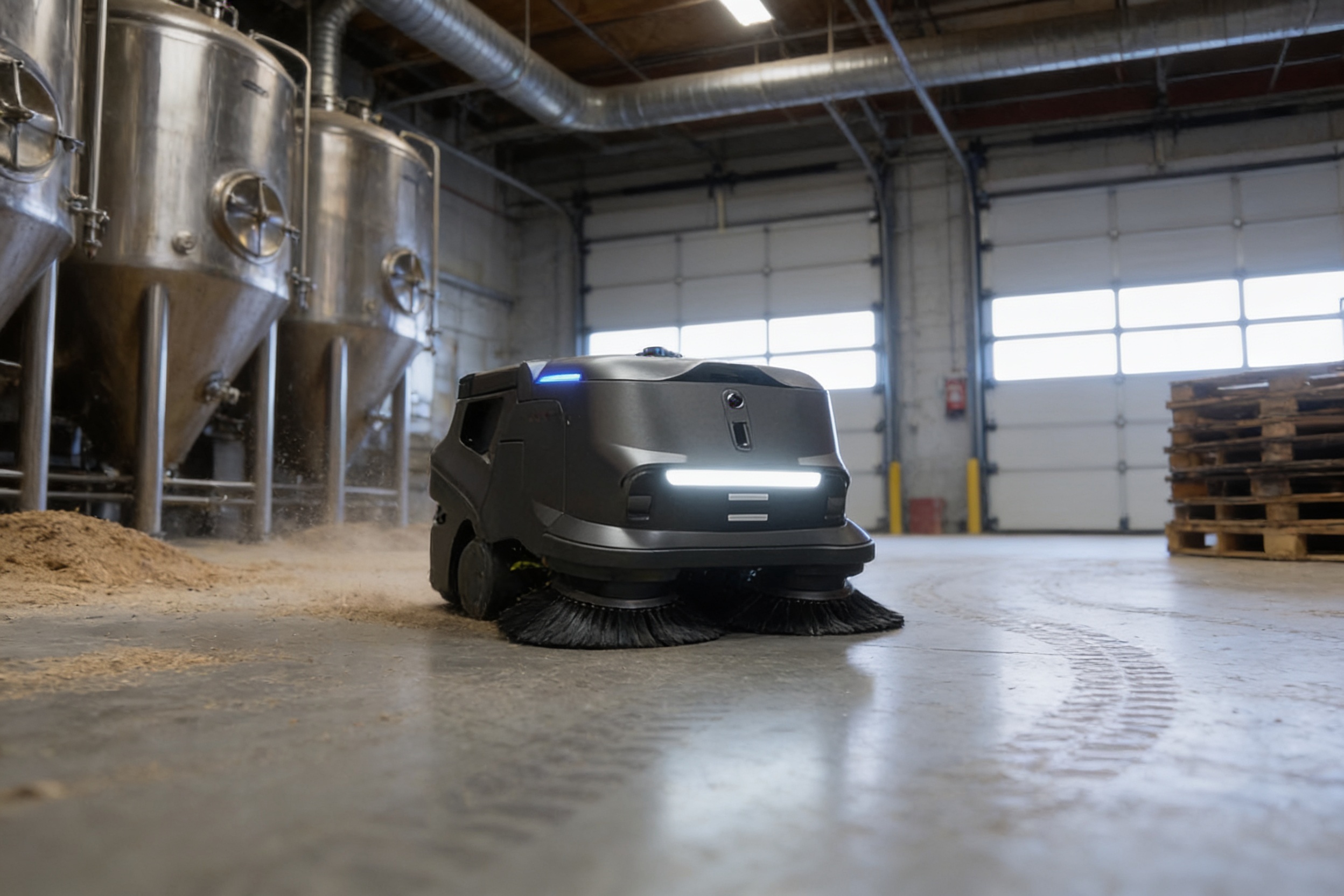
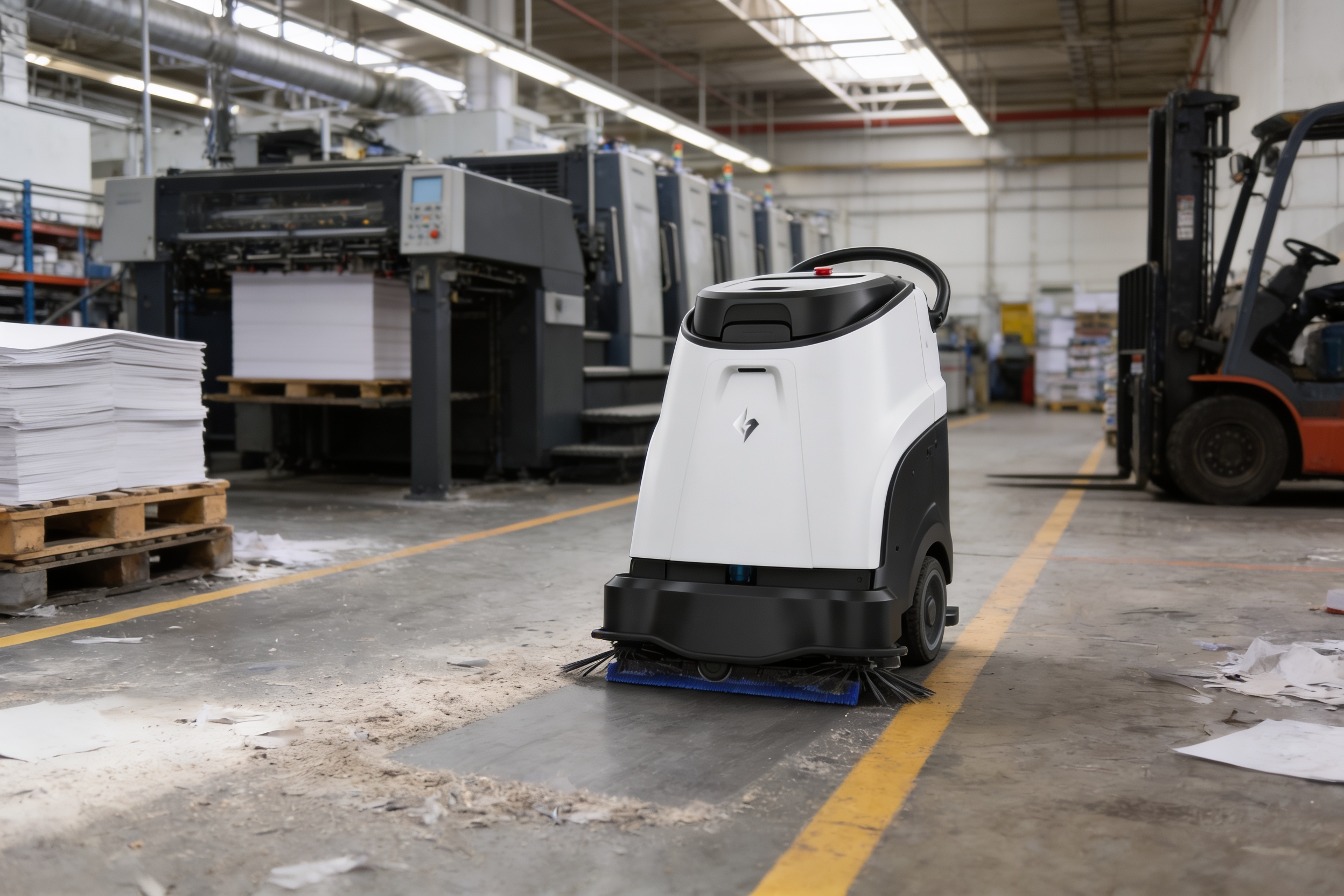
A floor scrubber or sweeper can take the hard-floor passes that follow a fixed route: vinyl and tile corridors, a hard-surface entry lobby, and open reading areas with clear floor. It works best when the route repeats and the aisles are wide enough for the machine to turn in.
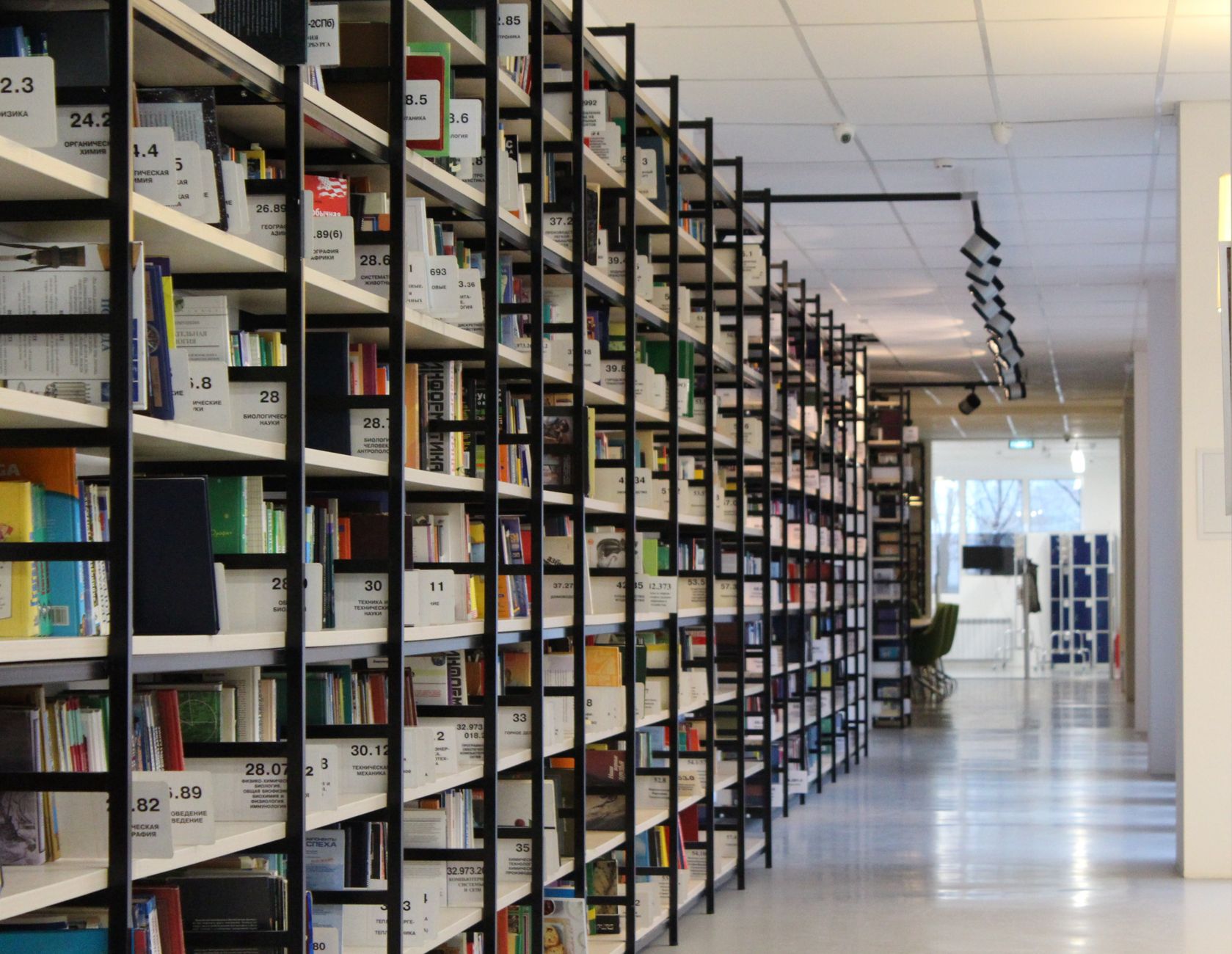
Bookstacks are harder. Shelving with narrow gaps, book carts left in aisles and cords across the floor all cut the route. An aisle can only be taken after staff clear it, so the night crew still does a set-up step that the machine cannot do alone.
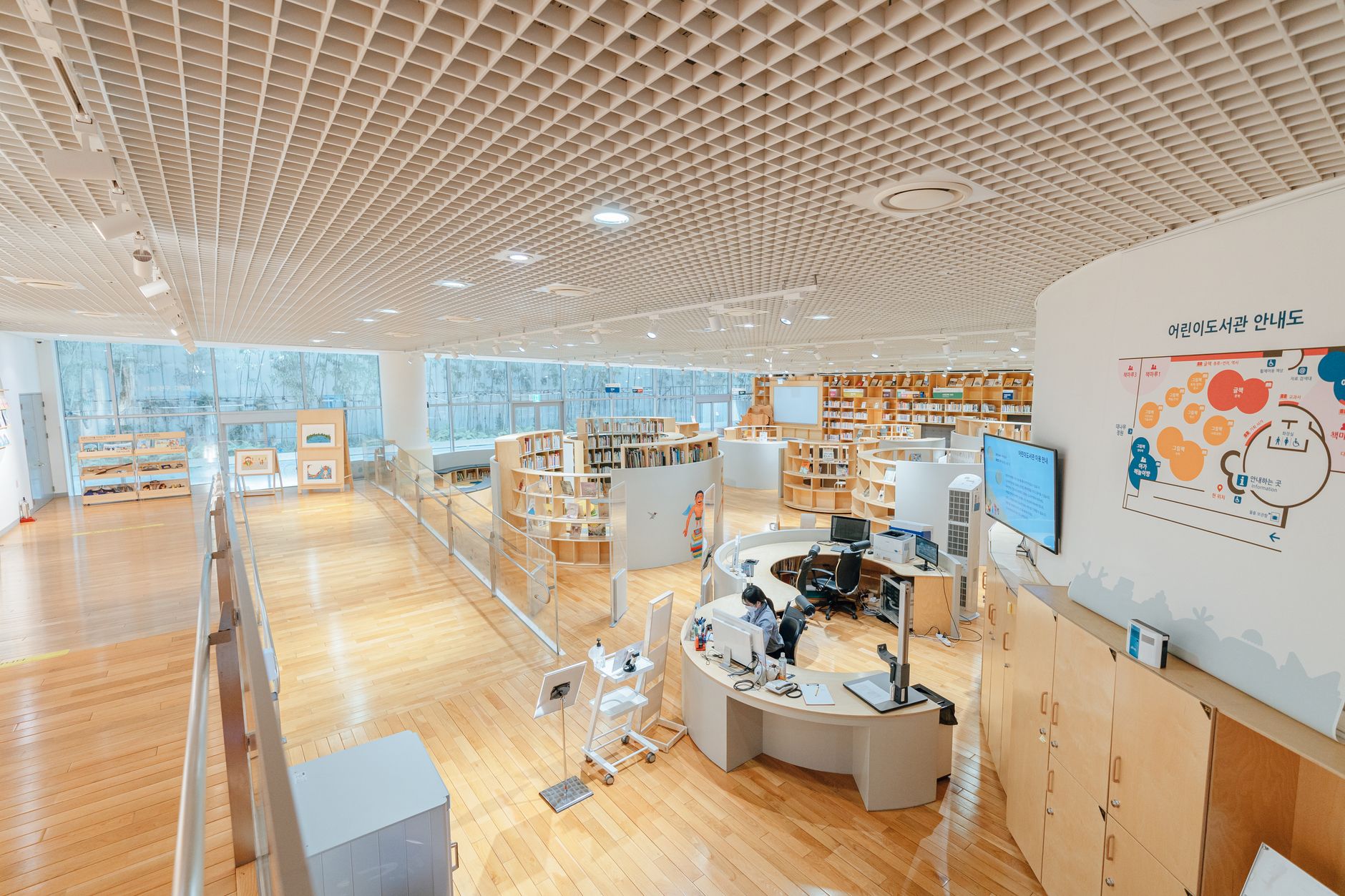
Carpet is a separate case. Many libraries have carpeted reading rooms and children's sections, and a hard-floor scrubber is the wrong tool there. A vacuum-type unit may suit some carpet, but the fit depends on pile, transitions and furniture, so test it on the actual floor before assuming it works.
How big are public libraries, and how much floor do they cover?
The honest limit first: our search did not find a verified figure for hours per night or per week of janitorial floor work in libraries, and no current national count of library open hours or staffing was verified either. Any hour estimate therefore has to come from your own building, timed on site.
The scale is still useful. According to the IMLS FY2017 tables, 9,045 public libraries met the federal definition used in the survey, with 16,557 central and branch libraries and 672 bookmobiles. These are the latest official national counts we found, and newer outlet totals from secondary sources include branches, so they are not directly comparable.
Building size varies a lot. The Indiana State Library's 2022 facilities summary reports a mean central library building of about 23,980 square feet and a median of about 12,498 square feet. The gap suggests a few very large buildings raise the average, so a single average will mislead you about any one branch. The Oregon State Library sets one full-time equivalent at 40 hours a week, and other states use different bases, so agree on the definition before comparing a robot to a person.
What do the labor and injury numbers say about library janitors?
Turnover is the labor figure most often quoted, and it is the one least verified for this trade. Trade estimates run much higher than government data, and our search did not confirm a verified BLS job separation figure for building services. Ask your own HR records for vacancies, call-outs and night-shift exits, since those show the local problem better than an industry average.
Injury data is more solid. According to the Bureau of Labor Statistics snapshot for 2016 to 2020, janitors and cleaners, except maids and housekeeping cleaners, had 191.6 days-away-from-work cases per 10,000 full-time equivalent workers in 2020, covering 21,100 cases. The BLS 2015 to 2019 snapshot puts the 2019 rate for the same group at 157.4 per 10,000, with 18,680 cases, against 86.9 for all occupations that year.
No 2021 to 2024 rate was found, so 2020 is the most recent figure here, and it should be checked against the current BLS table before it goes into a board memo. Overtime, night-shift premiums and sick-day use for library janitors were not verified either. Those costs can move the total more than the local wage for this job does, so pull them from your own payroll.
| Task | Today | With a robot |
|---|---|---|
| Hard-floor corridor and lobby pass | Minutes timed on your floor | Setup and route check only, timed on site |
| Sweep open hard-floor reading areas | Minutes timed on your floor | Covered by the fixed route on clear floor |
| Clear carts, chairs and cords before the run | Minutes timed on your floor | Stays with staff before the machine starts |
| Restroom cleaning and restocking | Minutes timed on your floor | Stays with staff |
| Spill response and spot cleaning | Minutes timed on your floor | Stays with staff |
| Closing walk-through and sign-off | Minutes timed on your floor | Stays with staff |
Our search did not verify a national hour figure for library floor work. Time each row for two weeks in your own building and fill the table with those minutes, which come from your payroll and a stopwatch rather than from this page.
How does a library team work with a cleaning robot?
The setup we plan for is a robot plus fewer staff, never zero staff. The robot takes the fixed hard-floor route after closing, and a person stays for restrooms, spot cleaning, the closing walk-through, event turnarounds and anything the machine flags. A plan with no one on site leaves restrooms, spills and the closing check with nobody, so we design for a smaller team, not an empty building.
Our integrators select the machine for the site, lease it through financing, deploy and integrate it, train the staff who will run it, and service it across the country. Training usually covers starting the route, clearing aisles before a run, checking the charging spot, and what to do when the machine stops somewhere unexpected. The lease is quoted after a free site assessment, which maps the floor and route first.
The handoff matters most. The person who leaves at closing and the first robot pass need one agreed checklist, so the machine does not start in a cart-filled aisle or in front of a restroom that is still being cleaned.
What can a cleaning robot not do in a library?
The machine is limited to the floor task it was built for. It does not clean restrooms, handle a spill that needs judgment, lift a book cart, move chairs after a program, or decide that an area is unsafe. Those limits are why a person stays on the closing route.
A robot also cannot notice everything. A dropped coin, broken glass or a person asleep in a reading room needs a human. A library that uses its main floor for programs most nights will need more setup time, and that setup time has to be counted against any saving before the decision is made.
- Restroom cleaning, fixtures and restocking
- Spills that need judgment or chemical control
- Moving chairs, tables and book carts
- Stairs, and any floor that needs an elevator unless a route is set up for it
- Carpet in most reading rooms and children's areas
- Entry mats, exterior walks and book drops
What should we measure before deciding on a cleaning robot?
Measure first, decide second. Time the night floor route for two weeks, separate the hard-floor passes from restroom and spot work, and record the staff minutes for each. Those minutes are the only hour figure that will hold up, because our search did not find a verified national number for library floor work.
Then check the building. Floor type by area, aisle width and clearance, level changes, carpet share, closing hours and how often the layout changes all shape the answer. A large hard-floor lobby is a different case from a branch with carpet and shelving close together.
Ask what the lease covers. Confirm whether service, repair and replacement units are part of the agreement, and get the answer in the written quote rather than from a web page.
Is leasing a cleaning robot for a library worth it?
It is worth it when the robot removes enough repeat hours to change the staffing plan. If it takes one pass but the same person must stay for the same time, the saving is small. If it lets a night shift shrink to a shorter closing route while the robot runs the fixed pass, the saving is real. The useful version of the cost to lease a commercial robot question is about the staffing change, not the machine alone.
Financing spreads the lease over a fixed term, so the library can plan the cost the way it plans other operating expenses. Ask for a fixed lease payment in the quote, with the term and service terms stated, and compare it against the minutes you measured rather than a guess.
Ask the library's finance office how an operating lease would be recorded before the decision goes to the board. A clear answer at that stage saves a round of revisions later.
Frequently asked questions
Want a cleaning robot at your public library?
Tell us about your site. We will recommend the robot, quote the lease, and keep it serviced.
Sources
- US Bureau of Labor Statistics, Occupational Employment and Wage Statistics (OEWS May 2024)
- IMLS FY2017 tables
- BLS injuries and illnesses snapshot, janitors and cleaners, 2016 to 2020
- BLS injuries and illnesses snapshot, janitors, 2015 to 2019
- AACEM and ISSA autonomous cleaning survey, 2019
- Indiana State Library, 2022 summary of library facilities
- Oregon State Library, public library statistics guide