
The short answer
A cleaning robot makes sense at a rehabilitation center when the night janitor shift is hard to fill and the hard-floor passes in halls and common areas repeat on the same route each night. In a cleaning robot vs night janitor comparison, the robot takes the scrubbing while a person still covers restrooms, trash, spills, carpets, therapy areas and any patient need, so the realistic model is a robot plus fewer staff, never zero staff.
See what a cleaning robot costsRun the numbers in the ROI calculator
Key takeaways
- The robot takes the repeat hard-floor route, and a person keeps the rest of the night.
- Scrubbing robots suit hard floors, so restrooms, trash, carpet and patient areas stay with staff.
- No verified rehab-specific shift length, turnover or overtime figure was found, so measure your own night hours first.
- Plan for a robot plus fewer staff, with one named person responsible for overnight response.
- The lease payment comes in a quote after a free site assessment based on your floor and route.
Cleaning robot vs night janitor at rehabilitation centers: which makes sense?
A cleaning robot makes the most sense at a rehabilitation center where the night janitor shift is hard to fill and the hard-floor work in halls and common areas follows the same route every night. Those repeat passes are the part a scrubbing robot can run on a set path. It makes less sense where most of the night is restrooms, trash, carpet, bedside spills and patient-area tasks, because a robot cannot do those.
For most rehab sites the honest answer is a robot plus fewer staff, not a robot in place of all staff. Someone still needs to be in the building overnight to respond to spills, falls, alarms and anything the robot cannot clear. A design with no one on the floor overnight is the wrong design, whatever the robot can do.
What does a night janitor actually do in a rehabilitation center?
A night janitor at a rehab center usually works a fixed route through the public halls, lobby, dayrooms, therapy and gym spaces, and restrooms. The work is emptying trash, restocking supplies, cleaning restrooms, and scrubbing or mopping floors in the same order each night. Much of it is repetition, which is why the scrubbing portion matches a robot.
The rest of the shift is not repetitive. Spills happen at random, wet floor signs have to go out, a mat or wheelchair has to be moved, and a restroom needs a full pass. The janitor may also be one of the few people moving through the building overnight, and that role is hard to replace with equipment alone.
Median hourly wage, Janitors and Building Cleaners
$4,041
Monthly cost of one full-time worker, at the median wage plus payroll costs (an estimate, not a quote).
Which night floor tasks can a cleaning robot take over?
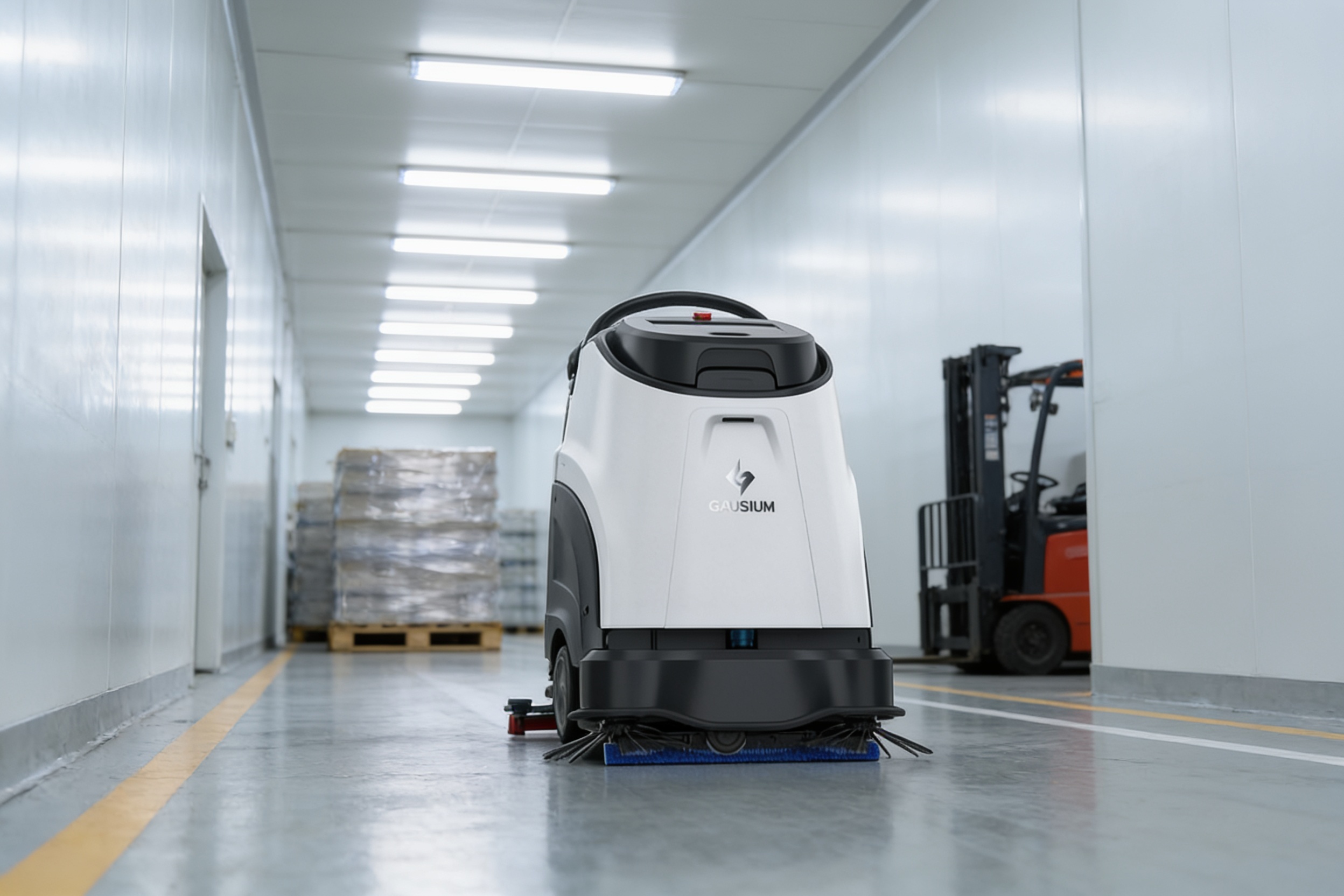
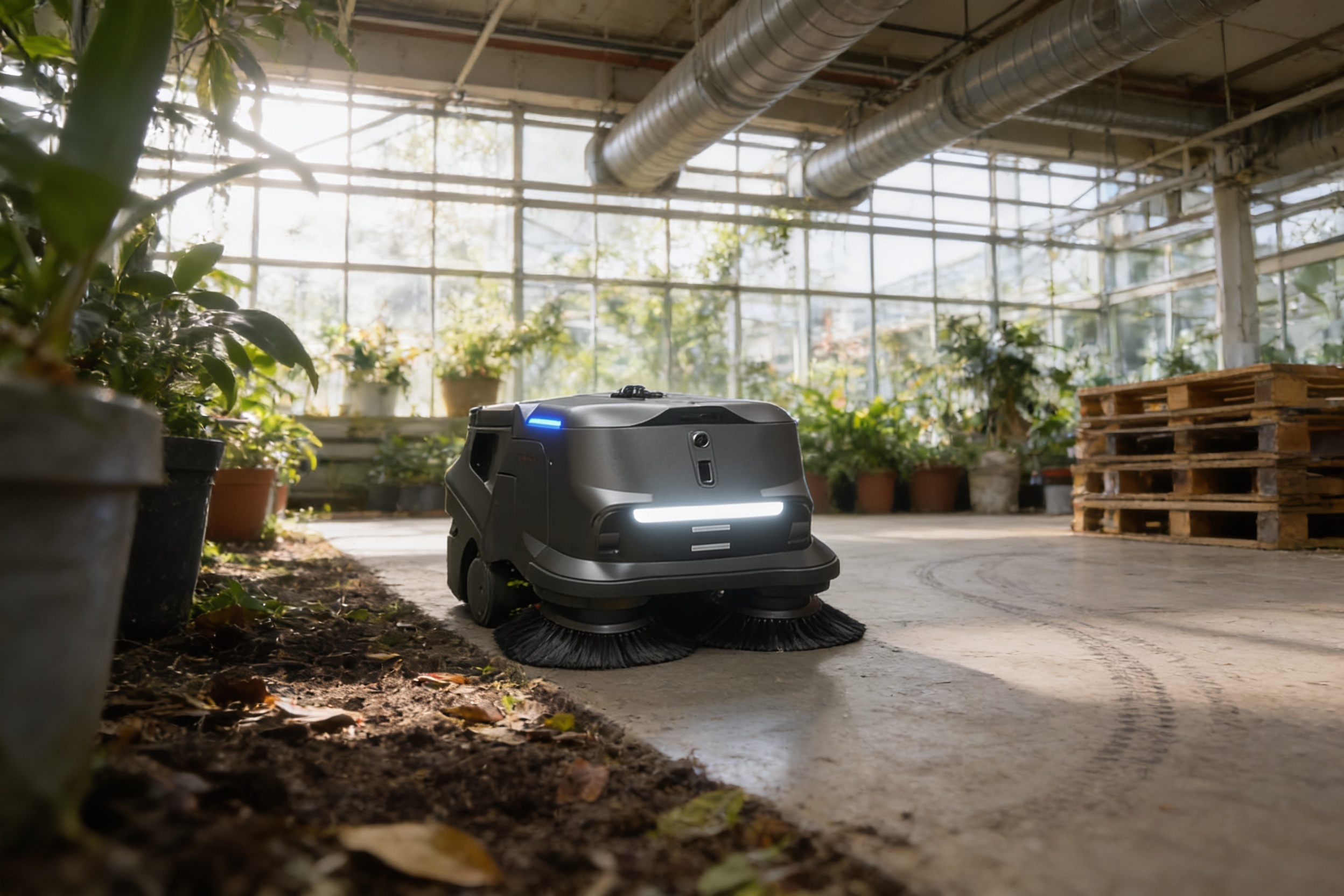
A scrubbing robot takes the hard-floor passes a janitor runs on a schedule: corridors, the lobby, hard-floored common areas and the long walkways between rooms. It works best where the route is mapped, the doors are known, and the path is clear before the run starts. Mapping and a clear route are what let a repeat route run unattended.
It does not take work that needs hands, judgment or a patient-care setting. Restrooms, trash and recycling, bedside and dayroom spills, carpet, therapy mats and equipment, stairs, and areas with beds or wheelchairs stay with staff. Those tasks take up part of every night, so the robot changes the shift rather than removing it.
- Hard-floor passes on a mapped route
Cleaning Robot
Runs the same route on a schedule, timed and repeatable
Night Janitor
Covers the route, but pace varies and the person can be pulled to other tasks
- Restrooms and trash
Cleaning Robot
Not in scope
Night Janitor
Full pass with supplies, trash removal and restocking
- Spill response
Cleaning Robot
Cannot judge or clean an unknown spill, so it needs staff
Night Janitor
Assesses the spill, uses the right product and sets signage
- Carpet and therapy mats
Cleaning Robot
Outside the job of a hard-floor scrubber
Night Janitor
Vacuums, spot cleans and resets mats and equipment
- Overnight response
Cleaning Robot
No judgment and no response to people
Night Janitor
Answers alarms, falls and staff calls
- Hours and consistency
Cleaning Robot
Same pass every night, with hours set in the schedule
Night Janitor
Coverage depends on sick days, overtime and open shifts
How many rehabilitation centers are there, and how much labor is involved?

No official 2024 or 2025 count of rehabilitation centers turned up in the government data gathered for this page. The closest broad figure comes from a peer-reviewed study of Census Bureau County Business Patterns, which counted 707,634 US healthcare establishments in the 2016 data, up 34% from 2000, with 12.5% of them long-term care facilities. That is all of healthcare, not a rehab count, so treat it as context.
The labor picture starts with the Bureau of Labor Statistics. Its Occupational Outlook Handbook puts about 2,447,700 janitors and building cleaners employed in the 2024 data, with projected growth of 2% from 2024 to 2034, which it calls slower than average. Most workers learn the job on the job, with no formal education required. The government wage data on this page covers the wage side of the same job.
A 2020 BLS Economics Daily article put about 9,100 janitors and cleaners, excluding maids, among roughly 1.5 million jobs in nursing care facilities in May 2020. That group sits close to rehab work, but the figure is dated. Verified 2024 or 2025 turnover, overtime, night shift and sick day figures for this job were not found, and BLS does not publish occupation-level turnover. For turnover, use the JOLTS industry tables for your region, and pull overtime and sick day numbers from your own payroll.
What does injury data say about night floor cleaning?
The Bureau of Labor Statistics injury snapshot for janitors and cleaners, excluding maids and housekeeping cleaners, in private industry reported 157.4 nonfatal injury and illness cases with days away from work per 10,000 full-time equivalent workers in 2019. The series in that snapshot runs 178.6 in 2016, 176.6 in 2017, 137.1 in 2018, 157.4 in 2019 and 191.6 in 2020, with 18,680 such cases in 2019.
No rehab-specific or nursing-facility injury rate turned up in this run, so these figures describe janitorial work across private industry, not your building. Treat them as a prompt. Look at lifting, reaching, bucket and wringing work, and wet-floor transitions on your own night shift, and check your own injury log before you commit to a model.
How do a cleaning robot and night staff work together?
The working model is a robot plus fewer staff. The robot runs the hard-floor route while one trained person stays on site for restrooms, trash, spills, carpets, patient-area requests and any response the robot cannot give. Staff hours fall where a dedicated person used to be tied to the scrubbing route. They do not fall to zero.
Setup decides how well this works. Someone maps the floor, sets the route and the doors, clears the path before each run, and knows what to do when the robot stops. Service Robot Co. handles the site assessment, deployment, integration and staff training, so the person on site knows the start, stop and fault steps before the first night.
How much floor can a robot cover in a night?
Throughput figures come from equipment makers and supply guides, not from independent tests. A janitorial supply guide estimates 8,000 to 35,000 square feet per hour for a walk-behind scrubber, depending on cleaning width, and notes that real output drops with obstacles, turns and operator pace. A manufacturer lists up to 28,000 square feet per hour for medium to large walk-behind areas.
No throughput figure for autonomous scrubbers turned up in this run, and neither did the square footage of a typical rehab center. Time one full pass on your own floor, count the passes a night needs, and compare that with the route you want the robot to run.
On adoption, the AACEM and ISSA autonomous cleaning survey from 2019 covered about 23,000 contractors, in-house providers and facility managers and described adoption as being in an infant stage. About one-third of non-adopters said they might adopt within a year. ISSA Today's September and October 2025 issue reported that 43% of respondents had plans to adopt autonomous cleaning equipment, which is a stated plan rather than measured adoption.
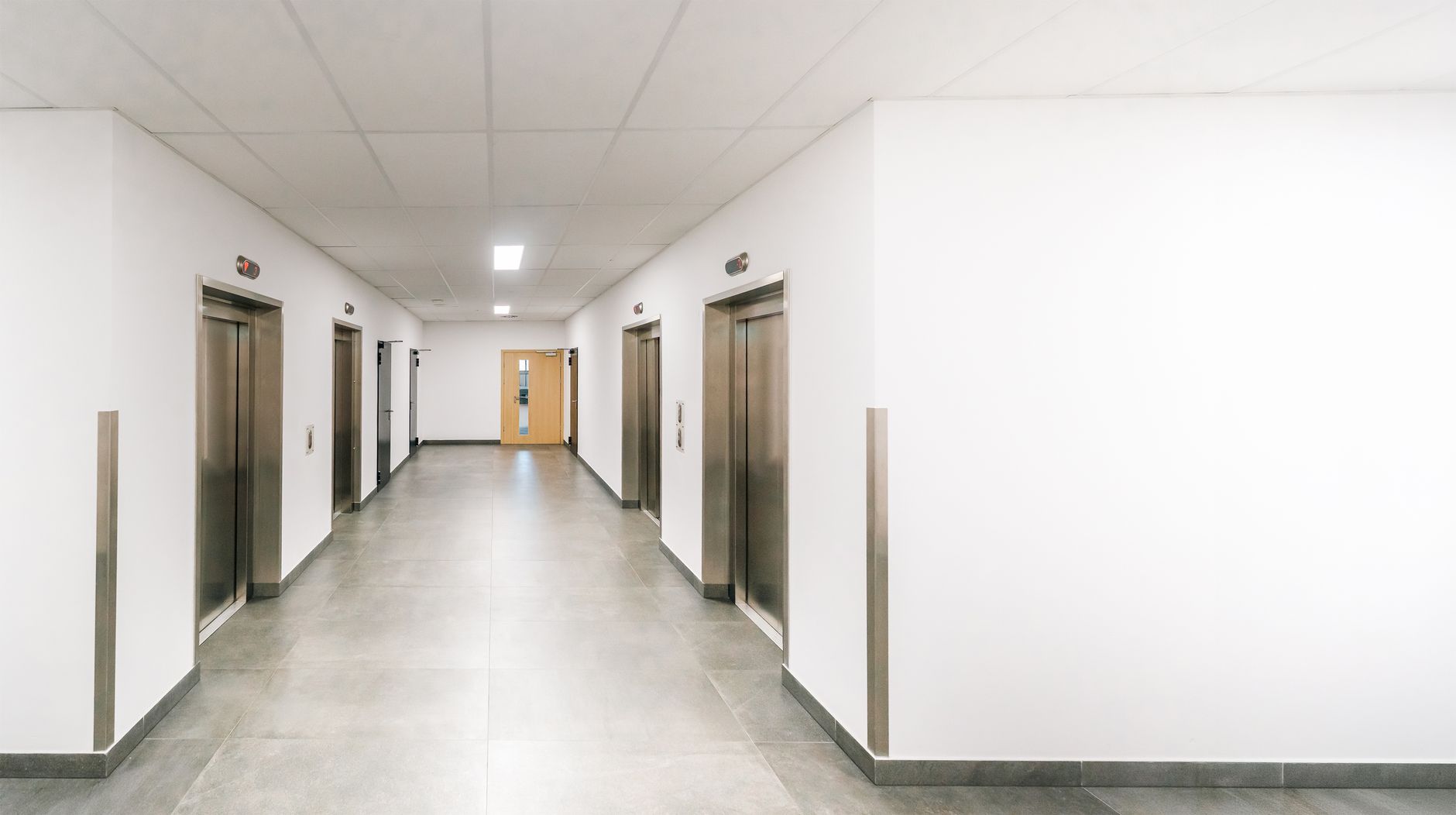
What can a cleaning robot not do in a rehabilitation center?
A hard-floor scrubbing robot does not clean restrooms, empty trash, handle bodily fluids, or manage carpeted and therapy areas. It does not respond to a patient, a fall or an alarm, and it cannot judge whether a spill is safe to leave. It should not run through a space where people are walking, moving equipment or lying on mats.
The route depends on the floor. Thresholds, changes between flooring types, drop-offs, rugs and anything left in the path can stop a run. Dining areas during meal service, therapy hours and rooms where people sleep need staff judgment about when the robot runs, and night noise matters where residents or patients rest, so the schedule has to fit the building.
A robot does not remove the need for a person on call. If it faults at 2 am, someone has to decide whether to clear it, skip the area or call for help. Plan that response before go-live, or the robot becomes one more thing left broken overnight.
How do you get started with a robot lease for night floor work?
Start with a free site assessment. Service Robot Co. maps the route, measures the hard-floor passes, marks the areas the robot should not enter, and selects a robot that fits the floor. Robots are leased only, through financing, and the payment comes in a quote after the assessment, so it depends on your site rather than on any figure on this page.
After the quote comes deployment and integration, with staff training and go-live support so the on-site person knows how to start, stop and clear the robot. Service is handled nationwide, including on-site dispatch and remote triage for faults. A site can begin with one leased unit on a single route, then expand once that route runs cleanly.
Bring your night hours, injury log, route plan and payroll notes to the assessment. Those inputs, together with the government wage data on this page, turn the question into a number you can take to a budget meeting.
Frequently asked questions
Upcoming hospitals & healthcare events
- ConferenceNew England College Health Association (NECHA) 2026 Annual MeetingNov 11 to 13, 2026Newport Marriott Hotel & Spa, Newport, RI
- ConferenceHLTH USA 2026Nov 15 to 18, 2026The Venetian Expo, Las Vegas, NV
- ConferenceIndiana Safety and Health Conference & Expo, 2027Feb 8 to 10, 2027Indianapolis, IN
- ConferenceHealthcare Project Delivery Conference 2027Feb 10 to 11, 2027Manchester Grand Hyatt, San Diego, CA
Want a cleaning robot at your rehabilitation center?
Tell us about your site. We will recommend the robot, quote the lease, and keep it serviced.
Sources
- US Bureau of Labor Statistics, Occupational Employment and Wage Statistics (OEWS May 2024)
- Bureau of Labor Statistics, Occupational Outlook Handbook: Janitors and Building Cleaners
- Bureau of Labor Statistics, Injury and Illness Snapshot: Janitors and Cleaners (except Maids and Housekeeping Cleaners), 2016 to 2020
- Peer-reviewed study using Census Bureau County Business Patterns, 2000 to 2016, Infection Control and Hospital Epidemiology
- AACEM and ISSA Autonomous Cleaning Survey (2019)
- ISSA Today, September and October 2025