
The short answer
In a university dormitory, the cleaning robot vs night janitor decision comes down to repeat floor work. A robot can handle the hallway, lounge and shared bathroom floor passes on a fixed nighttime route, while a person is still needed for fixtures, spills, restocking and judgment calls. The strongest setup is a cleaning robot plus fewer night staff, not zero staff, and a lease quote follows a free site assessment so the fit is checked on your actual floors.
Key takeaways
- A robot covers the repeat floor passes on hallways, lounges and shared bathroom floors, while people handle fixtures, spills and restocking.
- The best model is a cleaning robot plus fewer night staff, never zero staff.
- Overnight coverage is hard to keep filled, and one industry blog citing BLS data puts sector turnover near 45 percent a year.
- Injury data shows janitorial work carries real risk, but it does not prove a robot lowers that risk.
- Check floor types, doorways, quiet hours and fire doors in a site assessment before deciding.
Should a university dorm use a cleaning robot or a night janitor?
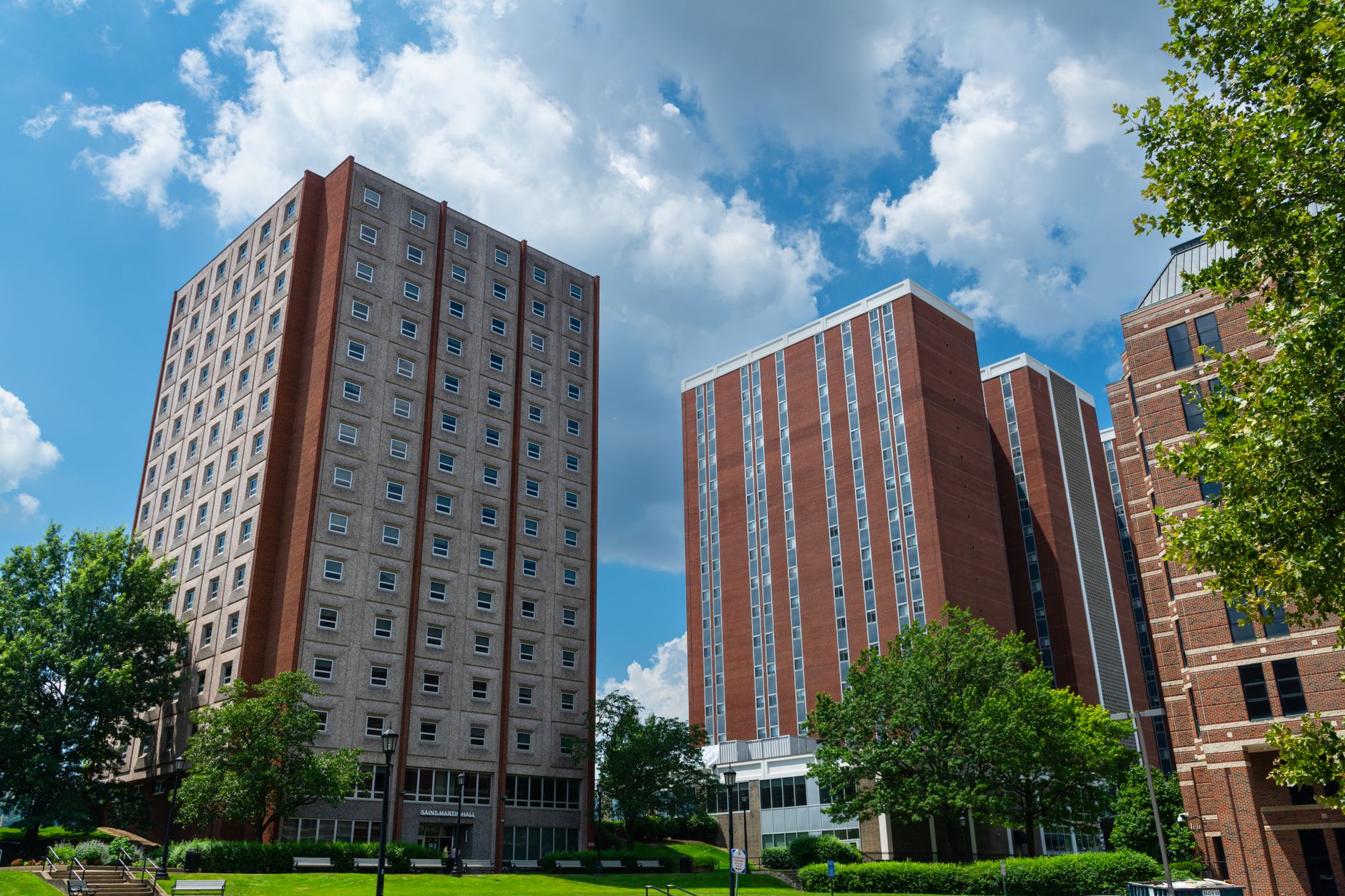
Most university residence halls still rely on people for overnight cleaning, and the choice is rarely a robot or nothing. The useful question is which parts of the night route a robot should take and which parts still need a person in the building. That split matters more than the headline choice, and it frames the rest of this page.
The Bureau of Labor Statistics counted 2,447,700 janitors and building cleaners employed in 2024, according to its Occupational Outlook Handbook. The same handbook projects 2 percent growth from 2024 to 2034, which is slower than average, and about 351,300 openings a year on average. The sector will keep hiring, but openings alone will not fill every overnight shift.
No official national count of residence halls turned up in our research, so there is no verified total of dorms to multiply by a per-building figure. For a specific campus, the federal routes to institution-level housing data are NCES College Navigator and IPEDS. Start there before sizing a program across several buildings.
When does a cleaning robot make sense in a university dorm?
A cleaning robot fits a dorm when the night route is repeated, predictable and mostly floor work. Long corridors, a fixed set of lounges and shared floors on each level give it a stable path. The robot follows that path every night without drifting, but it does not check what it was not asked to check.
It makes less sense when the building is mostly small rooms with furniture in the way, when doorways are tight or irregular, or when floor types change often along the route. It is also a weak fit when most of the job is messes, resident contact or fixtures, because those are the tasks where a person adds the most value.
A short pilot on real corridors usually answers the question faster than a desk review. Run the route on a few floors, log what it covers, and compare that log with what the night staff did before the trial.
Median hourly wage, Janitors and Building Cleaners
$4,041
Monthly cost of one full-time worker, at the median wage plus payroll costs (an estimate, not a quote).
- Repeat floor passes
Cleaning Robot
Runs the same route every night at a steady pace without breaks
Night Janitor
Can adjust the route on the fly, but needs breaks and may vary between shifts
- Bathroom fixtures
Cleaning Robot
Covers the floor only, not toilets, sinks, mirrors or partitions
Night Janitor
Cleans fixtures, mirrors and partitions by hand
- Spills and unexpected messes
Cleaning Robot
Not suited to them, so it needs a person to respond
Night Janitor
Responds on the spot and decides how to clean and whether to report
- Restocking and trash
Cleaning Robot
Does not restock paper or soap or empty bins
Night Janitor
Restocks and empties bins as part of the route
- Resident contact
Cleaning Robot
Moves around people but cannot handle a resident's request
Night Janitor
Can talk with residents and handle issues as they come up
- Shift coverage
Cleaning Robot
Still needs a person to supervise, check the log and respond to alerts
Night Janitor
Absence needs cover from another staff member
What does a night janitor actually do in a dorm shift?
A dorm night janitor usually works a set route through residence hallways, lounges, stairwells, laundry rooms and common bathrooms. The route covers floors and high-touch surfaces, then restocking and trash, then a check that doors, lights and equipment are working. The work runs while residents sleep, so the person is also the one who notices a problem and decides what to do about it.
The Bureau of Labor Statistics handbook says 24-hour maintenance needs, as in hospitals and hotels, are met with shifts. University housing follows the same logic. Someone has to be on the route while the building is quiet, and a single absence can leave whole wings uncovered.
Facilities teams often size the work by cleanable square footage. One published method converts that area by space type into hours using ISSA 612 task times, then adds 15 to 20 percent for breaks, travel and restocking, according to a facilities workloading guide. That gives a building-specific estimate, which is why we measure your floors rather than quote a generic figure.
Which parts of dorm night cleaning can a robot take, and which can't it?
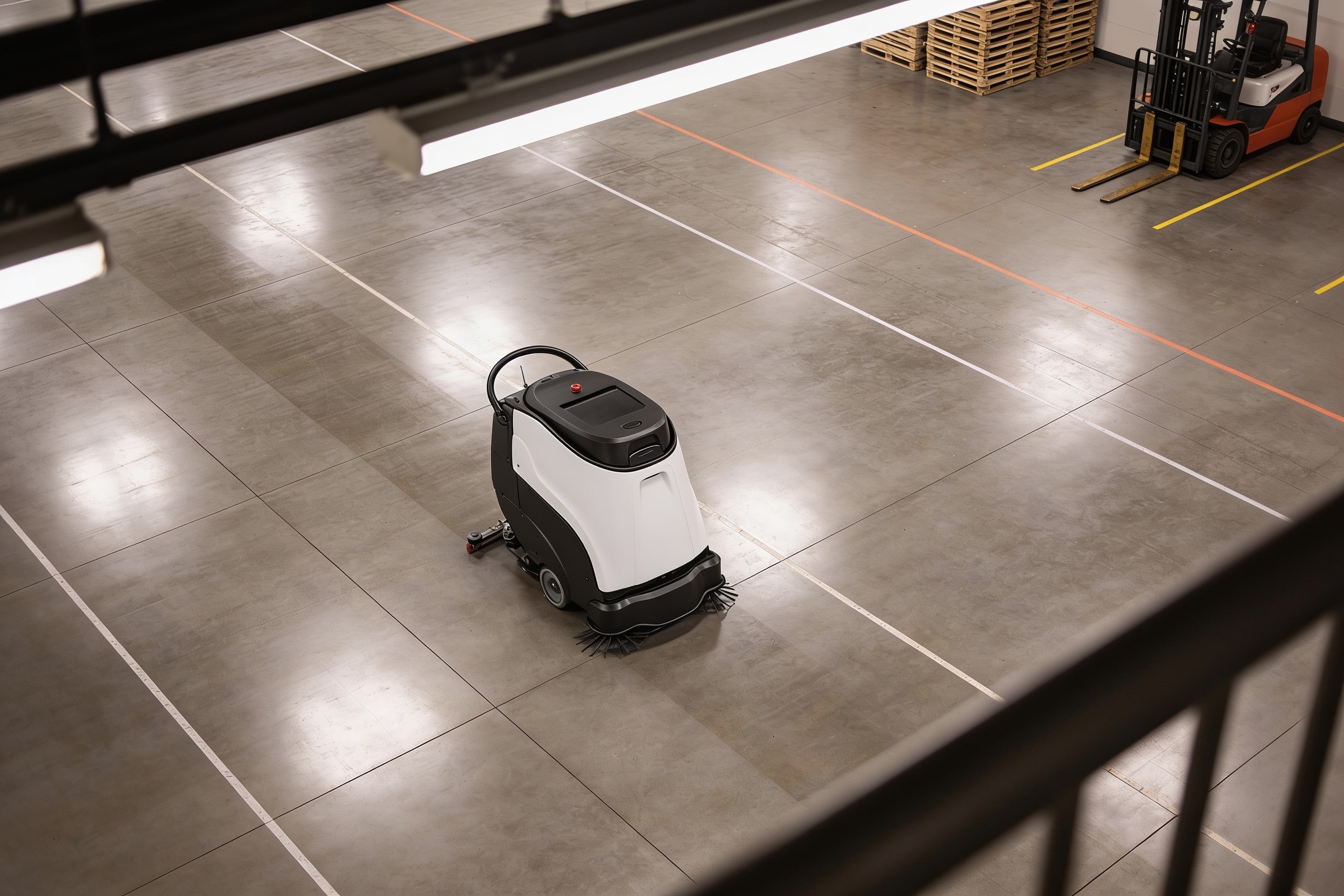
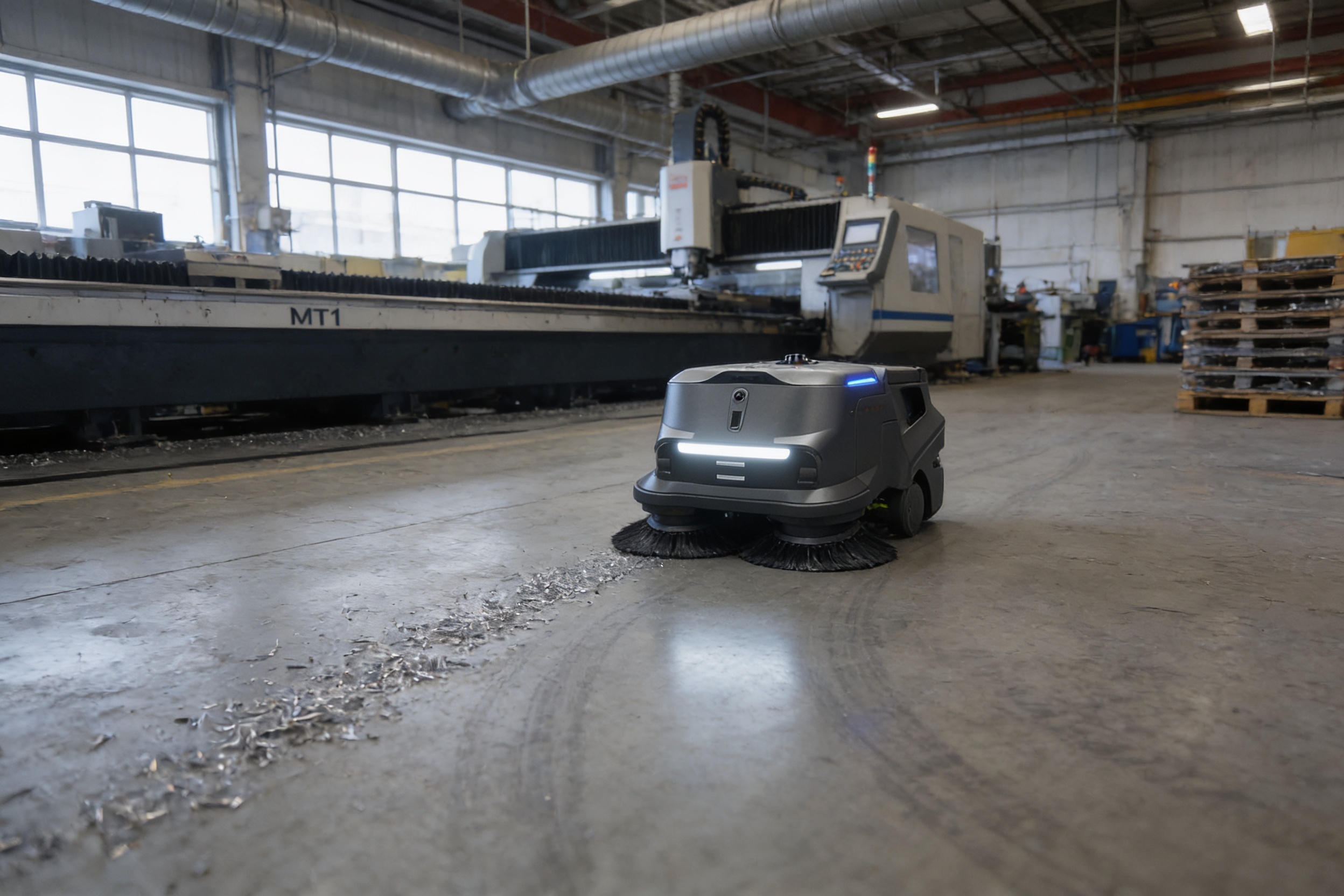
A floor cleaning robot can take the repeat floor passes: sweeping or scrubbing hallways, lounge floors, stairwell landings and the floor of shared bathrooms. These are long, repetitive passes on known surfaces, which is the kind of work robots handle well. Running them at night, while residents sleep, is where the value shows up.
A robot cannot clean toilets, sinks, mirrors, partitions or other bathroom fixtures, and it cannot wipe high-touch items such as door handles and elevator buttons. It does not restock paper and soap or empty trash. Those tasks stay with a person on the same shift.
Spills, biological messes, broken fixtures and damage all need a person who decides how to clean, what to report and whether to close an area. Those decisions sit outside the robot's route, so they belong in the staffing plan from day one.
How many hours does dorm night cleaning take, and how hard is it to staff?
We found no verified hour count for dormitory night shifts, so any hour figure for a specific building should come from a site walk. The hours depend on floor area, the number of bathrooms, lounge size, the route length and how often the route runs.
Turnover is the staffing risk. An industry blog citing Bureau of Labor Statistics data reports annual separations in the sector averaging about 45 percent since 2017, excluding 2020. We could not confirm that figure against the BLS table, so treat it as a lead rather than a fact. Either way, plan as if some night shifts will be open at any given time.
Universities also set their own staffing and cleaning rhythms. One private college's facilities office aims for one custodian for about every 100 students in residence halls. A Canadian university's custodial scope of work sets deeper cleaning on a separate schedule: residence traffic areas such as lounges and hallways get truck-mounted steam cleaning at least twice a year, and residence living areas at least once a year. Nightly floor passes and periodic deep cleaning are different schedules, and a robot changes only the first.
The work also carries injury risk. The Bureau of Labor Statistics injury snapshot for janitors and cleaners shows the following, and the list below gives the figures as published.
We found no 2024 injury rate specific to janitors. The figures show the job carries real injury risk, but they do not prove that a robot lowers it, so do not base the decision on safety alone.
- 2020: 21,100 days-away cases among janitors and cleaners, a rate of 191.6 per 10,000 full-time equivalent workers (BLS snapshot covering 2016 to 2020).
- 2019: 18,680 days-away cases, a rate of 157.4 per 10,000 full-time equivalent workers (same BLS snapshot).
- 2024, all private industry: 2.3 cases per 100 full-time equivalent workers, down from 2.4 in 2023, according to a workplace safety summary of BLS data.

How does a team work with a cleaning robot in a dorm?
The model we recommend is a cleaning robot plus fewer night staff, never zero. The robot takes the repeat floor route, while a person covers fixtures, spills, restocking, resident issues and the robot itself. Fewer night staff is an outcome of the plan, not the starting point.
In practice the shift is split at the start and end. A person checks the robot, clears the route of obstacles and confirms the charging point before the night begins. A short close check follows, with a log of what ran and what needs attention at the morning handover.
We train the staff who remain so they know what the robot does, what its alerts mean and when to call for service. We service robots nationwide, with on-site dispatch when a unit needs hands-on repair, and response terms should be confirmed in writing.
What can a cleaning robot not do in a university dorm?
A robot does not make judgment calls beyond its route and sensors. It cannot decide that a spill needs a supervisor, that a resident needs help, or that a door left open is a safety problem. Those checks are why a person stays in the building.
The route also depends on a clear path. Furniture moved into hallways, cords, stored carts and misplaced bins can stop a run, and a stopped robot leaves part of the floor unfinished. Someone has to read the log and respond, or the gap goes unnoticed until morning.
The robot is also equipment with its own failure modes. A unit that goes down overnight needs a plan: a backup unit, staff covering that route, or a repair dispatch that fixes it before the next night. Ask how that is handled, in writing, before you sign a lease.
How do you start a cleaning robot pilot in a dorm?
Start with a site walk and a written list of the night route. We map the building, record floor types, doorways, elevators, bathrooms and lounges, and identify which parts of the route the robot can take. That gives a specific picture before any quote is prepared.
We quote a robot lease after a free site assessment, with the lease provided through financing. Once the site is understood, we select the robot for it, deploy and integrate it, train the staff and service it nationwide. Begin with one unit on one floor or wing, run it for a set period, and compare its log with the old route before expanding.
Use the checklist below before you decide. Bring the local wage for this job from the government wage data on this page into the labor math, and compare hours covered rather than headcount alone.
Frequently asked questions
Want a cleaning robot at your university dormitory?
Tell us about your site. We will recommend the robot, quote the lease, and keep it serviced.
Sources
- US Bureau of Labor Statistics, Occupational Employment and Wage Statistics (OEWS May 2024)
- Bureau of Labor Statistics, Occupational Outlook Handbook: Janitors and Building Cleaners
- Bureau of Labor Statistics, occupational injury snapshot for janitors and cleaners, 2016 to 2020
- Janitorial industry blog on turnover citing BLS data
- Workplace safety summary of BLS injury data, 2024
- St. Olaf College facilities office
- University of Guelph custodial service scope of work
- Facilities workloading guide for university custodial staffing (ISSA 612 task times)