
The short answer
A cleaning robot makes sense at an indoor aquatic center when the nightly work is mostly a repeatable route over wet deck and lobby floors after closing. It does not make sense when most of the shift is hand work on fixtures, chemical handling, or cramped and irregular spaces, and in that case a night custodian remains the right choice. For many sites the cleaning robot vs night custodian answer is a mix, with the robot on the open floors and a person on everything else.
Key takeaways
- A cleaning robot fits the repeatable open-floor route after closing, not the whole night.
- The custodian keeps the wet areas, fixtures, corners and checks, so the model is a robot plus fewer staff, never zero staff.
- We found no verified hour, floor area or staffing figures for aquatic centers, so measure your own route before deciding.
- Government injury and employment data describe the custodian job, while turnover figures from vendors are estimates.
- A lease quote follows a free site assessment, not the other way around.
Cleaning robot vs night custodian: which makes sense at indoor aquatic centers?
A cleaning robot makes sense at an indoor aquatic center when the nightly work is mostly a repeatable route over wet deck and lobby floors after closing. It is a poor fit when the shift is dominated by hand work on fixtures, chemical handling, or cramped and irregular spaces. Most sites end up with a mix, where the robot covers the open floors and a person handles everything else.
We did not find verified figures for shift length, deck floor area, or staffing levels at aquatic centers, so this page does not give you hours or headcount. What it does give you is the expectation for pool decks in published inspection checklists, government data on the custodian job as a whole, and industry adoption figures. Use those as context for your own site assessment, not as a forecast for your building.
What does a night custodian actually do after an indoor pool closes?
After the last swimmer leaves, the closing custodian usually works the deck, the lobby and the main corridors. The work is sweeping and wet cleaning floors, emptying waste, and cleaning restrooms and locker rooms. The order matters because deck and lobby floors need to be dry and safe before the morning crowd arrives.
A 2020 state aquatics coalition document summarizing COVID-era guidance called for a full facility cleaning after closing and before reopening. That is a state summary, not a CDC rule. We did not find a CDC statement requiring overnight pool closure or a set deck-cleaning schedule for recreational water illness control, so your operator's written plan and local health rules set the schedule for your site.
Median hourly wage, Janitors and Building Cleaners
$4,041
Monthly cost of one full-time worker, at the median wage plus payroll costs (an estimate, not a quote).
Which parts of the closing routine can a cleaning robot take?
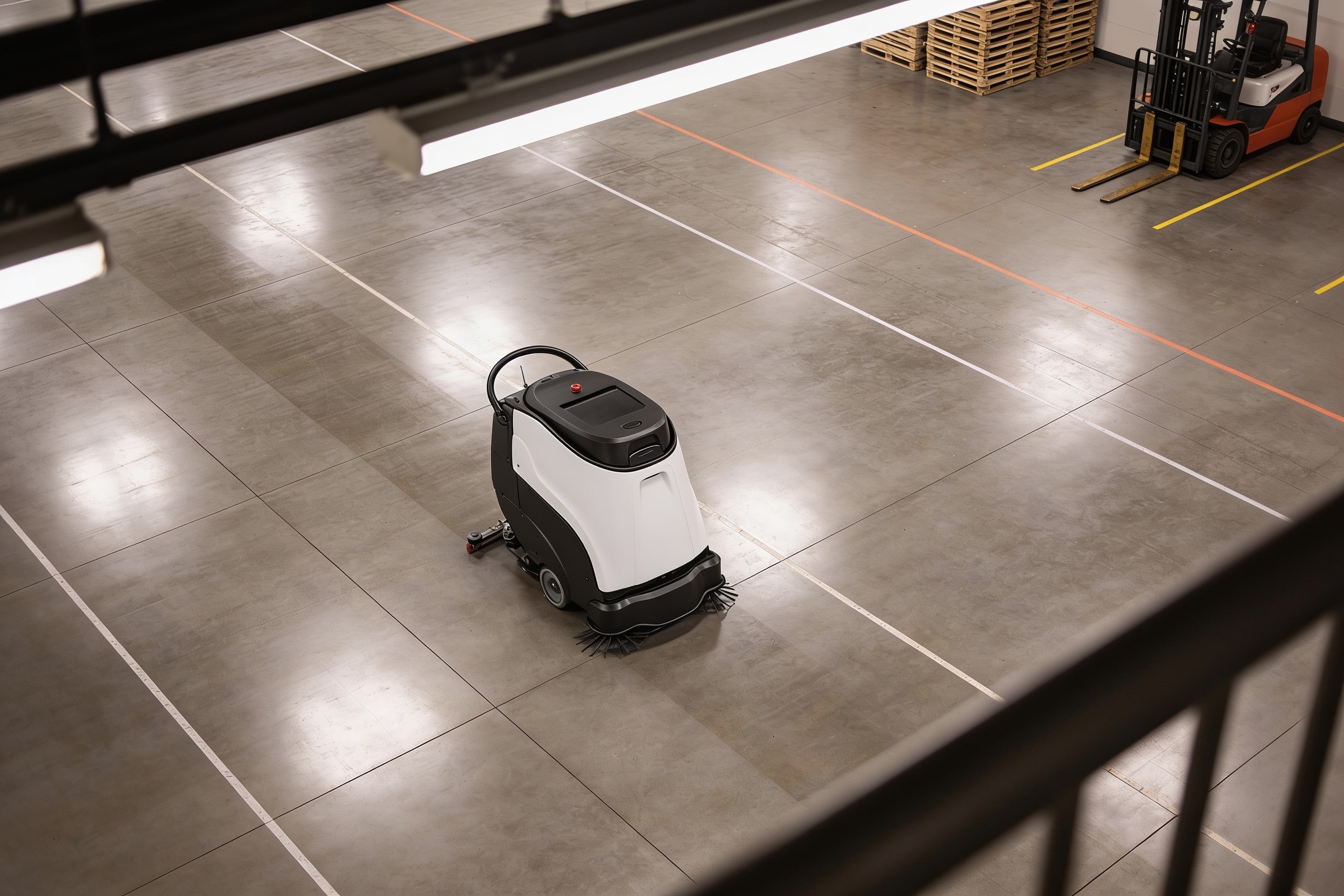
A cleaning robot can take the repeatable floor passes: the open deck walkways, the lobby and the main corridors that are walked the same way every night. Once the route is mapped, the robot runs it the same way each shift. That consistency is hard to guarantee with a checklist when staff are tired, rushed or covering two areas at once.
A 2021 District of Columbia pool inspection checklist says decks should be clean, properly drained, impervious and slip-resistant. A robot can help hold the wet-cleaning standard on the open floor. It does not replace the drainage check, the slip check or the written record that the deck was finished.
- Route repeatability
Cleaning Robot
Runs the same mapped route every night
Night Custodian
Varies with tiredness, staffing and the day's messes
- Open deck and lobby floors
Cleaning Robot
Covers the open floor passes
Night Custodian
Covers them too, but the pass uses the person's time
- Corners, edges and fixtures
Cleaning Robot
Usually cannot reach or clean them
Night Custodian
Does them by hand
- Judgment about slip hazards and standing water
Cleaning Robot
Flags spots it cannot clear
Night Custodian
Spots the hazard and decides what to do
- Water chemistry and chemical handling
Cleaning Robot
Not robot work
Night Custodian
Handled by trained staff under the operator's written plan
- A bad night with blocked routes
Cleaning Robot
Works the route it can reach
Night Custodian
Adapts the route, calls for help and handles a spill
Which parts can a cleaning robot not take at an aquatic center?
Water chemistry and chemical handling are the clearest limit. Testing and adjusting pool water, and handling the chemicals that go with it, belong to trained operator staff under the operator's plan, not to a floor robot. Fixtures are the second limit. Toilets, showers, drinking fountains, benches, and the hand work around edges and gutters need a person with a cloth and a brush.
Steps, ledges, thresholds, trash, ladders and any area blocked by equipment or loose gear are also outside the robot's job. If the mapped route cannot reach a corner, the custodian does that corner by hand. Plan for a hand pass on those areas every night, and count them in the staffing picture.
How many hours does the work take, and what do injury and turnover data say?
We did not find verified shift lengths for deck or lobby cleaning at aquatic centers, so the hours table below describes where effort moves, not minutes saved. The wider job is well documented. According to the BLS Occupational Outlook Handbook, about 2,447,700 janitor and building cleaner jobs existed in 2024, and BLS projects about 351,300 openings a year on average, mostly from replacement needs.
Injury data is one reason operators look at automation. According to the BLS injury and illness snapshot, private-industry janitors and cleaners, except maids and housekeeping cleaners, logged 21,100 nonfatal injury and illness cases with days away from work in 2020, at a rate of 191.6 per 10,000 full-time-equivalent workers. The rate series was 178.6 in 2016, 176.6 in 2017, 137.1 in 2018 and 157.4 in 2019, and the 2019 rate was nearly twice the all-occupations rate of 86.9.
Turnover is the other pressure. One janitorial vendor blog estimates cleaner turnover at 200 to 300% a year, and another vendor source gives a 75% to 375% range. Both are vendor estimates, not BLS figures, so check them against your own HR records. The government wage data on this page gives the local wage for this job, which is the number to set beside any staffing plan.
How many indoor aquatic centers are there, and how common is cleaning automation?
A CDC MMWR report cites about 309,000 public aquatic venues in the U.S. That count traces to 2011 aquatic-sector marketing data, and we found no newer official count. A 2016 CDC MMWR inspection study covered 84,187 routine inspection reports for 48,632 public aquatic venues in five states, about 15.7% of the 309,000 total. It is not a nationally representative sample, so read it as a view of inspection practice, not a national census.
Adoption data is early. According to an AACEM and ISSA autonomous cleaning survey built on 2019 data, about 23,000 building service contractors, in-house providers and facility managers were sent the survey, and 27% of respondents were active users. About one-third of non-adopters said they were somewhat likely to adopt within a year, and the survey itself describes adoption as early stage. Market reports give revenue figures rather than facility counts, so we did not use them here.
How does a team work with a cleaning robot?
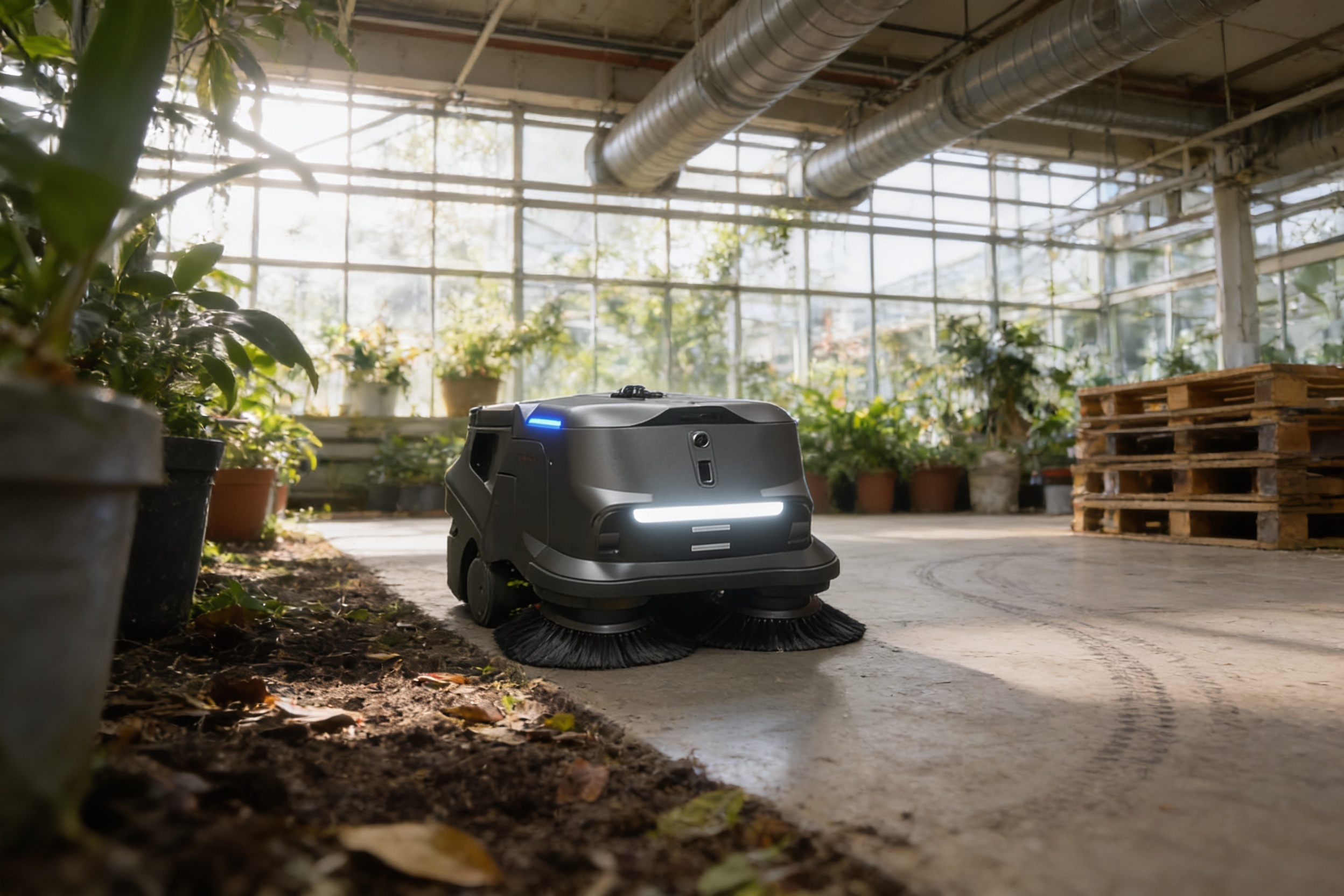
The working model is a robot plus fewer staff, never zero staff. The robot takes the open-floor passes on the mapped route, and the custodian moves to the wet areas, fixtures, corners and checks that the route cannot cover. The custodian also watches the run, clears obstacles and handles any stop or fault.
Staffing changes should follow the site assessment and your own timed hours, not a headcount guess. Keep the existing closing schedule until the robot has run several weeks of logged shifts, and let those logs decide whether hand time goes down. We pick the robot for the site, lease it through financing, deploy and integrate it, train your staff and service it nationwide, so the custodian is trained on the robot before the first live night.
What should you check before deciding?
The cleaning robot vs night custodian decision turns on a few site facts. Floor type and slope decide whether the robot can hold the route without leaving standing water. Drain placement decides where the deck can be scrubbed cleanly and where a person must check by hand.
Ask your operator and custodian which tasks take the most time and which are still done by hand every night. Those answers, not a general claim about robots, set the staffing mix. The local wage for this job, taken from the government wage data on this page, is the other side of that comparison.
How do I start a cleaning robot lease for an aquatic center?
Start with a free site assessment. We map the deck and lobby, measure the route and surfaces, note the drains and wet areas that need a hand pass, and then quote a lease. Robots are leased through financing, and the quote covers the lease terms and the service plan.
Begin with one leased unit on one route, run it for a set period, and compare the logged shifts against the current closing routine. Keep the custodian on the wet areas and checks during the trial. If the logs support it, add routes or units. If they do not, the trial still shows where the hand work lives.
Frequently asked questions
Want a cleaning robot at your indoor aquatic center?
Tell us about your site. We will recommend the robot, quote the lease, and keep it serviced.
Sources
- US Bureau of Labor Statistics, Occupational Employment and Wage Statistics (OEWS May 2024)
- CDC MMWR, aquatic venue count and 2016 inspection study
- BLS Occupational Outlook Handbook, Janitors and Building Cleaners
- BLS injury and illness snapshot, Janitors and Cleaners
- AACEM and ISSA autonomous cleaning survey
- Janitorial turnover vendor blog
- Janitorial turnover vendor guide
- State aquatics coalition opening procedures guidance
- District of Columbia pool inspection checklist, 2021