
The short answer
For a cleaning robot vs night janitor decision at a county courthouse, the robot makes sense when most night floor work is sweeping and scrubbing long corridors and lobbies on a fixed schedule with the building empty. It does not make sense as a full replacement, because restrooms, high-touch surfaces, trash, restricted rooms and incidents still need a person. The practical answer for most courthouses is one robot plus fewer night staff, not zero staff.
Key takeaways
- A robot takes the long floor passes well, but restrooms, high-touch surfaces and incidents stay with staff.
- Courthouses are quiet and mostly empty at night, which suits a fixed autonomous route.
- Most openings are replacements for people who leave, so the question is how many hands the night floor needs.
- The labor numbers that decide the case are your own overtime, call-outs and vacancy days, not a national average.
- Start with a site walk and a one-floor pilot, and decide on timed tasks rather than a guess.
Cleaning robot vs night janitor at a county courthouse: which makes sense?
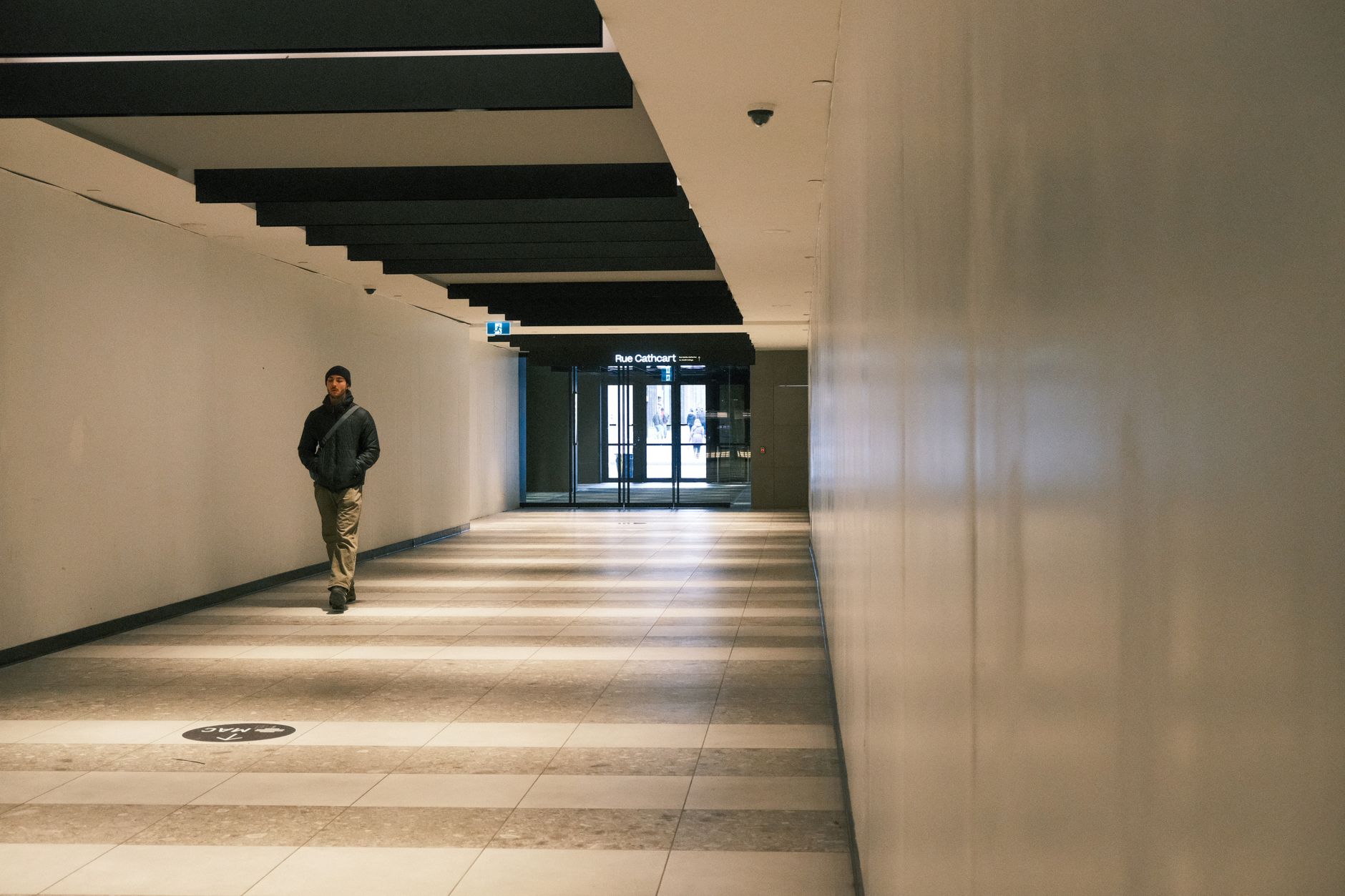
A cleaning robot makes sense at a county courthouse when most of the night floor work is sweeping and scrubbing long corridors and lobbies on a fixed schedule, with the building empty. Courthouses share the conditions that suit autonomous floor care: set hours, wide public halls, and long stretches when nobody walks the route. The robot can run the same path each night while the building is quiet.
It makes less sense when the shift is mostly restroom work, detailed cleaning of furniture, and frequent after-hours events that change the floor plan. It also makes less sense in a small building with many stairs and restricted rooms, because the route is short and the robot's advantage shrinks.
Most openings are replacements for people who leave, so the real question is usually whether the floor can be covered by a robot while a seat stays open, and whether the remaining staff can handle the rest. That framing gives a clearer answer than a simple headcount swap.
What does a night janitor actually do in a courthouse shift?
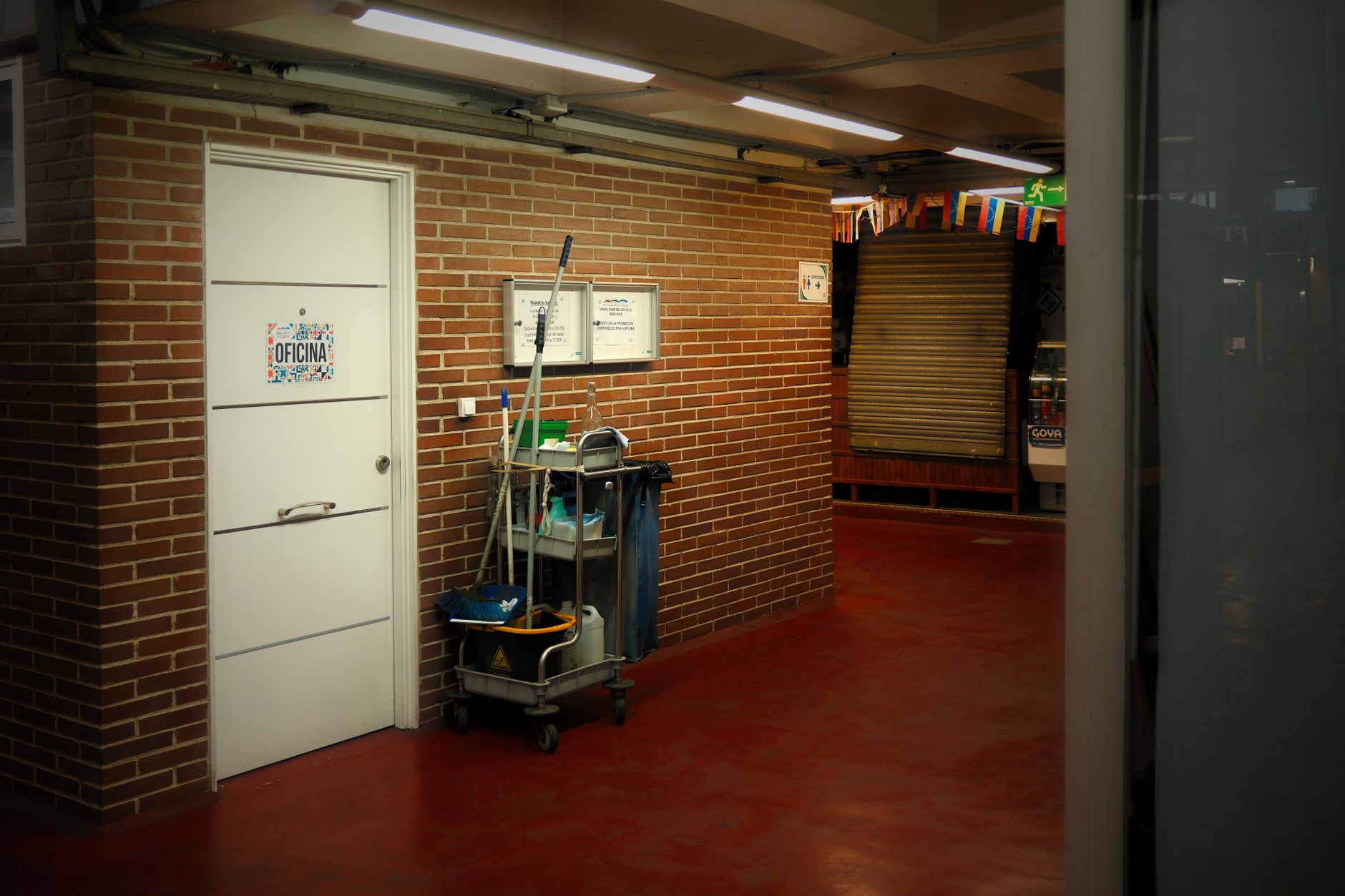
The night janitor works the same loop on each floor: empty trash and recycling, sweep and mop corridors and stairwells, clean restrooms, wipe high-touch surfaces such as door pulls, elevator buttons, handrails and bench backs, and restock paper and soap. In a courthouse the high-touch list is long, because the public touches the same surfaces all day and night is the only window to reset them before the next morning's sessions.
Courthouse rules shape the shift more than most buildings. Courtrooms, jury rooms, holding areas and records rooms are often locked or restricted, so the crew may need escorts, key control or a short approved list of rooms. Screening areas and anything found on the floor, including spills of unknown material, usually go to the security desk rather than into a trash bag.
Injury exposure is part of the job. The Bureau of Labor Statistics reported 191.6 nonfatal injury and illness cases involving days away from work per 10,000 full-time equivalent workers for janitors and cleaners in 2020. In 2019 that group's rate was 157.4, against 86.9 for all occupations, which is why the physical share of the shift is worth measuring before any change.
Median hourly wage, Janitors and Building Cleaners
$4,041
Monthly cost of one full-time worker, at the median wage plus payroll costs (an estimate, not a quote).
Which parts of the night routine can a robot take over?
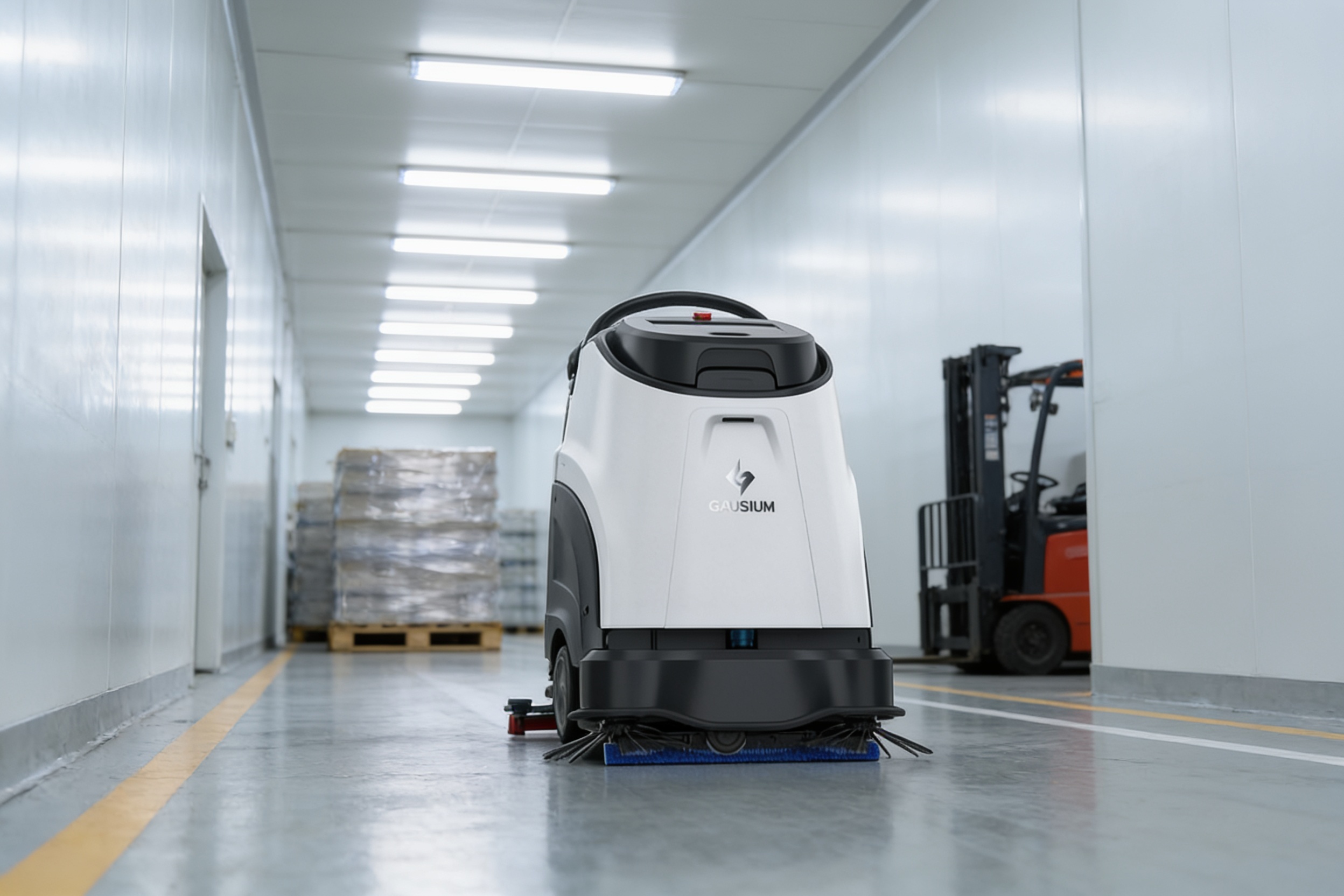
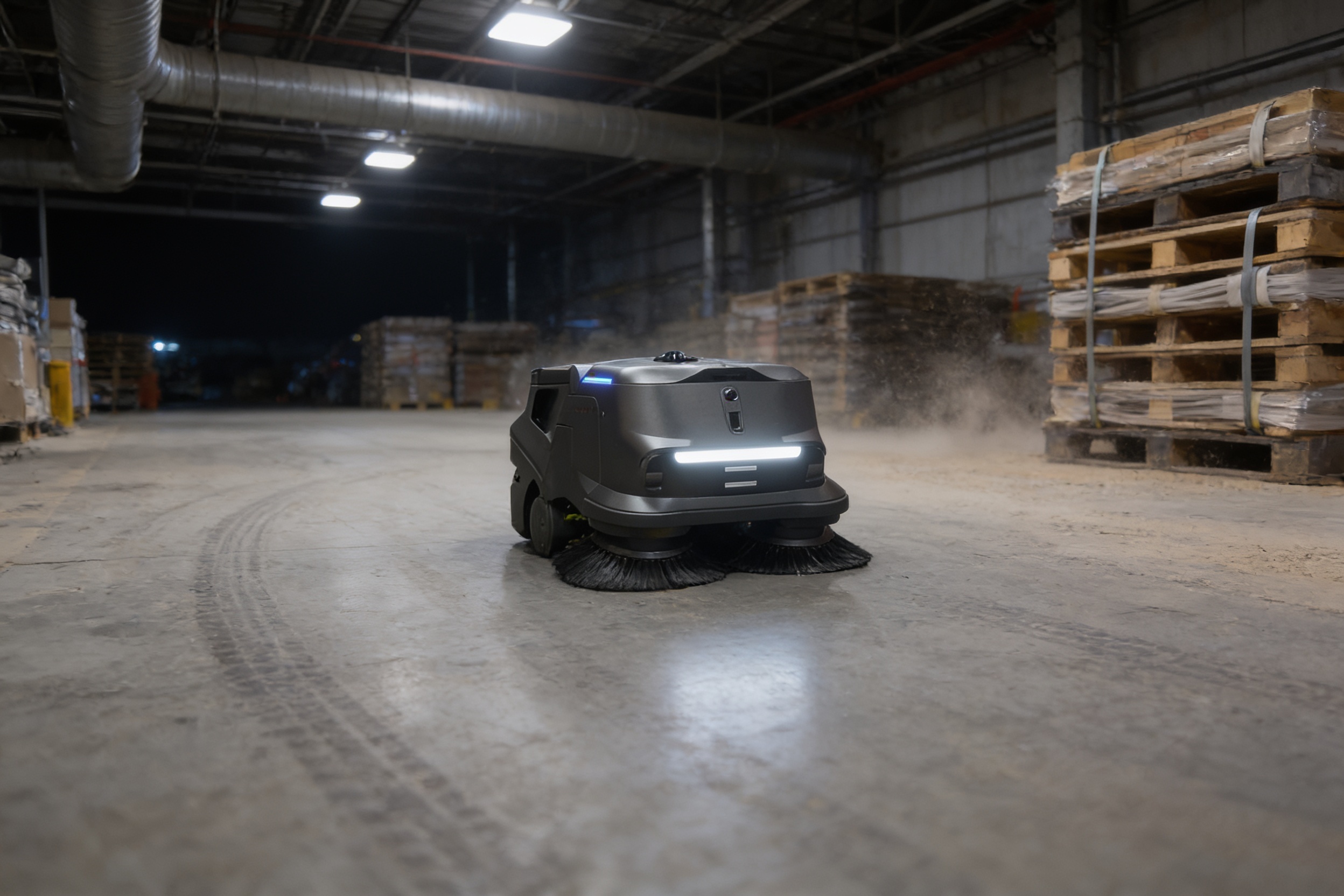
A robot does well on the parts of the floor that are flat, open and repeated. Scrubbing or sweeping hard floors such as vinyl, sealed concrete, terrazzo or polished stone in lobbies, main corridors and landings takes a large share of the night route, and a robot runs that route the same way every night without a break.
The robot cannot take the work that needs hands, eyes or judgment. It cannot clean a toilet, sink or stall, wipe handles and rails, empty bins or change liners, reach behind furniture, or use stairs. It also cannot notice a broken fixture or a spill that sits off its route, and it cannot help a person in distress.
Some areas sit in the middle. Elevator lobbies and ramps usually need a mapped path and a decision on whether the robot uses an elevator at all. Carpeted hallways and courtroom areas depend on the flooring and the cleaning method, so they belong on the site assessment list rather than on the robot's route by default.
- Open corridors and lobby
Cleaning Robot
Runs the same mapped route every night without breaks
Night Janitor
Covers the route with flexibility when a spill or obstacle appears
- Restrooms
Cleaning Robot
Cannot clean fixtures, stalls or sinks
Night Janitor
Does the hands-on work and checks for problems
- High-touch surfaces
Cleaning Robot
Cannot wipe handles, rails or elevator buttons
Night Janitor
Wipes by hand on each floor
- Trash and liners
Cleaning Robot
Cannot empty bins or change liners
Night Janitor
Handles this as part of the route
- Incidents and odd findings
Cleaning Robot
Cannot judge a situation, and only reports what its sensors detect
Night Janitor
Responds, calls security and makes the decision
- Route consistency
Cleaning Robot
Strong, with the same path and timing each night
Night Janitor
Varies with the individual and the day
- Schedule flexibility
Cleaning Robot
Needs remapping after floor-plan changes
Night Janitor
Adapts to events and special sessions on the spot
What does the labor picture look like for courthouse night staff?

The national labor picture for this job is large and fairly stable. According to the Bureau of Labor Statistics Occupational Outlook Handbook, there were about 2.45 million janitor and building cleaner jobs in 2024, with 2% projected growth from 2024 to 2034. The government wage data panel on this page shows the national figure for this job, and the local wage for this job in your county is the number to hold against any quote.
Turnover and staffing gaps are the real pressure. The National Center for State Courts reports that court employee turnover has more than doubled since fiscal year 2020-21, although its trending page does not give a 2025 figure. Courthouse security faces a similar squeeze: a News from the States report describes sheriff's deputies who staff courthouse security with a vacancy rate of nearly a quarter, and courts were weighing temporary closures for coverage. The date of that report was not confirmed in our research.
Some labor facts we could not verify. We could not confirm overtime rates, sick-day rates or the share of night shifts for courthouse custodians, so this page does not state them. Ask the facilities office for the last twelve months of overtime, call-outs and vacancy days on the night shift. Those figures, not a national average, decide how many hours a robot is worth in your building.
How does a team work with a cleaning robot at night?
A courthouse that adds a robot still keeps people on the night shift. The robot takes the long floor passes, while staff take restrooms, high-touch surfaces, trash, restricted rooms, incident checks, setup, supervision and reporting. Because most openings are replacements for people who leave, many sites keep the seat filled when they can and use the robot to cover the floor while a replacement is slow to arrive.
The shift changes shape more than it shrinks. A janitor who used to spend the middle of the night pushing a mop down a corridor now spends that time on restrooms, resetting stations and checking the robot's route, and handles anything the robot flags as blocked. Staff learn to clear the route before each run and to report stuck or blocked paths.
We are a commercial robot integrator. We pick the robot that fits the site, lease it through financing, deploy and integrate it, train the staff and service it nationwide. The lease is quoted after a free site assessment, and training is part of the rollout, so the night crew knows the pause, restart and reporting steps before the first full night.
What can a cleaning robot not do in a courthouse?
The honest limit is that a robot covers a route, not a building. It does not handle the parts of the night that need a decision, such as a medical event, a broken lock, an unknown spill, a person asleep in a corridor, or a suspicious item. Those go to the security desk or the on-duty supervisor, so the staffing plan must keep someone on site to take them.
It also depends on the building's rules. Access to secured floors, how the robot pauses during a lockdown, and how after-hours events are handled are decisions made with court administration and security. Put those rules in writing before go-live, and expect security to ask about the robot's paths and any sensors it carries.
A robot is also a schedule tool, and schedules change. If the courthouse runs night events, weekend sessions or special proceedings, the floor plan changes and the route must be remapped. Ask for the remapping process in the quote, including how a changed route goes back into service.
How big is a courthouse floor, and does size change the math?
Size matters because the robot's value comes from covering ground that people would otherwise walk by hand. A Government Accountability Office review found that 33 federal courthouses completed since 2000 hold 12.76 million square feet, and that 3.56 million square feet, or 28%, is extra space above authorized size. Those are federal buildings in reports dated 2010 to 2012, so use the figures for scale rather than as a county number.
County courthouses vary widely. According to an American Heritage article, undated in our search results, there are about 3,101 county courthouses. The building types range from old stone structures with stairs and marble to newer glass buildings with long open halls and annexes with mixed floor types, and each type needs its own route plan.
Floor type and the number of separate zones usually matter more than total square footage. A large building with one long open lobby may suit the robot better than a smaller building full of stairs and restricted rooms. Measure the floor types and count the zones before you decide, and the answer usually becomes clear.
Is autonomous floor cleaning common yet, and does adoption support the decision?
Adoption is growing but still early. The ISSA and AACEM autonomous cleaning survey, from 2019, was sent to about 23,000 building service contractors, in-house providers and facility managers. According to the ISSA write-up, about one-third of nonadopters said they were likely to adopt within a year, and active users were 27% of respondents.
The survey is old, and the full report is available only to members, so treat it as a baseline rather than a current measure. It described adoption as being at an early stage, which means the procurement path, staff training and service support matter more than a long list of references. We did not verify a 2025 facility-level adoption rate.
Ask any provider for references in buildings with similar floors and night schedules, and ask how service is handled when a unit is down. A courthouse is a public building with security rules, so the reference that counts is one with a similar access control setup.
How do you get started with a cleaning robot at a county courthouse?
Start with a site assessment, not a robot. We map the route, time the night tasks, identify restricted zones and flooring types, and meet the facilities office and security. That produces the staffing plan and the pause rules. The lease is quoted after the free site assessment, so the number reflects the real route and service needs.
A common first step is a pilot on one floor or on the main lobby and corridors. Go-live follows staff training, a supervised run and a go-live check, with remote triage and on-site dispatch if something goes wrong. Service is nationwide, and the quote lists what service covers and what happens when a unit needs repair.
The lease runs through financing, and the fixed lease payment is set in the quote. Check the quote for service coverage, insurance, and the remapping process for after-hours events. Then compare it with your own overtime, call-out and vacancy figures and the local wage for this job.
Frequently asked questions
Want a cleaning robot at your county courthouse?
Tell us about your site. We will recommend the robot, quote the lease, and keep it serviced.
Sources
- US Bureau of Labor Statistics, Occupational Employment and Wage Statistics (OEWS May 2024)
- Bureau of Labor Statistics, Occupational Outlook Handbook
- Bureau of Labor Statistics, Injuries, Illnesses and Fatalities
- ISSA, AACEM autonomous cleaning survey
- Government Accountability Office
- News from the States
- National Center for State Courts
- American Heritage