

Key takeaways
- Repeat floor passes on hard decks and lobbies are the strongest fit for a floor cleaning robot.
- Staff stay on restrooms, locker rooms, spills, and detail work, with a robot plus a smaller team.
- Reported hour savings from comparable sites vary widely, so size the fit with your own floor pass timing.
- A free site assessment comes before any lease payment is quoted.
Can cleaning robots for aquatic centers really help?
Yes, in the right places. Cleaning robots for aquatic centers work best on the large hard surfaces that take the same repeat passes every day: pool deck walkways, the entry lobby, spectator areas, and the corridors between locker rooms and the water. A floor cleaning robot can make those passes on a set schedule, so the people on your team stay on the work that needs a person's eyes and hands.
It does not replace your staff. Restrooms, locker rooms, showers, and the spills and detail work around the pool still need trained people. The robot takes over the repetitive floor passes, which frees those staff for tasks that need judgment and close attention.
The fit is strongest at indoor pools and multi-pool facilities with wide dry-deck and lobby areas. If your building is mostly small rooms, carpet, or stairs, a floor cleaning robot will cover less of the day, and the numbers will look different.
What cleaning problem do aquatic centers face today?
Aquatic centers have a floor problem that never fully stops. Pool decks, locker room entries, and lobby floors collect water, sand, hair, and foot traffic from opening to close. Wet areas have to be cleaned, dried, and checked again and again, and the busiest hours are often the same hours when attendants are handling check-in, lessons, and lifeguard duties.
The labor pool is large, but the openings are steady. According to the U.S. Bureau of Labor Statistics, about 2,447,700 people worked as janitors and building cleaners in 2024. The same Bureau page projects about 351,300 openings in that group each year on average over the decade, and 2% growth from 2024 to 2034, which it calls slower than average. Hiring for floor care is a recurring task, not a one-time project.
Aquatic staffing is tight too. According to the Aquatic Trends Report, as summarized in a secondary source, 41.8% of U.S. aquatic facility managers reported lifeguard staffing shortages in 2024. The same summary says equipment and facility maintenance concerns rose from 53.3% in 2023 to 60.5% in 2024. An older Athletic Business survey of aquatics operators found that 57% of respondents named recruiting and retaining lifeguards as their greatest staffing challenge. These are directional figures, so use them to frame your own staffing review rather than as a benchmark.
What are the main benefits?

The first benefit is coverage that does not drift. A floor cleaning robot runs the same route on the same schedule, so the deck and lobby get their pass before the busy hours rather than when someone finds a gap in the afternoon.
The second is time returned to staff. Each hour a machine handles repeat passes is an hour a person can spend in a restroom, a locker room, or on a spill that needs judgment. On a short-handed shift, that is usually where the squeeze is felt most.
The third is clean floors at opening. Early morning or overnight runs can cover large open floors without an operator on the machine, so the building is ready when doors open. For a facility that sees heavy weekend traffic, that timing matters.
The fourth is less disruption to patrons. Scheduled passes can happen between lessons, during quiet blocks, or after closing, so the team is not stopping mid-session to deal with a wet patch in the lobby.
How does the robot work day to day?
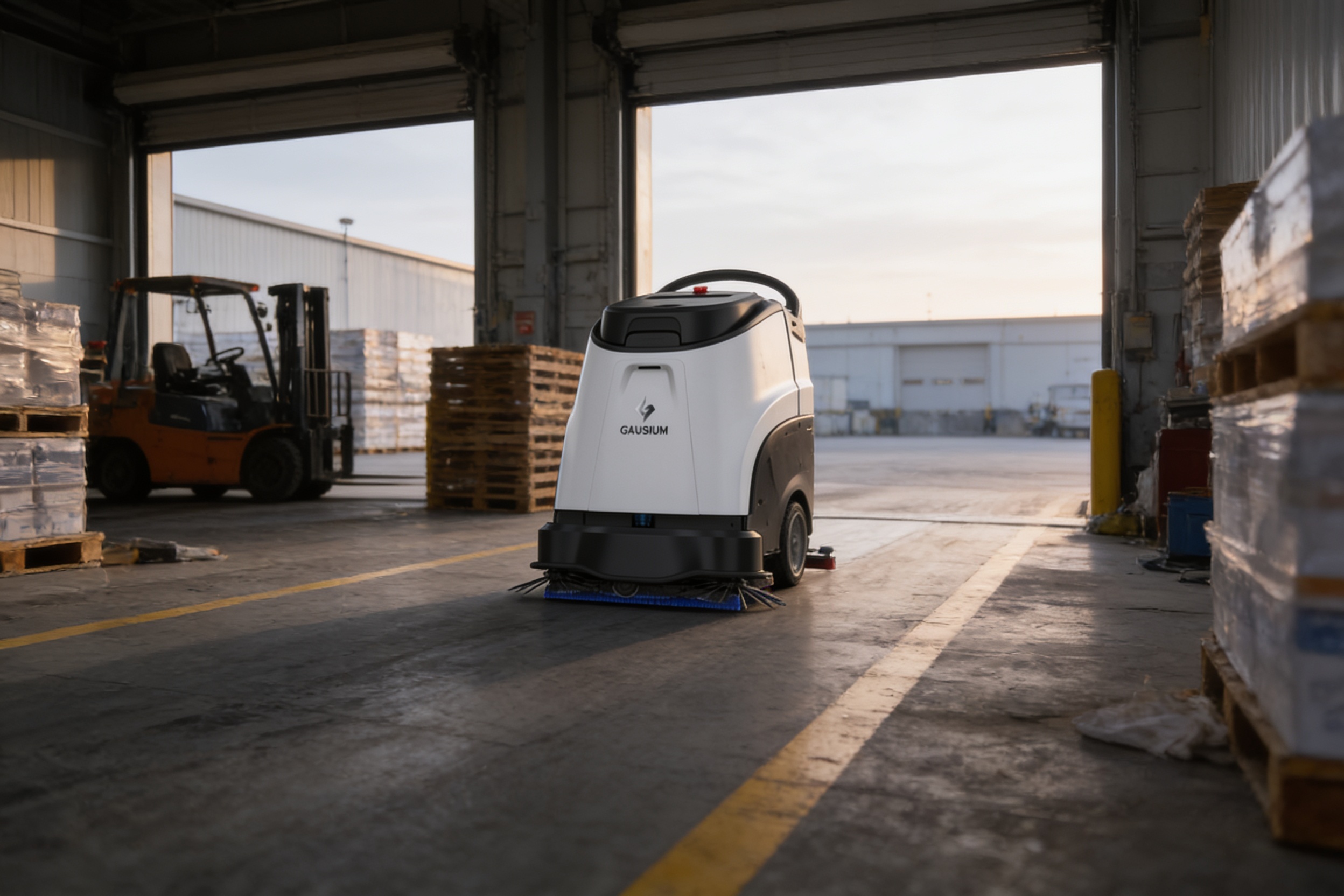
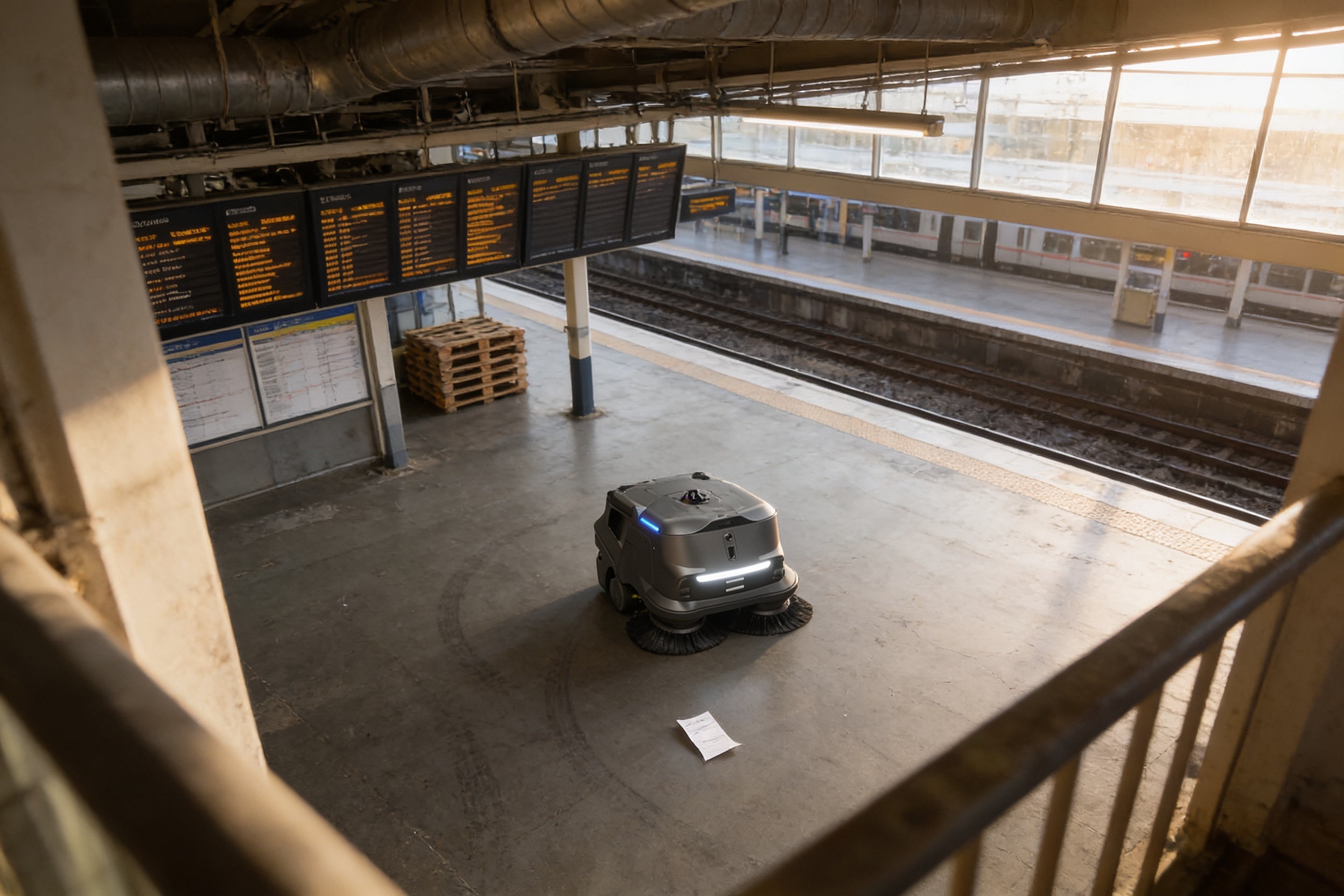
Before a floor cleaning robot runs, the site is mapped. Our team walks the space, records the route, and sets the boundaries so the machine keeps to the approved hard surfaces and stays away from areas you close off. Go live support keeps someone on hand during the first runs, so staff see how the machine behaves on your floors.
Day to day, the robot follows its scheduled route and returns to its charging spot when the pass is done. Staff clear obstacles such as loose chairs, bags, and equipment before each run, and they check the run status at the end of the shift. Those checks are short and sit alongside the work the team already does.
Schedules change. A swim meet, a school session, or a seasonal program can shift the timing or the route. Changing a route is normally a planning task for your team, and that is worth knowing before you set the first schedule.
Which areas does the robot cover?
The best areas are large, hard, and mostly open. At an aquatic center that usually means the pool deck walkways, the entry lobby, the spectator gallery, and the corridors between the locker rooms and the water. These are the places where the same pass repeats across the day.
Keep the robot out of restrooms, locker room interiors, showers, and any area with carpet, stairs, steep height changes, or heavy clutter. Those areas need hands-on work, and forcing a machine into them wastes time and can create new problems.
The zones below list the areas we see as the strongest fit. Your layout may add or remove some, and the site assessment is where the list gets checked against your floor plan.
How does it work alongside existing staff?
A robot plus a smaller team is the model that works. The machine takes the repeat floor passes, and staff keep everything else. You do not reduce the team to zero, and the plan should never assume you will.
In practice the team shifts toward restroom and locker room care, spills, supervision, and the detail work that takes a person. Shift lengths can stay the same while the floor time inside them moves to the machine.
Lead staff should be in the loop on the route, the schedule, and what to do when the machine stops. Training on those points is part of deployment, and the first few weeks are where new habits form.
Where do the savings come from?
Savings come from staff hours, not from a headline number. The useful question is how many hours each shift spends on repeat floor passes, and how many of those hours a robot could take over. Reported results from comparable floor care sites give a sense of the range, but they are vendor-reported and have not been independently audited.
One vendor case study at a 50,000 square foot healthcare site reports manhours per night falling from 16 to 5, and the team shrinking from 3 people to 2, in 2023. A bank campus case reports the cleaning team saving 26 hours per week of ride-on vacuuming time. A separate case for a single floor scrubber reports savings of about three hours every day.
Those sites are not aquatic centers, so treat them as a sense of scale. Your own deck, lobby, and corridor mix will set your number. The right way to size it is to time your floor passes as they run today for one week, then list the hours that could move to the machine.
Work the math by shift, not by year. A few hours moved off a shift can change who does which task, even if the total team size stays the same. The savings show up as time freed for the people you already employ, and that time is what you redirect to restrooms, locker rooms, and detail work.
What can the robot not do?
A floor cleaning robot does not clean restrooms, showers, or locker rooms, and it does not assess and respond to spills that need a person. It is not a substitute for staff judgment about hygiene or patron safety, and any plan that treats it as one will disappoint.
It also struggles with carpet, stairs, tight corners, and areas with frequent obstacles. Those spaces need staff or other equipment. A schedule that depends on a clear floor is only as good as the team's habit of clearing it.
A breakdown needs a service plan. Repairs are dispatched nationwide, but the days the machine is down still need coverage, so the setup should include a plan for manual cleaning during that time.
How do you get started?
Start with a free site assessment. We map the space, look at the floors and traffic, and recommend the right floor cleaning robot for your facility. The lease payment comes in the quote after that assessment, so you see the numbers for your site before you decide anything.
Our commercial robot leasing runs through financing. We handle deployment and integration, train your staff, and service the unit nationwide. Many operators begin with one unit on a single deck or lobby, watch the results over several weeks, then decide whether to expand.
If your center has large hard floors and staff hours that go to the same passes every day, the assessment is the quickest way to test the fit. Bring your floor plan, your shift schedule, and any notes on busy hours, and the assessment will start from those.
Frequently asked questions
Want a cleaning robot at your aquatic center?
Tell us about your site. We will recommend the robot, quote the lease, and keep it serviced.
Sources
- U.S. Bureau of Labor Statistics, Occupational Outlook Handbook, janitors and building cleaners
- CDC MMWR, estimate of public aquatic venues
- Athletic Business state of the industry survey, aquatics
- Aquatic Trends Report 2025, secondary summary
- Aquatic Trends Report, challenges and plans, secondary summary
- Healthcare site floor care case study, 2023, vendor-reported
- Bank campus floor care case study, vendor-reported
- Floor scrubber case study, vendor-reported