

Key takeaways
- Waiting halls and boarding areas get steady foot traffic, and a floor pass can run between sailings.
- Ferry terminal floors need short, repeated passes that fit the gaps in the timetable.
- A robot takes the repetitive passes while staff handle spills, restrooms and passenger help.
- Savings depend on hours you measure yourself in a site assessment, not on outside figures.
- A robot plus a smaller team is the working model, and the robot has real limits on stairs, spills and routes.
Can cleaning robots for ferry terminals keep up with passenger traffic?
Yes, for the large open floors where passengers wait and board. Cleaning robots for ferry terminals fit waiting halls, ticket lobbies and boarding areas, where foot traffic arrives in waves and the floor needs a pass between sailings rather than one long clean at the end of a shift. A floor cleaning robot runs its route on a schedule, so the floor gets attention in the gaps between departures.
The scale is large. According to the Bureau of Transportation Statistics, ferries carried about 105.8 million annual passengers in its June 2026 release. For 2019, the bureau headlined 132 million ferry passengers, and a marine trade publication reported the same release as 131.6 million. The 2026 count may not cover the same set of operators as earlier years, so avoid comparing the two directly.
This page covers the problem at ferry terminals today, the main benefits, how the robot works day to day, which areas it covers, how it fits beside your crew, what drives savings, what it cannot do, and how to get started. Each section is written for the person who runs the terminal floor, not for a technical reviewer.
What problem does a ferry terminal face today?
Ferry terminals concentrate foot traffic into short, heavy bursts. Passengers arrive in waves before each sailing, bring wet footwear and luggage across the waiting hall, and leave the floor marked by the time the next group reaches the boarding area. Many operators clean between trips, but the timing depends on how many people are on shift and how long the crowd stays.
Staffing is the tight spot. According to the U.S. Bureau of Labor Statistics, about 2.4 million people worked as janitors and building cleaners in 2024. The same handbook projects 2 percent employment growth from 2024 to 2034, which it describes as slower than the average for all occupations, and about 351,300 openings per year on average, mostly from replacing workers who leave. A terminal that depends on a few people for every floor pass feels each resignation.
Published standards for how often a ferry waiting area should be cleaned between sailings are hard to find. One ferry operator's 2020 notice said frequently touched surfaces were sanitized between every trip, with deep cleaning overnight while vessels were not running. That is a useful model for direction, but it is not a schedule you can copy. Set your own interval from passenger counts and your sailing timetable.
What are the main benefits?
The first benefit is cadence. A scheduled floor pass can run after each departure, so the waiting hall is never more than one sailing behind. Staff do not have to remember the interval or leave the ticket counter to start a pass, and the route runs the same way on a quiet morning and a crowded holiday.
The second is coverage. Floor cleaning robots are built to cover large open areas in steady passes. A vendor case study for a retail property in Ottawa cites a target of about 15,000 to 18,000 square feet per hour, and a manufacturer listing for one scrubber gives up to 1,200 square meters per hour as a theoretical maximum. Both are figures from other sites, so treat them as targets to test in your own hall.
The third is how staff hours get used. Repetitive passes eat hours that could go to spills, restrooms, counter support and passenger questions. The robot takes the passes it does well, and your crew keeps the work that needs judgment and a person in the room.
The fourth is a record. Ask for run logs as part of setup, so you can confirm that the boarding area was covered before the afternoon sailing instead of relying on memory.
How does the robot work there day to day?
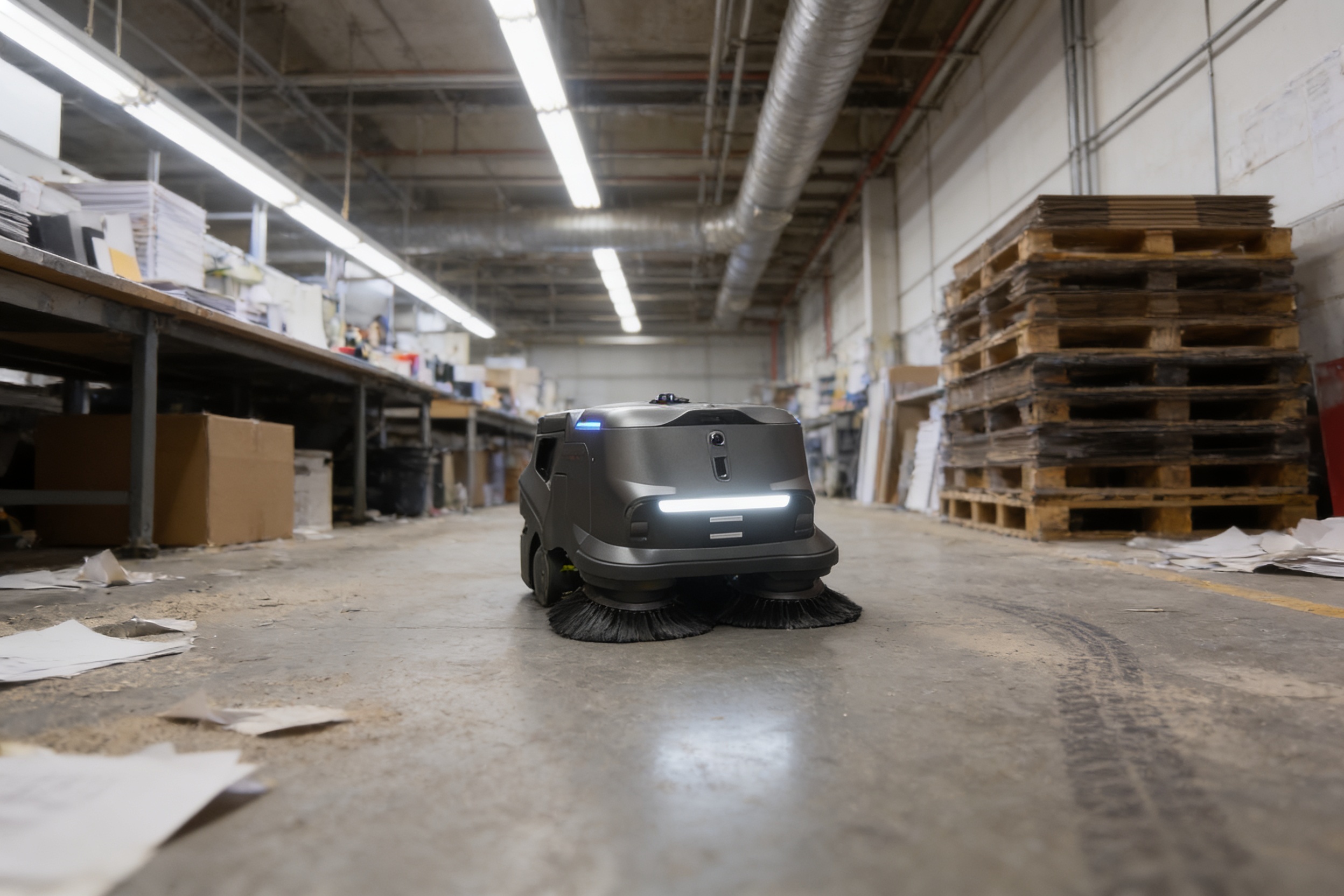
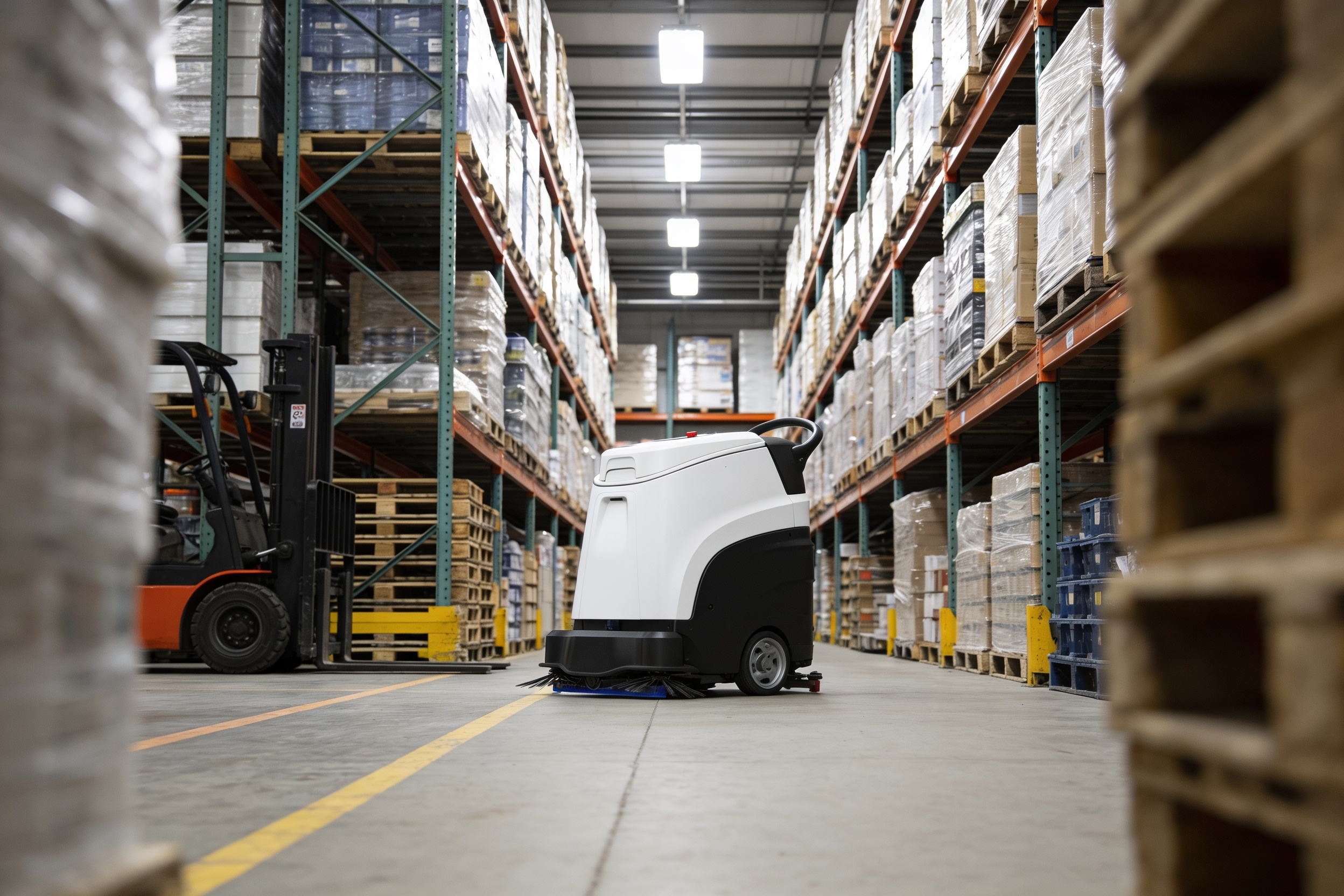
Before a robot runs in a terminal, the building is mapped. Site mapping records the waiting hall, boarding lanes, fixed seating, pillars and the paths passengers take. The robot then repeats its route on a schedule, returns to a charging dock when its battery runs low, and waits for the next run. Your staff set the times and the no-go zones, and changes to the route go through the setup team.
Crowds change the job. Guidance for airport terminals notes that autonomous floor machines slow or stop when many people are in the building, and a ferry hall at boarding time faces the same problem. Plan the main pass for the gaps between groups and keep a clear lane for the machine. A robot that stops for a crowd is doing its job, but it needs the lane to finish.
The day is mostly routine. The sequence below shows one waiting hall and boarding area on a typical timetable, which your staff can adjust to your sailings.
Which areas of a ferry terminal does the robot work in?
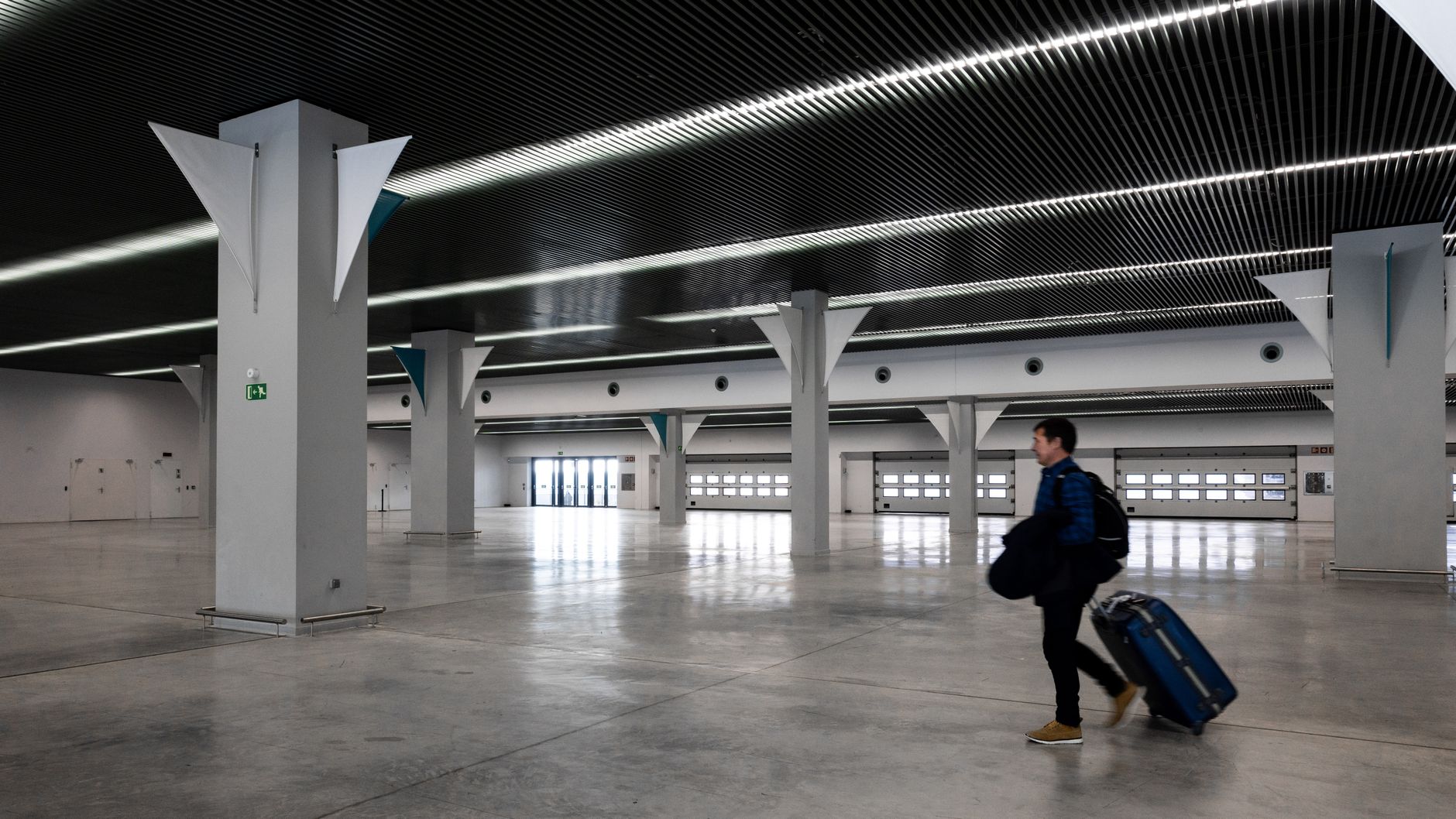
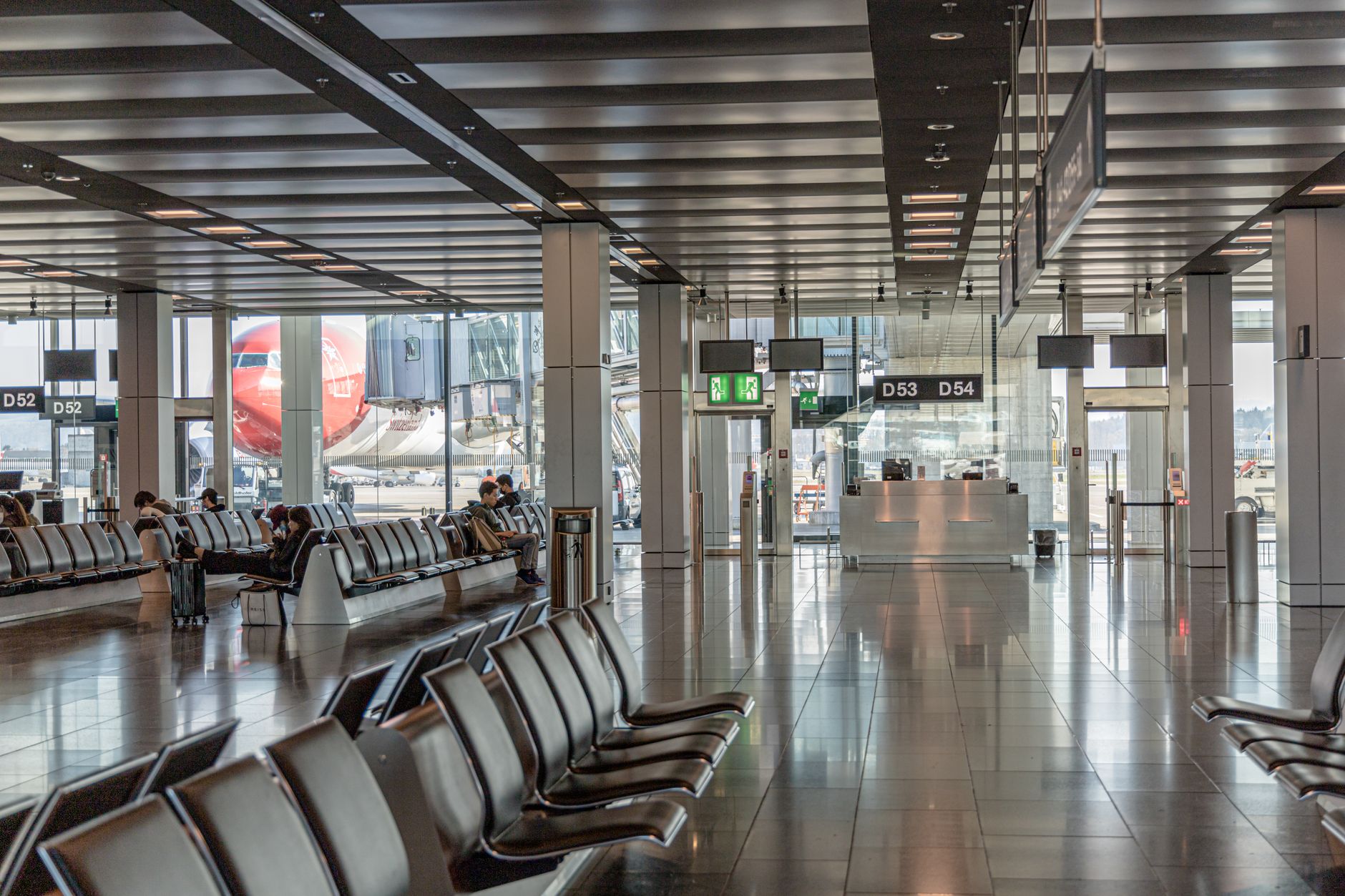
The best areas are large, mostly open hard floors that carry the most foot traffic. Waiting halls, ticket lobbies and boarding areas top the list, with long passenger corridors close behind. Outdoor ramps, stairs, carpeted lounges and restrooms need another plan or stay with staff.
Entrances are a special case. Rain and grit come through the doors with passengers, and a pass in the vestibule after each arrival wave keeps the main hall from turning slick. The six zones below show where a floor cleaning robot earns its place and what it does in each, along with the staff tasks that stay in place.
How does it work alongside existing staff?
A robot does not replace the team. It takes over a share of the repetitive floor passes, and the crew does the work that needs judgment and a person in the room. Think of it as a robot plus a smaller team, not a building run by a machine alone. The crew still responds to spills, handles restroom checks, supports passengers at the ticket counter and watches the room during peaks.
The handoff matters most. Staff need a simple rule for when they stop the robot and call a person, such as a large spill, a blocked route or an unusual object on the floor. Set those rules before go live and review them after the first week. We train your staff as part of deployment, so the crew knows what the robot does, what it cannot do and how to pause it safely.
The workforce numbers support keeping people on the schedule. Most openings in this occupation come from replacing workers who leave, according to the Bureau of Labor Statistics, so a site that loses a person faces a hiring job. The robot can carry the routine pass while you hire, but it does not replace the people you still need.
What drives the savings?
Savings come from hours, not from a promise. The main drivers are the square footage that gets a floor pass each day, the number of passes your timetable needs, how much of your crew's time those passes take today, and how crowded the hall runs at each sailing. A long, flat waiting hall with a busy timetable gives the robot more useful work than a short hall with few sailings.
Outside throughput figures are only a starting point. To run your own numbers, measure the square footage of each floor zone, time one pass as it runs today, and count the passes per day. Hours saved depend on those three inputs and on how often the route is interrupted by crowds or spills. Figures from other sites do not show what your hall will do.
Ask for the estimate in hours per week for your site, with the assumptions written down. A useful quote shows which hours change, which stay with staff, and what happens on a day when the robot is paused for service.
What can the robot not do?
A floor cleaning robot is a floor tool. It has limits, and a good plan names them before the first run. It cannot do the following, so those tasks stay with your team.
Layout is the other limit. The route needs clear lanes and a charging dock, and a hall full of temporary barriers or luggage carts may need another route or another time of day. The site assessment should record those constraints before any quote is written.
- Climb stairs, steps or curbs between floor levels
- Clean upholstered seating, carpet or window glass
- Handle a large or unusual spill without a person
- Replace restroom checks, security or passenger assistance
- Work through a route blocked by queue barriers, carts or fixed kiosks
How do you get started?
Start with a free site assessment. We walk the terminal with you, map the floors, note the crowd pattern at each sailing, and recommend the right robot for the space. Nothing is leased until you have seen the route and the plan, and the lease quote for cleaning robots for ferry terminals follows that assessment.
We pick the robot for your site, lease it through financing, deploy and integrate it, train your staff and service it nationwide. Robots are leased only, through financing programs, and the fixed robot lease payment comes in the quote after the site assessment. Ask the quote to show the schedule, the service response for a repair and what happens during a pause for service.
A sensible first step is a pilot in one waiting hall and one boarding area, with one leased unit and a clear record of hours and spill calls before and after. Expand only when the route, the crew rules and the service response meet your timetable.
Frequently asked questions
Want a cleaning robot at your ferry terminal?
Tell us about your site. We will recommend the robot, quote the lease, and keep it serviced.
Sources
- U.S. Bureau of Transportation Statistics, ferry passenger release
- U.S. Bureau of Transportation Statistics, 2019 ferry passengers
- Marine trade publication, 2019 ferry passenger count
- U.S. Bureau of Labor Statistics, Occupational Outlook Handbook
- Vendor case study, autonomous floor cleaning at a retail property
- Manufacturer product listing for autonomous floor scrubbers
- AviationPros, guidance on autonomous floor cleaners in airport terminals
- Dan's Papers, 2020 ferry operator cleaning notice