
Key takeaways
- A floor cleaning robot can run apparatus bay and bunk room floors on a set schedule that fits shift turnover.
- Crews keep their hours for readiness checks, equipment care, training and calls.
- Older stations and thin engine staffing make repeat floor work hard to fit into a shift.
- Savings depend on your SOP and your floors, so the free site assessment comes first.
How can cleaning robots for fire stations help?
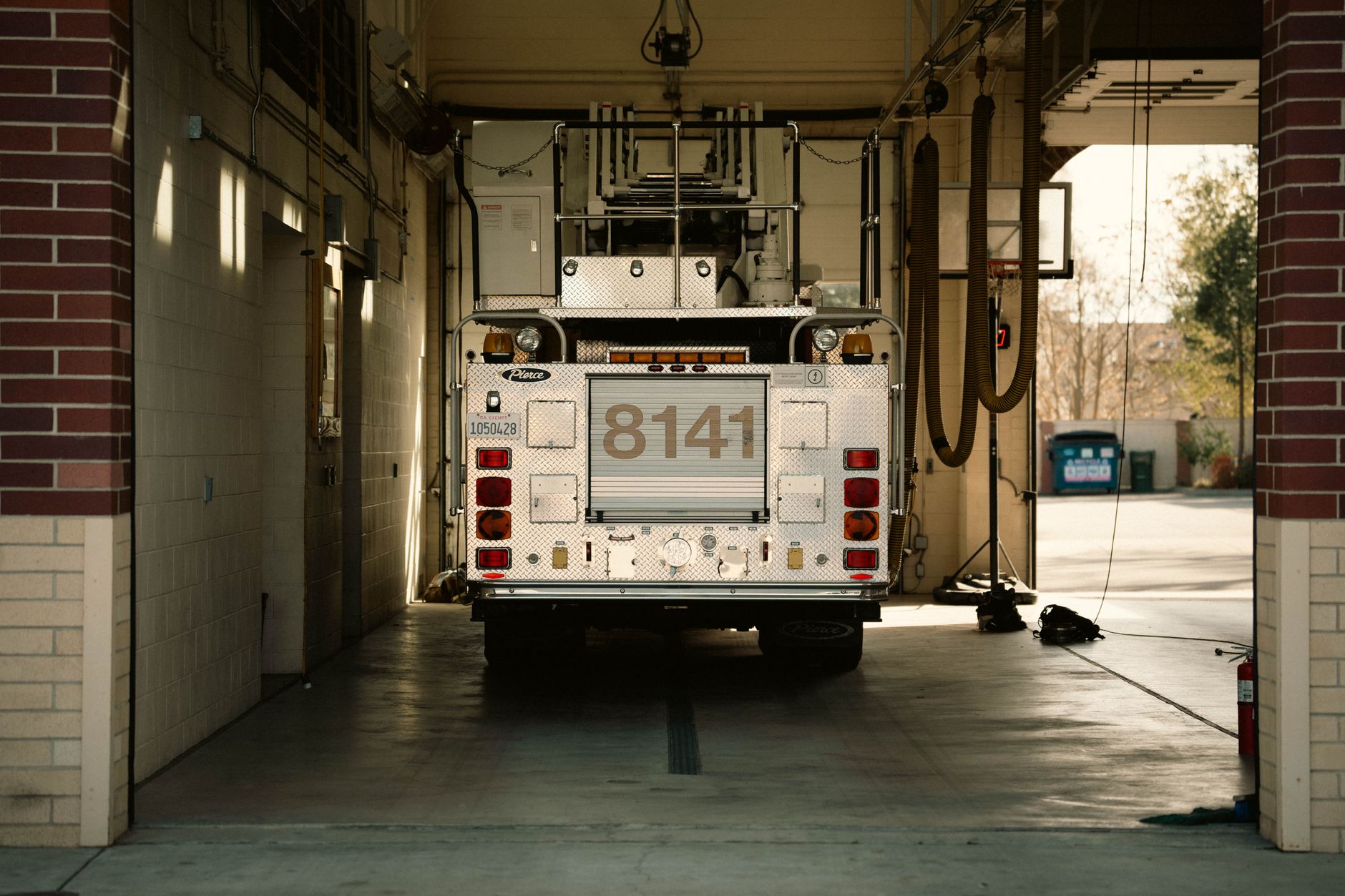
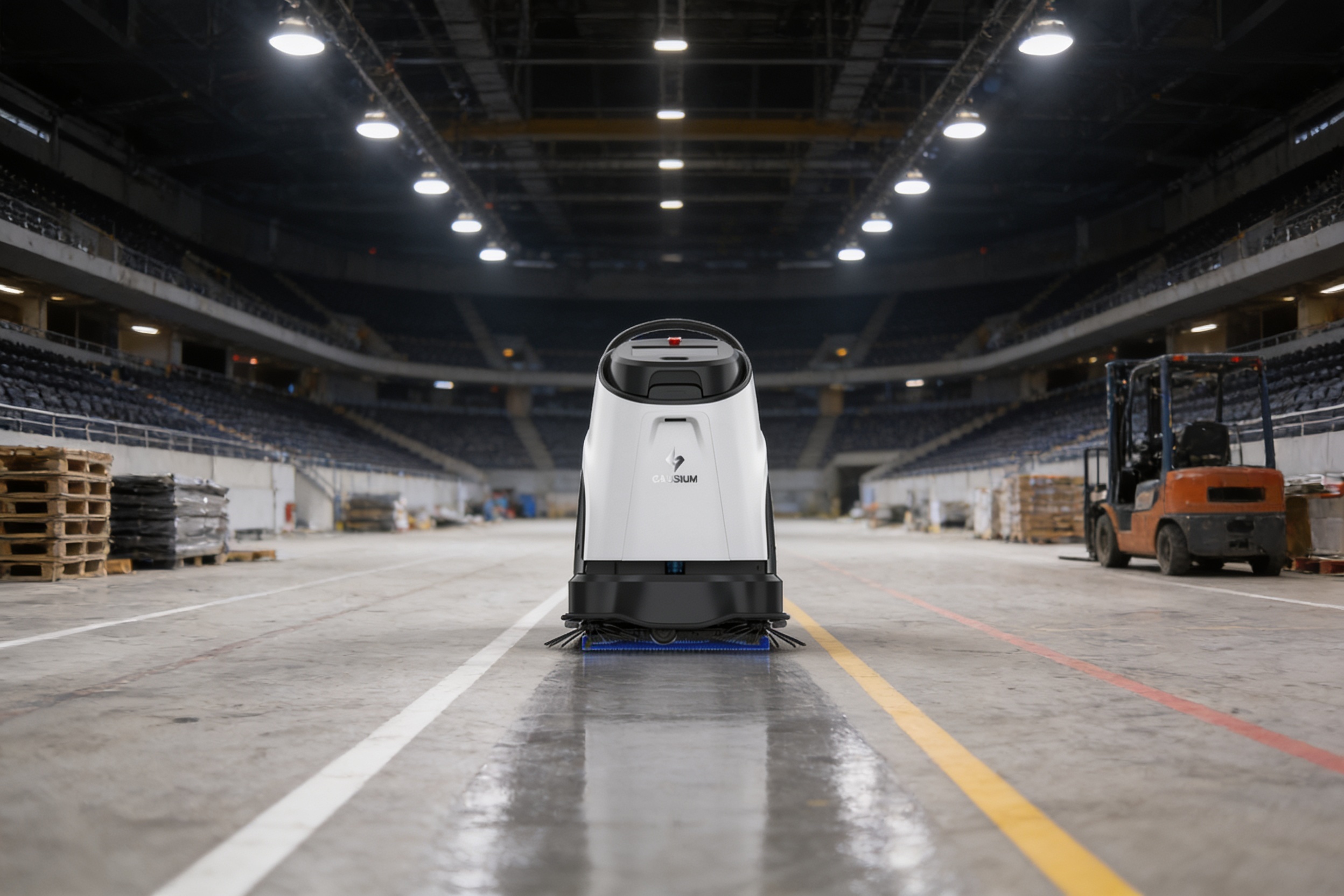
Cleaning robots for fire stations take over the floor work that repeats every day in apparatus bays, bunk rooms and day rooms. A floor cleaning robot runs on a set schedule, so the work happens at the same time on each shift and does not wait for a free hour on the crew board. The crew keeps its time for readiness tasks, equipment checks and calls.
The biggest benefit is predictability. Many department SOPs tie cleaning to shift change, requiring each engine, truck, unit and station to be cleaned daily so the oncoming shift can accept it. A floor robot can finish the hard floors ahead of that handover, so the incoming crew starts on a clean bay instead of a list of catch-up tasks.
We are a US commercial robot integrator. We choose the right robot for your building, lease it through financing, deploy and integrate it, train your staff and service it nationwide. Your crew stays in charge of the station, and the payment comes in a quote after a free site assessment.
What problem does this kind of station face today?
According to the Bureau of Labor Statistics Occupational Outlook Handbook, firefighter employment was about 344,900 jobs in 2024. Local government, excluding education and hospitals, accounts for 88% of those jobs, and volunteers are not counted. For an operator, that means most stations sit inside municipal budgets, and staffing follows city schedules rather than the cleaning list.
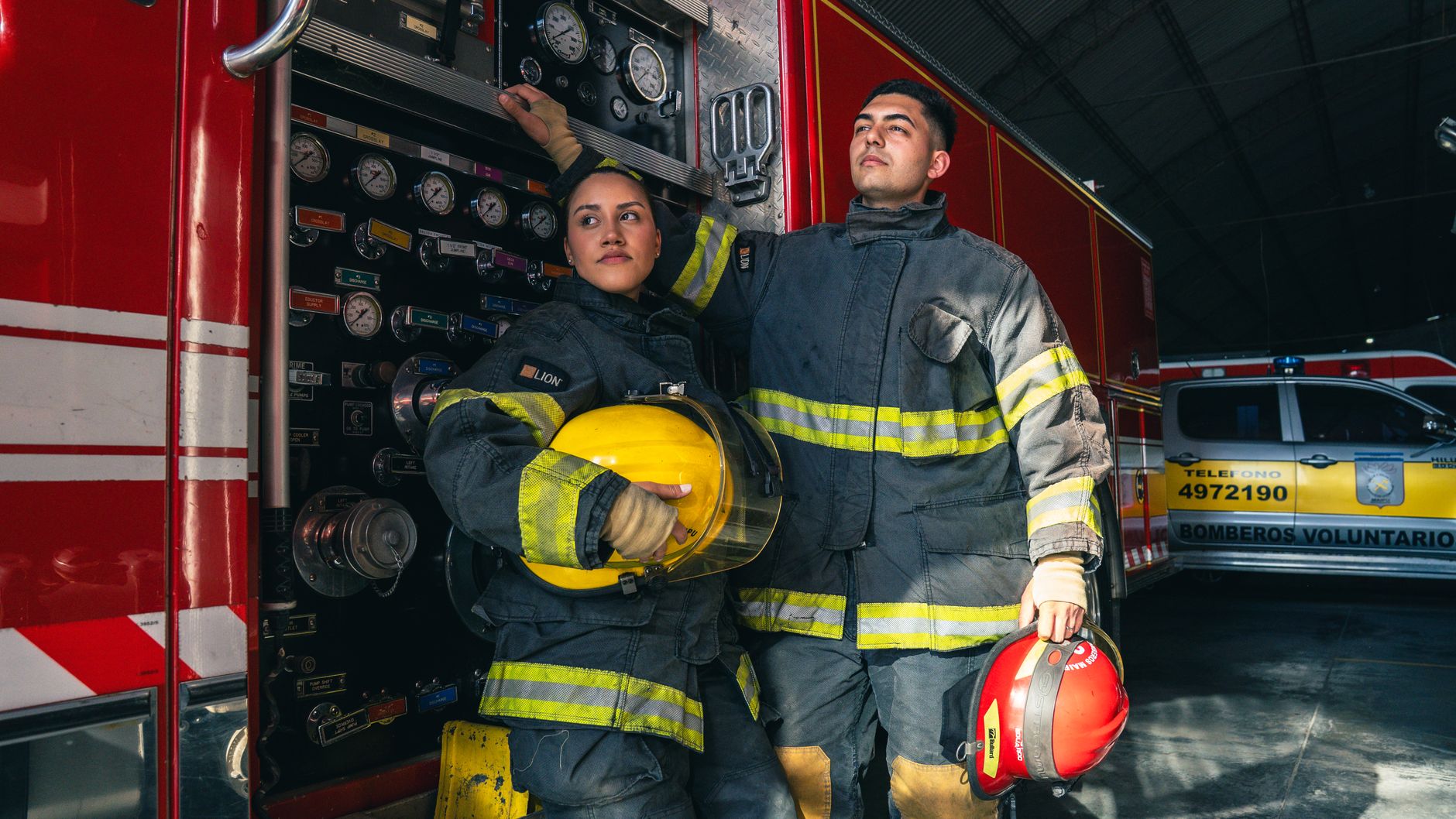
The buildings are old. According to an NFPA report covered by Fire Rescue 1, 43% of fire stations are 40 or more years old. Older bays and bunk rooms tend to have worn tile, aged grout lines and floor drains that a manual crew has to work around every day.
Crew counts are thin in some places. A Pennsylvania study commissioned by the International Association of Firefighters reported an average of 2.29 people per engine, and the reporting says that is nearly 50 percent below the NFPA 1710 safety standard. That is one state and a study with a stake in the outcome, so read it as a local signal. When hands are short, floor work is often what slips first.
What are the main benefits for the station?
The benefits are practical, and most of them show up within the first few weeks of a steady routine. Floors are finished on schedule, crews have fewer tasks to fit around calls, and the station looks the same on every shift. The gains fall into four groups:
- Bay and bunk room floors finished before the shift handover
- Crew time moved from repeat floor passes to readiness checks and training
- The same cleaning pass on every shift, so inspections and turnovers run the same way
- Less dependence on whichever crew member happens to have a free hour
How does the robot work at a station day to day?
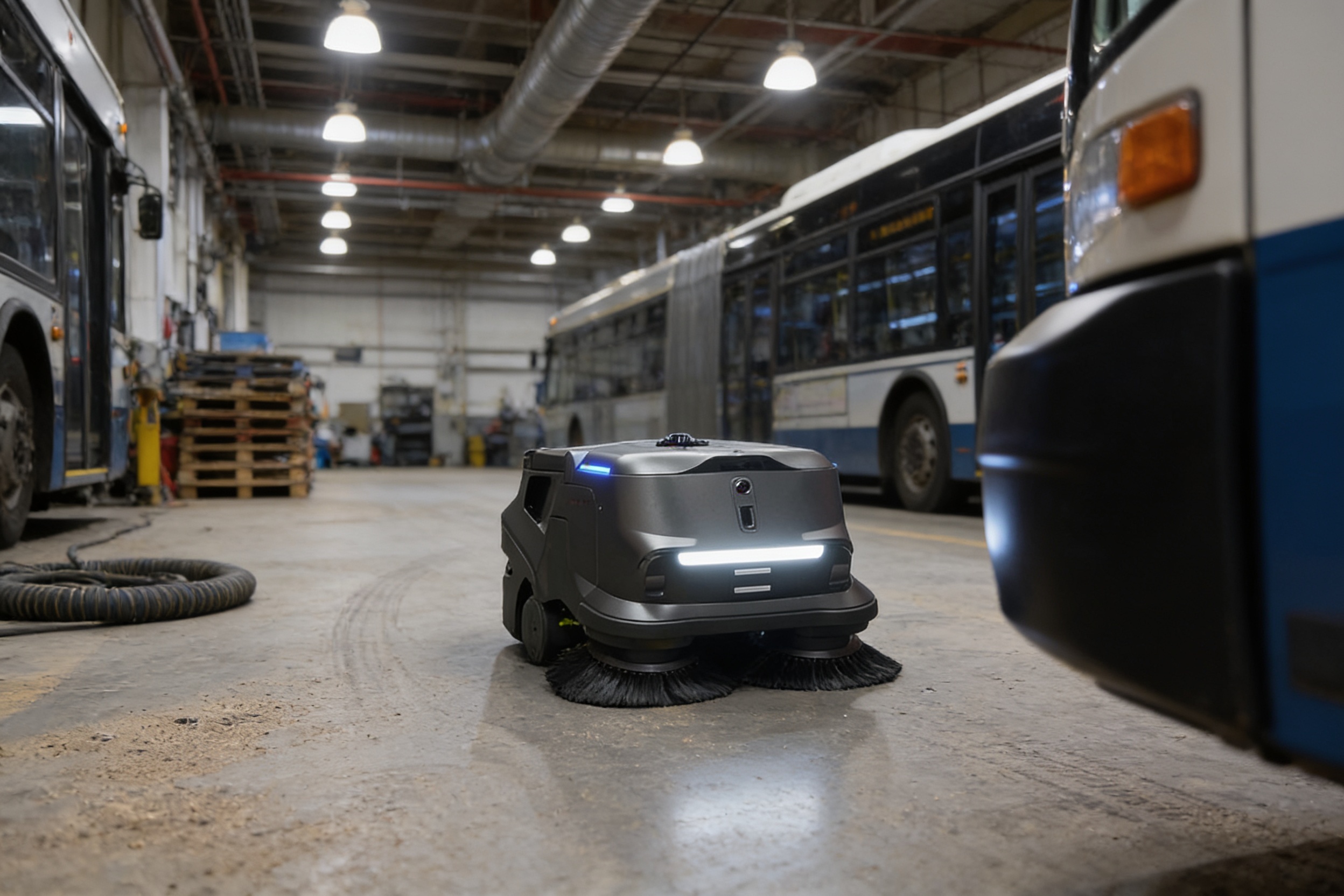
Before anything runs, we map the floors during a site assessment. We mark the bays, the bunk room corridors, the day room, the kitchen and the hallways, and we set keep-out areas for hoses, cords, vehicles parked on the floor and the drains. The map lets the robot cover the same route each time without a crew member guiding it.
The schedule is the second decision, and SOPs differ. Some require resident quarters cleaned by 2200 hours, others want daily duties finished before 1700 hours when able, and some have the 0700 crew handle station and apparatus cleanups. Many bay floors are swept and mopped daily, while others are swept only as needed or weekly. The robot runs the schedule your SOP calls for.
At the end of each run, the robot returns to its dock. A crew member checks the bay, clears anything the robot flagged and confirms the floor is ready for the next shift. These checks are short, and they keep the robot tied to the station's own standard.
Which areas of the station does it cover?
Cleaning robots for fire stations work best in areas that are large, flat and used every day. Apparatus bays are the obvious first zone, because they carry the most floor area and the most debris from equipment and boots. Bunk room corridors and the day room come next, since they carry shared traffic through the same hours.
Kitchens and dining areas can join the route when the floor is hard and the path is clear at the scheduled time. Station hallways link the zones together, so one pass can cover them. Locker room floors can be included too, though the robot does not clean fixtures, toilets or showers.
The layout is what makes cleaning robots for fire stations practical in older buildings, where bays, corridors and rooms vary in size and shape. The site walk sets the route around those differences before anything runs.
How does the robot work alongside the crew?
The robot does not replace the crew. A station still needs people to run calls, keep equipment ready, manage the schedule and respond when something goes wrong. What changes is who handles the repeating floor pass, and that job moves to the robot on a fixed route.
Staff have a few short jobs in the new routine: move hoses and cords out of the path before each run, clear spills and anything the robot flags, and confirm the floor at the end. Someone should know how to pause the robot and how to call for on-site help. We train the team on these steps during deployment, so the routine belongs to the station.
The point is a robot plus a smaller team, never zero staff. Our service team responds nationwide, so a station is not left alone with a stuck robot.
What drives the savings, and how large could they be?
The savings come from hours that move, not from a promise about headcount. The main drivers are the floor hours a crew spends on repeat passes, the number of shifts that start on a clean floor, and how often a floor task slips because calls took the time. We did not find a verified national figure for cleaning hours per shift, so we measure your own hours during the site assessment rather than quote a range.
Staffing pressure explains why that measurement matters. A Florida county workshop document cites a statewide baseline of 1,469 firefighter vacancies from a 2023 survey, and a 2025 working estimate of about 2,500. Those are planning figures, not a 2025 survey result, so read them as a sign of pressure rather than a headcount. Nationally, according to the Bureau of Labor Statistics, firefighter employment is projected to grow 3 percent from 2024 to 2034, with about 27,100 openings projected each year.
The number of these places is large. According to the CTIF country profile for the United States, which lists NFPA as its representative organization, there are approximately 58,150 fire stations. That profile gives no survey year, so treat the figure as an undated estimate.
What can the robot not do?
A floor cleaning robot is not a full station cleaner. It does not clean toilets, showers, sinks or gear, and it does not handle hazardous residue or contaminated equipment. It needs clear floors, so cords, hoses and loose objects must be moved before each run. Stairs and uneven thresholds are outside its range, and a bay with standing water or a major spill needs a person first.
It also does not set the schedule by itself. If the SOP changes or the station reassigns crew duties, the route and timing need updating. We set that up during deployment and review it with the station, so the robot keeps to the standard in force.
How do you get started?
Start with a free site assessment. We walk the station, map the bays and bunk room corridors, read your cleaning SOP and measure the floor areas the robot would cover. You receive a plan for the routes, the schedule and the staff steps, along with a lease quote through financing.
We recommend starting with one unit at one station, so the team learns the routine before anything expands. A pilot shows how the run fits your shift turnovers, what needs clearing and where the schedule needs adjusting. Once the routine holds on your floors, the same approach can carry to other stations.
The payment comes in the quote after the assessment, not before it. We deploy and integrate the robot, train your staff, support go live on site and service it nationwide, so the station has one partner and one number to call.
Frequently asked questions
Want a cleaning robot at your fire station?
Tell us about your site. We will recommend the robot, quote the lease, and keep it serviced.