
The short answer
A cleaning robot makes sense at a car dealership when the showroom floor is mostly clear, the route can be mapped, and the scrub can run on a schedule outside customer peaks. A showroom floor cleaner, meaning a person working with a scrubber or sweeper, is still the better choice when vehicles, displays, and fluid spills crowd the floor during open hours. Most stores end up with both: a robot handles the scheduled passes while staff handle spills, spot work, and the areas a robot cannot clear.
Key takeaways
- A cleaning robot fits a showroom with a mapped route and a scrub window outside customer peaks.
- Spills, drips, cluttered display rows, and detailing still need a person during open hours.
- A Woodward and Associates survey reported by Wards Auto found more than 50 percent of new-vehicle dealers open on Saturdays, so cleaning has to fit long hours.
- Dealership staffing turns over often, so a robot reduces how much cleaning depends on filling one specific shift.
- The workable setup is a robot plus fewer staff, never zero staff, with a lease quote issued after a free site assessment.
Cleaning robot vs showroom floor cleaner: which makes sense for car dealerships?
A cleaning robot vs showroom floor cleaner decision usually comes down to one question: can the showroom be cleaned on a schedule without a person pushing a machine past customers? When the answer is yes, a robot is a strong fit. It runs the same sweeping and scrubbing passes a janitor makes between customer visits, but on a clock, and it runs them the same way every time.
A robot makes sense when the showroom is clear enough to map, the flooring is mostly hard surface such as polished concrete or tile, and the store can give the robot a window with few people in the path. It also makes sense when the store struggles to fill a dependable cleaning shift.
It does not make sense when the floor is crowded most of the day with vehicles and displays, when spills are frequent and need an immediate response, or when most of the work is spot cleaning and judgment. In those stores a showroom floor cleaner still does the job better, and a robot is at most a supplement.
What does a showroom floor cleaner actually do in a shift?
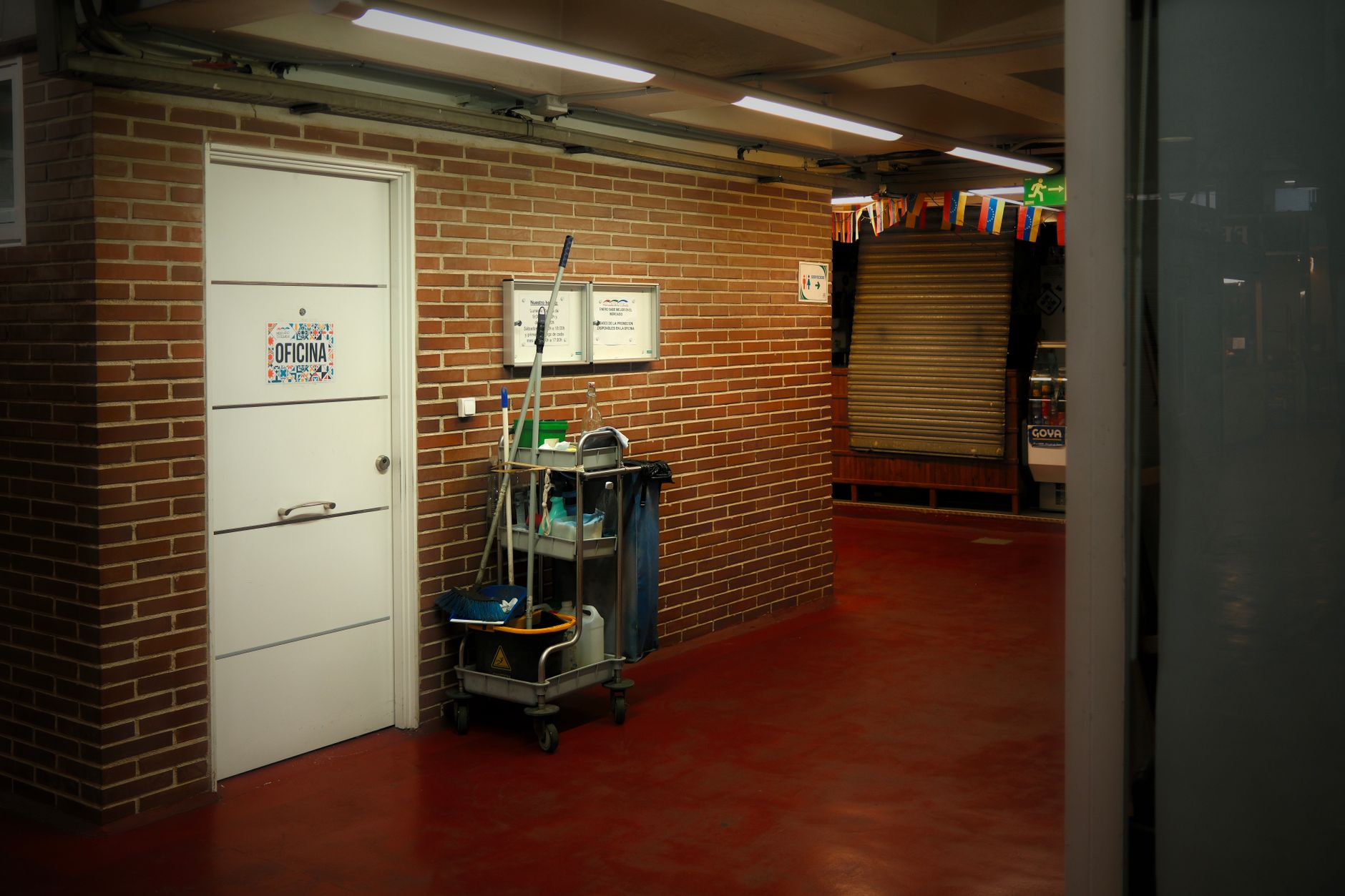
A showroom floor cleaner usually covers the entry, the sales floor between vehicle displays, the customer lounge, and the paths that run past the service drive. The work is sweeping, scrubbing, and wiping, with spot treatment for drips, tire marks, and scuffs. Much of it has to happen between customer visits or after close, because a scrubber moving through a crowded showroom is a hazard and a distraction.
We could not verify how many hours a dealership showroom takes per shift. No published industry figure for showroom cleaning time was found, so the number has to come from the site. Store managers should time one full cleaning pass for each zone and note what was missed, because that baseline sets the rest of the math.
A person also does tasks a floor cannot: moving a display, answering a spill near a vehicle door, checking the entry mat, and reporting damage. Those tasks often land on the same worker who scrubs, so the cleaning schedule and the staff schedule should be planned together.
Median hourly wage, Janitors and Building Cleaners
$4,041
Monthly cost of one full-time worker, at the median wage plus payroll costs (an estimate, not a quote).
Which parts of a dealership showroom can a robot take, and which can it not?
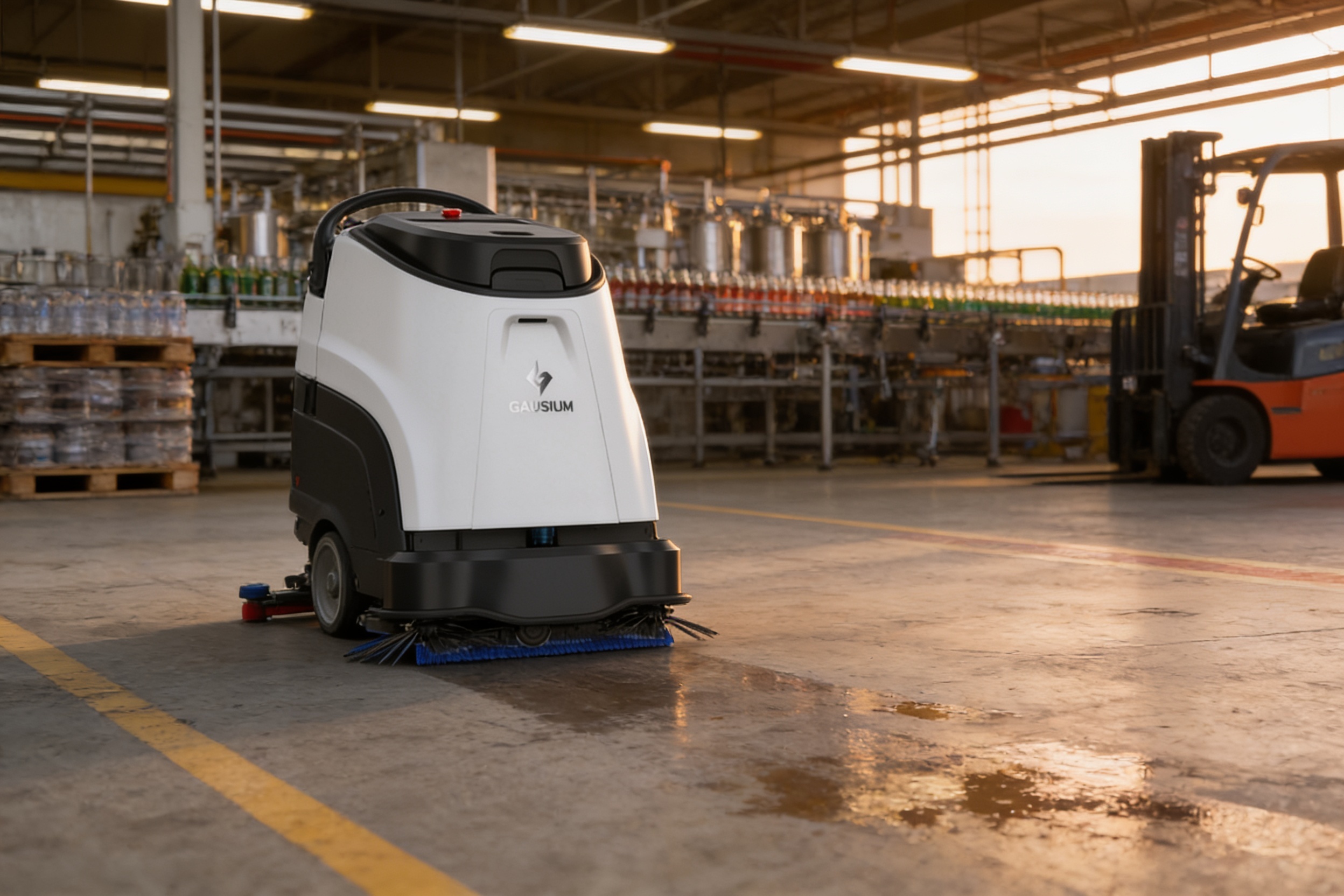
A robot handles open, flat, mapped areas well: the long central aisles, the open floor between display rows, the entry corridor, and a lounge if the furniture leaves a clear route. It runs the same pattern every pass and does not skip a row because the shift is ending.
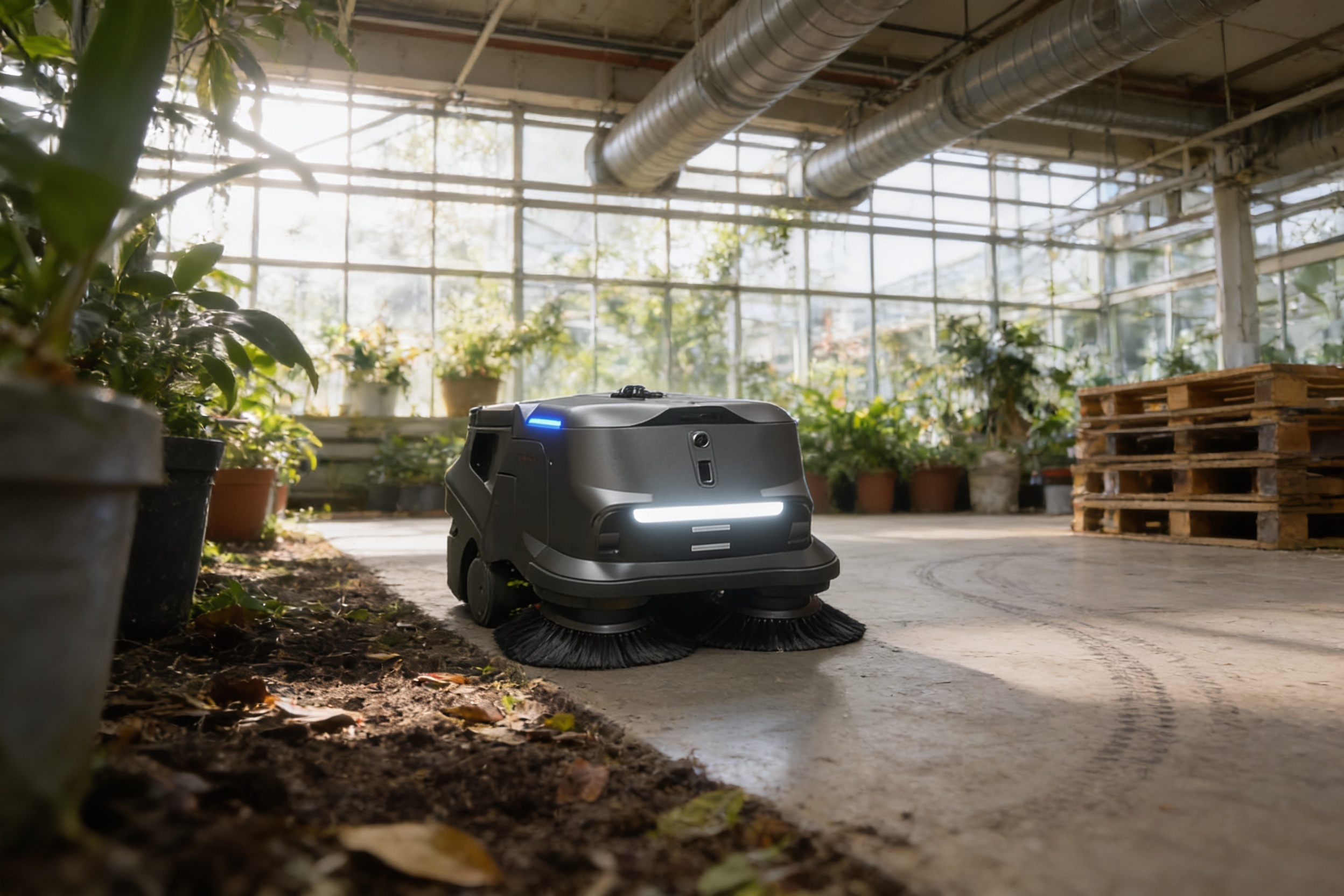
Robots struggle with clutter. A vehicle parked at an angle, a stray cable, a raised threshold, a rug edge, or a low display platform can stop a route or leave an unscrubbed strip. Fluid spills and residue that need a different treatment still need a person.
Where the line falls depends on each store's layout, which is why the site assessment maps the floor before anyone quotes a lease.
- Usually suited to a robot: open aisles, flat hard floors, entry corridors, clear lounge space
- Usually needs a person: fluid spills, vehicle drips, carpet edges, thresholds, tight gaps around displays, glass and high surfaces
- Depends on the layout: display rows with clear gaps, and a route that stays clear every day
- Scheduled passes
Cleaning Robot
Runs the same route on a clock and does not skip rows
Showroom Floor Cleaner
Adjusts the route on the fly
- Open hours with customers
Cleaning Robot
Needs a clear route and stops when a person is in the path
Showroom Floor Cleaner
Works around customers with judgment
- Spills and drips
Cleaning Robot
Flags them but cannot respond to them
Showroom Floor Cleaner
Responds at once with the right treatment
- Clutter and thresholds
Cleaning Robot
Struggles with angled vehicles, cables, and raised edges
Showroom Floor Cleaner
Moves items and steps over thresholds
- After close
Cleaning Robot
Runs in its scheduled window without a person on the floor
Showroom Floor Cleaner
Needs a shift, transport, and supervision
- Detailing and glass
Cleaning Robot
Not its job
Showroom Floor Cleaner
Person wins, this is skilled work
- Absences
Cleaning Robot
Does not call out sick
Showroom Floor Cleaner
Calls out, and is hard to replace on short notice
How many dealerships are there in the US, and how big are their showrooms?
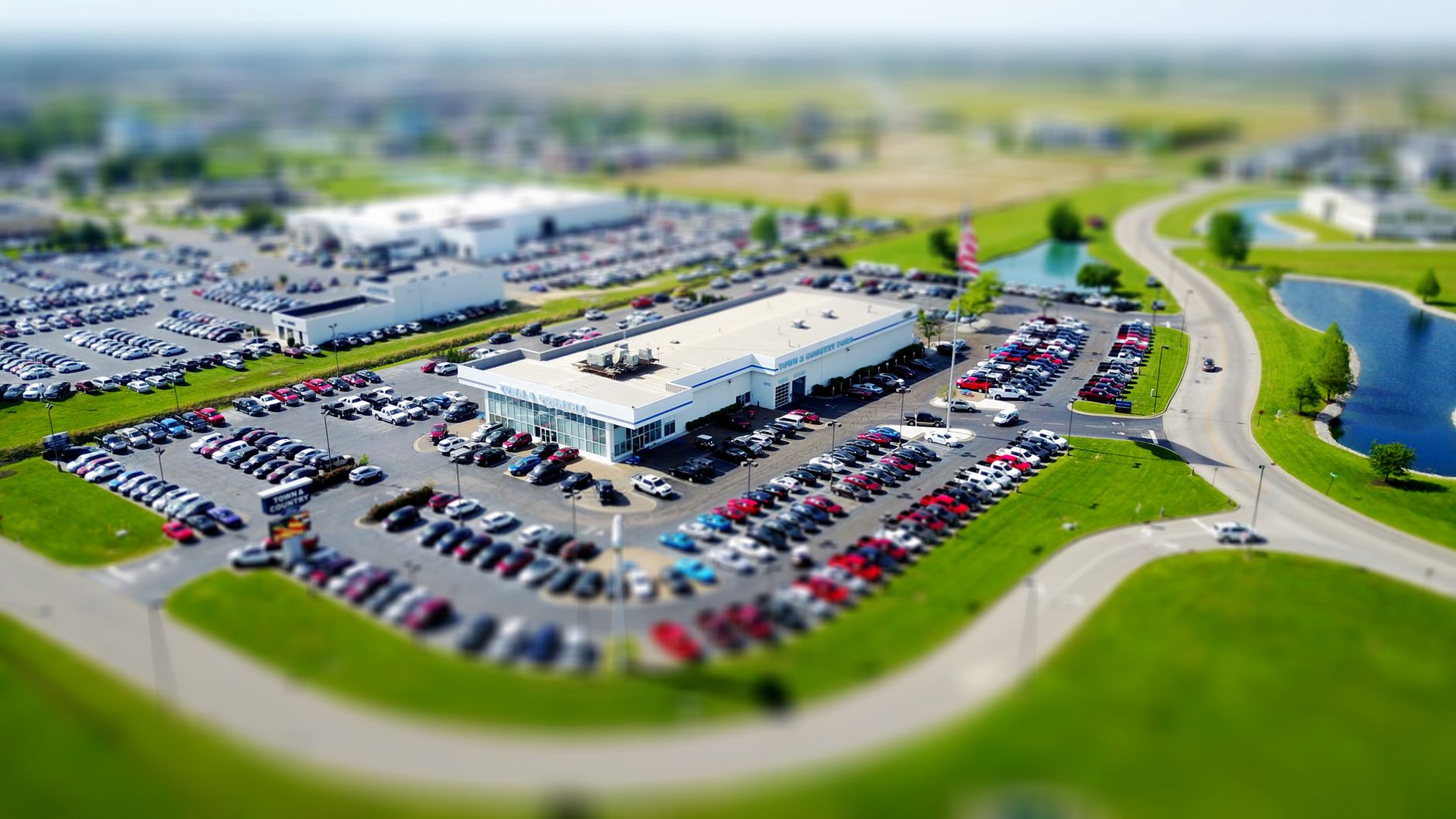
According to the NADA full-year profile, there were 16,990 total franchised new-car dealerships in the US for 2025. California has the most, at 1,334, and Alaska has the fewest, at 27. A separate market research estimate of 16,528 new car dealers uses another method, so the two figures should not be compared directly.
Floor size varies widely. One Riverside, California dealership project lists about 22,717 square feet in total, with about 7,000 square feet of sales space and 12,000 square feet of service area. One Arlington, Texas project lists 91,000 square feet over two stories on 15.6 acres. These are individual project listings, not a survey, and no published industry average for showroom square footage was found.
In the Riverside listing, the sales space is under a third of the building total. A robot planned for the showroom covers the most visible floor, while the service area and drive lanes are usually a separate cleaning task with their own route.

How high is staff turnover at dealerships, and what does janitorial staffing look like?
The 2019 Dealership Staffing Survey, as summarized by CBT News, reported 80 percent turnover of sales staff in 2019. That is an older figure, and sales staff are not the cleaners, but it shows how often dealership floor roles change hands. An earlier NADA benchmark, as reported by Auto Remarketing, put annual dealership turnover above 46 percent in recent years and 34 percent in a 2022 report. We could not confirm a 2025 figure from public summaries.
NADA says its 2026 workforce report, based on 2025 calendar-year data, drew on over 250,000 payroll records across more than 60 job titles, but the full report is members only. For janitors and building cleaners, the BLS Occupational Outlook Handbook reports about 2.4 million jobs in 2024, projected growth of 2 percent from 2024 to 2034, which it calls slower than average, and about 351,300 openings a year, mostly from replacement hiring. No official BLS turnover rate for janitors was found.
Staffing risk is not only about headcount. A store can be fully staffed on paper and still lose the cleaning hour on a Saturday when one person calls out.
Do dealership hours and weekend shifts change the cleaning math?
Dealership hours are long and include weekends. A Woodward and Associates survey reported by Wards Auto found more than 50 percent of new-vehicle dealers open on Saturdays, and an average of 10 technicians on weekdays and 3 on Saturdays. Those are service staffing figures, but they show a thin weekend crew, and the same few people often cover several jobs on a Saturday, cleaning included.
NADA's 2013 workforce study, reported by CBT News, found that total hours and weekend shifts have a significant effect on retention. NADA's 2014 report found that the share of dealerships scheduling employees over 45 hours a week had dropped significantly. Both are dated, but they point the same way: schedule length and weekends affect who stays, and that affects who is left to clean.
We could not verify overtime or sick-day figures for showroom cleaning specifically. Before committing to a schedule, a store should check its own overtime and absence records for the cleaning shift and set the robot's window against those hours, not a generic average.
How risky is janitorial work, and what do injury rates show?
The BLS injury data for janitors and cleaners, except maids and housekeeping cleaners, shows 21,100 nonfatal injury and illness cases with days away from work in private industry in 2020. The rate was 191.6 per 10,000 full-time equivalent workers, about 1.9 per 100. The same BLS snapshot reports 18,680 such cases in 2019, at 157.4 per 10,000. Fatal work injuries for the group were 42 in 2020, against 45 in 2019.
Those 2020 figures cover one year, a pandemic year, so they are not a clean trend. They still show real physical risk in this work: repetitive scrubbing and pushing, lifting, and slips on wet floors. A robot does not remove those risks from the people who stay, but it can take the most repetitive pass out of their day and the heavy machine out of a crowded floor.
Read these as the category risk for the job, not a forecast for one store. A store should review its own incident log before comparing it with any national rate.
Are other building service contractors adopting floor cleaning robots?
The 2026 BSC Market Study, as cited in a floor care vendor press release, found that about 32 percent of building service contractors plan to adopt robotic floor equipment within 12 months. The release puts that at roughly double the 2025 study figure. Because the source is a vendor release, treat the number as directional.
Older data shows a smaller base. An AACEM and ISSA survey from 2019 found autonomous equipment users made up 27 percent of responses, and a trade publication's summary of the same survey reported that 68 percent of contractors were neither using nor considering robotic equipment. Adoption is rising from a low base.
For a dealership, that means a cleaning contractor asking about robots is no longer unusual. Ask whether the contractor has run one in a similar retail or auto setting, and ask to see the route it used.
How does a robot work alongside staff, and why never zero staff?
The working model is a robot plus fewer staff, never zero staff. The robot takes the scheduled passes across open floor. The people on shift take spills, the zones the robot cannot clear, the entry and glass, and the checks a floor cannot do, such as confirming the route is clear and reporting anything broken.
The change for the team is in the sequence. Before a robot, one person starts a pass, stops for each obstacle, and finishes the floor in one long session. With a robot, staff clear the route before the window, then handle the exceptions the robot flags, which is shorter and easier to plan. A store with zero staff has no one to answer a spill during the window or when the robot stops.
We plan the route, train staff on exceptions and the stop procedure, and provide on-site dispatch and remote triage, so the store has one partner and one number for the robot. The staff schedule remains the store's decision.
What can a robot not do, and how do you start a lease for a dealership?
A robot does not do detailing, polishing, glass work, or the judgment call on a spill that might be a hazard. It cannot clear a cluttered floor on its own, and it needs a mapped route, a working network connection, and a place to charge. It stops for obstacles it cannot pass, so the route and window have to be planned around customers and vehicles.
To start, request a free site assessment. The assessment maps the showroom, measures floor types and clear zones, and identifies the windows that work. The lease quote follows the assessment as a fixed robot lease payment, with maintenance included, covering financing, deployment, staff training, and service. Bring the floor plan, a list of hard and carpeted surfaces, the cleaning hours the store wants, and the overtime and absence picture for the cleaning shift.
A sensible first step is one unit on one floor, with spare unit coverage for downtime, and a review of results once the unit has run through a full cycle of store traffic. Then decide whether a second zone makes sense.
Frequently asked questions
Want a cleaning robot at your car dealership?
Tell us about your site. We will recommend the robot, quote the lease, and keep it serviced.
Sources
- US Bureau of Labor Statistics, Occupational Employment and Wage Statistics (OEWS May 2024)
- NADA full-year profile 2025
- BLS Occupational Outlook Handbook, janitors and building cleaners
- BLS injury and illness snapshot, janitors and cleaners except maids and housekeeping cleaners
- 2026 BSC Market Study press release
- Wards Auto, Woodward and Associates survey on Saturday service hours
- CBT News, NADA 2013 workforce study on weekday hours
- CBT News, 2019 Dealership Staffing Survey
- Auto Remarketing, NADA turnover benchmark