
The short answer
For most big-box stores, the cleaning robot vs night janitor question turns on the floor. A robot makes sense when the sales floor is large, mostly open and clear at closing, and the night crew is hard to fill. It does not fit where stock, pallets or displays change every night, and it does not replace the people who handle restrooms, biohazards and blocked paths, so the realistic setup is a robot plus fewer staff, never zero staff.
Key takeaways
- A cleaning robot fits large, open hard floors that are clear by closing time.
- A cleaning robot does not fit cluttered aisles or work that needs hands and judgment.
- The workable model is a robot plus fewer staff, not a robot alone.
- Public labor data covers openings and growth, not overnight turnover, so measure your own.
- The lease payment is quoted after a free site assessment, built from your hours and floor.
Cleaning robot vs night janitor at big-box stores: which makes sense?
For a big-box store, a cleaning robot makes sense when the overnight sales floor is large, mostly open and clear of obstacles when the store closes, and when the night crew is hard to fill. It covers the same passes on hard floors that a night janitor makes, which is why the two compete for the same work.
It does not make sense as a one-for-one swap. A robot does not cover the work that changes from night to night, so the stores where it fits best are the ones where the route is the same every night.
Where it does not fit: aisles blocked by stock or pallets at closing, floors that need hands-on fixes, or a site where no one on the team can check and restart the machine. In those stores a night janitor is still the right call, or a robot plus a crew that does more of the hands-on work.
What does a night janitor do in a big-box store shift?
A night janitor at a big-box store usually starts with a walk of the floor to find spills, debris and blocked zones, then works through a fixed route. The route tends to include the main corridors between shelving, the front-end and checkout lanes, entrances, restrooms, break rooms and the back of house, where stock and cardboard collect.
Much of the work is repeat passes: sweeping, dust mopping, scrubbing with a walk-behind or ride-on machine, and wiping fixtures. The rest is harder to schedule. Spills found during restocking need cleaning right away, and trash removal, glass and door cleaning, and checks on wet floor signs and emergency exits fall to the same person.
The shift runs on a set order because the window is limited. The store closes to shoppers late and opens early, so any task that slips pushes into open hours, and the janitor has to recover the route without warning.

Median hourly wage, Janitors and Building Cleaners
$4,041
Monthly cost of one full-time worker, at the median wage plus payroll costs (an estimate, not a quote).
Which overnight floor work can a cleaning robot take, and which can it not?
A cleaning robot takes the work that repeats on a mapped route. That means scheduled sweeping or scrubbing of main aisles, open sales floor, and back-of-house corridors where the path is clear. Large hard floors are the design case for floor scrubbers, and the open sales floor of a big-box store is that kind of space.
Coverage per machine is one useful figure. A floor-equipment maker's retail infographic, which the maker reports itself, lists an average of 13,000 square feet cleaned per day per machine across 3,375 machines deployed in retail locations. Treat that as a vendor-reported average, then measure your own floor during the site assessment.
The robot cannot take work that needs judgment or hands. It does not clean biohazard spills, do restrooms, empty trash, move a cart or pallet out of an aisle, or decide what counts as a hazard. Those tasks stay with a person, and the staffing plan should say so in writing.
- Repeat passes on mapped aisles
Cleaning Robot
Same route every night, with no fatigue
Night Janitor
Covers the route and can adjust to what they see
- Spotting new hazards
Cleaning Robot
Only what the route and sensors are set to catch
Night Janitor
Spots spills, debris and fallen displays as they happen
- Restrooms and biohazards
Cleaning Robot
Not covered
Night Janitor
Covered by trained staff
- A bad night
Cleaning Robot
Stops at a blocked path or sensor fault and waits for a check
Night Janitor
Can clear a blocked path, though thin staffing can slow the work
- Filling the shift
Cleaning Robot
Does not call in sick, but needs a trained checker
Night Janitor
Hard to fill and keep, with openings that recur
How many hours does overnight floor care take, and what does the labor data show?
The public data on this job is thinner than most readers expect. The Bureau of Labor Statistics Occupational Outlook Handbook reports that janitors and building cleaners held about 2,447,700 jobs in 2024, with projected growth of 2 percent from 2024 to 2034, slower than the average for all occupations. It projects about 351,300 openings a year and says most come from replacement of workers who leave.
What it does not publish is what matters most to a store: turnover rate, overtime, night-shift share, and sick-day use for this job. No federal count of big-box stores was found either, so the number of sites that fit has to come from your own portfolio. Measure hours by zone with a timed walk, and count night-roster vacancies over the last twelve months.
Injury data points to a physically demanding job. The BLS injury and illness snapshot for janitors and cleaners, except maids and housekeeping cleaners, reports 191.6 nonfatal cases per 10,000 full-time equivalent workers in 2020. Put the local wage for this job from the government wage data on this page beside your measured hours to see what each night actually costs in labor.
| Task | Today | With a robot |
|---|---|---|
| Scheduled sweeping and scrubbing of main aisles | A person runs the route by hand each night | The robot runs the mapped route and staff check the log |
| Route setup and coverage check | The lead walks the floor and adjusts the order | The lead sets the route and reviews the coverage report |
| Restroom and break room cleaning | A person, every night | A person, unchanged |
| Spill response during restocking | A person, on the floor during the shift | A person, unchanged, with the robot paused |
| Trash removal and back-of-house clearing | A person | A person, unchanged |
The public sources used here do not publish hours per task, so this table shows who does each task rather than how long it takes. Measure your own hours by zone during the site assessment.
How does a night crew work with a cleaning robot?
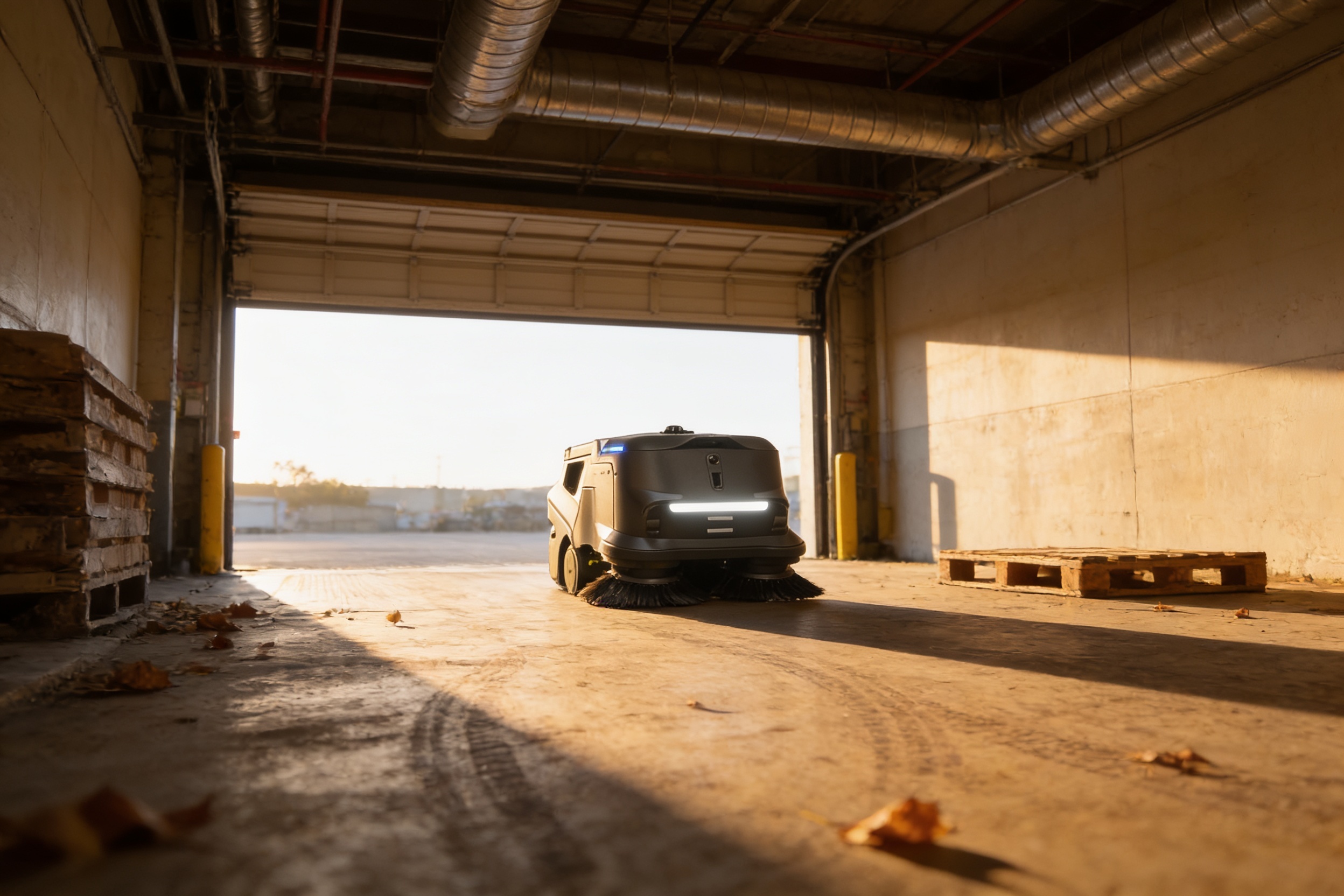
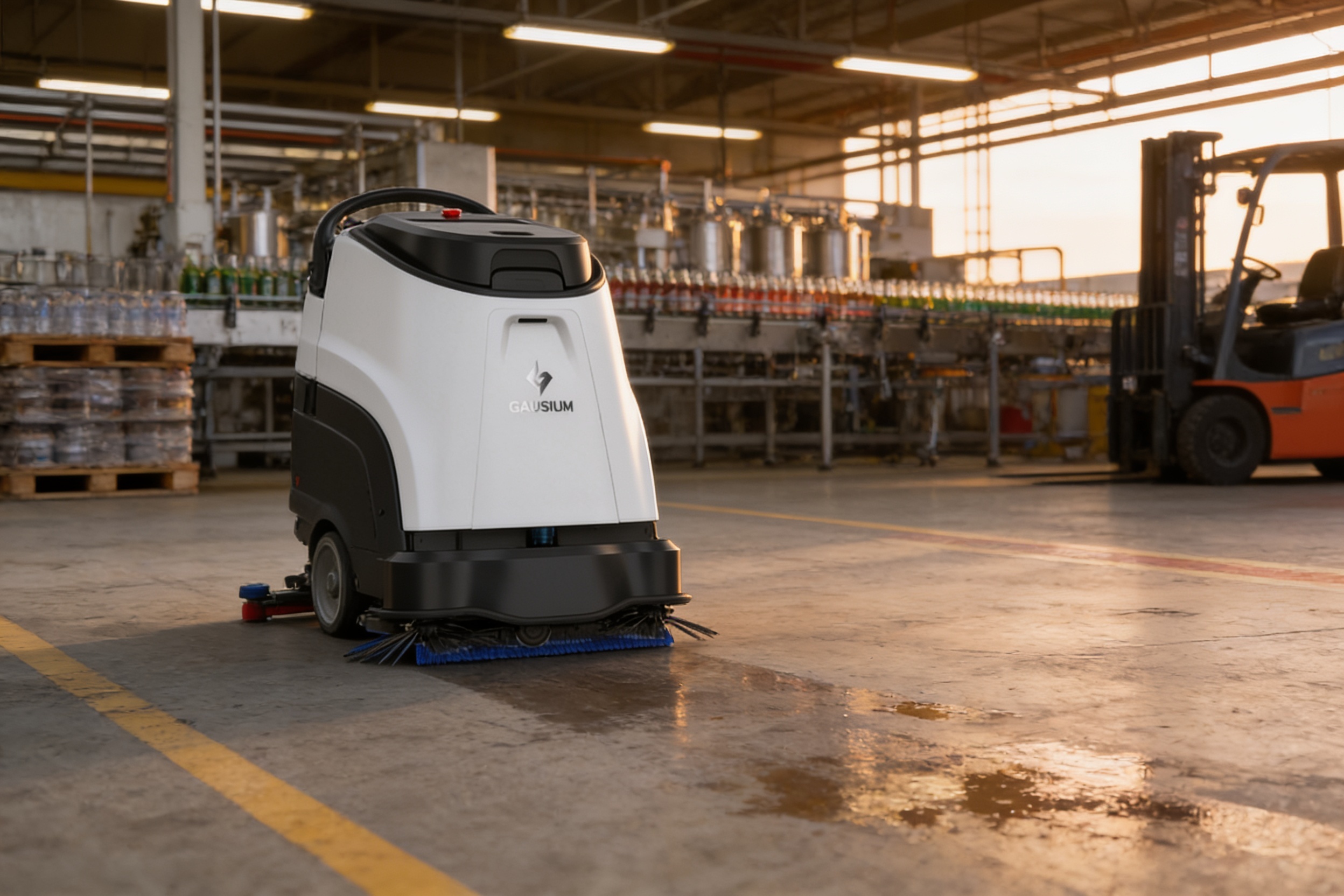
The right setup is a robot plus fewer staff, never zero staff. The machine runs its mapped route after the last customer leaves, while a person sets the route, checks the zones, clears obstacles, handles spills and restrooms, and finishes what the machine skipped. The crew gets smaller, but it stays on the floor.
We are a US commercial robot integrator. We pick the robot for the site, lease it through financing, deploy and integrate it, train the staff, and service it nationwide. Training covers daily checks, what to do when the machine stops, which zones are off limits, and how to restart a route. Staff who only watch the machine need the same training, since their job is to notice problems early.
Expect a handover period. The first weeks show which zones the route misses, which stock moves in the evening, and where the crew still walks the same path by hand. Those findings change the route more than any single setting does.
What can a cleaning robot not do at night?
A robot has real limits, and this page should say so. It works poorly in areas with stock, pallets or displays that change every night, and it needs clear paths to run. It cannot judge a hazard it has not been told about, and it cannot clean a biohazard, do restrooms, take out trash, or report a broken fixture to a manager.
Robots also need someone to check them. When a sensor stops, a door is blocked, or a spill appears in a zone the route does not cover, the stop waits for a person. A store that treats the robot as set and forget will see missed areas. Plan a check during the shift and a coverage review before opening.
Some teams also overestimate how much the crew shrinks. The robot removes repeat passes, not the rest of the task list, so crew size should follow the task list, not the machine count.
Is a cleaning robot worth it compared with a night janitor?
Worth it depends on how many overnight hours are hard to fill and how much of the floor is repeat work. Industry survey data points the same way. In a 2019 autonomous cleaning survey by AACEM and ISSA, with nearly 23,000 respondents, 77 percent of non-adopters evaluating the equipment cited labor savings as an influence on the decision, and about 70 percent expected payback within two years, according to ISSA.
Adoption is rising, though much of the evidence comes from vendors. According to a floor-equipment provider's release citing the 2026 BSC Market Study, about 32 percent of building service contractors plan to adopt robotic floor equipment within 12 months, about double the 2025 share. Treat that as a direction, not a measure of your own market.
Store footprint is a risk too. According to Coresight Research as reported by a news outlet, over 8,200 US retail store closures happened in 2025, against earlier forecasts of about 15,000. A financial news report says US retailers planned more than 1,200 store openings in 2026, led by discount chains. Match the lease term to the expected life of the store, and ask about site plans before you commit.
The lease payment is quoted after a free site assessment, built from your hours, your floor area and your crew, so the comparison should wait for those numbers.
How does a robot lease work for a big-box store?
A lease spreads the cost of the robot over a fixed term, so the store does not need to commit capital up front. We lease robots through financing, and the fixed robot lease payment is quoted after a site assessment that maps the floor, measures the zones and marks the tasks that stay with staff.
Ask what the lease covers, because service affects uptime more than the machine does. Look for on-site dispatch, remote triage, spare unit coverage or a loaner unit during a holiday peak, emergency response nationwide, and whether maintenance and liability coverage are included. Get each term in writing before anything is signed.
How do you start a cleaning robot pilot at a big-box store?
Start with one store and one floor, not a chain-wide rollout. The main sales floor is usually the cleanest test, because the aisles are large and the route repeats. Before anything is installed, time the night crew by zone for a week, count the areas that get skipped, and record how often a person clears a blocked path by hand.
Then run the robot on that zone for a set period and compare coverage, hours on the floor, and the number of times a person had to step in. Keep the human tasks on the plan. Expand only when coverage holds and the staff can run and check the machine without outside help.
Begin with a free site assessment, which maps the floor and sets the route, then review the lease quote against your measured hours. We handle deployment, integration, go-live support and staff training, so the first night is planned rather than improvised.
Frequently asked questions
Want a cleaning robot at your big-box retail store?
Tell us about your site. We will recommend the robot, quote the lease, and keep it serviced.
Sources
- US Bureau of Labor Statistics, Occupational Employment and Wage Statistics (OEWS May 2024)
- Bureau of Labor Statistics, Occupational Outlook Handbook: Janitors and Building Cleaners
- BLS injury and illness snapshot: janitors and cleaners, except maids and housekeeping cleaners, 2016 to 2020
- BLS Employer-Reported Workplace Injuries and Illnesses, 2024 (release dated January 22, 2026)
- ISSA and AACEM autonomous cleaning survey, 2019
- Floor-equipment provider release citing the 2026 BSC Market Study (vendor-reported)
- Floor-equipment maker retail infographic (vendor-reported)
- Sunstar, reporting Coresight Research on US retail store closures in 2025
- Trader's Union, US retailers 2026 store openings