

The short answer
For most candy plants, the cobot vs manual packer decision comes down to one question: is there a fixed station that places finished pieces into trays or cases the same way for most of the shift? If so, a cobot can take the repeating motion, while a smaller staff handles changeovers, checks and exceptions, and it is a poor fit for lines that change format often or pack fragile, hand decorated pieces that need a person's judgment.
Key takeaways
- A cobot fits one fixed packing station where the same pieces go into trays or cases on repeat.
- Manual packers still win on changeovers, fragile decorated pieces and anything that needs a judgment call.
- Seasonal swings in staffing are the strongest reason to test a robot plus a smaller crew.
- Plan for a robot with a smaller crew, never a robot with zero staff.
- The lease is quoted after a free site assessment, based on your measured hours, not a guess.
Cobot vs manual packer: when does a cobot make sense in a candy plant?
For most candy plants, the cobot vs manual packer question comes down to one thing: is there a fixed station that places finished pieces into trays or cases the same way for most of the shift? A collaborative arm repeats that motion with steady spacing and no drop in pace late in a shift. The fit is strongest on long runs of one product, because the gripper and program change less often.
It does not make sense everywhere. A cobot is a poor choice when the line changes format several times a shift, when pieces are fragile or hand decorated and need a person's eye on each one, or when the packing point keeps moving. In those cases the manual packer keeps the advantage of judgment and flexibility, and the setup time for a robot can eat the gain.
For most plants the honest answer is a mix. The cobot takes the repetitive stretch of the shift, and a smaller staff handles changeovers, checks and exceptions. Judge the decision by which station, which pieces and which hours it covers, not by the robot itself.
- Repeat placing of uniform pieces
Cobot
Holds spacing and pace through a long single product run
Manual Packer
Slows and varies late in a long shift
- Night and weekend coverage
Cobot
Runs the repeat stretch with a lead present on the line
Manual Packer
Needs a crew scheduled for each shift
- Seasonal ramp
Cobot
Covers the repeat hours without a new hire for each one
Manual Packer
Requires hiring, training and a learning curve each season
- Format changeover
Cobot
Needs staff to set the program and gripper each time
Manual Packer
Adjusts to a new format quickly with little setup
- Spotting a bad piece
Cobot
Places what arrives, so a person must check the feed
Manual Packer
Judges soft, cracked or decorated pieces by eye
- Recovering from a jam
Cobot
Needs a set routine and a staff member nearby
Manual Packer
Clears the jam and resumes on judgment
- Setup and lease
Cobot
Lease quoted after a free site assessment, with staff training
Manual Packer
Hiring, onboarding and supervision for each seasonal crew
What does a manual packer actually do in a candy plant shift?
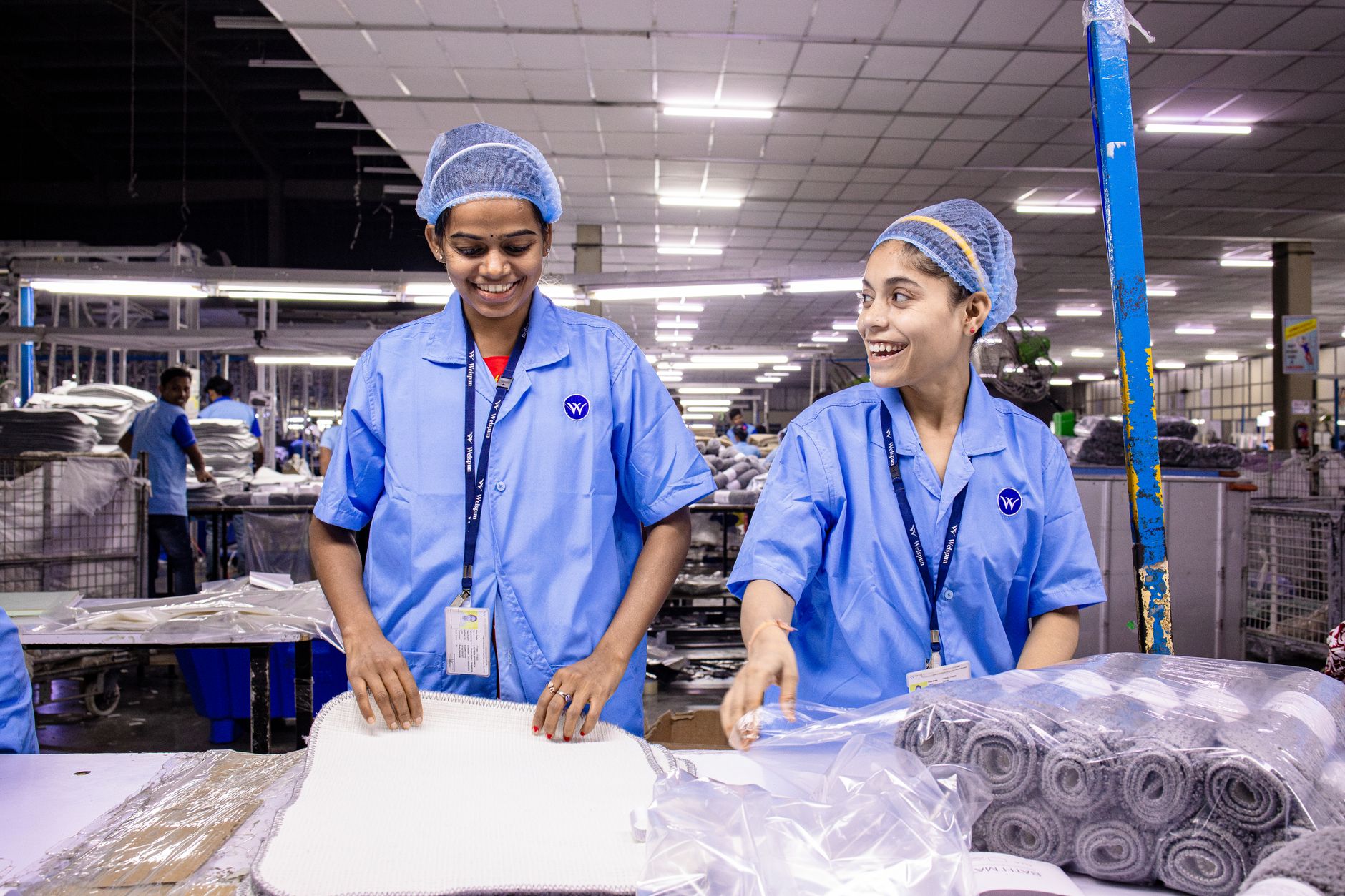
A manual packer usually works at a table or the edge of a line. The job is to pick finished pieces off a conveyor or tray, check them, and place them into a tray, insert or case in a set pattern. Most of the shift is the same motion repeated, broken up by short tasks such as restocking trays, clearing a jam, swapping case blanks and pulling a piece that looks wrong.
Much of the skill is in the checks. A packer notices a cracked, soft, misshapen or discolored piece, pulls it, and keeps the count right for the case. That visual judgment is the part of the job that is hardest to automate, and it is the part most often left out when a plant describes the work on paper.
Hand packing also carries physical load. According to the Bureau of Labor Statistics injury and illness chart for 2024, private industry recorded 2,488,400 total recordable cases, and 888,100 of them involved days away from work, with a median of 8 days away. Those figures cover all industries, not candy plants, but they show that repetitive, full shift work is where strain cases concentrate. When a robot takes the fixed station, fewer people repeat those motions in that stretch, and the people who remain can be placed on the checks and exceptions.
Which candy packing tasks can a cobot take, and which can it not?
A cobot can usually take the pick and place of uniform pieces from a known position into a known pattern, as long as the pieces arrive consistently. It holds spacing with repeatable accuracy and works through a long run without the fatigue that slows a person late in a shift. The gripper is the key part. Suction, fingers or a tray pocket must match the piece, and that is set during deployment, not after.
Tasks a cobot generally cannot take without a person are the ones that need judgment, setup or recovery:
Between those two groups sits the part that decides the fit: how consistent the pieces are as they reach the station. A feed that presents pieces the same way each time is what lets a cobot run well, and a feed that varies is what sends the work back to staff.
- Judge a soft, cracked or hand decorated piece by eye
- Change over to a new format without staff setting the program and gripper
- Recover from a jam or a dropped tray in an unplanned way
- Handle very irregular or fragile shapes without a custom gripper
- Decide that a batch looks wrong after a recipe or supplier change
How big is the labor problem for candy packing?
Federal data does not break out candy packers, so the closest benchmark is the packaging and filling machine group. According to the Bureau of Labor Statistics occupational estimate for packaging and filling machine operators and tenders, about 371,600 workers are employed in that group, though the page does not clearly label the year. Data USA, citing BLS projections, puts the group at about 381,200 jobs in 2024, rising to about 398,200 by 2034, a 4.5 percent increase, with about 45,300 openings a year from growth and replacement.
Turnover is the signal that matters for a seasonal plant. According to the Bureau of Labor Statistics Job Openings and Labor Turnover Survey, the quits rate was 2.0 percent for 2025, and the job openings rate was 4.3 percent, down from 4.6 percent in 2024. Those are economy wide averages, not candy plant figures, so use them as context rather than a forecast for your floor.
Seasonal hiring follows a familiar pattern at the edge of the sector. According to ZipRecruiter job listings, temporary and seasonal candy packer and production roles are common, often placed through staffing agencies with a path to permanent hire. No employer-reported plant turnover figure turned up in our review, so treat those listings as directional.
Overtime, night shift coverage and sick days are the other half of the picture. We did not find a candy-specific figure for any of them, so measure your own timesheets across a full season before deciding. The number that matters is how many hours the fixed station goes unstaffed or covered by overtime in a peak month, not the national average.
How many candy plants are there, and how common is automation in food?
According to IBISWorld, about 1,679 candy manufacturing businesses operated in the United States in 2025. That is an industry estimate, not a Census count, so read it as the size of the market rather than an exact plant total. The wider chocolate and confectionery group is estimated at about 3,383 businesses in 2025, up 1.3 percent from 2024, according to the same publisher.
Automation in food is growing. According to the International Federation of Robotics, US food and beverage robot installations rose 30 percent to about 2,900 units in 2025. A candy station is therefore in line with what other food lines are doing, though that does not prove the economics fit your plant.
The category figure matters less than your line. Whether a station is a good cobot target depends on how much of the shift repeats there, how often the format changes and how consistent the pieces are. Two candy plants in the same category can have answers that point in opposite directions.
How many hours of the shift could a robot take over?
No verified hours figure exists for candy packing across plants, so the method is to measure your own line. Count the minutes per shift spent on the repeating placement motion at the fixed station, then separate out changeover, checks, jam clearing and restocking. Those four buckets are what the site assessment should record.
Once measured, the hours sort into two groups. Hours at the fixed station that repeat are the ones a robot takes. Hours on checks, exceptions and changeover stay with people, because they need judgment or a setup that a person runs. That is why the hours a robot takes over are always smaller than the total packing hours on a timesheet.
Seasonal swings change the payoff. A robot covers the repetitive hours of a peak run without a new hire for each one, and a smaller staff covers the exceptions. A plant that runs a steep, short peak may find that staffing the peak works, while a longer run of the same product favors the robot. Measure both before choosing.
How does a team work with a cobot in a candy plant?
The working model is a robot plus a smaller crew, never a robot alone. The cobot takes the repeat packing at the fixed station. Staff hold the roles that need judgment: a feed person who keeps pieces presented, a quality lead who pulls defective pieces, and a changeover lead who owns the program, gripper and jam recovery.
Fewer staff at the station does not mean no staff on the line. A station with nobody present can go wrong quietly. A jammed tray, a bad batch or a dropped piece may not show up until the case count is off, so someone has to be close enough to see it. The sensible target is a smaller crew with clear roles, not an empty station.
Training is part of the work. We train the people who run the cell, cover the stop and restart routine, and set the escalation path, so the person on the line can recover common faults without calling for help on every stop. Seasonal crews need this most, since they turn over each year.
Where does a cobot fall short for candy packing?
A cobot is not a fit for every candy line. It struggles with mixed formats that change often, because each change needs a new program, gripper and tray setup, and that time comes straight out of the gain. It also struggles where the piece varies widely in shape or softness, since the gripper is set for a known piece.
Throughput limits matter too. One cobot at one station packs at the speed of that station. If the feed runs faster than the arm can place, the bottleneck moves, and a second station or another approach may be needed. Check the line rate before assuming one arm covers the flow.
Sanitation needs a check before deployment. Washdown rules, cleaning chemicals and the schedule between runs all shape which hardware and guarding fit the station. We do not promise a hygiene result without the site's own rules in hand, and the equipment maker's guidance comes first.
A cobot also does not judge a batch. When the recipe, supplier or piece character changes, a person has to notice and decide, and the packing station has to be ready for that.
How do you get started with a cobot for candy packing?
Start with a free site assessment. We map the station, measure the line rate and the hours at the fixed station, record the changeover pattern and note the sanitation rules. The output is a fit decision and a lease quote, not a promise. The lease is quoted after the assessment, through financing, so the plant sees the fixed lease payment before committing.
Pilot one station first. A single leased unit on the packing point that repeats most is the lowest risk way to learn the changeover load, the feed issues and the crew's routine before adding units. Deployment can be phased so the rest of the line keeps running.
Plan the staffing before go live. Name the feed person, the quality lead and the changeover lead, and train them on the stop and restart routine. Ask for a service plan with remote triage and on site dispatch, so a fault during a peak run does not leave the station idle for long, and ask what the plan does when a unit is down.
Frequently asked questions
Want a cobot at your candy manufacturing plant?
Tell us about your site. We will recommend the robot, quote the lease, and keep it serviced.
Sources
- Bureau of Labor Statistics, Occupational Employment and Wage Statistics, packaging and filling machine operators and tenders
- Data USA, packaging and filling machine operators and tenders profile
- Bureau of Labor Statistics, Job Openings and Labor Turnover Survey release, March 2026
- ZipRecruiter, seasonal candy packer job listings
- IBISWorld, candy manufacturing number of businesses
- Bureau of Labor Statistics, number and rate of nonfatal work injuries and illnesses by industry
- International Federation of Robotics, US robot installations press release