
The short answer
A cobot makes sense in a cobot vs palletizing worker in Detroit decision when the line stacks steady, repeatable cases in a fixed pattern and the plant can keep trained people for everything else. It does not make sense when patterns change often, when loads are irregular or heavy bags of uneven shape, or when volume is too low to justify a lease. For most Detroit plants the right answer is a robot plus fewer staff, not a robot that replaces the crew.
Key takeaways
- A cobot fits steady, repeatable palletizing patterns with a trained person assigned to the cell.
- Pattern changes, irregular bags and jam clearing remain people's work in most installations.
- Manual bag palletizing carries real back risk, which is part of the case for automation.
- The government wage data on this page shows the local wage for this job; the lease quote comes after a free site assessment.
Cobot vs palletizing worker in Detroit: when does the robot make sense?
A cobot is the better fit when a palletizing line stacks consistent cases in a repeatable pattern, runs most of the week, and has a trained person to supervise the cell and handle exceptions. A palletizing worker stays the better choice when the line changes patterns often, when loads are irregular or hard to grip, or when most of the shift goes to clearing jams and carrying. For many plants the honest answer is both: the robot takes the repetitive lifting, and people move into tending, changeovers and quality checks.
The useful question is not whether a robot can stack pallets, because a well-specified cobot can. The question is whether your case volume, pattern count and shift coverage justify a lease, and whether the people you keep can do the work the robot cannot. The government wage data on this page gives the local wage for this job, which is one input to that decision, not the decision itself.
We are a US commercial robot integrator. We pick the robot for the site, lease it through financing, deploy and integrate it, train the staff and service it nationwide. The recommendation on this page is a starting point, and the lease is quoted only after a free site assessment.
What does a palletizing worker actually do in a Detroit shift?
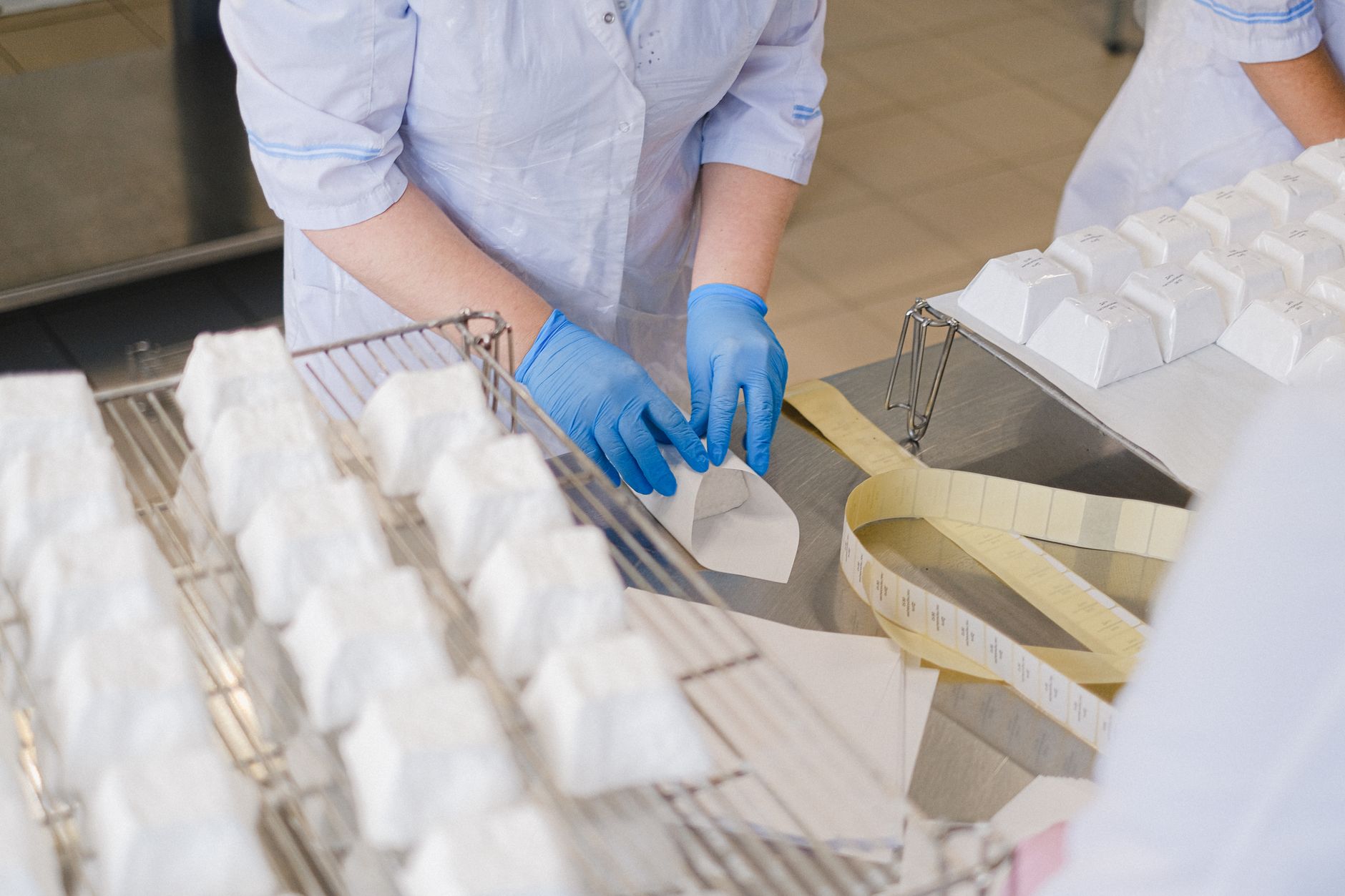
Palletizing sits at the end of the line. Finished cases or bags come off a conveyor, and a worker turns, orients and places each one into the stacking pattern for that product. Layers are separated with slip sheets where needed, and the stack is checked against the work instruction before the pallet moves on.
A large share of the shift is not stacking. Workers clear misfeeds, straighten cases that have landed crooked, swap pattern settings when the product changes, and keep pallet and label supply moving. When a case is damaged or a bag splits, the worker decides whether it goes on the pallet, goes to a reject point, or stops the line.
Moving full pallets to staging or the dock is often a separate job for a forklift operator or material handler. That matters for the robot case, because unless the cell includes pallet conveying or a mobile base, a cobot at the stack does not move the finished pallet away.
Median hourly wage, Laborers and Freight, Stock, and Material Movers, Hand
$4,476
Monthly cost of one full-time worker in Detroit, MI, at the median wage plus payroll costs (an estimate, not a quote).
Which palletizing tasks can a cobot take over, and which can it not?
A cobot does well at the repetitive core: picking cases of a known size and weight from a conveyor or infeed, placing them in a programmed pattern, and repeating that pattern for hours without tiring. Consistent geometry makes this work. When case dimensions and the pattern are stable, the program is simple and the cell behaves predictably.
Several parts of the job stay with people in most installations. A change to pattern or product needs someone to reprogram or reteach the robot. Irregular or damaged cases need a judgment call. Heavy or soft bags, whose shape changes on every pick, are much harder than rigid cartons. Clearing jams inside machines and moving pallets across the floor usually fall outside the cobot's scope.
Two checks eliminate more poor fits than any other test. First, the rated payload and reach must cover your heaviest case with margin. Second, the pick point must suit the conveyor height and the way cases actually arrive.
- Pace across a long shift
Cobot
Holds a steady cycle without fatigue
Palletizing Worker
Slows down over a long shift and needs breaks
- Repeating one stable pattern
Cobot
Strong, with the same placement every cycle
Palletizing Worker
Good, but slower and more variable across a shift
- Changing patterns across many products
Cobot
Needs reprogramming or new pattern files
Palletizing Worker
Reads a new spec sheet and adapts the same day
- Irregular or damaged cases
Cobot
Poor at judgment; stops or needs a fixed rule
Palletizing Worker
Decides whether a case goes on the pallet
- Jams, resets and misfeeds
Cobot
Stops and waits for a person
Palletizing Worker
Clears the jam and restarts the line
- Night and weekend coverage
Cobot
Runs with an operator on call, not a full crew
Palletizing Worker
Needs a scheduled crew, overtime and relief coverage
What does the local labor picture look like for this job?
Nationally, Laborers and Freight, Stock, and Material Movers, Hand had 2,988,900 employees in 2024, according to O*NET, which cites BLS. The same source projects 3,033,100 employees by 2034, a slight increase. That is a large, steady pool of work, so staffing this job stays a standing task for most plants rather than a short-term gap.
Detroit-Warren-Dearborn is heavily oriented to transportation and material handling. According to the BLS regional release published in May 2025, transportation and material moving occupations were about 8.9 percent of area employment in May 2024, with a location quotient of 8.8. That broad group covers far more than palletizing, so read it as context for how much material handling labor the metro already has, not as a palletizing headcount.
Our research did not find a local count of warehouse-only employment for Detroit. It also found no published figures for palletizer shift hours, overtime, night shift share or sick days for this occupation. We used only the May 2025 release, because a 2024 release lists two close figures for the same category that we could not reconcile. For hours, overtime and absences, your own timekeeping is the source to trust. The government wage data on this page shows the local wage for this job, and it should be set against the hours the cell would cover.
Why is manual palletizing hard on the body, and what does that change?
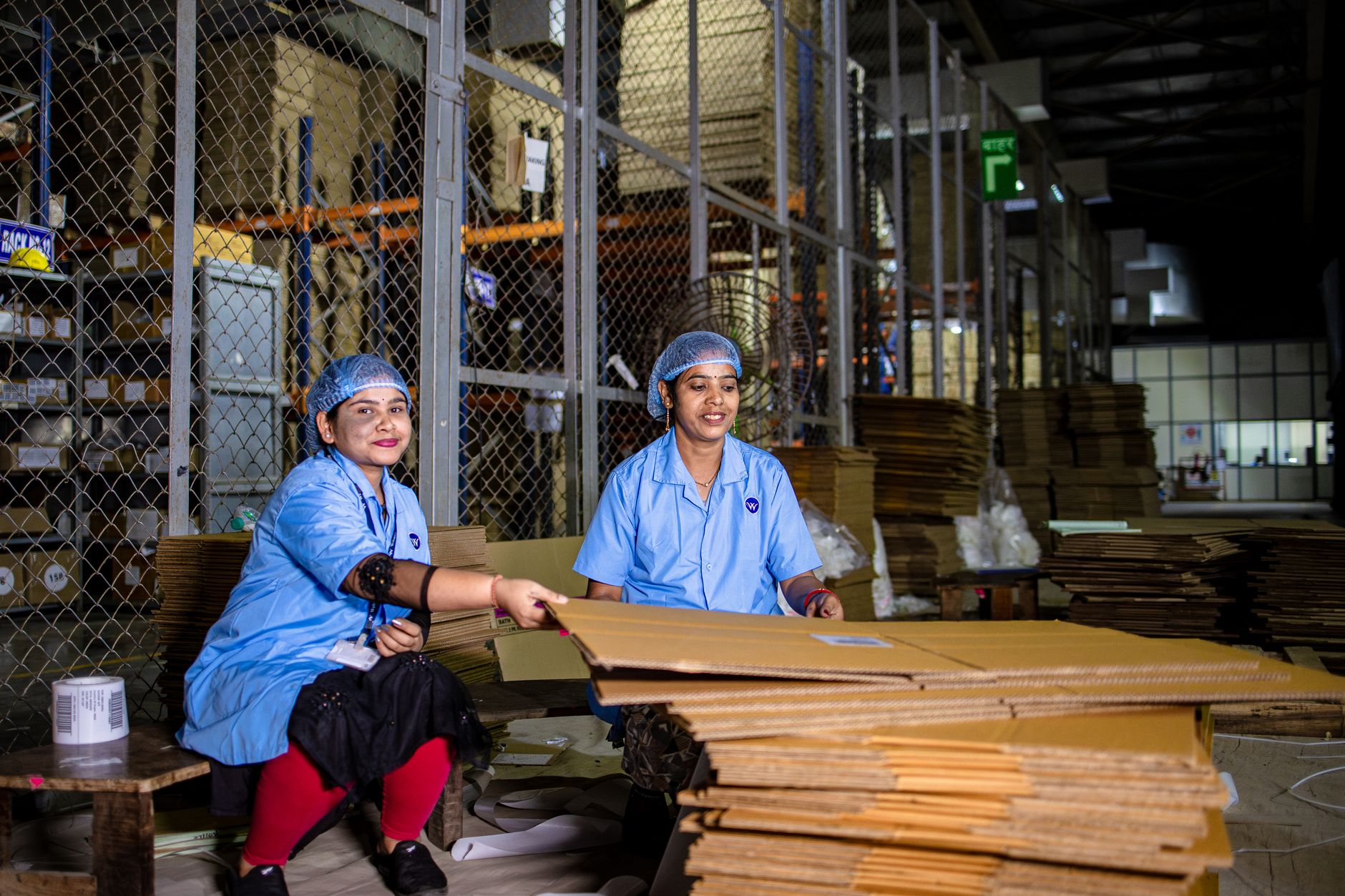
Manual bag palletizing is hard on the lower back. A NIOSH study by Gallagher and Heberger, published in 2015, found that for many workers loading small bags, spinal compression exceeds the NIOSH criterion of 3400 N. The same study found that placing the pallet at the end of the conveyor, rather than beside it, reduced estimated lumbar compression by about 800 N, according to the MMH article that reports the study.
Sector injury data is broader than palletizing. BLS reported 265,700 total recordable cases in transportation and warehousing in 2023, with an incidence rate of 4.5 per 100 full-time equivalent workers, in its November 2024 release. That covers the whole sector, so it shows how much manual material handling risk exists, not a palletizing rate for your plant.
A separate MSHA database count, cited by CDC, lists 217 palletizing-related injuries in the mining sector, with a median of 17 days lost per injury. The back was the most injured body part, at 34 percent of cases. Mining is not a direct analog for a Detroit plant, but the back pattern matches the ergonomic study. The case for a cobot is therefore partly about lift load and injury risk, and a layout change such as end-of-conveyor placement can help even before any robot is considered.
How does a team work with a cobot day to day?
The working model is a robot plus fewer people, never zero. A typical cell keeps one trained operator per shift for changeovers, exceptions and quality checks, with a second person during ramp-up or a new product launch. The robot takes the repetitive lifting, and the operator covers the jobs that still need a person.
Staffing shifts from stacking to tending. Fewer people are needed at the stack, but the people you keep need training on the robot's interface, basic fault recovery and pattern resets. Plan training for go-live, and name a person to respond when the cell stops unexpectedly.
Backup coverage matters, because a stopped cell costs more than one absent worker. Before go-live, ask how the service plan handles on-site dispatch, remote triage and spare unit coverage. A phased rollout that starts with one cell lets the team learn on a single line before the rest of production depends on the robot.
What can a cobot not do?
A cobot cannot judge a case it was not programmed to handle. Crushed cartons, mixed sizes arriving out of sequence, or a bag that tears mid-pick need a person, as does the decision that an incoming load does not meet spec. A cell that assumes perfect input will stop often, and frequent stops erase the labor case quickly.
It is not a general purpose worker. A cobot does not move pallets across the floor, climb a rack, or reach into a machine it cannot access. Those tasks need separate equipment or staff. Plants that expect one robot to replace the full palletizing crew, including forklift work and relief coverage, tend to be disappointed.
A cobot also does not remove the need for engineering. Pattern changes, product launches and layout changes all need time from someone who knows the line. We would rather flag that before the lease than after a demonstration pallet works and the first product change does not.
Is cobot adoption growing, and does it matter for one Detroit plant?
According to the International Federation of Robotics, cobot installations reached 66,000 units in 2025, about 11 percent of industrial robot installations. Total industrial robot installations passed 600,000, reported as 603,000 and up 11 percent. Adoption is clearly growing, but those figures describe the market, not your plant.
For a single plant, the useful signal is maturity. Cobots are now a common tool for repetitive palletizing and machine tending, so integrators and service support are established and easier to find. That lowers the risk of a first installation, though it does not replace a site assessment of your own line.
How do you get a cobot lease quote in Detroit?
Start with the site, not the robot. We assess the pallet patterns, case and bag specifications, conveyor geometry, shift coverage and the staff who will tend the cell, then recommend the robot and layout that fit. The lease is quoted after that free site assessment, and the quote covers the robot, integration and service in one agreement.
Robots are leased through financing, which spreads the commitment over the agreement term and keeps capital available for the line itself. After the quote, we deploy and integrate the robot, train your staff, support go-live, and service it nationwide through on-site dispatch and remote triage. Confirm exactly what the service plan covers in the written quote.
Ask for a single pilot cell before any full line conversion. A robot pilot program with one leased unit tests the pattern library, operator training and service response in your building before the rest of the line depends on it.
- Site assessment of the line, patterns and staffing
- Review of case and bag specifications against the robot's payload and reach
- Layout and integration plan for the conveyor and pallet flow
- Pilot cell with training and go-live support, then expansion only after results
Frequently asked questions
Put a robot to work in Detroit.
We walk your site, learn the job, and recommend the unit that fits. Then we quote the lease, deploy it, and keep it serviced.
Sources
- US Bureau of Labor Statistics, Occupational Employment and Wage Statistics (OEWS May 2024)
- BLS Occupational Employment and Wages, Detroit-Warren-Dearborn (May 2024 data, released May 2025)
- BLS Occupational Outlook Handbook, Hand Laborers and Material Movers
- O*NET OnLine, Laborers and Freight, Stock, and Material Movers, Hand (citing BLS)
- BLS Survey of Occupational Injuries and Illnesses, 2023 data (November 2024 release)
- CDC Stacks, MSHA palletizing injury data
- MMH, NIOSH study on ergonomics of bag palletizing (Gallagher and Heberger, 2015)
- International Federation of Robotics, President's Report 2026