
The short answer
The cleaning robot cost for airplane hangars depends on how much open floor gets scrubbed, how much oil and debris sits on it, how many obstacles the route has to avoid, the after-hours window, and how many units run. No single price fits, because hangar floors range from a few thousand square feet to hundreds of thousands. We lease the robot through financing and state a fixed robot lease payment in a quote that follows a free site assessment.
Key takeaways
- Hangar floor area varies enormously, so the site assessment sets the number, not a national average.
- Heavy oil and fixed obstacles add staff work that a robot pass does not remove.
- Janitorial labor is a tight pool with high turnover, which shapes the staffing case.
- A lease quote should name mapping, integration, training and service on separate lines.
- No hangar case study turned up in our search, so measure your own floor before deciding.
What does a cleaning robot cost for an airplane hangar depend on?
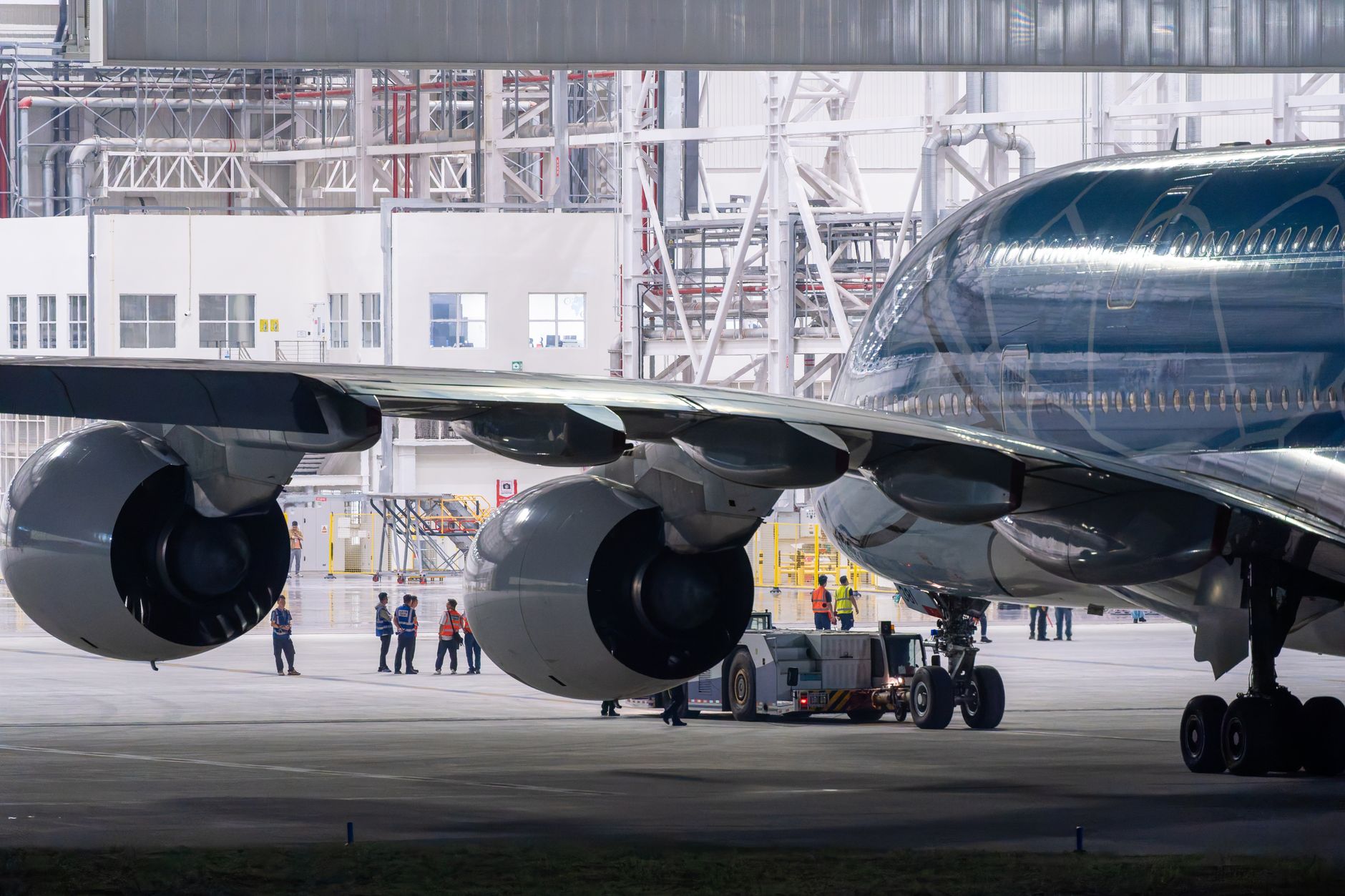
The cleaning robot cost for airplane hangars is set by the work on the floor, not by the building type. A hangar floor is large, mostly open concrete, and often marked with oil, hydraulic fluid and tire residue near the aircraft stands. Scrubbing that floor on a repeat schedule is routine work, the kind a floor scrubber handles well in large spaces.
Our search did not turn up a published case study for an autonomous scrubber working inside an aircraft hangar. The closest documented matches are airport terminals and a military logistics warehouse. Treat any hangar claim as something to test on your own floor, not something to assume from a neighboring space.
The useful questions are how many square feet get scrubbed, what is spilled on the floor, what must be moved out of the route, and when the work can happen. Those answers move the scope far more than the word hangar does.
How big is a typical airplane hangar floor?
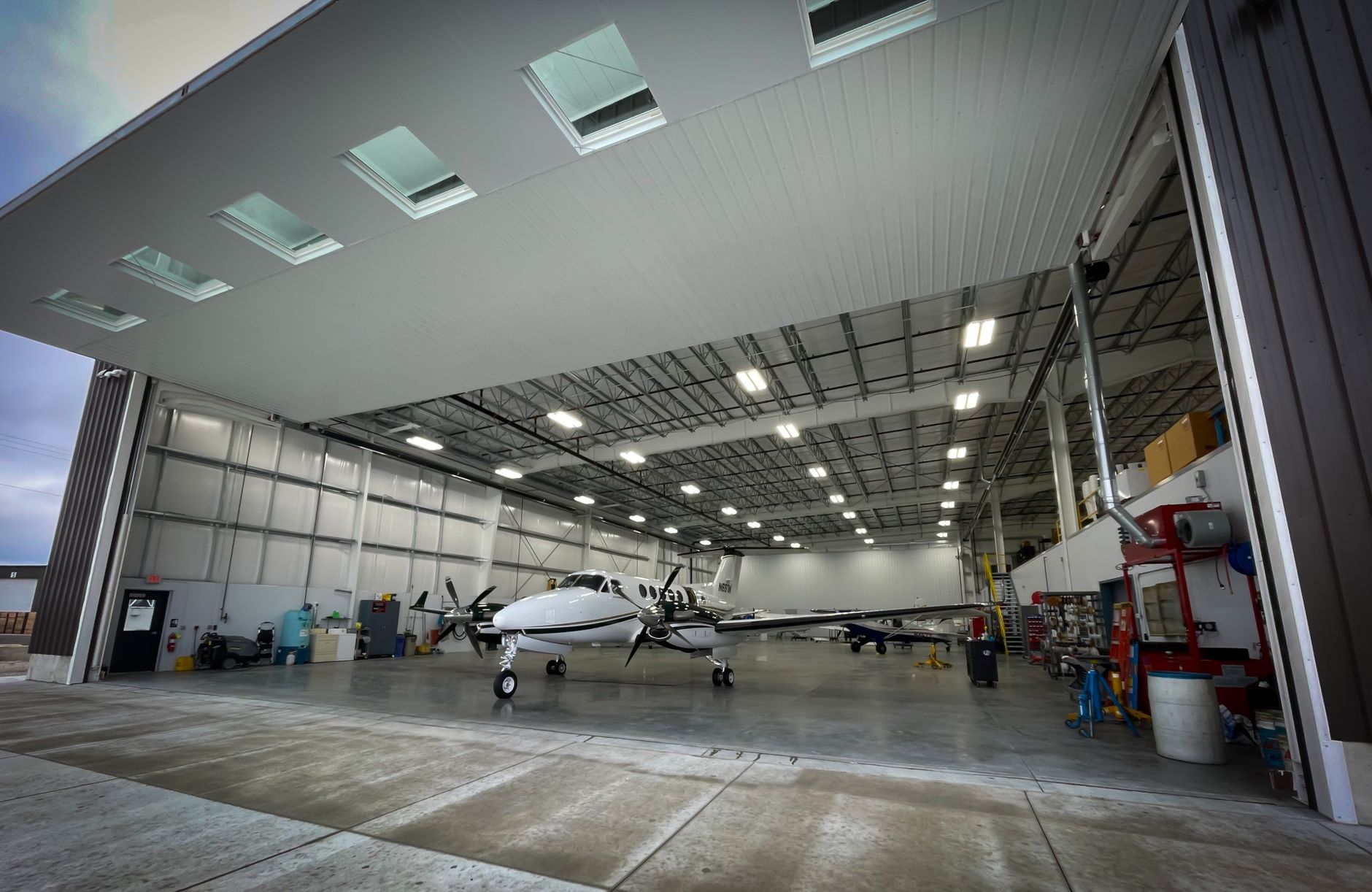
Hangar size varies more than most people expect. An industry blog gives a small box hangar at about 50 by 50 feet, roughly 2,500 square feet, though that source is not independently verified. A Bishop Airport document describes its Hangar 2 at 22,400 square feet, measured 160 by 140 feet.
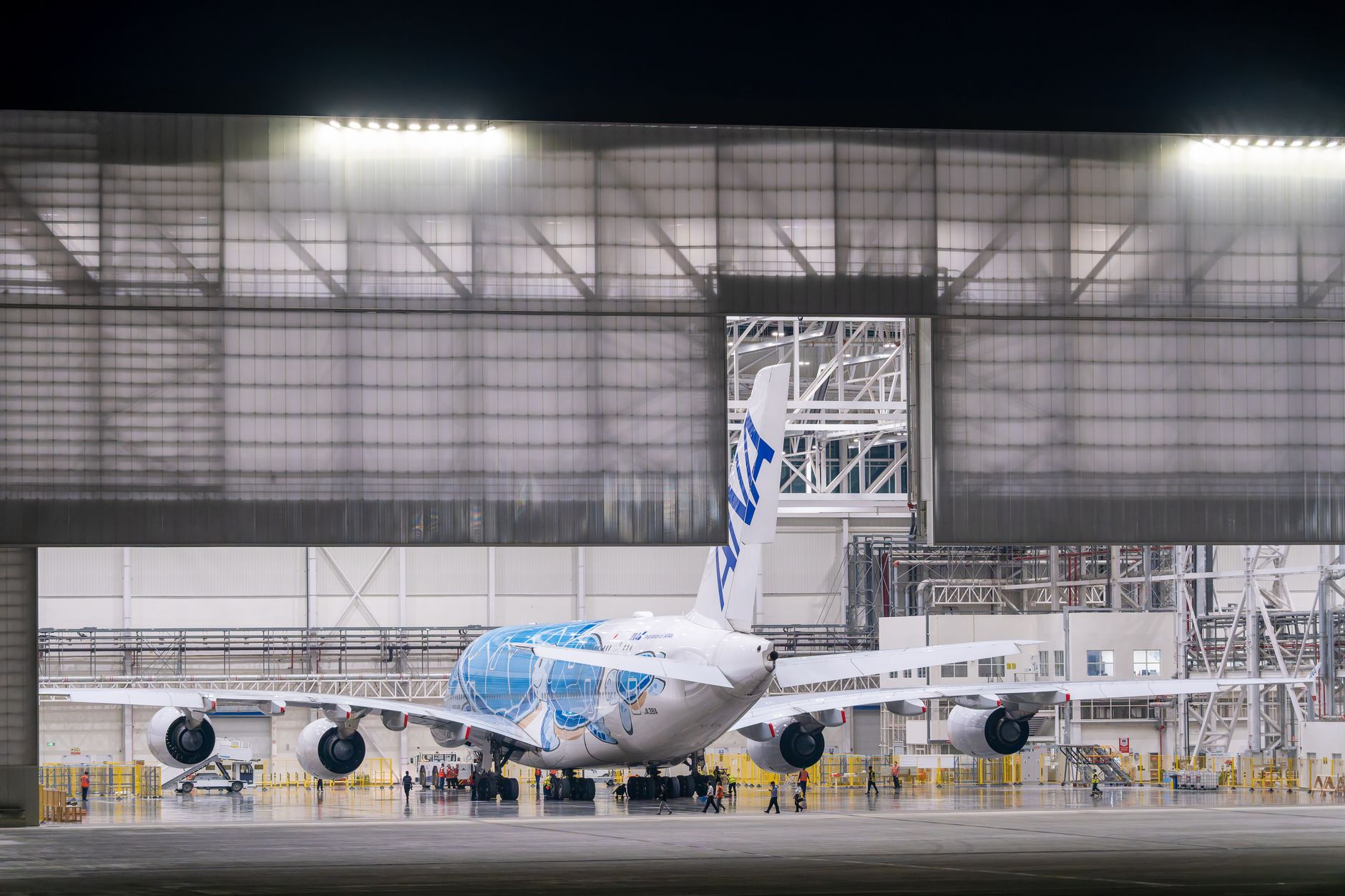
At the large end, SBD International Airport lists seven large bays for heavy aircraft maintenance, from 30,000 square feet to over 500,000 square feet. A floor that size is less a single scrub job and more a planned set of routes across several zones.
Area alone does not predict the work. Layout, the shape of the floor and the position of the stands decide how the route runs. A square footage number is a starting point, and the site assessment turns it into a route.
National counts are a weak guide too. An aviation blog citing a Bureau of Transportation Statistics publication puts the number of airports, including heliports and seaplane bases, at 19,445, with 18,988 open. That figure was not checked against the FAA database, and we found no count of general aviation hangars, so there is no reliable national number to scale from.
What moves the cost up or down at an airplane hangar?
Five factors do most of the work in a quote. Floor area sets how long a unit runs and whether one unit covers the space. Contamination sets how much a person must treat before the robot starts, and heavy oil is the main example.
Obstacles and aircraft positions matter because the route has to be mapped around tool carts, stands, jacks and aircraft that may not sit in the same place each night. Clear paths and a fixed layout keep the route simple and lower the mapping work.
The after-hours window and the number of units close the loop. A short window on a large floor usually raises the unit count, while a longer window can lower it. We size these together during the site assessment, not from a rule of thumb.
How many hours of floor work does a robot take over?
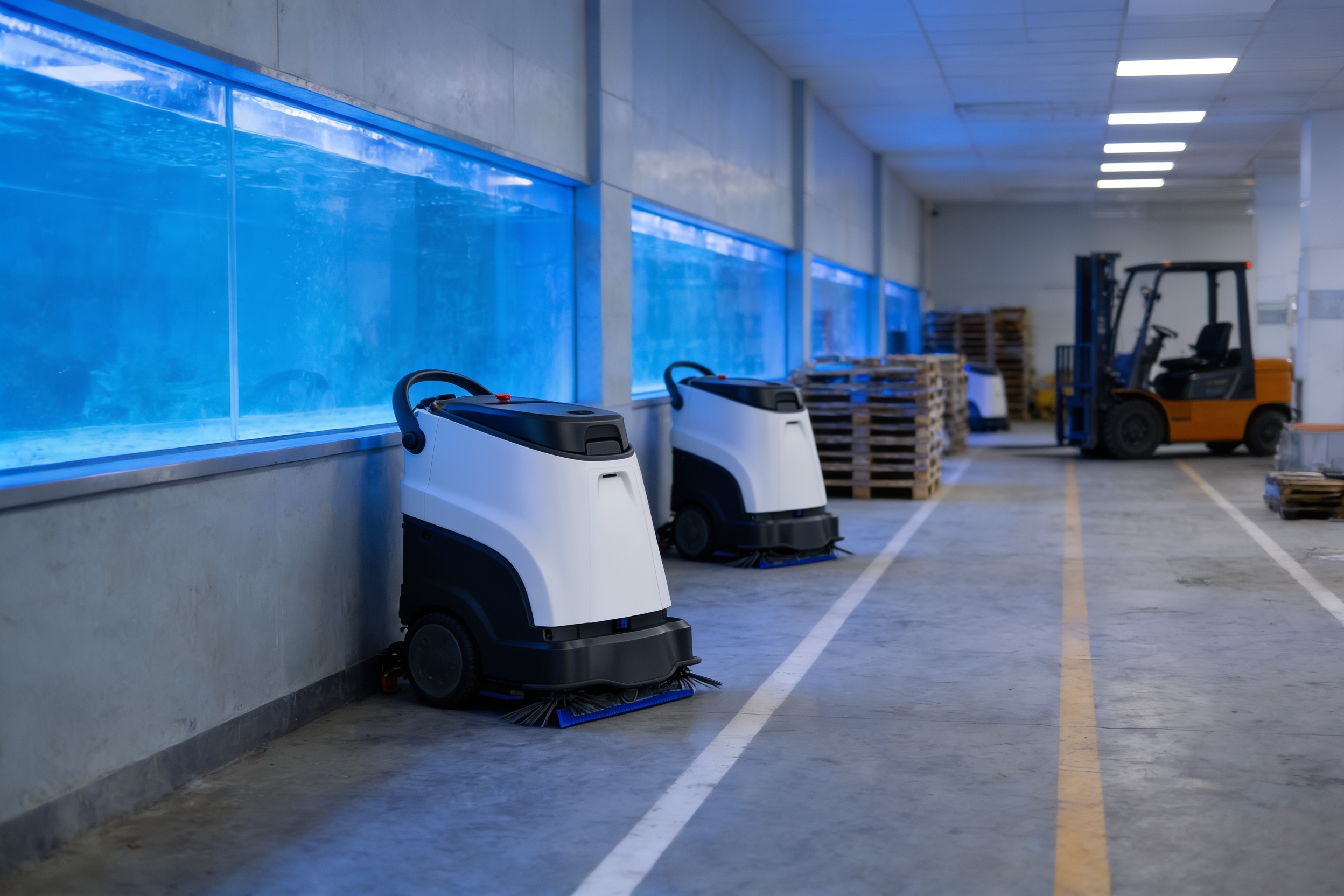
The clearest hour figure comes from an official Air Force Materiel Command photo page, which reports an autonomous scrubber covering a 13,000 square foot logistics warehouse in about two hours. That is a warehouse, not a hangar, so read it as a reference rate and not a forecast for your bay.
Crew hours on your floor are not in any source we found. They depend on the shift plan, how much of the floor is wet, and how many people actually work the area. Time the existing work over several nights before comparing options, and count setup, pre-treatment and checks, which people often leave out of the estimate.
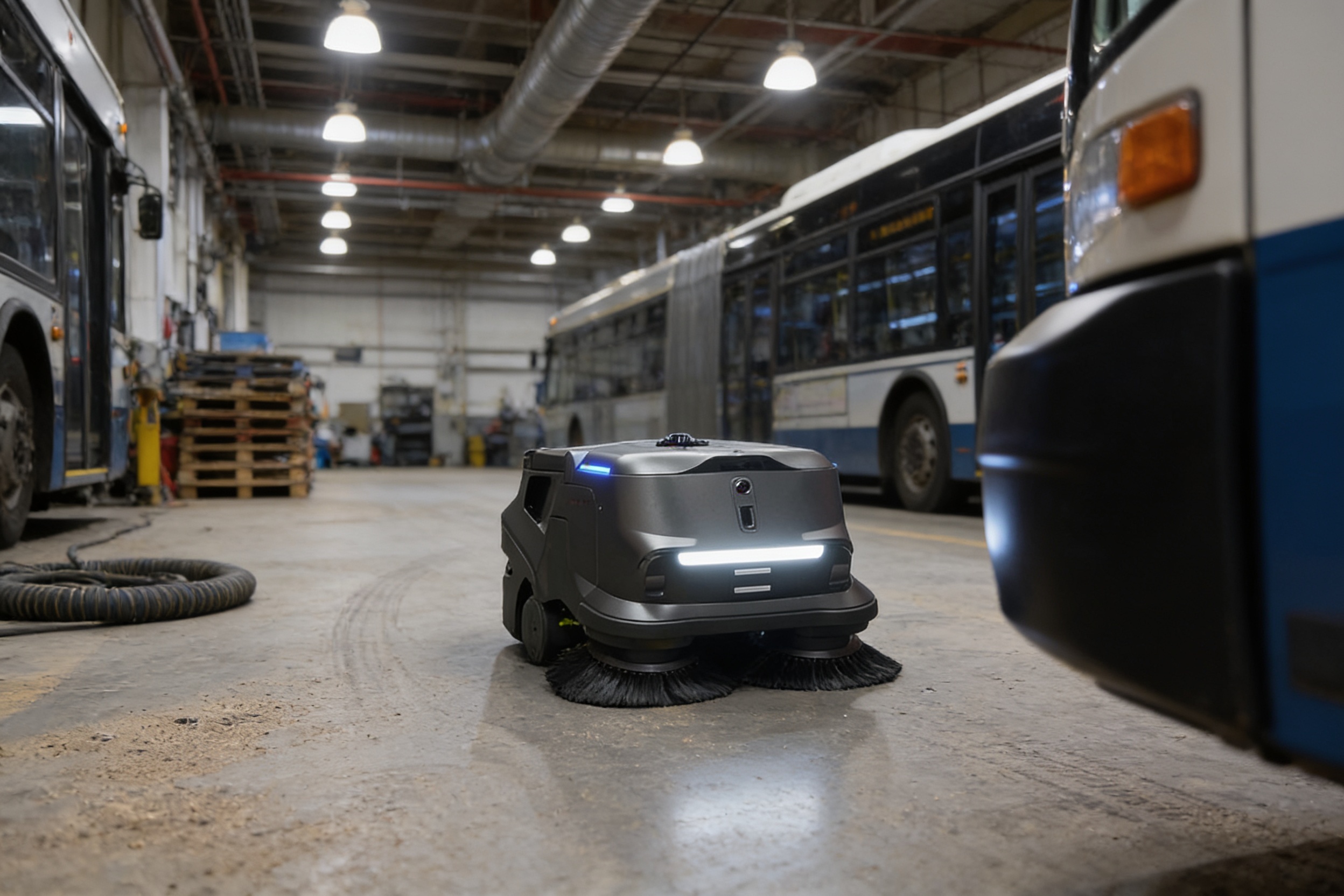
The table below lists the tasks that move to the robot and the tasks that stay with staff. The robot takes the repeat pass, while people keep the pre-treatment and the checks.
Which parts of an airplane hangar does the robot cover?
A cleaning robot covers open, hard, reasonably level floor. In a hangar that usually means the main bay floor, the walk paths between stands, and the hard corridors that connect the bay to offices and tool rooms. Each area needs a mapped route and a clear list of no-go zones.
It is a poor fit for stands, cluttered corners, pits, abrupt edges and areas where fluid is thick. Those stay with staff, and the boundary should be drawn during the site assessment, not after install.
Thresholds at hangar doors deserve a check, since debris and track lines can stop a route. Plan who clears them before each run.
How does leasing through financing work, and what does the quote include?
We lease the robot through financing, so the operator does not pay the full equipment cost up front. The quote gives a fixed robot lease payment, and it follows a free site assessment because the floor, the route and the shift window set the scope.
A quote for this kind of site should show the number of units, mapping and route setup, software, deployment and integration, staff training, and service. Ask that each line be named, so you can compare it with what the site already spends on the floor.
Terms are set in the quote. Ask for the lease term, what happens at the end of it, and how downtime is covered, including whether a loaner unit is included.
Is a leased floor robot worth it compared with staffing the floor?
Janitorial work is hard to staff. According to the BLS Occupational Outlook Handbook, about 2.45 million people were employed as janitors and building cleaners in 2024, and employment is projected to grow 2 percent from 2024 to 2034, which the BLS rates slower than average.
Turnover is high. A cleaning industry HR blog, citing BLS JOLTS data, reports an annual separation rate of 68.4 percent for the services to buildings and dwellings subsector in 2024. That figure was not verified against BLS and excludes no-call no-shows and same-week terminations, so read it as a direction and not a rate for your crew.
Injury rates matter too. A business guide citing the BLS injury survey reports about 2.5 recordable cases per 100 full-time-equivalent workers in janitorial services in 2024, with 1.7 DART and 1.2 DAFW cases. Those figures were not checked against the BLS table, and the same guide puts all private industry at 2.2 per 100 FTE for 2024.
Whether it pays depends on your shift. If the crew cannot fill nights, the robot takes the repeat pass while staff handle spot work. Compare the quote with the real cost of the shift you are trying to cover, not with a generic figure.
What can a cleaning robot not do in an airplane hangar?
It does not clean heavy oil or grease on its own, it does not handle spill response, and it does not climb stairs or work in pits. It also does not replace a person who inspects the floor for debris or decides what is safe to scrub.
The route depends on the map. If stands, carts or aircraft move without the map being updated, the robot stops, reroutes or waits, and staff must clear it. Name who owns the map, because that is a daily operating task.
The honest test is a trial on your floor. Ask for a site assessment before any commitment, and bring the oil areas, the stand positions and the shift window so the scope reflects the real hangar.
How do I get a quote for an airplane hangar?
Start with a free site assessment. We walk the hangar, measure the open floor, mark oil areas and obstacles, and confirm the shift window, power and access. Those inputs set the number of units and the route.
From there we send a written quote that states the fixed robot lease payment, the financing terms, mapping, integration, training and service. Ask about each line before you approve it. As a vendor neutral robot integrator, we pick the unit that fits the floor.
If the floor is a poor fit, we will say so. A short pilot on one bay can show whether the route holds before any larger commitment.
Frequently asked questions
Want a cleaning robot at your airplane hangar?
Tell us about your site. We will recommend the robot, quote the lease, and keep it serviced.
Sources
- BLS Occupational Outlook Handbook, janitors and building cleaners
- Business guide citing BLS injury data for 2024
- Air Force Materiel Command photo page
- Bishop Airport hangar document
- SBD International Airport hangar information
- Cleaning industry HR blog citing BLS JOLTS data
- Aviation blog citing Bureau of Transportation Statistics
- Industry blog on aircraft hangar sizes