
The short answer
Cleaning robot cost for veterinary clinics depends on how much open floor the robot covers each night, which surfaces and layouts it has to handle, how long the overnight window is, and how much mapping, integration and service the site needs. The lease payment is set in a quote after a free site assessment, because no published figure fits every clinic. Staffing is the other side of the math, since repeat floor work turns over steadily across this kind of job.
Key takeaways
- Lease cost follows open floor, surfaces, overnight window, unit count and service scope, and the quote sets the number.
- Repeat open-floor passes suit a robot, while animal care, waste and kennel runs stay with staff.
- The lease payment is one line; mapping, integration, training and service belong in the quote too.
- Log a week of your own floor hours before asking for a quote, because no verified public hour figure replaces it.
- A free site assessment turns the cost question into a written scope and a fixed payment.
Cleaning robot cost for veterinary clinics: the short answer
A cleaning robot for a veterinary clinic is leased, and the cost moves with the site rather than with a catalog figure. The main levers are the open floor the robot must cover, the surfaces and transitions on its route, the overnight window the clinic can give it, and the mapping, integration and service the site requires. Two clinics of similar size can get very different quotes if one has carpeted waiting areas and tight back hallways while the other has sealed hard floors.
The cost question is also a labor question. Clinic support teams are often small, and the floor work between appointments and after close is repetitive, measurable and easy to schedule. That makes it a good candidate for a robot, but only once the clinic can name which passes it wants automated.
What moves the cost up or down at a veterinary clinic
Floor area is the first lever. A robot covering a small exam and waiting area finishes a pass far sooner than one working the full front of house, the back corridors and the surgery prep rooms. Once a pass runs longer than the overnight window, the clinic either adds a unit or drops a zone, and both change the quote.
Surfaces come next. Hard floors such as sealed vinyl or tile are the simplest route. Carpet in waiting areas, rugs, thresholds between rooms and ramps add mapping work and can narrow which robot fits the site. Areas near drains and kennel doors need a decision about whether the robot runs there at all.
Hours and shifts are the third lever. A clean overnight window with nobody in the corridors keeps the robot on a single shift with little supervision. If the clinic wants passes during open hours, the route has to work around patients, clients and staff, which adds supervision and may add a second unit. Service coverage rounds out the picture, since response terms decide how long a stopped unit leaves a corridor unfinished.
How big the market is and what the staffing picture looks like
Veterinarian headcount is large enough to matter for sizing. According to the AVMA's market research page, there were 127,131 U.S. veterinarians as of December 31, 2023. The clinics that employ them are where repeat floor work piles up between appointments, so headcount alone tells you little about the cleaning load.
Staffing pressure is real. According to the AVMA Economic State of the Veterinary Profession, 2025 edition, based on 2024 survey data, veterinarian unemployment rose from 0.5 percent to 0.7 percent, against 3.9 percent for the overall national rate. Among reasons for considering leaving, 33.7 percent cited mental health and 16.6 percent cited lifestyle or work hours. The figures come from a summary of the report, so check the full PDF before quoting them in a proposal.
Support labor draws from a larger pool, but turnover is constant. According to the BLS Occupational Outlook Handbook, about 2,447,700 janitors and building cleaners held jobs in 2024, with employment projected to grow 2 percent from 2024 to 2034, slower than average. The handbook projects about 351,300 openings a year, mostly from replacement, and entry needs no formal credential, only short-term on-the-job training.
Injury rates add to the picture. A BLS Economics Daily article from December 2025 reports 10.6 nonfatal injuries and illnesses per 100 full-time workers in veterinary services in 2023, against 2.4 for all workers. The veterinary rate has ranged from 8.8 to 13.8 since 2019, and 29 percent of 2023 recordable cases led to days away, job transfer or restriction.
How many hours of floor work a robot can take over
The research behind this page did not verify an hour figure for clinic floor work, so the useful number is the one you measure. Log every repeat floor pass for a week, noting who does it, what area it covers and how long it takes. That log turns a general estimate into a quote you can check.
Most of the work that suits a robot is open floor on a fixed route. Corridors, waiting areas and the reception front repeat each night and between busy blocks of appointments. Work involving animals, waste, fluids or moved furniture stays with staff and should be logged separately.
Once the timing is in, the comparison is direct. Hours the robot takes over come off the staff schedule, and the time staff spend on setup, daily status checks and fault reporting goes back on. Only the net figure belongs in the decision.
How leasing through financing works and what the quote includes
Robots are leased through financing, so a clinic does not have to make a large upfront outlay to put one in service. The lease sets a fixed payment for the term, and that payment is quoted after the site assessment, when the robot count, mapping and service scope are known. A quote is only as complete as the scope behind it.
A complete quote shows the robot or robots chosen for the site, the lease term and fixed payment, the mapping and integration work, go-live support, staff training and the service plan. It also states response times and whether a backup unit is available. If any of those lines is missing, ask why before you compare it with anything else.
We offer lease financing programs and select the robot for the site first, then build the lease around that choice. Our integration team handles deployment, and our service team handles faults nationwide, with remote triage first and on-site dispatch when a unit needs hands on it.
Where a cleaning robot works in a clinic
A clinic has a few zones that suit a robot on a fixed route and several that stay with staff. The six zones below are the spaces a site assessment usually reviews.
Routes in a clinic are short and tightly bounded, so the assessment maps each one before a quote is written. Doorways, furniture and room transitions decide whether a route can repeat safely without staff in the way.
What a cleaning robot cannot do at a veterinary clinic
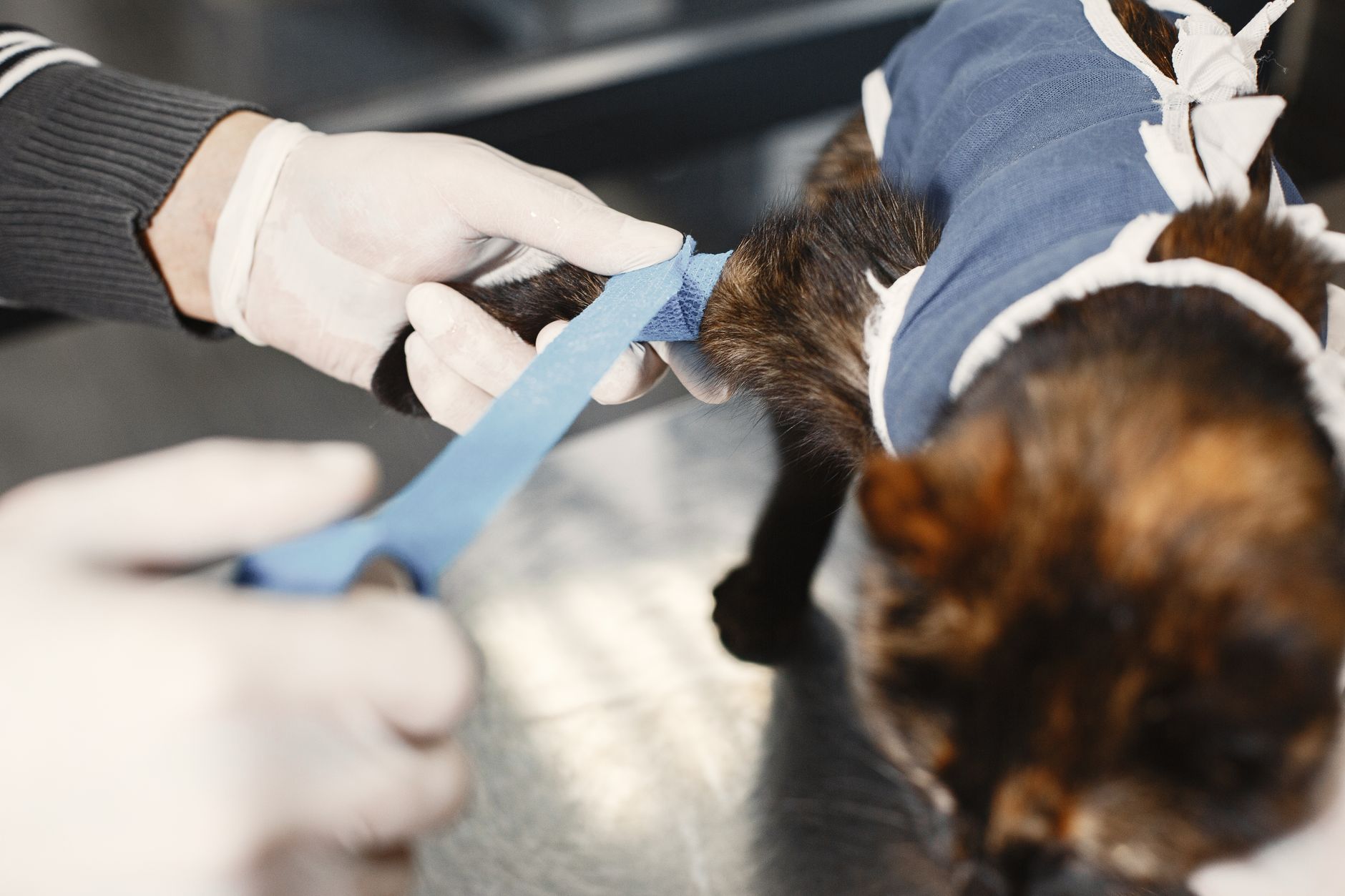
It cannot handle animals, waste, fluids or sharps, and it should not be asked to. Those tasks stay with trained staff, along with the clinic's infection control routine. According to a CDC summary of Washington State workers' compensation claims from 2007 to 2011, injuries most often came from physical contact with animals, which is a handling issue for staff rather than a floor issue.
It cannot run a route that is blocked. Cages, carts, mop buckets and loose cords stop the robot or send it around, so staff clear the path before each pass. A clean route is a staff task that comes before the robot runs, and a clinic that skips it will see unfinished passes.
It is not a replacement for surface disinfection in exam and kennel areas. Hygiene between appointments and in kennels follows its own protocol, and a floor robot does not change that protocol. Treat the robot as the repeat floor pass, not the whole hygiene program.
Older federal data also shows that animal-related injuries are a separate hazard. According to a BLS Monthly Labor Review article using 1990s data, on average 63 fatal and 12,500 nonfatal injuries and illnesses involving animals occurred each year. That estimate is old, but it explains why animal handling stays with trained people.
How to get a quote after a free site assessment
The quote starts with a free site assessment. We walk the clinic, measure the open floor, note surfaces and transitions, log traffic and the overnight window, and confirm where the network reaches. From that we propose the robot, the number of units and the service scope.
Bring your own timing log from a week of floor work, the floor plan if you have one, and the staff schedule for the hours you want covered. The more specific the inputs, the closer the quote lands to the actual scope of work.
When the quote arrives, check it against the hidden costs listed above. A quote that names mapping, integration, training and service in plain terms is one you can measure against the staff hours you want to take over.
Frequently asked questions
Want a cleaning robot at your veterinary clinic?
Tell us about your site. We will recommend the robot, quote the lease, and keep it serviced.
Sources
- AVMA market research statistics on U.S. veterinarians
- AVMA Economic State of the Veterinary Profession, 2025 edition
- BLS Occupational Outlook Handbook: Janitors and Building Cleaners
- BLS The Economics Daily: Nonfatal Injuries and Illnesses in Veterinary Services
- BLS Monthly Labor Review: Are Animals Occupational Hazards?
- CDC stacks: Washington State workers' compensation claims involving animals