
The short answer
The cleaning robot cost in Las Vegas is set by floor area, overnight hours, foot traffic, and how much mapping, integration and service a site needs, with the unit count following from those. Las Vegas has a large janitorial workforce, but hotels, casinos and convention halls run tight schedules and heavy traffic that shape the unit count and the service plan. A lease quote comes after a free site assessment, because the measured floor is what sets the answer.
Key takeaways
- Floor area, overnight hours and foot traffic move a Las Vegas quote more than any single fixed item.
- The BLS counted 25,710 janitors and cleaners in the Las Vegas metro in May 2023, so local labor is deep but still hard to keep stable.
- Mapping, integration, training and service are the costs people most often leave out of the first conversation.
- Overnight cleaning on a mapped route takes staff time that a unit can cover, so labor hours are the real measure.
- A lease quote comes after a free site assessment, and the lease terms and service plan are written into it.
What does a cleaning robot cost in Las Vegas depend on?
The cleaning robot cost in Las Vegas is set by the building and the schedule, not by a shelf price. Two sites of the same size can land far apart on a quote if one runs a single day shift and the other needs a unit working a casino floor that stays busy around the clock. The useful question is what the robot has to cover, at what hours, and what the site needs around it to keep it running every day.
Local labor sets the baseline. According to the Bureau of Labor Statistics Occupational Employment and Wage Statistics program, 25,710 janitors and cleaners, except maids and housekeeping cleaners, were employed in the Las Vegas-Henderson-Paradise metro in May 2023, up from 23,860 in May 2022. A calculation from those two counts gives a rise of about 7.8 percent, and the metro location quotient for the job was 1.66, meaning the work is about 1.66 times as concentrated there as across the country.
A large local pool does not mean a stable crew. Janitorial jobs turn over fast, and every replacement brings training and supervision time that the cleaning schedule still has to absorb. That is why the labor side of the math matters as much as the machine.
Which factors change the cleaning robot cost at a Las Vegas site?
Floor area is the first driver. It sets how many units and how many hours of runtime a site needs to finish a full pass. A large hotel lobby with connected corridors may need more than one unit, while a small restaurant may need one unit on a short route. Coverage is measured as mapped floor, which is why the assessment begins with a walk and a floor plan.
Shift timing matters as much as size. A unit that runs overnight, after guests leave and before the morning crew arrives, covers more ground than one that works a busy lobby at midday. Overnight access also depends on how the building is locked, how elevators are controlled and who approves after-hours entry.
Surfaces and traffic change the work. Sealed concrete, tile and polished floors are the easiest to scrub. Carpet, thresholds, ramps and furniture that moves each day add route planning and sometimes a human pass. Desert grit tracked in from parking areas adds to how often a floor needs a pass, and crowds around event doors add stops.
Mapping, integration, unit count and service coverage finish the picture. The robot needs a map of the floor and a list of the doors, elevators and dock points it may use. Integration with access control or existing cleaning logs is a separate line. A second unit gives backup when one is down, and a faster response window raises the cost of service.
Which Las Vegas businesses run cleaning robots, and what drives their demand?
The local mix is unusual. Casinos, hotels, convention halls, restaurants, grocery stores, gyms, car dealerships and parking garages all carry large floor areas and heavy traffic, and most set their own hours around guest or customer schedules. For many of them the overnight window is the most valuable part of the day.
Visitor demand moves the workload. The Las Vegas Convention and Visitors Authority reported 38,545,700 visitors in calendar 2025, down 7.5 percent from 2024, and every month of 2025 was down year over year, according to the Nevada state publication that carries the summary. Hotel occupancy averaged 80.3 percent for 2025, down 3.3 points, according to a local TV news summary of the year.
Convention activity held nearly flat, with about 6 million attendees in 2025, according to the same local TV news summary. Event halls need a full clean between shows, so a short turnaround favors a unit that can run on a schedule. Room count also sizes the work. Available room inventory was 149,971 in November 2025, according to the state publication, which shows how many corridors and lobby zones a hotel side of the metro carries each night.
How many labor hours does a cleaning robot take over?
The research behind this page did not verify typical cleaning hours for a Las Vegas building, so the hours below describe the kinds of work a site assessment times, not published averages. Government data does show how hard the job is on people. According to the Bureau of Labor Statistics injury snapshot for janitors and cleaners, except maids and housekeeping cleaners, there were 21,100 nonfatal cases with days away from work in 2020, and the incidence rate was 191.6 per 10,000 full-time equivalent workers, up from 157.4 in 2019.
Those figures explain why hours spent pushing equipment and repeating the same floor pass matter. A mapped unit takes the repeat passes on the main routes, which are the most predictable part of the night. Staff keep the work that needs judgment or hands, such as debris, spills, restrooms, touch points and the areas a unit cannot reach.
Turnover makes the hours harder to cover. A janitorial industry blog cites turnover ranges of 75 to 400 percent, and it is not government data, so treat it as a warning sign and measure your own. Each open shift that goes unfilled is an hour the floor waits, which is where the labor comparison usually starts.
How does leasing a cleaning robot through financing work?
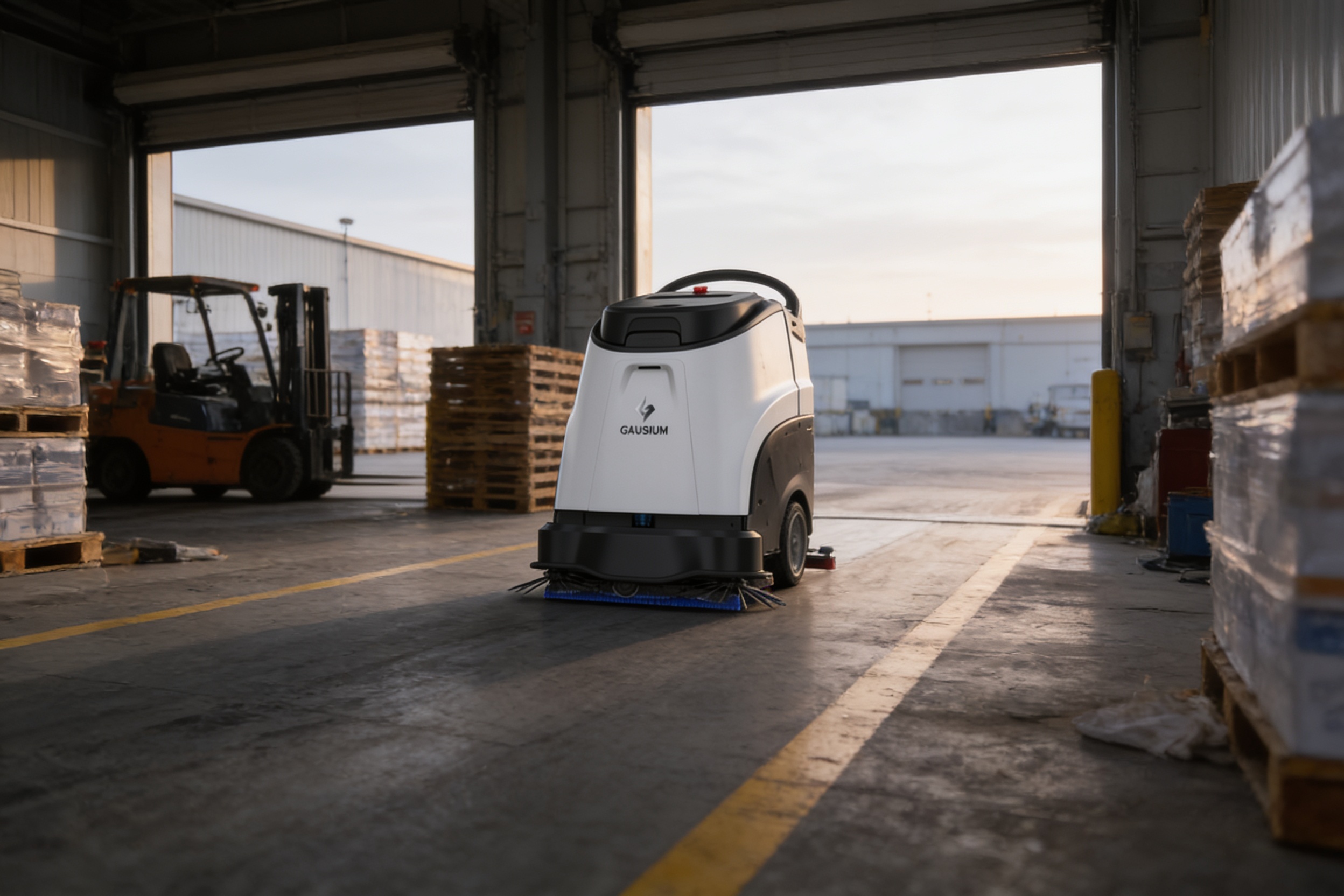
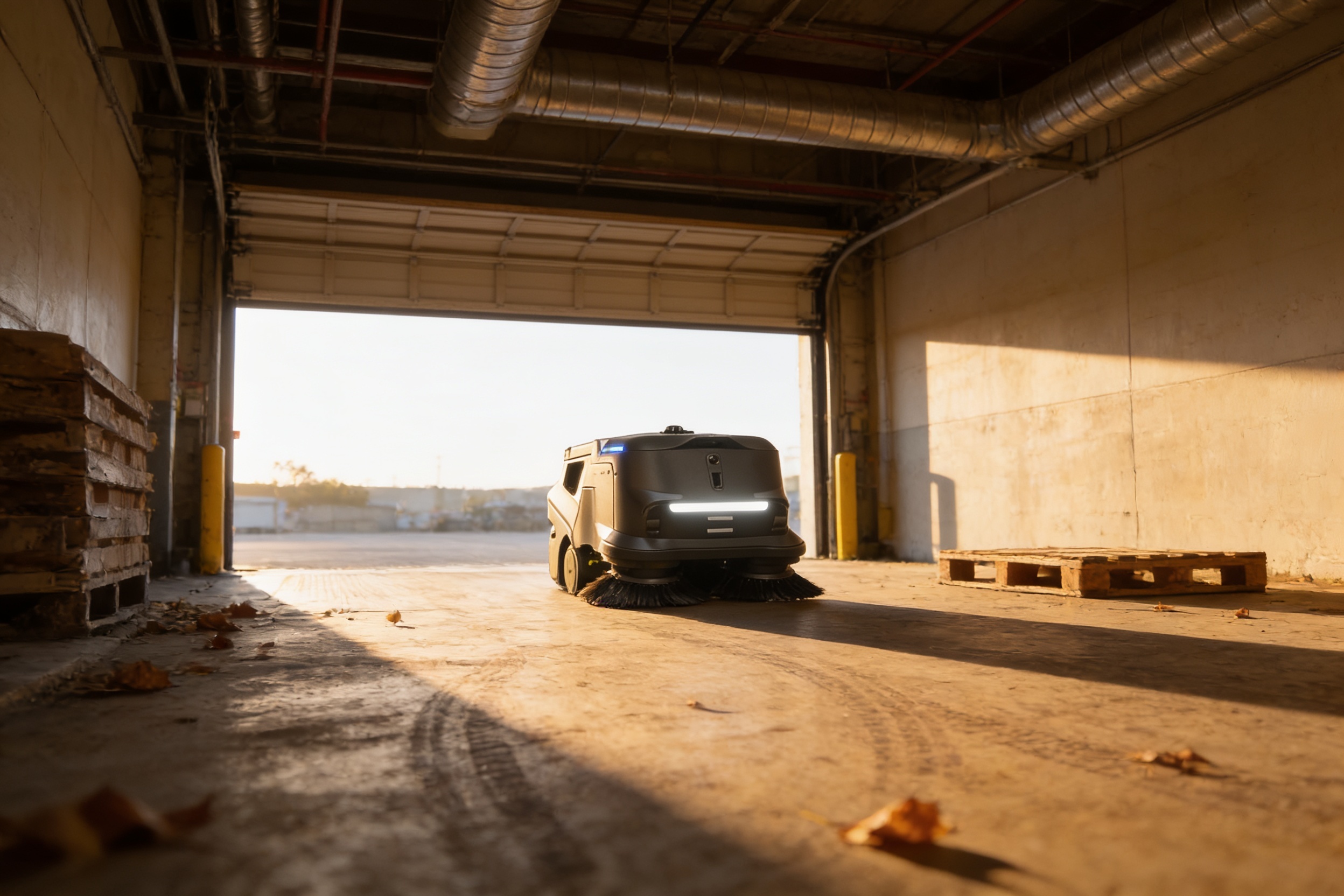
We lease commercial robots through financing, so a business pays a fixed lease payment instead of tying up capital in hardware. The lease keeps money free for staffing, supplies and facility work, and it places the unit, deployment and service under one agreement. We are a US commercial robot integrator: we pick the unit for the site, lease it, deploy and integrate it, train staff and service it nationwide.
The quote lists the lease terms, deployment and integration, staff training, mapping time and the service plan as separate lines. Maintenance and repair sit inside the service plan, with remote triage first and on-site dispatch when a fault needs hands. Ask for the term and the end-of-term options in writing, along with what happens to the unit if the site closes early.
The lease payment is only part of the answer. Read the terms for insurance, relocation, swapping units and early exit, because those clauses change the true cost more than the headline payment does. A quote that is clear on these points is much easier to compare with a staffing plan.
Is a cleaning robot worth it compared with staffing the same shifts?
Worth it depends on the cost of unfilled shifts and the hours a crew spends on repeat passes, not on the machine alone. Turnover is the pressure point in this market. Where a night shift is hard to fill, a unit covers the repeat passes that would otherwise wait, and the crew keeps the work that needs hands.
Adoption is growing but still early. In a 2019 survey of nearly 23,000 recipients by AACEM and ISSA, 62 percent of building service contractors, 68 percent of in-house providers and 69 percent of facility and property managers had not used autonomous cleaning equipment. A 2026 figure, reported in a news item and attributed to a vendor, puts the share of building service contractors planning to adopt robotic floor equipment within 12 months at about 32 percent, roughly double the 2025 share.
Payback is a question you answer with your own hours. Count the night-shift hours, the open shifts, the overtime and the supervision time, then set those against the lease quote and the service terms. A steady overnight floor with few obstacles usually looks very different from a site with many doors, carpet zones and tight gaps.
What can a cleaning robot not do?
A cleaning robot does one job well. It runs repeat floor passes on a mapped route. It does not replace everything a crew does. Restrooms, glass, spot cleaning of spills, debris that needs picking up by hand and detailed work around fixtures stay with staff.
Terrain and layout set the limits. Steps, thresholds, ramps, narrow gaps and carpet beyond what the unit is rated for need a survey and sometimes a human route. Furniture that moves every day breaks the map unless someone updates it. Wet or uneven floors can stop a unit until staff clear them, and a unit that stops in a doorway can block a fire route, so stop rules should be set during deployment.
Connectivity, power and access matter. A unit needs a reliable link to the building network and a charging spot that stays open. Fire doors, sprinkler zones and loading docks have to be checked before deployment. These limits do not make the robot a poor fit. They define which zones the unit covers and which zones staff keep.
How do you get a cleaning robot quote after a site assessment?
A quote starts with a free site assessment. We walk the floor, record its area and surfaces, time the existing routes, note the shifts and traffic, and check doors, elevators, power and network access. The result is a route plan and a unit count, and the lease quote is built on that plan.
The quote is written, not estimated from a list. It shows the lease terms, deployment and integration, staff training, service coverage and any extra work such as mapping time. Ask for each line to be named and for a plain sentence on what changes the total if the floor changes after deployment.
Before you request an assessment, gather the floor plan or CAD file, the cleaning schedule, the staff count for each shift, the hours the building is open, and a list of zones with carpet, ramps or heavy traffic. Those five items let the assessment move quickly and keep the quote tied to your floor.
Frequently asked questions
Put a robot to work in Las Vegas.
We walk your site, learn the job, and recommend the unit that fits. Then we quote the lease, deploy it, and keep it serviced.
Sources
- BLS Occupational Employment and Wage Statistics, May 2023
- BLS Occupational Employment and Wage Statistics, May 2022
- Nevada state publication with LVCVA visitor and room inventory data, 2025
- Local TV news summary of 2025 Las Vegas visitor and hotel data
- BLS injury snapshot, janitors and cleaners except maids and housekeeping cleaners, 2020
- ISSA and AACEM autonomous cleaning equipment survey, 2019
- Janitorial industry blog on turnover rate changes
- News item on 2026 robotic floor equipment adoption among building service contractors