
The short answer
Cleaning robot ROI in Las Vegas comes from floor hours that a leased robot takes over from janitors and building cleaners, on the large floor areas typical of casinos, hotels and convention venues. The return depends on how many of those hours the robot can realistically cover, how much supervision stays with staff, and the lease cost quoted after a free site assessment. The calculator on this page shows a savings range for your building, not a promise.
Key takeaways
- The return comes from the floor hours a robot takes over, not from removing a whole crew.
- Large floor areas in Las Vegas buildings mean more repeat passes per shift.
- The local wage for this job sets the value of each hour, and it is shown beside the text.
- Measure your own hours and uptime, because no verified Las Vegas hour count is published here.
- Savings are ranges that narrow after a free site assessment and a measured pilot.
Run the numbers for your site
Auto-detected from your location - we use the real BLS wage here. Not right? Pick your city or state above.
What do you want to automate?
The robot runs the open floor overnight; your crew keeps detail and edges.
What does cleaning robot ROI in Las Vegas look like?
Cleaning robot ROI in Las Vegas is the return a building earns when a leased floor robot takes over repeat floor work that janitors and building cleaners would otherwise do. The setting matters because the floor area is large. According to the LVCVA monthly summary, Las Vegas recorded 38,545,700 visitors in 2025. The LVCVA year-end release describes hotel inventory of about 150,300 rooms, the largest in the US, and notes that this is an approximation rather than one official total.
Those rooms sit in buildings with long corridors, gaming floors, back-of-house passages and parking structures. According to KNPR, reporting in May 2026, the Las Vegas Convention Center has about 2.5 million square feet of exhibit space and a total venue of 4.6 million square feet after the West Hall expansion. BizBash reported that the expansion added 600,000 square feet of exhibit space.
Floor area is one of the main inputs to the calculator on this page. A large hotel or venue will show a separate savings range from a small office, and that range narrows once the site assessment maps the actual routes. Treat it as a spread to narrow, not a forecast.
Where does the return come from in a Las Vegas building?
The first source of return is labor hours on repeat floor passes. Corridors, gaming floor edges, convention aisles and parking decks need the same passes every shift, and the crew time spent on those passes is what a robot can take over. The second source is coverage. When the overnight crew is thin, public areas can go longer between passes, and scheduled runs keep the floors on a set cycle.
Room cleaning is a separate job from janitorial work. Housekeeping staff clean guest rooms, and this page does not price that time. The robot takes janitors and building cleaners type of work off the crew, such as scrubbing, sweeping and passes through shared areas, so staff can spend their hours on restrooms, spills and detail work that a robot does not handle.
Expect the return to come from a share of the hours, not from removing the whole crew. Most sites keep people for restrooms, trash, spills, doors and stains. Plan the robot as one part of a floor routine, and the offset will be easier to defend when you review it later.
Median hourly wage, Janitors and Building Cleaners
$4,184
Monthly cost of one full-time worker in Las Vegas, NV, at the median wage plus payroll costs (an estimate, not a quote).
What is the local labor side of the math?
The government wage data on this page gives the local wage for this job, which sets the value of each hour the robot takes over. The calculator applies that value to the hours a robot covers, so the route share sets the scale of the offset. Every site has its own staffing, so treat the wage as a starting value, not a payroll figure.
According to the Bureau of Labor Statistics Occupational Employment and Wage Statistics for May 2023, the Las Vegas-Henderson-Paradise metro had about 25,710 janitors and cleaners jobs, or about 23.7 per thousand jobs in the metro. We did not find a May 2024 metro employment count in this search, so the employment figure here is from May 2023.
Turnover adds hiring and training time to the labor cost of a crew. We did not find an official BLS turnover rate for janitors and building cleaners, and the higher turnover figures circulating in trade material were not traced to a primary source. Use your own separation and hiring records during the site assessment.
How does the savings math work?
The calculator works from three inputs. The first is labor hours offset, meaning the floor hours per week that move from the crew to the robot. The second is the share of the work a robot realistically takes, because obstacles, doors, carts and spills keep some passes with staff. The third is the lease cost, which comes in a quote after a free site assessment.
In plain terms, the savings range is the local value of the hours the robot takes over, minus the lease cost, with allowance for the staff time still needed for supervision and exceptions. The low end assumes a smaller share of passes and more staff checks. The high end assumes clean routes, steady uptime and a full schedule of runs.
Read the range as a spread the site assessment narrows. The more stable the measured hours and routes, the tighter the range. Ask for the assumptions behind any figure you are shown, including the share of passes and the hours of staff time kept on the account.
Lease length also changes the math. A longer term spreads the lease cost over more periods, while a shorter pilot period lets you check the measured share before you commit to a full schedule. Compare the terms side by side in the quote, not only the headline range.
Which cleaning hours does a floor robot take over?
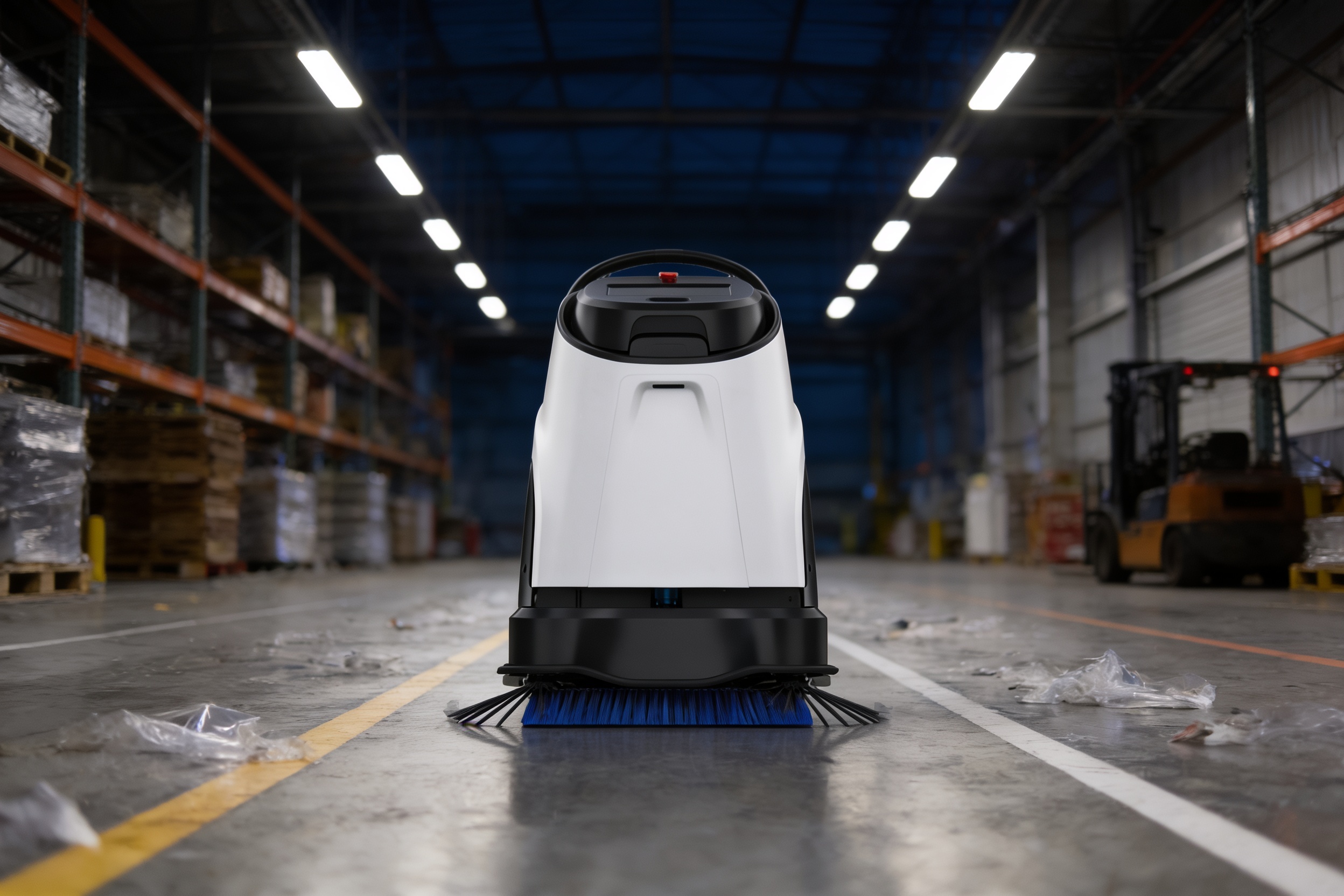
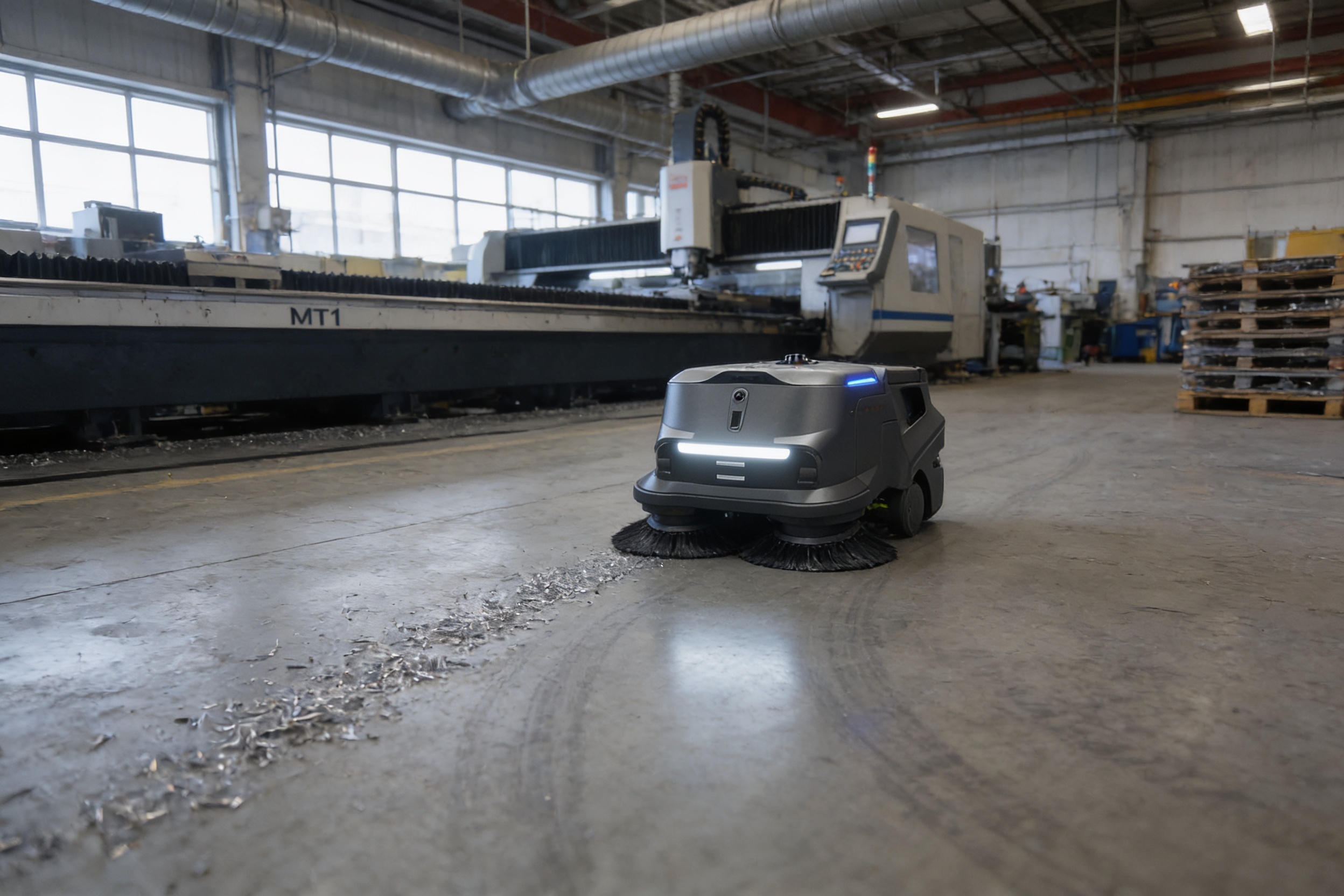
The table lists the kinds of floor work a robot can take over and what the crew does instead. The hour figures are not on this page because we did not verify a Las Vegas hour count for these tasks in this search. Your crew logs from the site assessment give the real figures.
Restroom cleaning, trash removal, spill response and stain removal stay with staff. A robot covers the repeat passes that fill much of the shift. That split is what the calculator models.
To log hours, record each route, its start and end time and any stoppage for one normal week and one event week. Separate the passes the robot can run from those that need a person, and note the reason for each. That log becomes the base for the offset in the calculator.
What do injury rates say about floor work?
The Bureau of Labor Statistics Survey of Occupational Injuries and Illnesses reports 21,100 cases with days away from work for janitors and cleaners, except maids and housekeeping cleaners, in private industry in 2020. The incidence rate was 191.6 per 10,000 full-time equivalent workers. For 2019, the same series reported 18,680 cases and an incidence rate of 157.4 per 10,000.
For 2016 to 2018, the same series reports rates of 178.6, 176.6 and 137.1 per 10,000 full-time equivalent workers, in that order. These are national figures for private industry, and we did not find post-2020 data in this search. They are not Las Vegas figures.
Repetitive passes and manual handling are where much of the exposure sits, so a floor robot can reduce the number of manual passes a worker makes. Check your own injury logs before you assume a safety gain, and keep staff on tasks that involve loading, cords and spills.
How common is autonomous floor cleaning?

A 2019 survey by AACEM and ISSA found that about two-thirds of respondents had not used autonomous cleaning equipment. A later ISSA follow-up reported that 27 percent of respondents use autonomous cleaning equipment. The year of that follow-up is not confirmed in the source excerpt, so read the two results as a trend, not a matched comparison.
Adoption is still a minority practice in the survey data, which makes peer references useful. Ask a comparable site for its measured hours, its uptime and how its crew adjusted. Industry surveys reflect the people who answered them, so they cannot tell you what your building will do.
What can lower the return, and how do you avoid it?
The most common way a floor robot underperforms is downtime. If a unit waits for service, the crew covers the passes and the offset shrinks. Ask how fast a service team can dispatch, whether remote triage can restart a unit, and whether a spare unit covers a failed one during the lease.
Layout changes are the second risk. New furniture, event setups and temporary barriers can block routes. Agree on a change process with the operations team and update the route map after any major change, so the robot does not stall in the same place every shift.
Third, an optimistic share of hours inflates the range. Start with a measured share in a pilot area, then expand. Fourth, staff who do not expect the robot may move carts into its route or ignore alerts. Brief the crew and assign one person to check runs each shift.
Finally, look at the exceptions. Spills, wet floors, cords and doors that stay open all interrupt runs. Count how often staff step in during the pilot, because that count tells you how much supervision the return really carries.
How long until a lease pays back?
The first phase is the site assessment, which maps the floor, records crew logs and identifies the routes the robot will run. The second phase is a pilot with one leased unit in a defined area, so the measured hours can be checked against the forecast. We provide go-live support and staff training during that phase.
The third phase is full deployment, with the schedule widened as the measured share holds. Payback comes when the measured hours offset the lease cost over the period you are measuring. Because the result depends on the first months, pilot measurements matter more than any early forecast.
Keep the measurement simple: hours on each route before and after, the uptime percentage and the exceptions staff handled. Those three records show whether payback is on track. Review them at fixed intervals with the operations lead so that changes are made on evidence.
How do you get a precise figure from a free site assessment?
A free site assessment turns the savings range into a quote. We look at floor plans, routes, floor types, shift schedules, power and charging access, and how the crew works today. The output is a narrower range and a lease quote built on your numbers, not a generic benchmark.
We are a commercial robot integrator. We pick the right robot for the site, lease it through financing, deploy and integrate it, train the staff and service it nationwide. Service plans can include on-site dispatch, remote triage and spare unit coverage, and the terms are stated in the quote.
To start, request the free site assessment with your floor plan, shift schedule and logged crew hours. We will return the calculator output for your building with the assumptions shown, so you can check each input before you decide.
Frequently asked questions
Put a robot to work in Las Vegas.
We walk your site, learn the job, and recommend the unit that fits. Then we quote the lease, deploy it, and keep it serviced.
Sources
- US Bureau of Labor Statistics, Occupational Employment and Wage Statistics (OEWS May 2024)
- LVCVA monthly summary (2025 visitor volume)
- LVCVA year-end release (hotel inventory)
- KNPR, Las Vegas Convention Center expansion report (May 2026)
- BizBash, Las Vegas Convention Center expansion
- BLS Occupational Employment and Wage Statistics, Las Vegas-Henderson-Paradise metro
- BLS Survey of Occupational Injuries and Illnesses, janitors and cleaners
- AACEM and ISSA autonomous cleaning survey (2019)
- ISSA follow-up on autonomous cleaning equipment use