
The short answer
Delivery robot cost in Boston depends on the route the robot runs: its length, how many floors and elevator stops it covers, door and curb access, shift hours, and how many units run at once. Those inputs, plus mapping, integration and service coverage, set the lease quote, which we issue after a free site assessment.
Key takeaways
- Route length, floors and elevator stops usually move the lease quote more than the unit count does.
- Boston's food preparation jobs are less concentrated than the national average, so the labor case rests on each site's own shift hours.
- Mapping, integration, maintenance, insurance and training are costs people miss, and each should appear in the quote.
- No fixed figure applies to a Boston site until a free site assessment measures the actual route.
Delivery robot cost in Boston: what the answer depends on
A delivery robot cost in Boston is not one figure. It is the sum of what your route asks of the robot and what your team still has to do around it. Two restaurants on the same block can land far apart, because one runs a single dining room and the other carries trays up three floors.
This page explains the inputs we weigh, the labor hours they affect, the costs people forget, and how a lease quote is built. It uses local labor and venue data from federal and industry sources, which we name where they appear. Where the public data has no figure for a question, we say so rather than fill the gap.
Read it as a checklist for your own building. The numbers that matter most are the ones you measure on your floor: route length, stops per shift, and how many times staff currently walk the same path.
What moves delivery robot cost at a Boston site?
The biggest driver is the route. Its length, the number of floors and elevator stops, whether the robot can pass through each door on its own, and whether it must cross a curb or sidewalk all change the mapping, the hardware specification and the service visits. A route that stays on one level inside one building is simpler to deploy and maintain than one that climbs stairs or leaves the building.
Shift pattern comes next. A robot that runs through a dinner rush needs more headroom and more backup than one that makes a mid-afternoon restock run. Count runs per shift and the peak hour, not the daily total, because the peak sets how many units you need.
Boston's older buildings add their own friction. Corridors are often narrow, and kitchen staff, guests and deliveries share the same passage. Thresholds, elevator access control and floor finish all affect how reliably a route runs, so we check each of them during the site assessment.
Units and service are the last large levers. One robot on one route costs less to set up than a fleet that needs shared charging, a dispatch plan and spare-unit coverage. The service scope, including how fast a technician can reach you, sets the ongoing side of the lease.
Which Boston businesses run delivery robots?
The most likely candidates are full-service restaurants, hotels, senior living communities, office towers and university buildings. Each has repeat trips between a kitchen, a stock room or a front desk and a guest or resident area, and those trips are what a robot takes over.
A third-party count built from map listings put the number of restaurants in the city of Boston at 1,792 as of March 2025. That count is not official, and it does not separate sit-down restaurants from quick service, so use it to gauge the size of the market rather than to pick a number for one site.
Hotel supply is not growing quickly. A February 2025 hotel market update reported that no new hotels were under construction in Boston. That points to retrofits in existing buildings, where elevator access and door widths need checking before a lease is quoted.
What does the Boston labor market look like for these jobs?
Boston's food service and cleaning workforces are sizable, but neither is more concentrated here than across the country. The BLS May 2022 estimate for food preparation and serving workers in the Boston-Cambridge-Nashua metro put employment at about 198,880 jobs, with a location quotient of 0.87, which means a smaller share of the occupation than the national average.
Janitors and cleaners, except maids, numbered 37,750 in the same metro in the May 2021 BLS estimate, with a location quotient of 1.01, which is roughly in line with the national share. These are older releases. The most recent BLS OEWS figures for this metro were not retrieved for this page, so check the current table before you build a staffing case on it.
Food runner work usually sits inside a broader food preparation category. The BLS 'all other' food preparation line for the metro is an older figure and does not isolate runners, so it cannot tell you how many runners work in Boston.
How many staff hours does a delivery robot take over?
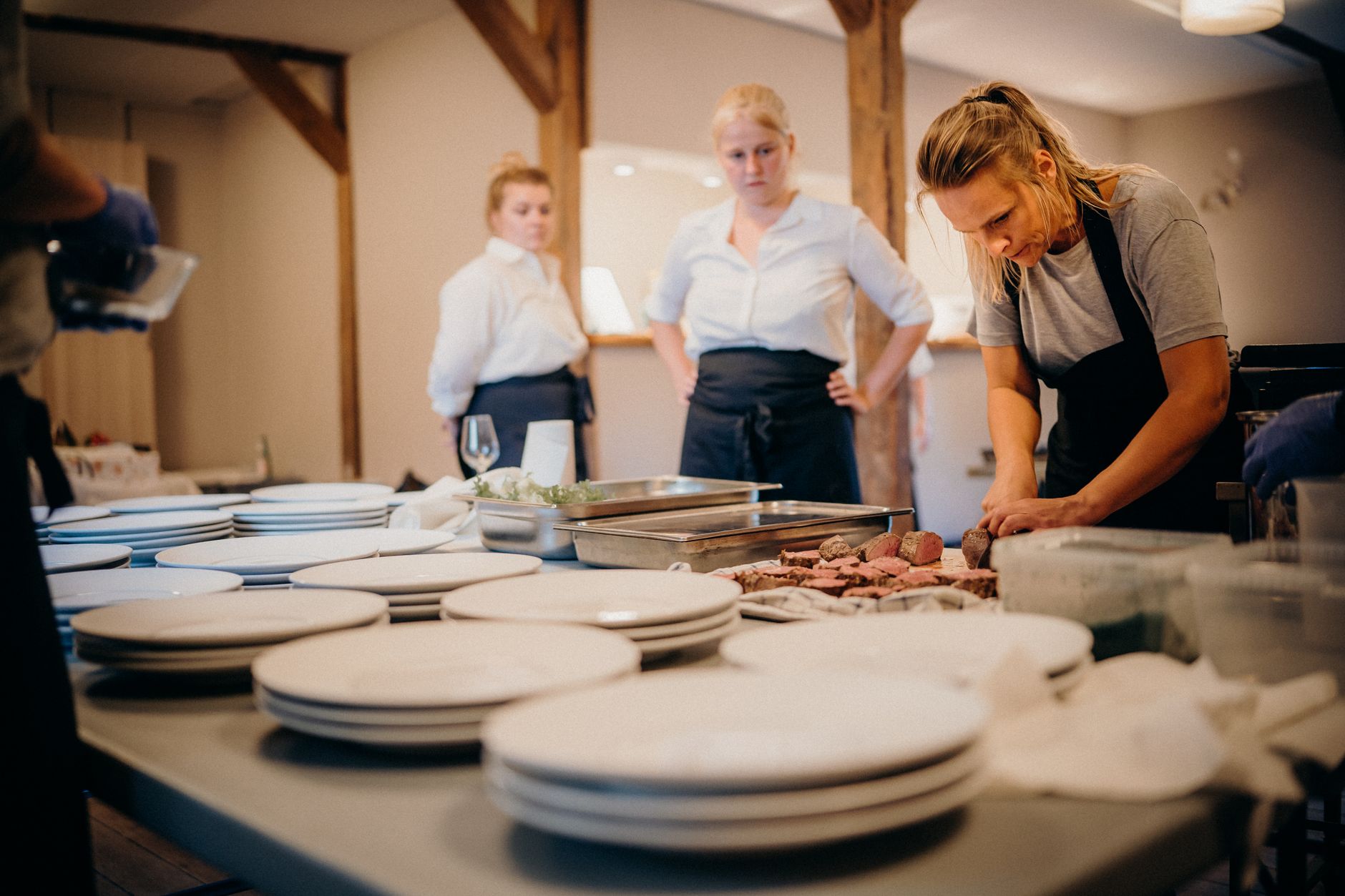
This page does not publish a generic hour figure, because none was verified for this setting. The useful measure is the walk and wait time staff log on each run, multiplied by runs per shift and the number of shifts. We take that log during the site assessment, and it is the first input in any lease comparison.
Turnover is the other reason labor hours matter. According to the Federal Reserve Economic Data series for total separations in accommodation and food services, the seasonally adjusted rate ran from 4.8 percent in October 2025 to 6.1 percent in January 2026, and was 5.4 percent in February 2026. According to BLS Economics Daily, the quits rate for accommodation and food services was 3.5 percent in August 2026, against 3.9 percent for the comparison month.
Each departure means a training cycle and a stretch of thinner coverage on the shift. A robot does not remove the need for staff, but it can carry the repeat trips while a new hire learns the line.
What costs do people miss besides the robot?
Most surprises come from the work around the robot, not the unit itself. Mapping, software, maintenance, insurance and training each carry cost, and a quote that leaves one out will look cheaper than the job really is.
Mapping comes first. The route has to be surveyed, including door positions, elevator interfaces and obstacles, and the map must be updated when a room or a shelf moves. We include the site assessment and initial mapping in our process, so you see that work before the lease starts.
Software and integration come next. The robot may need to connect with an elevator, a door or an ordering system, and each connection is work that must be scoped. We handle deployment, integration and go-live support as part of the lease scope.
Maintenance matters most in Boston winters, when salt and slush reach entrance mats, curb cuts and floor drains. Ask how service visits are scheduled, how fast a technician reaches you, and whether spare-unit coverage exists. We service units nationwide, and the quote states the service terms.
Insurance and training are the last two. Confirm in writing whether liability coverage is included in the lease. Training for the staff who load, reset and watch the robot is part of our deployment, but ask that the training plan appear in the quote.
How does leasing through financing work, and what does the quote include?
We lease robots through financing. The business makes a fixed lease payment for the term, and the lease terms are stated in the quote. The quote comes after a free site assessment, because the route, floors and service needs decide the number. Nothing on this page replaces that quote.
A lease quote should list the robot, deployment and integration, mapping, staff training and service for the full term. Ask the quote to state whether liability coverage and spare-unit coverage are included, and what happens if a unit goes down during peak hours.
Lease terms vary with the term length, the service level and the number of units. Ask how replacement works, how quickly a loaner arrives, and what the terms say at the end of the lease.
What can a delivery robot not do?
A delivery robot moves loads along a mapped route. It does not hold a conversation with a guest, handle a spill it did not expect, or decide that a service door is safe to open. Those jobs stay with staff, and the staff hours that remain should be counted in your comparison.
Routes have limits too. Stairs, steep curbs, sidewalk crossings and crowded corridors may fall outside what a given unit can handle, and that changes the quote. Boston's older buildings often have thresholds, narrow service doors and tight elevators, so the site assessment checks each of these before a route is promised.
Weather is a limit as well. Snow, slush and salt can stop a unit on an outdoor leg or a wet entry, so most routes are built to run indoors or on cleared paths. Outdoor legs should be quoted separately after the assessment. For official Boston snowfall records, check NOAA's NOWData for Boston Logan Airport.
How do you get a quote for a delivery robot in Boston?
Start with the route you already run. Write down the trips, floors, doors and peak hour, and note any leg that crosses outdoors. That list is what the site assessment checks, so it saves time on both sides.
Customer comfort is mixed. In a March 2023 consumer survey, 47 percent of Americans said they would order from a restaurant delivering by drone or autonomous vehicle, as reported by a restaurant trade news site. A separate survey, with its year not confirmed in our research, found 71 percent of consumers uninterested in robot or automated food delivery, citing reliability and order accuracy. Those figures argue for piloting one route, not for skipping the assessment.
Pilot one route first. Start with one leased unit on the path that repeats most, measure the staff hours it returns, and then decide whether a second route is worth adding. Backup coverage can be added later.
To get a number, request a free site assessment. We walk the route, map it, log the shift pattern and return a written lease quote that lists what is included.
Frequently asked questions
Put a robot to work in Boston.
We walk your site, learn the job, and recommend the unit that fits. Then we quote the lease, deploy it, and keep it serviced.
Sources
- BLS OEWS, food preparation and serving workers, Boston-Cambridge-Nashua, May 2022
- BLS OEWS, janitors and cleaners, Boston-Cambridge-Nashua, May 2021
- Federal Reserve Economic Data, total separations, accommodation and food services
- BLS Economics Daily, quits rate in accommodation and food services, August 2026
- Restaurant trade news report of a March 2023 consumer survey on automated delivery
- Food service trade report on consumer views of robot and drone food delivery
- Third-party Boston restaurant count, March 2025
- Hotel market update for Boston, February 2025