
The short answer
Autonomous mobile robot ROI in Kansas City comes mainly from hours of laborers and freight, stock, and material movers, hand work that a robot takes over on repeated routes, offset against a fixed robot lease payment and service cost. The range depends on how much of that work the robot can realistically complete on your floor, how many shifts it runs, and the local wage for the job, and a free site assessment turns those inputs into a figure for your building. The range on this page is an estimate, not a promise.
Key takeaways
- Most of the return comes from hours of laborers and freight, stock, and material movers, hand work a robot takes over, not from headcount cuts.
- The math is hours taken over, times the local wage for the job, minus the fixed lease payment and service cost.
- The share of routine work and the number of productive shifts move the result more than anything else.
- Transportation and material moving is 9.5% of Kansas City metro employment, above the 8.8% national share.
- A free site assessment turns this range into a lease quote and a figure for your floor.
Run the numbers for your site
Auto-detected from your location - we use the real BLS wage here. Not right? Pick your city or state above.
What do you want to automate?
The robot takes the repetitive cart and pallet moves off the heaviest motion.
What is autonomous mobile robot ROI in Kansas City?
Autonomous mobile robot ROI in Kansas City is mostly a labor offset. The robot does not change what the work is. It takes over some of the hours that people in the laborers and freight, stock, and material movers, hand group would otherwise spend on repeated moves, and the return is the value of those hours, net of what the robot costs to lease and keep running.
The number is only as good as the hours you can honestly move onto the robot. Steady, repeated runs on predictable routes convert well. Work spread across long, unstructured or mixed-traffic tasks converts poorly, so this page starts with the work and not the machine.
Adoption is growing across the industry. According to IFR coverage of World Robotics 2025, about 102,900 transport and logistics service robots were sold worldwide in 2024. Transportation and logistics held a 51% share, the largest of any sector, and that figure rests on a sample of 294 companies rather than an extrapolation. Separate IFR coverage reports that global professional service robot sales for transport and logistics rose 21% to 117,500 units in 2025. Those are worldwide figures, so they show direction, not local demand.
Where does the return come from in this setting?
Kansas City is a large transportation market. According to the BLS Kansas City OEWS release for May 2025, the metro had 104,360 jobs in transportation and material moving, which is 9.5% of local area employment against 8.8% nationally. That count covers all industries, not only warehouses, so the pool of people doing material handling work here is broad.
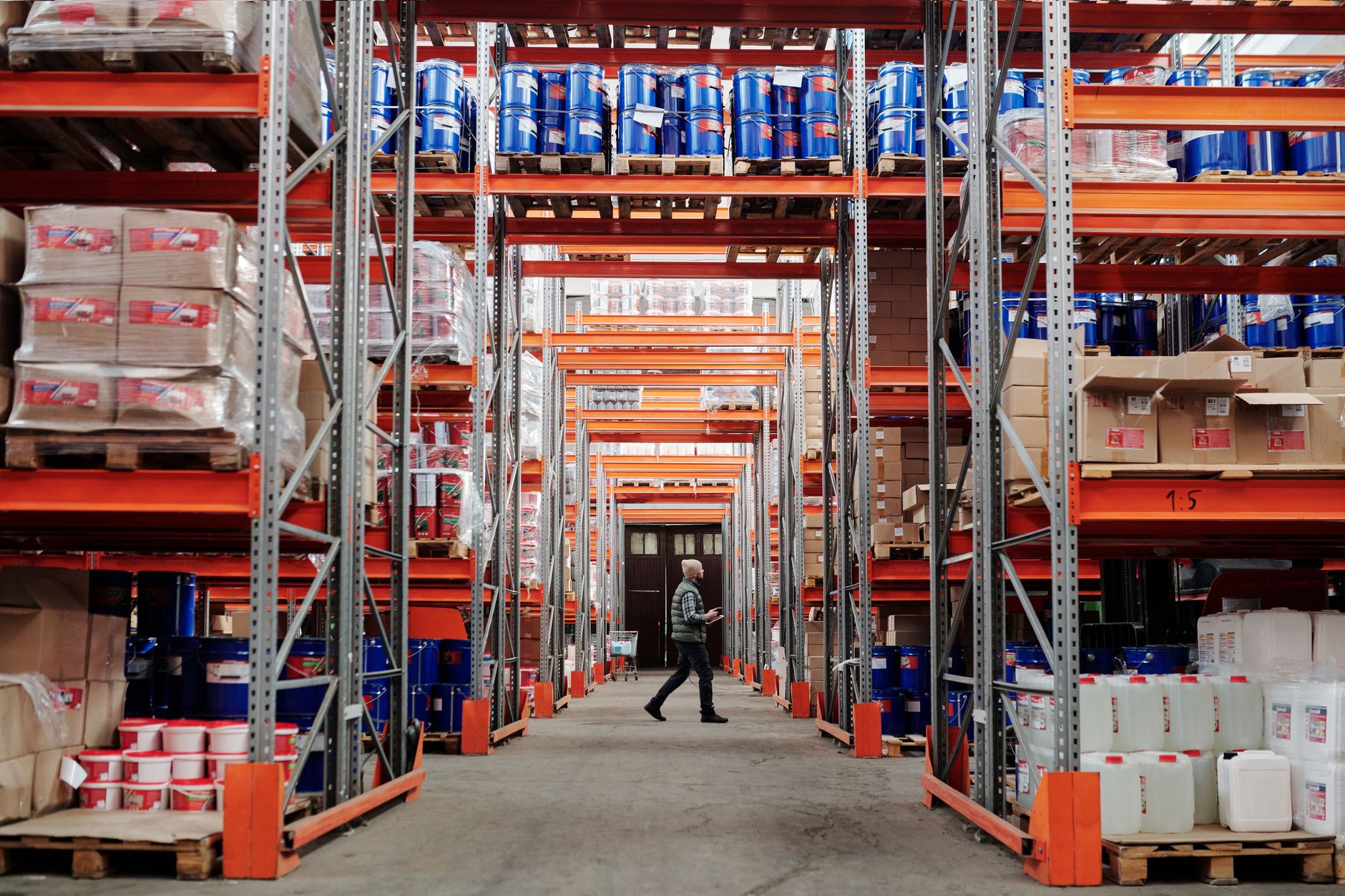
Nationally, the BLS Occupational Outlook Handbook puts hand laborers and material movers at about 6.9 million jobs in 2025, with about 2.94 million in the freight, stock, and material movers detailed occupation. Those are the hours a robot most often competes with on a floor: moving cases, pallets, bins and carts between dock, storage and the line.
The return comes from hours that are fixed. A scheduled night scrub, a morning replenishment run or a standing cart route repeats the same way every shift. Peaks that push overtime or temporary labor are harder to offset, because the robot still needs a defined route and a person still has to handle the surge. Map the hours that repeat, and the offset becomes concrete.
Median hourly wage, Laborers and Freight, Stock, and Material Movers, Hand
$4,542
Monthly cost of one full-time worker in Kansas City, MO, at the median wage plus payroll costs (an estimate, not a quote).
How does the savings math work?
Start with hours. Take the weekly hours of a task you plan to hand to the robot, multiply by the share of that task the robot can complete without a person, and you have the hours offset. Multiply that offset by the local wage for the job in the government wage data on this page, add the payroll burden you carry on top of wages, and you have the gross labor value.
Then subtract the cost of running the robot: the fixed robot lease payment, service, the time a person spends on exceptions, loading and charging, and any supervision the robot still needs. What is left is the net. The lease payment is fixed, while the labor value moves with hours and wage, so the result is most sensitive to how many hours the robot truly takes and how many shifts it runs.
The table below shows the task-by-task breakdown we build during an assessment. The numbers come from your own records and our time studies, not from this page.
What do the local labor numbers say?
The local labor base is large and steady. According to FRED, the Kansas City metro transportation, warehousing and utilities supersector had a 2024 annual average of 65.6 thousand jobs, and 66.1 thousand in December 2025. FRED flags those figures as preliminary and subject to revision, so read the trend as a direction, not a settled count.
Turnover adds a cost that does not show up in the wage line. According to the BLS JOLTS annual averages for 2025, the job openings rate was 4.3%, the hires rate 3.3%, the total separations rate 3.3% and the quits rate 2.0%. Those are economy-wide rates across all industries. The research did not turn up a verified full-year 2025 rate for transportation and warehousing, so do not assume the sector matches the national average.
The job itself is entry level. The BLS notes that hand laborers and freight, stock, and material movers, hand typically need short on-the-job training to start. Short training keeps hiring easy, but every new hire still needs supervision while learning routes, and that time belongs in the model. For planning, this page assumes four people doing this kind of work at a typical site. That is a planning assumption, not a published count, and your actual roster replaces it.
What changes the number up or down?
Three things move the number most. The first is the share of work the robot takes over. Long unbroken runs on a predictable route score higher than tasks that need a person to open doors, check labels or make judgment calls. The second is the number of productive shifts. A robot that works a second or third shift adds hours offset without adding a second lease, provided it is scheduled to run those shifts.
The third is the local wage for the job in the government wage data on this page, which sets the value of each hour. Floor conditions matter too. Aisle width, floor type, ramps, and mixed traffic with forklifts and foot traffic all change what a robot can do without an operator. The checklist below lists what we check before we put a number on a site.
What are the risks to the return and how do you avoid them?
The biggest risk is overestimating the share of work. A floor that looks clean on a plan can have pallets parked in unexpected places, staff crossing routes, or doors that open at odd times. Map the actual floor, time the real tasks across several shifts, and size the offset from that data, not from a brochure.
Safety is the second risk, and it cuts both ways. According to the BLS industry profile for warehousing and storage (NAICS 493), the total recordable case rate was 4.8 per 100 full-time workers in 2024, the DART rate was 4.1, and the days-away-only rate was 1.5. Fatal injuries in the sector were 32 in 2024, up from 28 in 2023, though BLS flags a series break from 2023 due to NAICS 2022. Robots can reduce repetitive load moves, but they add their own traffic, so the layout plan needs clear lanes and people who know where the robot goes.
Downtime is the third risk. A robot that sits idle takes its offset with it. Before you sign, ask how service response works, what happens during a unit outage, and who makes the call when a route is blocked.
- Routine aisle and dock runs
Autonomous Mobile Robot
Repeats the same route on schedule and does not tire on repeat legs
Staff
Adapts to blocked aisles, opens doors and reroutes on the spot
- Night coverage
Autonomous Mobile Robot
Runs on a schedule with no operator on routine legs
Staff
Needs a shift, breaks and supervision, and is still needed for exceptions
- Exceptions and judgment
Autonomous Mobile Robot
Waits or stops when a path is blocked or a task is unusual
Staff
Checks labels, handles damaged loads and makes calls the robot cannot
- Training and onboarding
Autonomous Mobile Robot
Setup and integration happen before go-live, with no hiring for the routes it runs
Staff
Entry-level training is short, but each new hire needs supervision while learning routes
- Flexibility when work changes
Autonomous Mobile Robot
Fixed routes, so changes need reprogramming with our team
Staff
Can be moved to a new task the same day
- Cost behavior
Autonomous Mobile Robot
Fixed lease payment regardless of how many hours it runs
Staff
Cost scales with hours worked, overtime and turnover
How does robot leasing work for a Kansas City business?
We lease the robot rather than sell it, so the decision centers on cash flow. You get a fixed robot lease payment, with the lease quoted after a site assessment, and a term that matches how long you expect the work to stay as it is. Our team picks the robot for the site, arranges the lease financing, deploys and integrates the unit, trains your staff, and services it nationwide.
Service belongs in the math. Maintenance and repair response determine how much of the scheduled offset survives a bad week, so compare service terms as carefully as the payment. Ask us to spell out response expectations, how a failed unit is replaced, and what the lease covers. Get those answers in writing before you compare offers.
The market around you is moving the same way. According to IFR coverage of World Robotics 2026, global industrial robot installations rose 11% to 603,000 units, and food, warehousing and logistics helped push US installations past Japan.
What is a realistic timeline from assessment to payback?
Most projects run through four stages. The free site assessment comes first, with floor mapping and timing of the actual tasks. The lease quote follows, covering the robot, the term and service. After signing, deployment and integration come next, with staff training and a supervised go-live period. Payback starts once the robot runs its routine hours reliably, not on the day it is switched on.
The length of each stage depends on site size, integration needs and how many routes you want. We would rather start with one unit on the highest-value route and add units once the offset is measured than promise a full-floor number on day one. A single-route pilot gives you real hours to test the math before you commit to more. The pilot tells you whether the range on this page holds for your floor.
How do you get a precise figure from a free site assessment?
A precise figure comes from your floor and your shift logs. Bring the shift schedule, the task list, a rough floor plan, and the wage and headcount figures your team uses. We map the site, time the tasks that are candidates for the robot, and identify where routes or traffic limit the share of work it can take.
The output is a savings range built from those hours, a lease quote for a specific robot and term, and a list of the changes that would move the number. Use the range to decide whether a pilot is worth running. Treat it as an estimate, not a promise, and let the first months of live operation confirm or correct it.
Frequently asked questions
Put a robot to work in Kansas City.
We walk your site, learn the job, and recommend the unit that fits. Then we quote the lease, deploy it, and keep it serviced.
Sources
- US Bureau of Labor Statistics, Occupational Employment and Wage Statistics (OEWS May 2024)
- BLS Occupational Outlook Handbook, Hand Laborers and Material Movers
- BLS Kansas City OEWS news release, May 2025
- FRED, Kansas City metro transportation, warehousing and utilities employment
- BLS JOLTS news release archive
- BLS Warehousing and Storage industry profile (NAICS 493)
- IFR World Robotics 2025 coverage, via Anuga FoodTec
- IFR service robots coverage, via Robotics Tomorrow
- IFR World Robotics 2026 coverage, via Manufacturing Digital