

The short answer
Cleaning robot ROI for daycare centers comes from janitorial hours that a robot takes off staff, mostly on floors that need regular cleaning after hours. The return depends on how many floor hours the site runs, how much of that work a robot can realistically take on a fixed schedule, and the lease cost set in a quote after a free site assessment. The savings range shown on this page is a planning estimate, not a promise.
Key takeaways
- The return is priced on janitorial floor hours, not on teacher or assistant time.
- How much floor a robot can take depends on layout, clear routes and the after hours window.
- Staff turnover in childcare makes floor work hard to staff, which raises the value of hours saved.
- Savings are ranges built from measured hours and the lease quote, never a fixed promise.
- A free site assessment replaces the calculator inputs with measured figures.
Run the numbers for your site
Pick your city or state for a real regional number - we use the real BLS wage there. (On the live site this auto-detects from your location.)
What do you want to automate?
The robot runs the open floor overnight; your crew keeps detail and edges.
What return can a daycare center expect from a cleaning robot?
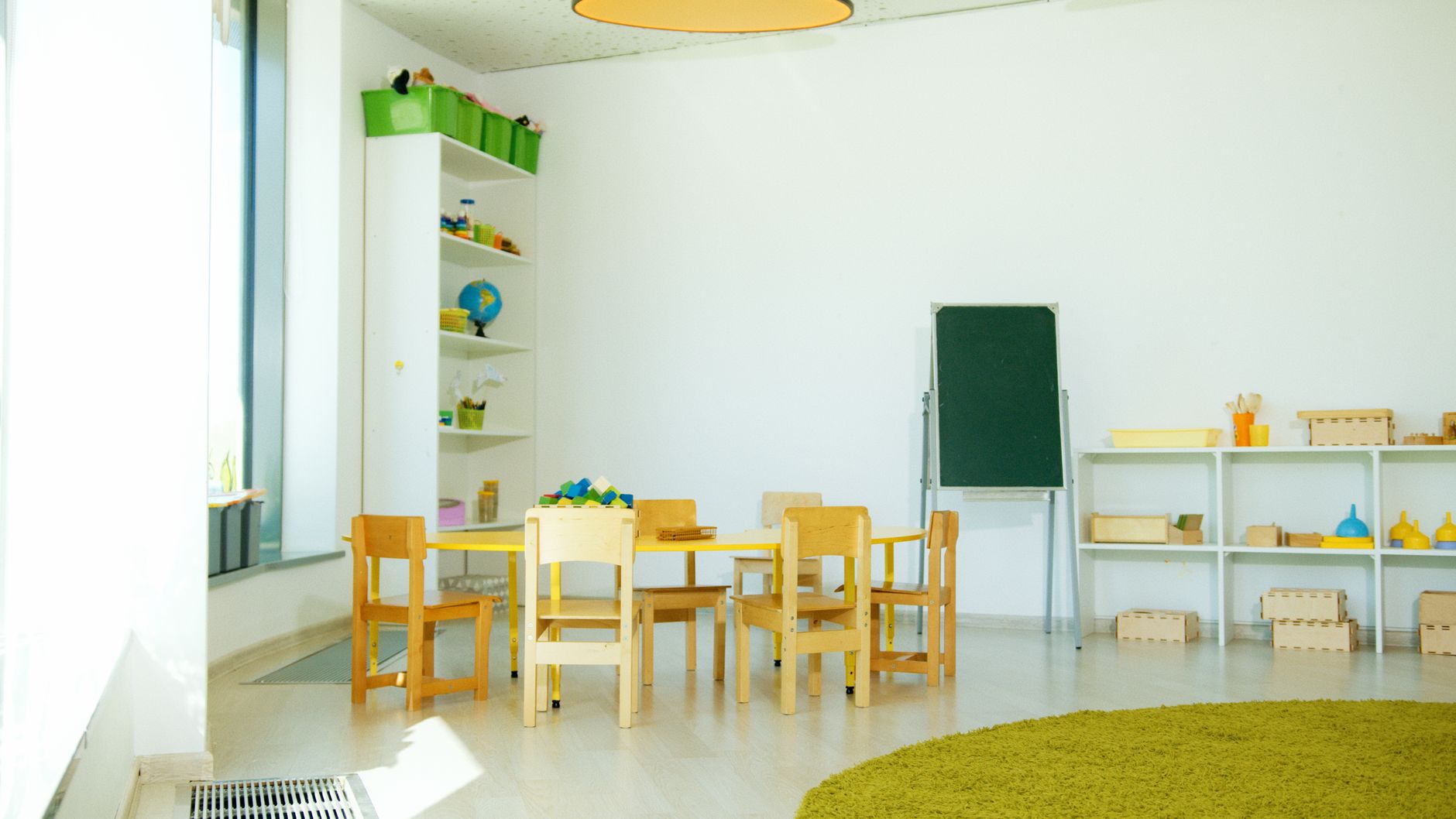
The return on cleaning robot ROI for daycare centers comes from floor hours that staff stop spending on the floor. In most centers the work is janitorial: sweeping and scrubbing classrooms, hallways, entry areas and common rooms once the children have gone, or between sessions when staff are needed to supervise. A cleaning robot can run those passes on a fixed schedule, so the hours it takes over are the number that drives the result.
Frame the labor side in janitorial hours. The government wage data panel on this page covers janitors and building cleaners, and the calculator prices the floor work a robot takes over at that rate. Teachers, assistants and directors are not priced on this page, because a robot does not do their work. What it does is remove one more job from a day that is already full.
How many daycare centers are there in the US, and how is the market changing?
Counts of licensed centers move slowly, and the published sources do not fully agree. According to Child Care Aware of America's 2025 edition, licensed child care centers fell in 26 of 43 states with complete data, and the net national change was about 1% lower. The same organization's 2024 edition counted 92,613 licensed centers in 40 states with complete data, up 1.6% from 2023. Both counts cover licensed centers only, so they leave out informal and home based care.
For a cleaning robot, the count matters less than the layout of one site. A stable market means a lease model can be planned across several centers that share an operator or a cleaning contractor, but the count does not tell you the floor area or staff count of any single center. That comes from the site walk. I did not find an official federal count of daycare centers for 2025, so these published counts are the best figures available.
Median hourly wage, Janitors and Building Cleaners
$4,041
Monthly cost of one full-time worker, at the median wage plus payroll costs (an estimate, not a quote).
Who does the floor work at a daycare center, and why is staff time tight?
Childcare work is done by childcare workers, and that job is not growing. According to the Bureau of Labor Statistics Occupational Outlook Handbook, childcare workers held about 991,600 jobs in 2024, and child daycare services is the largest employer in the group at 31% of the total. BLS projects employment in the occupation to decline 3% from 2024 to 2034.
Turnover is the operational problem. The McCormick Institute study of center based programs reports average annual staff turnover of 33% and a median of 23%, with individual centers ranging from 0% to 164%. Turnover is measured as staff who left in the past 12 months relative to the staff on hand. A center with high turnover is always training someone, and cleaning routines are among the first things that slip during that training.
Floor cleaning falls under a separate BLS group, janitors and building cleaners, which held about 2.4 million jobs in 2024. BLS projects that group to grow about 2% over the decade, which it calls slower than average, and projects about 351,300 openings a year, mostly from replacement. Janitorial help is hard to hire for as well, so when a center has a gap, the floors tend to fall to whoever is in the room.
BLS figures are national, so they do not give a staffing count for one center. I did not find a verified figure for the typical number of cleaning staff at a single daycare site. The calculator therefore starts from one person doing the floor work as a baseline, and the site assessment replaces that with the number that actually cleans your floors.
Where does the return come from?
The return has three parts: labor hours taken off staff, the schedule the robot can keep without anyone present, and the lease cost. Labor hours are the largest and easiest to measure. Each floor pass that moves from a staff member to the robot returns those minutes to the person who was doing it, or keeps that person on the floor with children.
The second part is timing. Daycare floors take heavy traffic all day from children, families, carts and spills, and the cleaning that matters most often falls after pickup, when staff are busiest with handoffs and paperwork. A robot that runs on a fixed after hours schedule keeps floors cleaned without asking a teacher to stop. Maryland early childhood guidance says cleaning frequency should follow how a space is used, and that hard surfaces, including floors, need regular cleaning. The Durham Region preschool schedule in Ontario treats its frequencies as minimums to be increased as needed. Both point to frequent floor cleaning, which is repeat work a robot can carry on a schedule.
The third part is the lease. Robots are leased through financing, and the payment is fixed in a quote made after the site assessment. The return is positive only when the labor hours taken off staff cover that payment and the service plan, and that depends on how much of the floor work the robot realistically takes.
How does the ROI math work for a daycare cleaning robot?
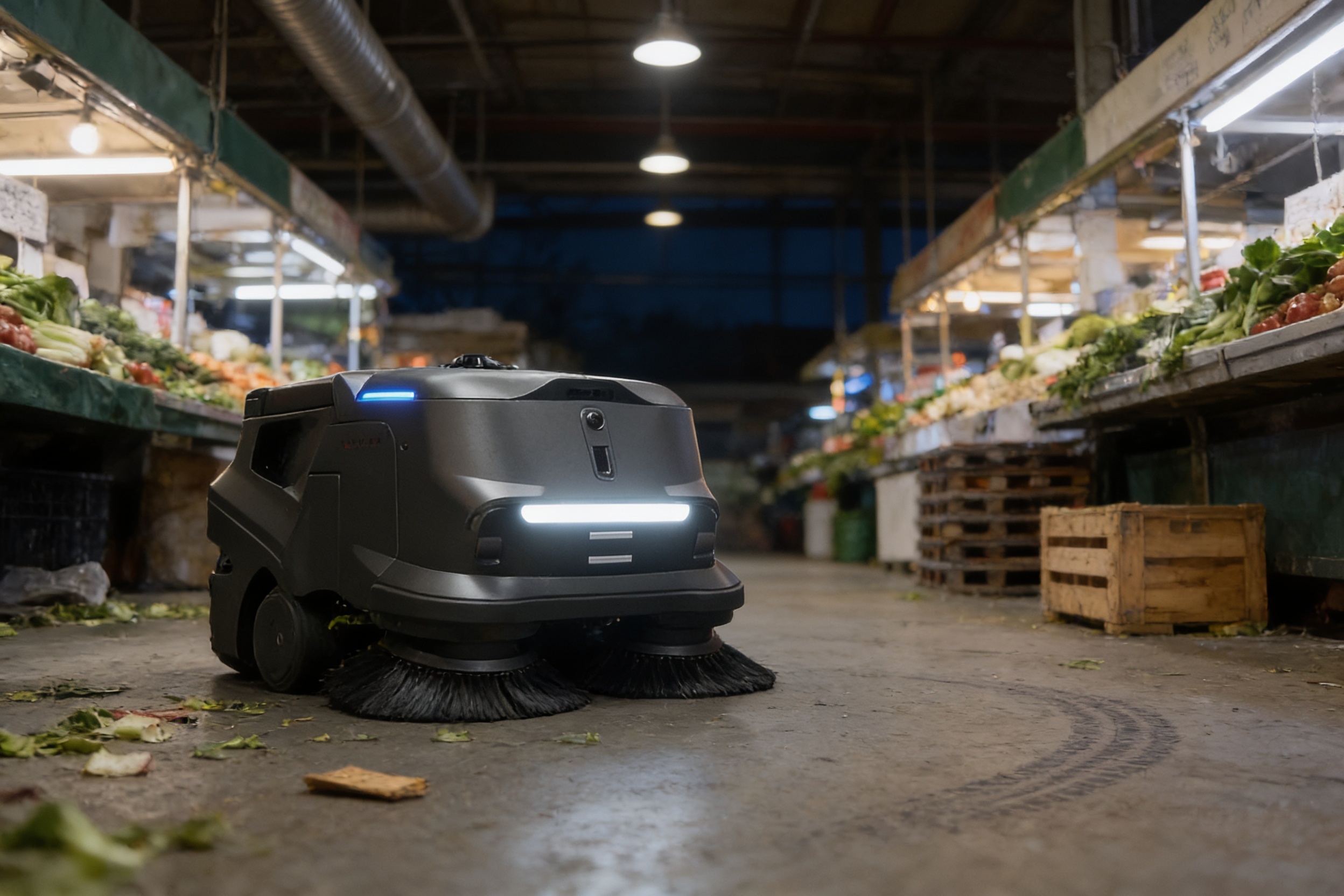
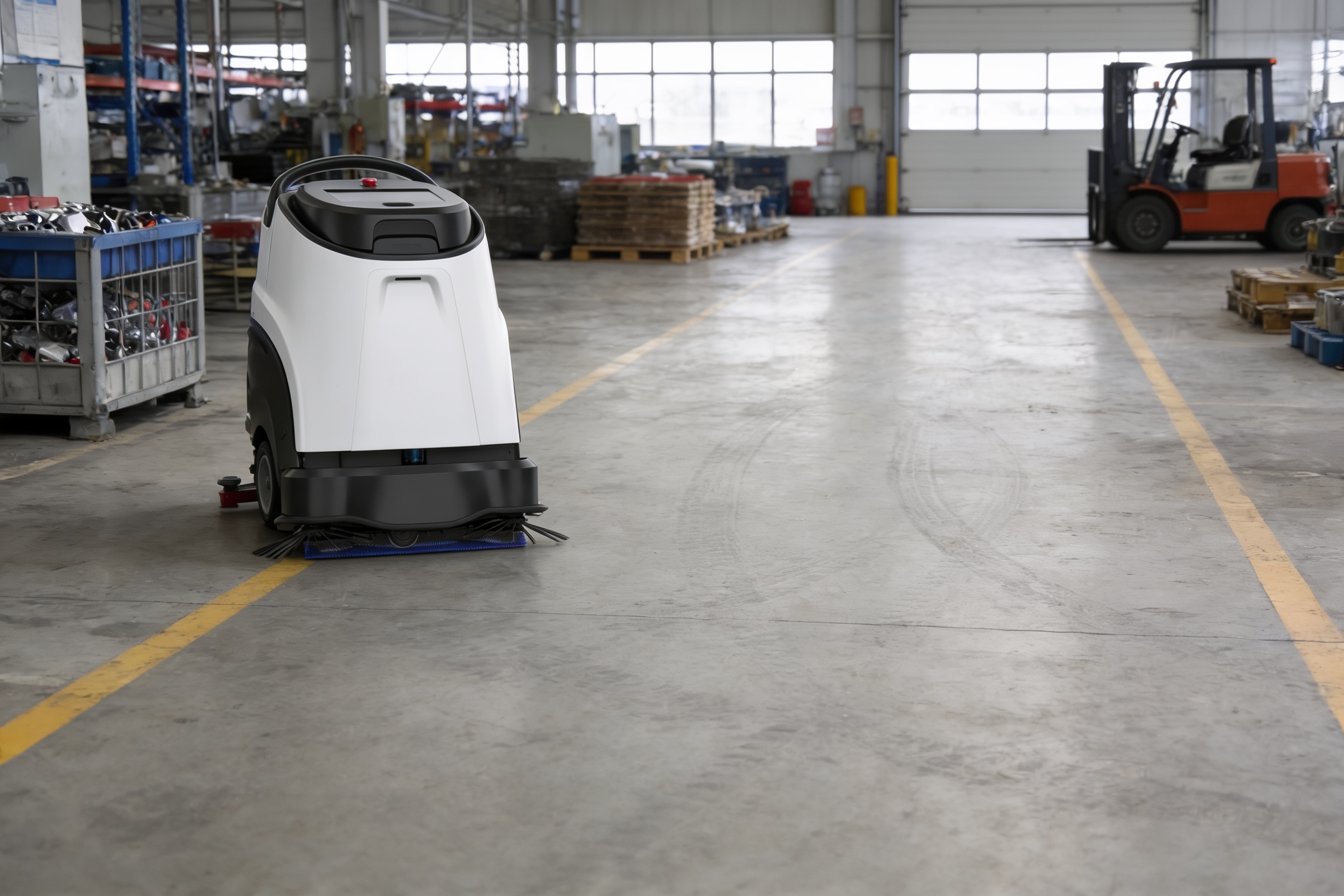
Start with hours. Measure how many hours a week the floor passes take today, including setup, cleanup and the time staff spend on the floor when they should be with children. Then estimate the share of that work a robot can realistically take. A robot covers open floor that is free of obstacles and follows a predictable route. It does not cover tight corners, furniture that staff move around, or spills that need a person right away. Most sites end up with the robot covering the main passes and staff handling the rest.
Next, price those hours at the local wage for this job, which the government wage data panel on this page shows. Multiply by the weekly hours the robot takes over and by the weeks the center runs in a year. Subtract the lease payment and the service cost set in the quote. The result is the savings range the calculator shows. It is a range because the measured hours, the share of work and the lease terms each vary from site to site.
Read the range as a planning estimate. The low end assumes the robot takes fewer passes and staff still cover more of the floor. The high end assumes the layout and the after hours window let the robot run most of the floor. Neither end is a promise, and both move as the site assessment replaces assumptions with measured figures.
| Task | Today | With a robot |
|---|---|---|
| Sweep classroom floors | staff time, measured on site | scheduled pass after pickup, staff clear loose items first |
| Scrub hallways and entry areas | staff time after pickup, measured on site | robot pass on a fixed route, checked at close |
| Clear the route before a pass | staff moving chairs, mats and bins | short evening setup, time measured on site |
| Spot clean nap room and bathroom floors | staff time, often between sessions | spills and tight corners stay with staff |
| Sanitize high touch surfaces | staff time, not floor work | stays with staff, outside the robot scope |
I did not verify published hour figures for daycare floor cleaning, so time values are left to the site walk and the calculator inputs. The rows show which work the robot takes over and which work stays with staff.
What are the risks to the return, and how do you avoid them?

The first risk is an overstated share of work. A room full of loose toys, low furniture and frequent spills will stop the robot more often, and staff will cover the gaps. Avoid this by mapping the floor during the site assessment, marking obstacles, and deciding in advance which spaces stay with staff.
The second risk is counting the wrong work. Maryland guidance says surfaces should be cleaned before they are sanitized or disinfected, because dirt can keep products from working. A robot that scrubs a floor does the cleaning step, but it does not sanitize high touch surfaces such as tables, handles and cubbies. Keep sanitizing hours out of the savings unless staff can actually hand them over.
The third risk is leaning on industry trend figures instead of your own hours. An ISSA and AACEM survey, which is older and predates 2025, found autonomous cleaning adoption at an early stage, with about one third of people who had not adopted saying they were likely to adopt within a year. That tells you the category is still settling. It does not tell you what your floors need, so let your measured hours set the return.
A fourth risk is a service gap. A unit that is down during a busy week can cost more than the lease payment, because the floor schedule slips. Ask in the quote how repairs are dispatched and what backup is planned.
How is a daycare floor different from other sites?
Daycare floors have features that office or warehouse floors do not. Children sit, crawl and play on the floor, so surfaces must be kept clean and dry. Rooms are rearranged for activities, with mats, tables and bins moving around, and spills are frequent. Staff are constantly responding to children, so any cleaning that depends on a person being free at the right moment will slip.
That shapes where a robot fits. The best candidates are sites with open, mostly clear main floor areas and a predictable after hours window. Hallways, large activity rooms and entry areas are often good candidates. Classrooms full of low furniture and infant areas usually need staff. The layout sets the share of work a robot can take, and the share sets the return.
What is a realistic timeline from assessment to payback?
Expect the process to run in stages. The site assessment comes first, with floor mapping, a route plan and a measurement of the hours the floor work takes now. The quote follows, with the lease terms and the service plan. Then comes deployment and integration, staff training, and a go live period in which the schedule is tuned to the room layout and the after hours window.
Payback depends on when savings begin and on how much of the schedule the robot runs. The go live period is usually the shortest stage, because the mapping and planning are done before it starts. Payback is set by the quote and by the hours the schedule actually runs, so the timeline should come from the assessment, not from a general figure.
We pick the right robot for the site, lease it through financing, deploy and integrate it, train staff and service it nationwide. Training is short and focused on setup, checks and the reset at close, because the people running a center are not cleaning specialists. If a unit needs repair, service is dispatched and backup is planned so the floor schedule holds.

How do you get a precise figure from a free site assessment?
The calculator on this page gives a range from the inputs you enter. A free site assessment replaces those inputs with measured numbers. We map the floors, time the floor passes as they run today, note obstacles and the after hours window, and confirm the staff time the robot would take over. From that we quote the lease and produce a savings range you can check against your own records.
Bring what you already have: licensed hours, the cleaning schedule as it runs now, a floor plan if one exists, and any cleaning contract. Note which rooms must stay off limits to a robot and which staff handle spills and bathrooms. If you do not know how many people clean the center, the assessment counts them, so the calculator no longer relies on the one person baseline.
A precise figure comes from measured hours, a mapped floor and a written quote. Ask for all three before you decide, and compare the savings range against the hours your team reports once the robot has run for a while.
Frequently asked questions
Want a cleaning robot at your daycare center?
Tell us about your site. We will recommend the robot, quote the lease, and keep it serviced.
Sources
- US Bureau of Labor Statistics, Occupational Employment and Wage Statistics (OEWS May 2024)
- Child Care Aware of America, Price and Supply 2025
- Child Care Aware of America, Price Landscape 2024
- BLS Occupational Outlook Handbook, Childcare Workers
- BLS Occupational Outlook Handbook, Janitors and Building Cleaners
- McCormick Institute, Center Based Child Care Turnover Study
- Maryland Early Childhood General Sanitation Guidelines
- Durham Region Preschool Room Cleaning and Disinfecting Schedule
- ISSA, Autonomous Cleaning Survey