
The short answer
Cleaning robot ROI for courthouses comes from taking the open-floor scrubbing and sweeping that night crews do after public hours and running it on a fixed schedule. The savings range depends on the floor area, the custodial hours that work takes today, and the share of it a robot can realistically do, net of the lease payment. A free site assessment turns those inputs into a lease quote and a range, so the figure stays a range until the building is measured.
Key takeaways
- Cleaning robot ROI for courthouses depends on open floor area and night labor hours, not on how many buildings a county owns.
- Courthouse floor passes are often a large, repeatable block of crew hours, which suits a scheduled autonomous scrubber.
- Hard-to-fill night shifts are the main reason the labor side matters, because an empty shift leaves the floor uncleaned.
- The robot takes open-floor passes, not restrooms, touch points or detail work, so staff remain part of the plan.
- Ask for the range from a free site assessment before deciding, and compare it with the lease terms in writing.
Run the numbers for your site
Pick your city or state for a real regional number - we use the real BLS wage there. (On the live site this auto-detects from your location.)
What do you want to automate?
The robot runs the open floor overnight; your crew keeps detail and edges.
What is cleaning robot ROI for courthouses?
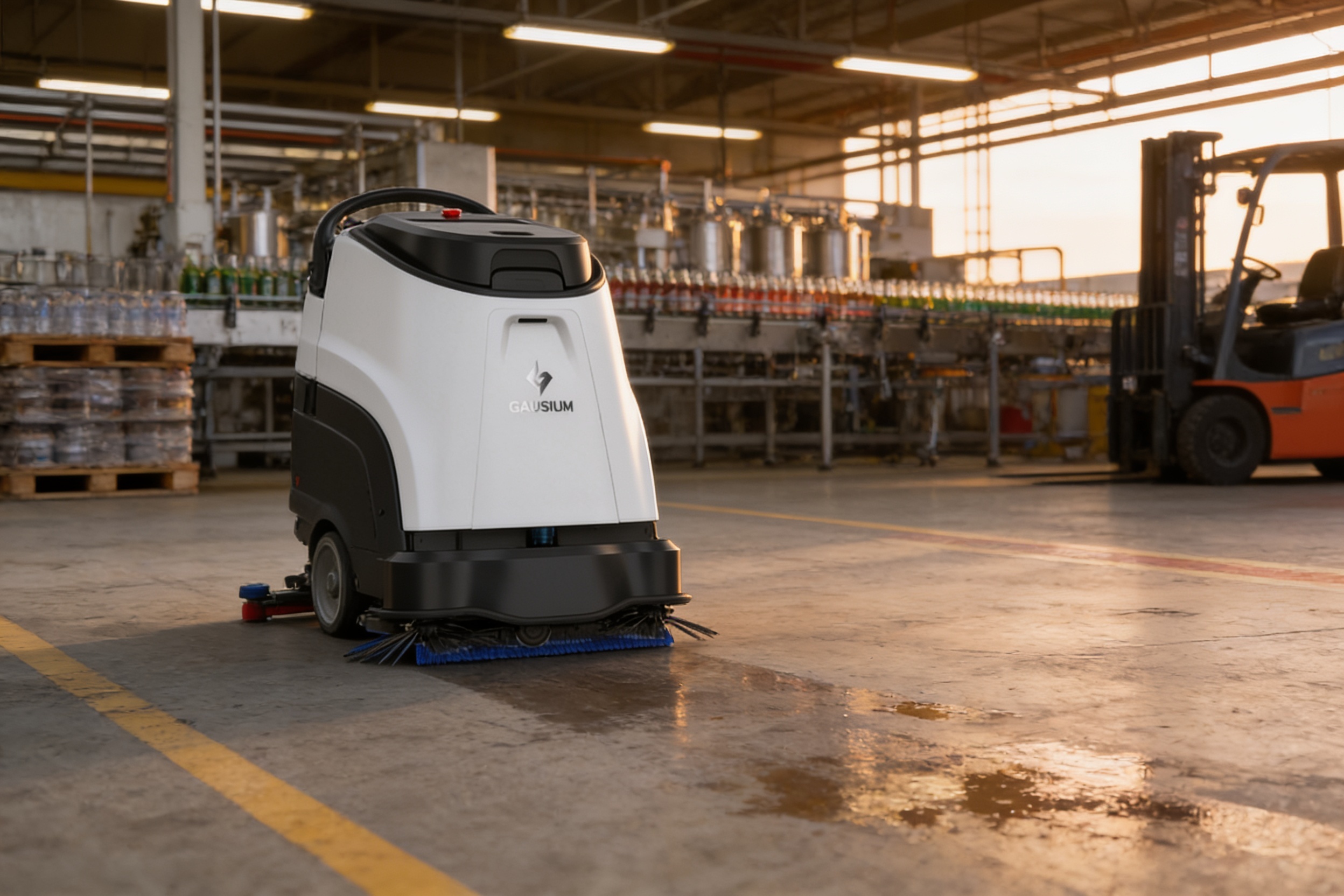
Cleaning robot ROI for courthouses comes from one place: open-floor passes that run on a schedule after public hours, so the building does not depend on finding a person for every night shift. Courthouses are mostly hard floors, long corridors and large public lobbies, which is the kind of route an autonomous floor scrubber handles well. The return is the labor hours that robot work offsets, less the lease payment and any cleaning the robot cannot cover.
Expect a range, not a single figure. The range moves with three inputs: the floor area that gets a scheduled pass, the custodial hours that pass replaces, and how much of the night's work is open floor versus restrooms, detail areas and high-touch surfaces that stay with staff. Our team sets those inputs during a site visit, then provides a lease quote with the terms written out. Nothing on this page promises a specific saving for a specific building.
The rest of this page explains each input, shows the arithmetic with published benchmarks, and lists what could push the number down. It also covers how long the path from assessment to payback usually takes and what to ask before signing a lease.
Why is night cleaning hard to staff at a courthouse?
Custodial work is a large, steady category of jobs. According to the Bureau of Labor Statistics Occupational Outlook Handbook, there were 2,447,700 jobs for janitors and building cleaners in 2024, with 2% projected growth over 2024 to 2034, which the handbook calls slower than average. The same page cites about 350,300 openings a year for 2023 to 2033, so employers fill this work continuously rather than once.
County courthouses show how thin night coverage can get. Champaign County, Illinois describes a lead custodian for its courthouse who oversees up to six custodians. Grundy County, Iowa assigns one custodian to the courthouse, annex and jail together. When one custodian covers several buildings, a single absence can leave the public floors with no one on the night shift at all.
Turnover makes the gap recur. Industry estimates of custodial turnover vary widely across sources, so this page does not rely on a single turnover figure. What matters to a courthouse manager is simpler: a night shift that cannot be staffed is a shift that goes uncleaned, and the gap shows up in worn floors, complaints and overtime paid to whoever covers it.
Median hourly wage, Janitors and Building Cleaners
$4,041
Monthly cost of one full-time worker, at the median wage plus payroll costs (an estimate, not a quote).
How many hours of floor work does a courthouse need each night?
No national standard sizes a courthouse cleaning crew, so the working number starts with floor area. A California superior court estimated its courthouse janitorial area at about 33,700 square feet in a published question and answer document. A floor of that size is a useful test case, but the real figure always comes from measuring the building you are looking at.
Production rates set the hours. The Dallas County 2014 janitorial bid set a maximum production rate of 5,000 square feet per hour for evening and night crews. At that rate, one full pass over 33,700 square feet is about 6.7 crew hours before setup, breaks or restroom work. A building that needs two passes a night doubles that workload.
Full-service custodial work runs slower than a single open-floor pass. Arlington Public Schools benchmarks the middle cleaning level at 19,000 to 25,000 square feet per 8-hour shift for one custodian, which works out to roughly 2,375 to 3,125 square feet per hour. Courthouses mix hard floors with carpet, stairs, restrooms and public counters, so the true rate for a full shift sits somewhere in that band, and a site walk tests it.
How is the savings range calculated?
Start with the labor side in the terms the wage data uses. The government wage data on this page covers janitors and building cleaners, so the labor side is counted as the hours of that kind of work the robot takes over. Multiply those hours by the local wage for this job, then add the value of any coverage gap the schedule closes, such as a night with no one on the floor.
Set that against the fixed lease payment, the maintenance terms and the internal time staff spend on loading, route checks and reporting. Those internal hours are real and often missed in early estimates. The difference, shown as a range, is the estimate for that building.
The share matters more than the total hours. A robot rarely takes all of a night's work. If it covers the lobby and corridor passes while staff still clean restrooms, touch points and detail areas, the offset is that portion only. A calculation that assumes full coverage overstates the return, and our calculator does not model it that way.
What changes the number up or down?
Four factors move the range most. The first is the open floor area that gets a scheduled pass, because it sets how many hours one pass takes. The second is night coverage today: a building with no one on the floor after hours gains more from a scheduled pass than one that already has staff on every shift. The third is layout, since long straight corridors and few obstacles raise the share a robot can cover.
The fourth is pass frequency. A floor that needs a pass every night offsets more hours than one that needs only a weekly deep clean, so the schedule is part of the math. Smaller buildings with few night hours can show a narrow range, and the assessment says so plainly. Staff on the floor can also move the number, for example by clearing the route before each run or handling spills during it.
Where can the return fall short, and how do you avoid it?
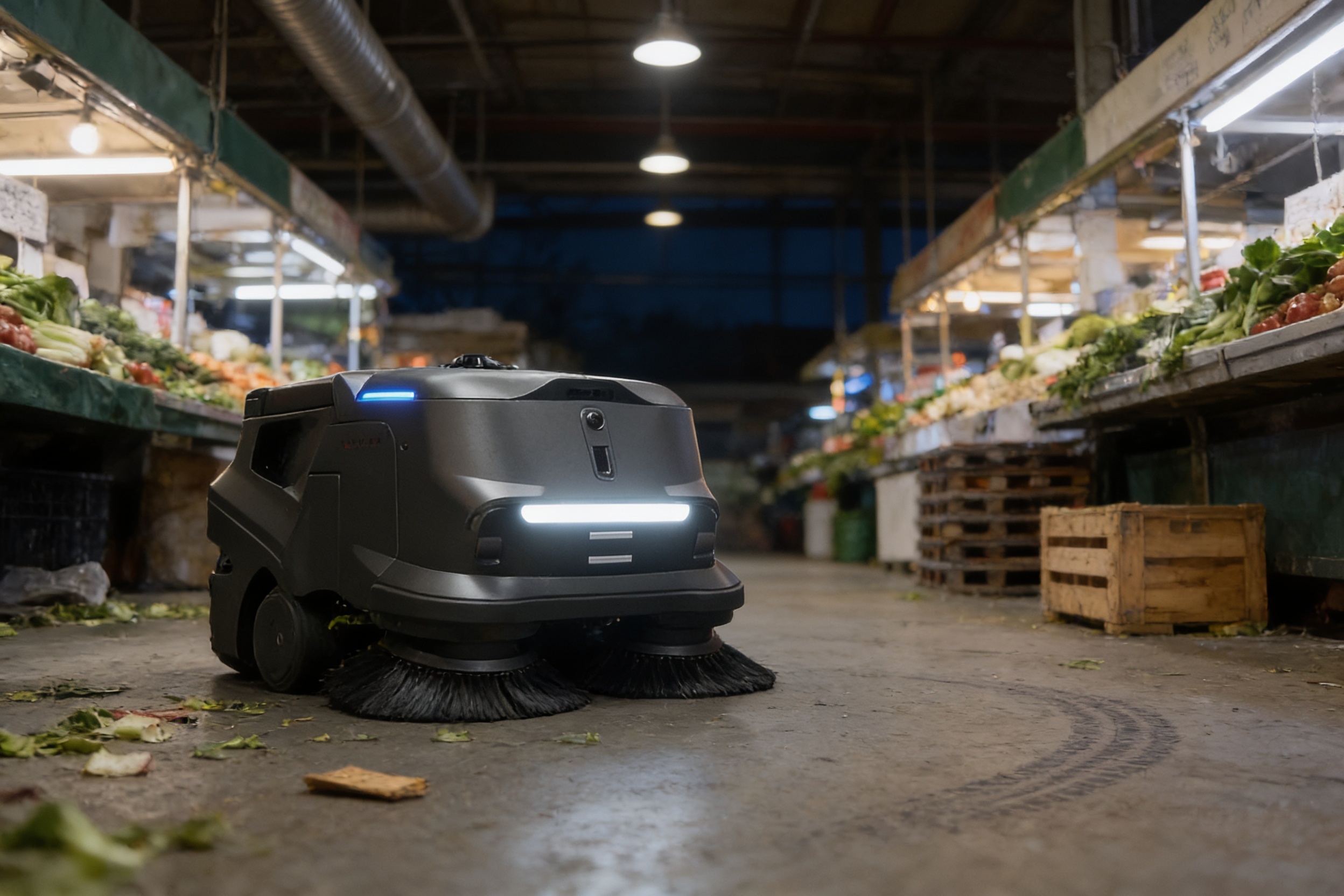
The most common shortfall is counting coverage that does not happen. A scrubber needs a clear route, a charging dock within reach and someone who clears the path each night. Court schedules and events can shift the cleaning window, so the schedule needs a flexible start time. Ask how the route changes when a hearing or an event moves the public hours.
A second risk is comparing the robot against all custodial hours when it takes only the open-floor share. A third is a single unit with no spare, which leaves a gap during service visits. Ask how backup coverage works and what the lease says about downtime. Build the estimate from the share the floor plan supports, not from the whole night shift.
Safety is part of the return too. The BLS injury snapshot for janitors and cleaners, except maids and housekeeping cleaners, reports 21,100 nonfatal cases with days away from work in 2020, with an incidence rate of 191.6 per 10,000 full-time equivalent workers. Taking open-floor passes off a crew lowers manual exposure for the share the robot covers, but staff still handle chemicals, ladders and restrooms, so training and protective equipment stay in place.
What does a realistic timeline from assessment to payback look like?
The path runs in stages. The free site assessment maps the floor, measures areas by surface, notes obstacles and records the night hours in use. The quote follows, with the lease payment, the terms and the savings range set side by side. We then deploy and integrate the robot, train the staff who will work with it, and run the route before full hours begin.
We usually suggest starting with one leased unit on the highest-value floors. A short run shows whether the scheduled passes match the plan and where the route needs changes. Payback depends on the savings range and the length of the lease, so no single month applies to every building. Read the timeline against the range, not against a fixed date.
Installation timing depends on site access, mapping needs and any approvals the building requires. Those steps are set during the assessment, so the schedule in the quote reflects the building rather than a template.
How do you get an exact figure for your courthouse?
The precise number comes from a free site assessment. We measure floor area by surface, count the custodial hours on the night shift, map the routes and identify obstacles, then build the savings range using the government wage data for janitors and building cleaners. The output is a range and a lease quote, so the decision rests on the building's own numbers.
Our company picks the robot for the site, leases it through financing, deploys and integrates it, trains the staff, and services it nationwide. That means one partner handles the robot from assessment through daily operation. Before the visit, gather the night schedule, the floor plan, any sensitive zones and the names of the people who will own the route.
Ask for the lease terms in writing, including what maintenance is included, how service visits are scheduled and what happens if the unit is out of service.
What stays with custodial staff in a courthouse?

A courthouse carries work that no floor robot should take. Public restrooms, high-touch surfaces such as door handles and counters, screening lanes and spills all need a person who can respond and inspect. Courtroom and chambers detail work, and any cleanup involving hazardous material, also stays with trained staff. Counting the robot as covering those tasks would overstate the return.
The robot's role is the open floor on a schedule. That frees custodial hours for the spaces where judgment matters and keeps a standard pass running on nights when no one is available to do it. Industry research points the same way. According to the AACEM and ISSA autonomous cleaning survey, about one-third of non-adopters expressed some likelihood of adopting within a year, based on 2019 data.
Staff roles change rather than disappear. Custodians move toward the detail work, route checks and reporting that a schedule cannot do on its own.
Frequently asked questions
Want a cleaning robot at your courthouse?
Tell us about your site. We will recommend the robot, quote the lease, and keep it serviced.
Sources
- US Bureau of Labor Statistics, Occupational Employment and Wage Statistics (OEWS May 2024)
- BLS Occupational Outlook Handbook: Janitors and Building Cleaners
- BLS injury and illness snapshot: Janitors and cleaners, except maids and housekeeping cleaners, 2016 to 2020
- San Bernardino Superior Court RFP 25-12 questions and answers
- Dallas County 2014 janitorial services bid tabulation
- Champaign County, Illinois: Lead Custodian, Courthouse job description
- Grundy County, Iowa: Custodian department
- Arlington Public Schools: Allocation of Custodians in Comparable School Districts
- AACEM and ISSA autonomous cleaning survey report