
The short answer
Cleaning robot ROI for cold storage warehouses comes from floor scrubbing hours that are hard to staff overnight in freezing rooms, because the work follows a fixed route that a robot can run with no operator on site. The savings range depends on how much of that route the robot realistically takes over, the local wage for janitors and building cleaners from the government wage data on this page, and the downtime the site must cover. The fixed robot lease payment is set in a quote after a free site assessment.
Key takeaways
- The return comes from route hours that are hard to staff overnight in freezing rooms.
- The USDA counted 931 refrigerated warehouses, and that figure is a lower bound for the market.
- Turnover figures come from vendors and vary widely, so measure your own shift log.
- Route clutter, shift timing and downtime cover move the savings range the most.
- A free site assessment turns the range into a lease quote you can check line by line.
Run the numbers for your site
Pick your city or state for a real regional number - we use the real BLS wage there. (On the live site this auto-detects from your location.)
What do you want to automate?
The robot runs the open floor overnight; your crew keeps detail and edges.
What is cleaning robot ROI for cold storage warehouses?
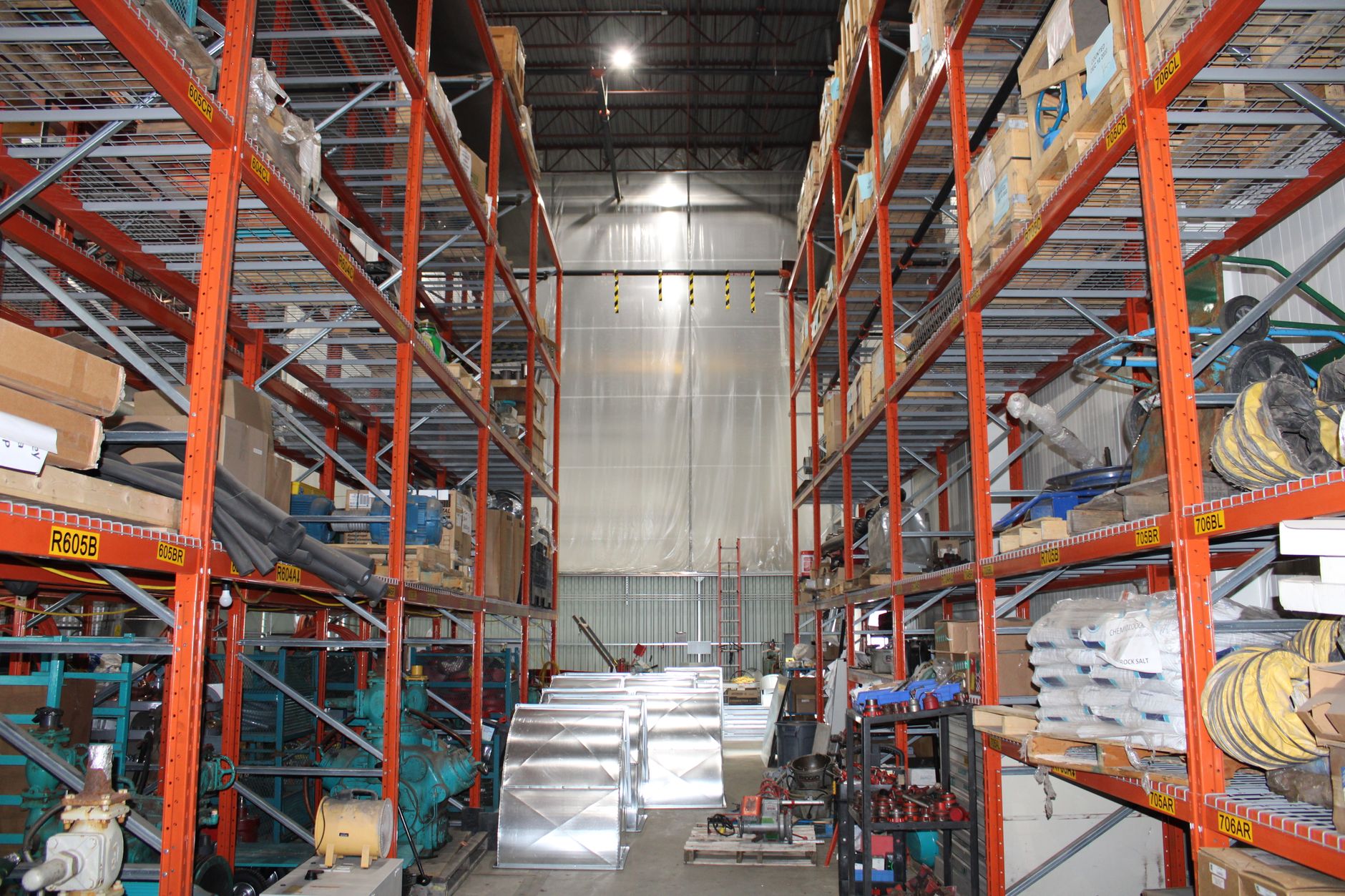
Cleaning robot ROI for cold storage warehouses is the return on floor scrubbing hours that are hard to staff in freezing rooms, set against a fixed robot lease payment for a machine that runs the route. Cold sites tend to repeat the same work every shift: the same main aisles, the same corridors between cold rooms, and the same dock lanes. Repeated work on a fixed route is the easiest kind for a robot to take over, which is why this setting is where we start.
The return is a range, not a promise. It rises or falls with three things: how much of the floor work the robot realistically takes, the local wage for janitors and building cleaners, and how much downtime the site must cover. The government wage data on this page supplies the labor side, and the calculator on this page turns your inputs into a savings range.
This guide explains where the return comes from, how the math works, what moves the number, and what it takes to get a precise figure. It is written for the person who signs off on the decision, so it focuses on hours, risks and timing rather than on marketing claims.
How many cold storage warehouses are in the US?
According to the USDA's refrigerated warehouse survey, 931 refrigerated warehouses were counted as of October 1, 2025. Of those, 476 were public and 455 were private or semi-private. The International Institute of Refrigeration's summary of the 2025 USDA survey reported an 8% increase in refrigerated warehouse capacity over 2023, which points to a segment that is growing rather than shrinking.
That count has a known gap. The survey excludes facilities whose inventory turns over more than once a month, so fast-moving distribution sites that hold product for short periods may not appear in it. Treat 931 as a lower bound on refrigerated sites in the country, not as a full census of every cold building.
For a single decision, the national total matters less than the building in front of you. Floor area, route shape, dock layout and the number of cold rooms decide whether one unit fits. Those facts come from your site assessment, not from a national count.
Median hourly wage, Janitors and Building Cleaners
$4,041
Monthly cost of one full-time worker, at the median wage plus payroll costs (an estimate, not a quote).
Why is floor scrubbing hard to staff in freezing rooms?

The occupation is large and turnover is high. According to the Bureau of Labor Statistics Occupational Outlook Handbook, janitors and building cleaners held about 2.4 million jobs in 2024, with projected growth of 2% from 2024 to 2034, which the handbook describes as slower than average. It also projects about 351,300 openings a year, so the occupation needs a steady flow of new hires even though total employment grows slowly.
Turnover estimates are less settled, and the ones available are mostly vendor reports. A janitorial attrition blog puts annual separation rates in the sector at 50 to 100 percent depending on the year. A cleaning software vendor's research page cites 75% to 375% annual turnover and elsewhere an average of 200 to 300%. The spread is too wide to quote as one number, but both point the same way: the job turns over fast, and every vacancy on a fixed route is a gap someone has to cover.
The pressure is not unique to janitorial work. The Material Handling Institute's 2025 Annual Industry Report, as cited in a warehouse automation guide, found that 45% of companies rate talent shortages as challenging, and 52% rate hiring or retaining labor as extremely challenging. Trade press coverage of cold storage describes operators moving toward automated operations because of persistent labor shortages and seasonal staffing swings.
We did not find a verified public figure for crew sizes or cleaning hours per shift in cold facilities. The labor side of this page therefore rests on your own schedule and the government wage data, not on an industry average.
How does the ROI math work for a cleaning robot lease?
The math has three parts. The first is the hours of floor scrubbing the robot takes over each week, which is the share of the route it can run without a person. The second is the value of those hours at the local wage for janitors and building cleaners, taken from the government wage data on this page. The third is the cost side: the fixed robot lease payment, plus the cover needed for hours when the unit is down or a person must handle an exception.
Put simply, the return is the value of the hours taken over, minus the lease payment, minus the cover. It is positive when the labor the robot covers is worth more than the lease and the backup together. A long, repeatable route on a site that is already short of overnight staff usually shows the widest range, while a short, cluttered floor shows a narrow one.
The calculator on this page is pre-filled for cold storage warehouses and shows a savings range rather than one number, because each input is uncertain. Change the route length, the shift hours or the wage input and the range moves. Use the output to frame the assessment, then replace the defaults with your own measurements.
How much of the floor work can a cleaning robot take over?
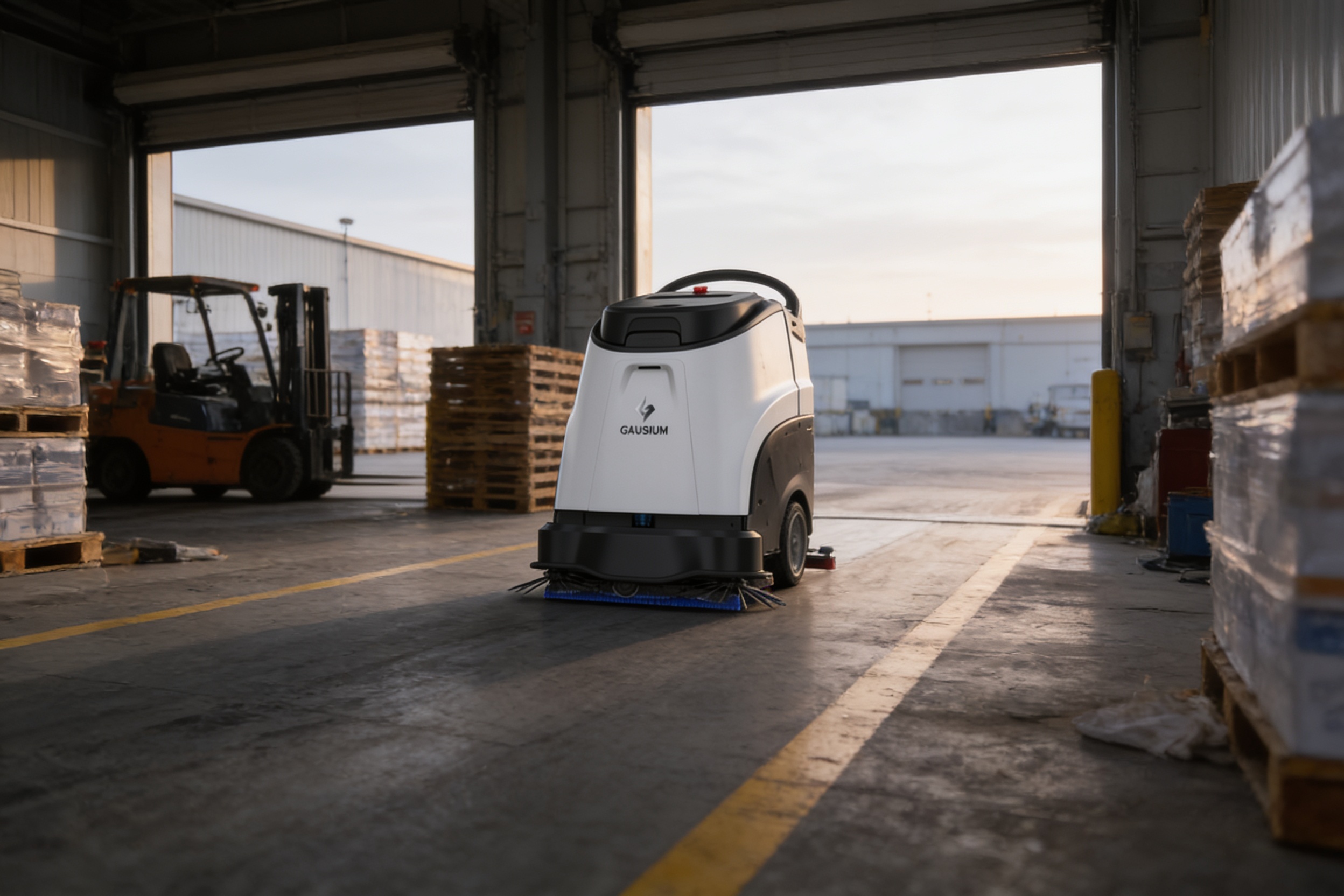
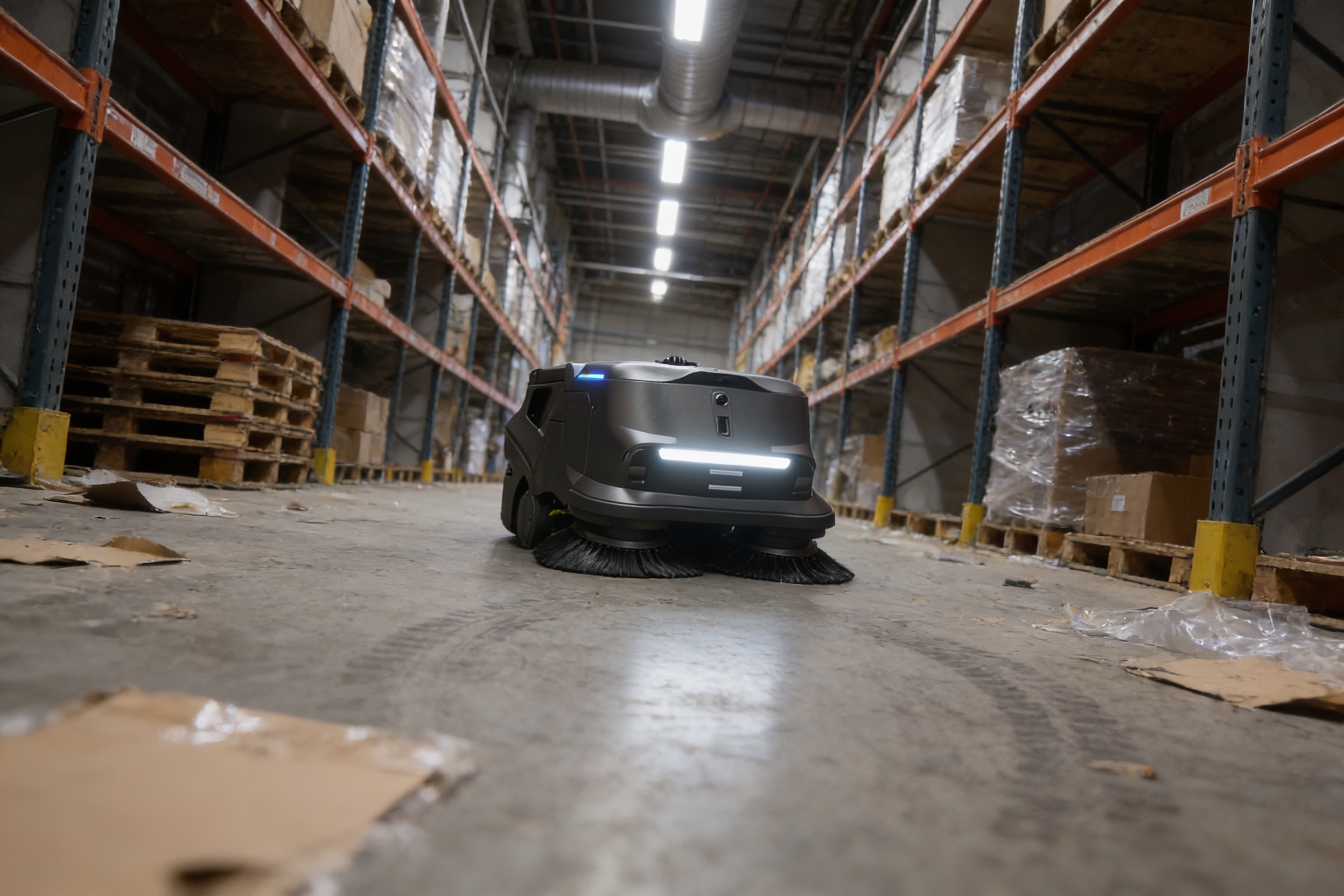
Not all of it, and that honest answer protects the return. A floor scrubber handles work that follows a route: main aisles, repeated corridors, open dock lanes and staging lanes. It does not replace work that depends on hands or a judgment call, such as tight corners, racking bases, equipment left in use, or a spill that needs a person to decide what to do.
Plan the share at the site level. Map the route first, then count the scheduled crew hours that fall on it. Hours that are mostly hand work stay with people, and the model treats them that way. A route share measured on the actual floor is worth far more to a decision than a share estimated from a layout drawing.
Overnight runs are where the fit is strongest, because the route can run with no operator on site during the hours that are hardest to staff. Day coverage has value too, but it competes with people for the same space, so the return is usually smaller. The list below shows the work that stays with staff.
- Corners, racking bases and tight spaces that need hand work
- Spills or debris that need a person to judge and clear
- Pallets, carts or equipment left in the route until a person moves them
- Doorways, thresholds and edges the route cannot reach
- Inspection, reporting and exception handling by staff
What changes the savings range up or down?
Four inputs move the range most: the length and clarity of the route, the share of scheduled hours that fall in the robot's run window, the local wage for this job, and downtime. Each one can be measured at a site visit rather than guessed from a brochure. Those measurements are what separate a useful range from a vendor estimate.
Clutter pushes the number down, because pallets and stacked goods break the route and the unit cannot finish it. Long, repeatable aisles push it up. A site that already runs an overnight shift usually sees a larger return than one that runs a day crew, because the robot covers hours the site would otherwise staff rather than hours it already shares with people.
Downtime is the input most people underestimate. A unit that stops leaves a route for a person to cover, so the cover plan and the service response time belong in the math. Ask for both in writing before the quote, including what happens on a weekend or during a holiday shutdown.
Public sources do not publish a typical janitorial headcount for a cold facility, so the crew size on your site comes from your schedule and the assessment, not from an industry average.
What are the risks to the return and how do you avoid them?
The main risks are routes that cover less floor than planned, downtime that someone must cover, and site changes that break the route. Each can be planned for. Start with a route survey that marks blocked points, agree on a cover plan for the hours the unit is down, and set a change process for when racking or pallet patterns move.
Injury data is a useful lens, but this page does not put a number on freezer floor cleaning, because we did not find a verified rate for that task in the sources we checked. The practical point is simpler: fewer hours spent on wet, cold, repetitive floor work means fewer hours in conditions that make the job harder. A robot does not replace the site's own safety program, and it should be written into that program.
Training is the other risk. If the staff who manage exceptions do not know the route log or the stop procedure, the unit sits idle and the hours return to the crew's schedule. We train the people who will own the unit before go live, and our service team handles repairs on site and through remote triage.
What is the timeline from assessment to payback?
The sequence is fixed even though the calendar varies by site. It starts with the assessment and mapping, moves to the lease quote and paperwork, then to installation, integration and training, and then to go live. Payback is measured on the first full period of real route data, not on the forecast made before the unit runs.
Plan for a phased start. A pilot with one leased unit lets you test the route, the cover plan and the service response before you commit to more units. The pilot also shows how often the route is blocked, which is the factor that most affects the return and the one a forecast can only estimate.
Once the first unit runs cleanly, the decision about a second unit is much easier. Spare unit coverage and a backup robot program matter most in this phase, because an early outage on a single unit can stall the whole test. Expect the first weeks to be spent tuning the route rather than proving the return.
How do you get a precise figure from a free site assessment?
The precise figure comes from a free site assessment. We walk the cold rooms and the dock with your team, map the route, record the scheduled crew hours, note freezer temperatures and access rules, and measure how often the floor needs work. That data sets the hours taken over, which is the input the savings range depends on most.
After the assessment, you receive a fixed robot lease payment quote with the terms in writing: the lease length, the service plan, what maintenance is included, and how on-site dispatch and remote triage work. Set the quote against the hours the route takes over, and ask for the range to be recalculated with the measured route. A 3-year robot lease is one structure to compare against shorter terms.
We are a US commercial robot integrator. We pick the robot that fits the floor, arrange the lease through financing, deploy and integrate it, train the staff who will run it, and service it nationwide. One partner covers the whole path, so the team that sized the return is the team that answers when the unit needs attention.
Frequently asked questions
Want a cleaning robot at your cold storage warehouse?
Tell us about your site. We will recommend the robot, quote the lease, and keep it serviced.
Sources
- US Bureau of Labor Statistics, Occupational Employment and Wage Statistics (OEWS May 2024)
- USDA NASS refrigerated warehouse survey, October 2025
- International Institute of Refrigeration news summary of the 2025 USDA survey
- BLS Occupational Outlook Handbook: Janitors and building cleaners
- Janitorial attrition blog (vendor-reported)
- Janitorial turnover research page (vendor-reported)
- MHI 2025 Annual Industry Report, as cited in a warehouse automation guide (vendor-published)
- Trade press coverage of cold storage automation and labor shortages