

The short answer
Cleaning robot ROI for museums comes mainly from hard-floor cleaning done after closing, when galleries and corridors are empty and staff would otherwise spend paid hours on repeated passes. The savings range depends on how many of those hours the robot takes over, the lease cost quoted after a site assessment, and how much of the floor the robot can realistically cover. A free site assessment measures the floor and the closing window, so the range becomes a precise figure for the specific building.
Key takeaways
- Closed-hours running fits galleries and corridors because the route is clear when visitors have gone.
- The savings range is built from hours of hard-floor work, the share a robot realistically takes, and the lease cost.
- Restrooms, spills, carpets and open-hours work stay with staff, so the offset is partial.
- No museum-specific hour baseline was found in this research, so the site assessment measures the starting point.
- The lease payment is quoted after a free site assessment, not before.
Run the numbers for your site
Pick your city or state for a real regional number - we use the real BLS wage there. (On the live site this auto-detects from your location.)
What do you want to automate?
The robot runs the open floor overnight; your crew keeps detail and edges.
Cleaning robot ROI for museums: what return to expect
A cleaning robot earns its return at a museum mainly on hard floors cleaned after closing. Galleries and corridors are wide and open, so a machine can run a fixed route while the building is empty. The return is a range, set by the hours of that work the robot takes over, the lease cost quoted after a site assessment, and how much of the floor the robot can realistically cover.
Most of the value sits in the hours, not in the machine. Any cleaning robot ROI for museums case has to start with how many hours staff spend on hard-floor passes now, because that is the labor the robot can offset. Restroom cleaning, spill response, carpeted areas and detail work stay with people, so the offset is partial by design.
How many museums are there, and who cleans them?
The Institute of Museum and Library Services estimated about 35,144 active museums nationwide in a May 2014 estimate. The agency calls that figure a stake in the ground and acknowledges that it may contain errors. According to the same estimate, historic sites, societies and houses make up 48% of the total, and many of those are small buildings with few cleaners. No newer official count was found in this research.
According to the American Alliance of Museums workforce snapshot, which is based on 2009 figures, 402,924 people work in America's museums, and about 59.7% of them hold government jobs. Public funding often means cleaning hours are set inside fixed staffing lines, so a change in hours has to be approved and budgeted rather than simply decided on the floor. No published count of cleaners per museum site was found, so the calculator starts from one dedicated cleaner, and the site assessment replaces that number with a real count.
Median hourly wage, Janitors and Building Cleaners
$4,041
Monthly cost of one full-time worker, at the median wage plus payroll costs (an estimate, not a quote).
Where does the return come from in a museum?
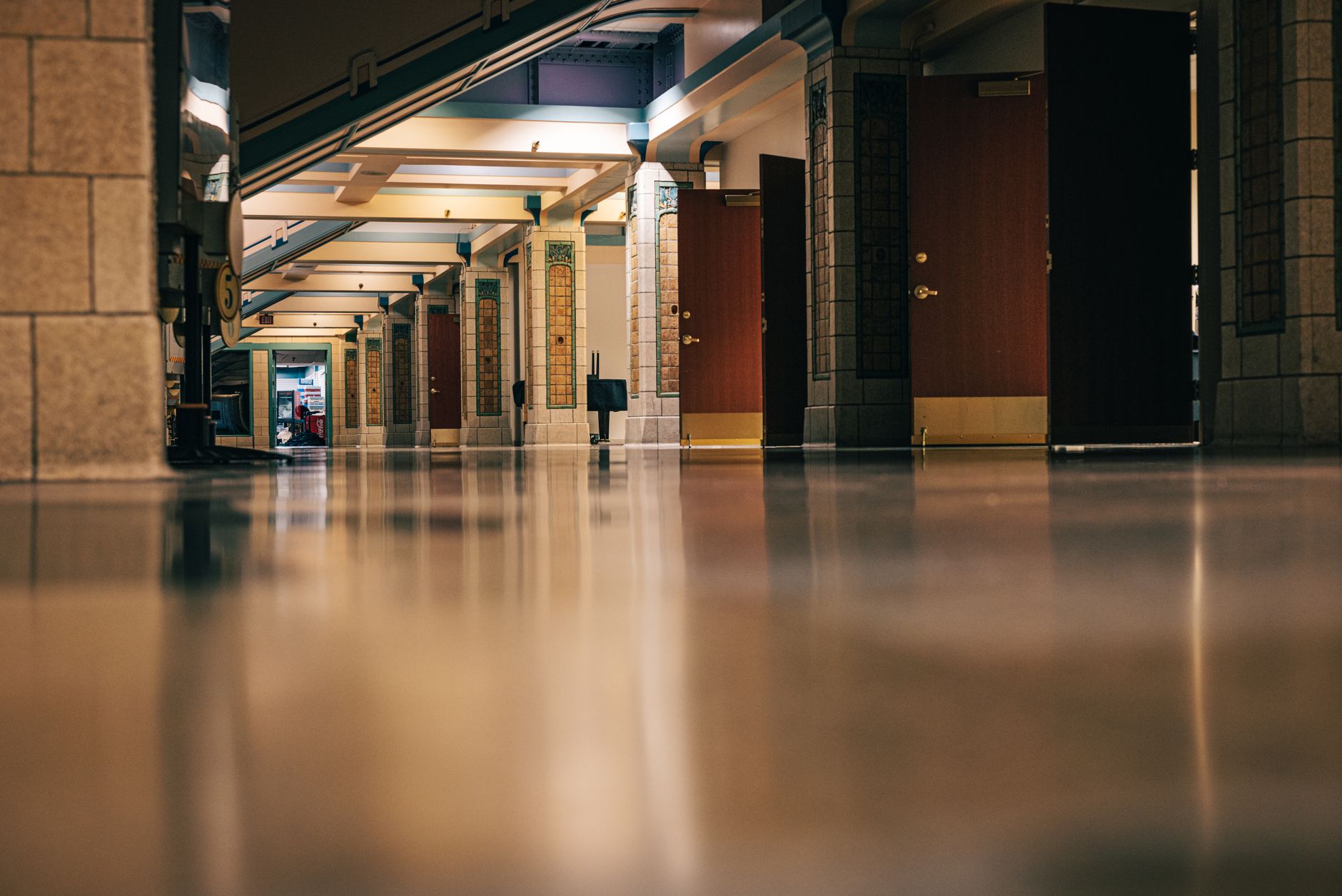
Museum galleries are long, open and largely hard floor, which is the surface where a floor scrubber does its most consistent work. Corridors and circulation routes between wings follow the same pattern. The robot's job is the repeated route, run when the building is empty and visitors are not walking through the space.
Closed-hours running also removes a scheduling problem. A cleaner working during open hours has to step around visitors, ropes, school groups and events, which slows the work and adds a safety concern. A robot that runs after closing avoids that constraint, as long as the closing window is long enough to finish the route.
How does the savings math work?
The calculation has three inputs. The first is the hours of hard-floor cleaning per week that staff do now, valued at the local wage for this job shown in the government wage data on this page. The second is the share of those hours a robot realistically takes, which is less than all of them because it does not do restrooms, detail work or spill response. The third is the lease cost, which is quoted after a site assessment.
The savings are the labor hours the robot offsets, minus the staff time that remains for setup, supervision and the morning check. Because each input is a range, the result is shown as a range too. We do not promise a single figure before the assessment has measured the floor.
Published case studies give a sense of scale, but they are vendor-reported and come from other settings. A hospital case reported 16 or more hours a night for two floor technicians on 50,000 square feet, with the team's nightly total falling to about 5 hours and scrubbing hours dropping 50%. A contractor case logged about 20 autonomous hours a week, sometimes above 30. Those are robot run hours in other buildings, so they test the method rather than giving a museum number.
What does the wage data mean for the labor side?
The wage panel on this page shows government wage data for Janitors and Building Cleaners, the occupation whose hours the robot takes over. The savings range applies that local wage to the hours the robot offsets, so the same hours produce a larger or smaller range depending on the local rate. If galleries are cleaned by staff in another job, such as security or visitor services, the calculator still prices only the cleaning time, because only that time is offset.
The Occupational Outlook Handbook lists about 2,447,700 jobs for Janitors and Building Cleaners in 2024, in its base-year projections, with projected growth of 2% from 2024 to 2034, which is slower than average. It also projects about 351,300 openings each year, mostly from replacing workers who leave. A workforce with heavy turnover makes fixed cleaning schedules hard to staff, and each vacancy leaves floors uncleaned or pushes work into overtime.
What do the injury figures say about floor cleaning?
Janitor and cleaner work carries real injury exposure. The Bureau of Labor Statistics recorded 21,100 cases involving days away from work for janitors and cleaners, except maids and housekeeping cleaners, in private industry in its 2016 to 2020 snapshot. That is an incidence rate of 191.6 per 10,000 full-time equivalent workers. Its 2015 to 2019 snapshot for janitors showed 18,680 cases and a rate of 157.4.
The most recent all-industry figure found is from 2024. According to Safety and Health magazine, reporting the Bureau's release, private industry's total recordable case rate was 2.3 per 100 full-time workers, and the injury-only rate was 2.2. An occupation-level 2024 figure was not found in this research, so the older snapshots are the best available for this job.
The published snapshots do not break these cases down by cause, so this page does not attribute them to floor passes. A robot does not remove the need for people on site. It can reduce how many hours a person spends on the most repetitive floor work, and any injury benefit should be counted as qualitative unless your own incident log supports a number.
What changes the number up or down?
The biggest driver is the share of floor the robot can cover in the closing window. A large open gallery with a clear route scores higher than a building split into many small rooms, with rugs and threshold changes. The robot's route time and the number of passes it can complete before the building reopens set how far it gets.
The schedule drives the labor side. If cleaning already runs outside open hours, the offset is the hours that move from staff to the robot, not the whole shift. Sites that clean during open hours can still benefit, but the case is weaker, because the robot cannot take over work that must happen while visitors are present.
What are the risks to the return, and how do you avoid them?
The first risk is a gap between the plan and the floor. If the route is not mapped, thresholds, plinths, temporary exhibit installations and loose cables can stop the robot, and the hours it was meant to take go back to staff. A site assessment with mapping and a route test closes most of that gap before the lease starts.
The second risk is downtime. A robot stopped for service leaves that floor uncleaned, so the return depends on how fast a fault is fixed. Our service team handles remote triage, on-site dispatch and emergency response nationwide, and a spare unit can cover a fault so one stoppage does not cancel a night's work. Ask whether maintenance is included in the quote, and what happens during a fault.
The third risk is expectation. If the museum treats the robot as a reason to cut the team without changing the schedule, the labor side falls apart. Training the staff who run the morning checks and handle exceptions keeps the offset accounted for.
How long does it take from assessment to payback?
The timeline has four stages: assessment, quote, a limited start on one unit or one wing, and full running once the route is proven. The assessment maps the floor, records the closing window and measures the hard-floor hours now. The quote then sets the lease payment and its terms.
Payback depends on how quickly the offset hours begin. The first stretch after go-live usually shows less than the steady state, because staff are still learning exceptions and the route is being tuned. How long each stage takes depends on the building, so the assessment sets the schedule rather than this page.
How do you get a precise figure?
A free site assessment replaces the ranges on this page with your own numbers. Bring the current cleaning schedule, the closing time, the floor plan, and a list of hard-floor areas with any carpets or thresholds. Mapping and a route test on site then measure what the robot can cover.
Our role is to select the robot that fits the site, lease it through financing, deploy and integrate it, train staff and service it nationwide. Compare any quote against the hours the assessment measured, not against a general figure, and ask the quote to list the lease term, what maintenance is covered and how faults are handled. The payment is quoted after the free site assessment.
Frequently asked questions
Want a cleaning robot at your museum?
Tell us about your site. We will recommend the robot, quote the lease, and keep it serviced.
Sources
- US Bureau of Labor Statistics, Occupational Employment and Wage Statistics (OEWS May 2024)
- Institute of Museum and Library Services, museum count estimate (May 2014)
- American Alliance of Museums, museum workforce data snapshot
- U.S. Bureau of Labor Statistics, Occupational Outlook Handbook: Janitors and Building Cleaners
- U.S. Bureau of Labor Statistics, occupational injuries snapshot for janitors and cleaners, 2016 to 2020
- U.S. Bureau of Labor Statistics, occupational injuries snapshot for janitors, 2015 to 2019
- Safety and Health magazine, reporting the Bureau of Labor Statistics 2024 injury and illness release