
The short answer
Cleaning robot ROI for senior living communities comes from the janitor and building cleaner hours a robot completes on scheduled passes through corridors, dining rooms and common areas, valued at the local wage for this job and set against the lease cost. The savings range depends on how much of that floor work fits a robot in a specific building, so a free site assessment measures the hours and that share before any lease quote is given.
Key takeaways
- The return comes from scheduled floor passes, not from cutting caregiver time.
- Only janitor and building cleaner hours are priced, using the government wage data on this page.
- A floor robot cleans floors. High touch disinfection stays with staff under infection prevention policy.
- Certified nursing assistant turnover in nursing homes was 42.34% in 2025, so gaps in floor coverage carry real cost.
- A free site assessment sets the share of work a robot takes and produces the lease quote.
Run the numbers for your site
Pick your city or state for a real regional number - we use the real BLS wage there. (On the live site this auto-detects from your location.)
What do you want to automate?
The robot runs the open floor overnight; your crew keeps detail and edges.
What return can a senior living community expect from cleaning robots?
Senior living covers a range of buildings, from assisted living to memory care and independent living campuses, so the floor work differs from one building to the next. According to Statista, the number of assisted living communities in the US was about 30,500 to 32,820 in early to mid 2025, and the upper figure is attributed to the National Center for Assisted Living. A separate analysis from CEP, citing National Center for Health Statistics research, puts assisted living and other residential care communities at about 32,000 to 32,231. The two ranges use separate scopes, so read them as a sizing band rather than a single count.
Cleaning robot ROI for senior living communities depends on how much of the floor work at one building is routine, repeatable and scheduled, and how many hours of that work your housekeeping team already spends on it. The calculator on this page uses the local wage for this job from the government wage data shown beside this text, applies the share of that work we expect a robot to take, and subtracts the lease cost. The output is a savings range, not a promise, and it moves when the inputs move.
Read the rest of this page before you use the range. Most errors in this category come from counting caregiver time as savings, assuming a floor robot disinfects high touch surfaces, and planning for payback without a ramp period. Each of those errors makes the number look better than the building will deliver.
Where does the return come from in senior living floor care?
The return starts with the janitor and building cleaner work that fills a shift in a senior living building. Corridors, dining rooms, lounges and common areas are swept and scrubbed on a set schedule, and the passes repeat night after night. That repetition is what makes the work easy to hand to a robot. The nurses, aides and care staff who mainly serve residents are not priced in this calculation. The robot takes the janitor and building cleaner type of work off the housekeeping team's plate, and nothing else.
Staffing is the second part of the case. Skilled Nursing News, reporting on the HCS nursing home turnover report produced with LeadingAge and supported by AHCA, says certified nursing assistant turnover was 42.34% in 2025, down from 44.16%. The same report covered 917 nursing homes and more than 111,600 employees, and top level executive turnover fell to 22.12% from 31.97%. AHCA reported, as covered by Skilled Nursing News in January 2026, that nursing homes added 40,700 jobs in 2025 and that turnover and agency use declined. These are nursing home figures, and we did not find housekeeping turnover for senior living in the research. The direction still matters, because when one person leaves, a scheduled pass can go undone.
Caregiver time is a different question. A draft UCSF staffing regulations document puts average aide hours per resident day in residential care communities at 2.2 to 2.7, depending on how many residents have dementia. ECRI reported total staffing averaging 2.84 hours per resident per day in 2014, in older data. That is direct care time, not housekeeping, so it explains why caregivers are stretched but does not set the offset.
The return is weakest in buildings that already run a small, stable housekeeping team with no open shifts. There the hours a robot takes over may be modest, and the value shifts toward consistent floors and a written record of passes. Count that honestly before you commit.
Median hourly wage, Janitors and Building Cleaners
$4,041
Monthly cost of one full-time worker, at the median wage plus payroll costs (an estimate, not a quote).
How does the math work for a cleaning robot lease?
The calculation has four inputs. The first is the hours of janitor and building cleaner work the robot takes over at one building, measured during the site assessment rather than estimated from total square footage. The second is the share of those hours a robot realistically completes, since not every task fits a machine. The third is the local wage for this job from the government wage data on this page. The fourth is the lease cost, which is quoted after the assessment.
The offset equals the hours completed multiplied by the local wage. From it you subtract the lease cost and the staff time still needed for setup, route checks, spill response and high touch work. A robot that takes most of the scheduled passes but leaves the rest to people will show a smaller offset than a headline suggests. We set the share conservatively and show a range, so the number reflects the building rather than a best case.
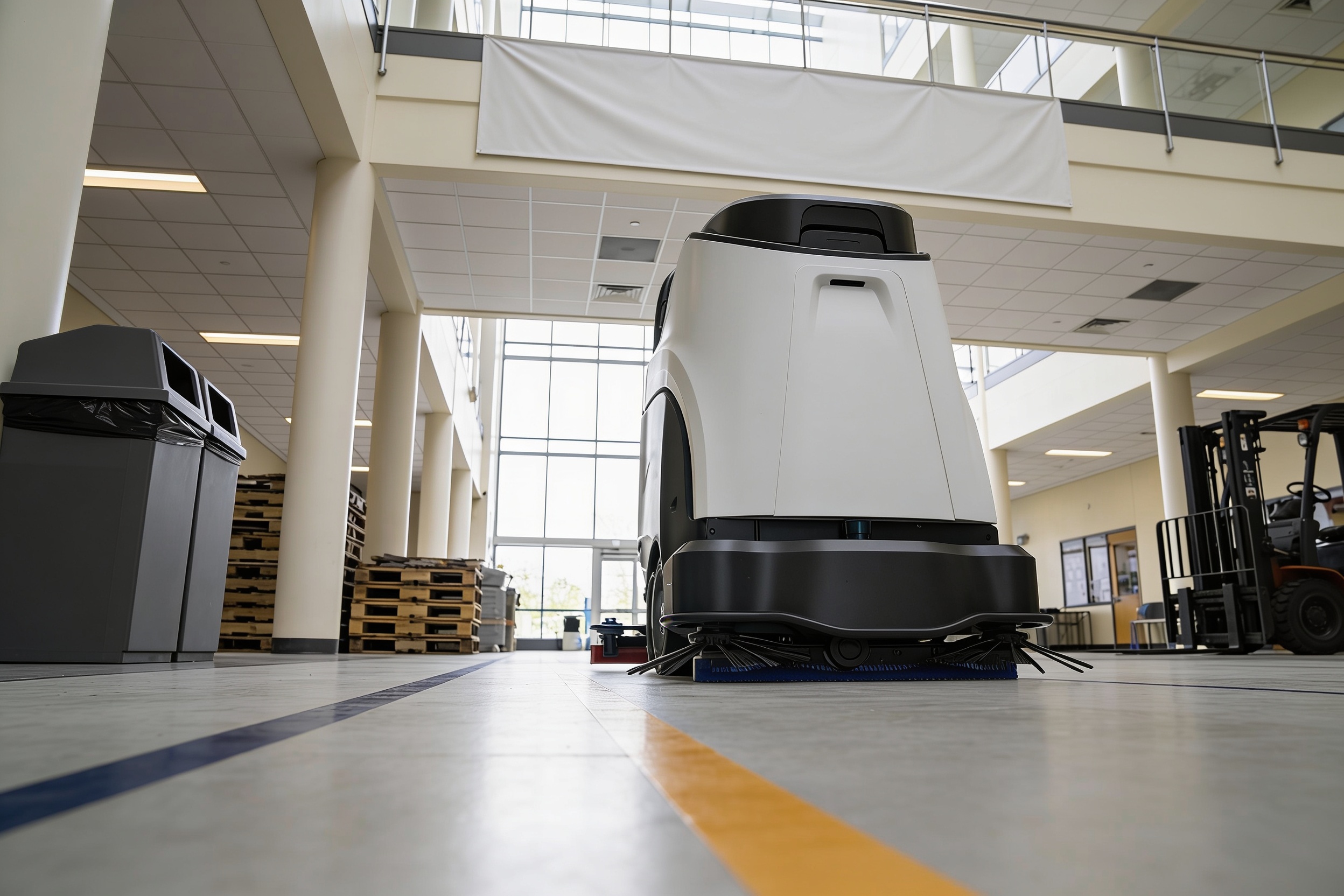
The share matters more than most people expect. Senior living floors often carry rugs, thresholds, dining furniture moved between services, and resident walkers. Each of those reduces the share of a given hallway a robot can cover in one pass. The assessment maps the route and marks the zones where a robot pass is practical, and that map drives the share.
What changes the number up or down?
Four factors move the number most. Floor layout comes first: wide, open, hard floors suit a robot far better than cluttered halls with thresholds and rugs. Schedule comes second. A pass that runs when no resident is walking the route frees more staff time than a daytime pass that still needs a person close by. The third is the volume of existing floor work at the building. The fourth is how the remaining work is divided among staff.
Staffing pressure changes how much value the robot gives. If the housekeeping team has open shifts that stay unfilled for weeks, the robot keeps the scheduled passes running. If the team is full and stable, the saving appears as hours moved to other tasks rather than as hours cut. Infection control expectations also matter. The multisociety nursing home infection prevention guidance released in late October 2025 calls for infection prevention teams to weigh in on cleaning practices and environmental systems, so the scope of robot work should be agreed with that team before a lease is signed.
What are the risks to the return and how do you avoid them?
The first risk is overstating the share of work a robot takes. A pass on a clear floor is simple, but spills, bodily fluids, dining chairs pushed into the path, and resident equipment interrupt the route. Plan staff time for those events, and count only the hours the robot completes in the assessment. A share measured on a cleared floor will overstate the offset every week.
The second risk is confusing a floor pass with disinfection. Floor scrubbing cleans the floor. It does not disinfect high touch surfaces such as handrails, call buttons and door handles, and it does not replace the hand hygiene and surface protocols your infection prevention team sets. A 2025 Virginia Department of Health memo on environmental cleaning advises enough environmental services staff and enough time for proper cleaning, referencing CDC surfaces guidance for minimum cleaning times. A robot can keep a floor schedule, but it does not replace that staffing.
The third risk is a slow ramp. Staff need time to learn routes, checks and escalation steps, and the route list is tuned over the first weeks. Start with one building or one wing, and plan the first months as a training and tuning period rather than a savings period. Communities that skip this step tend to compare an early month with a steady state figure and then doubt the result.
How does a cleaning robot compare with a person on the floor?
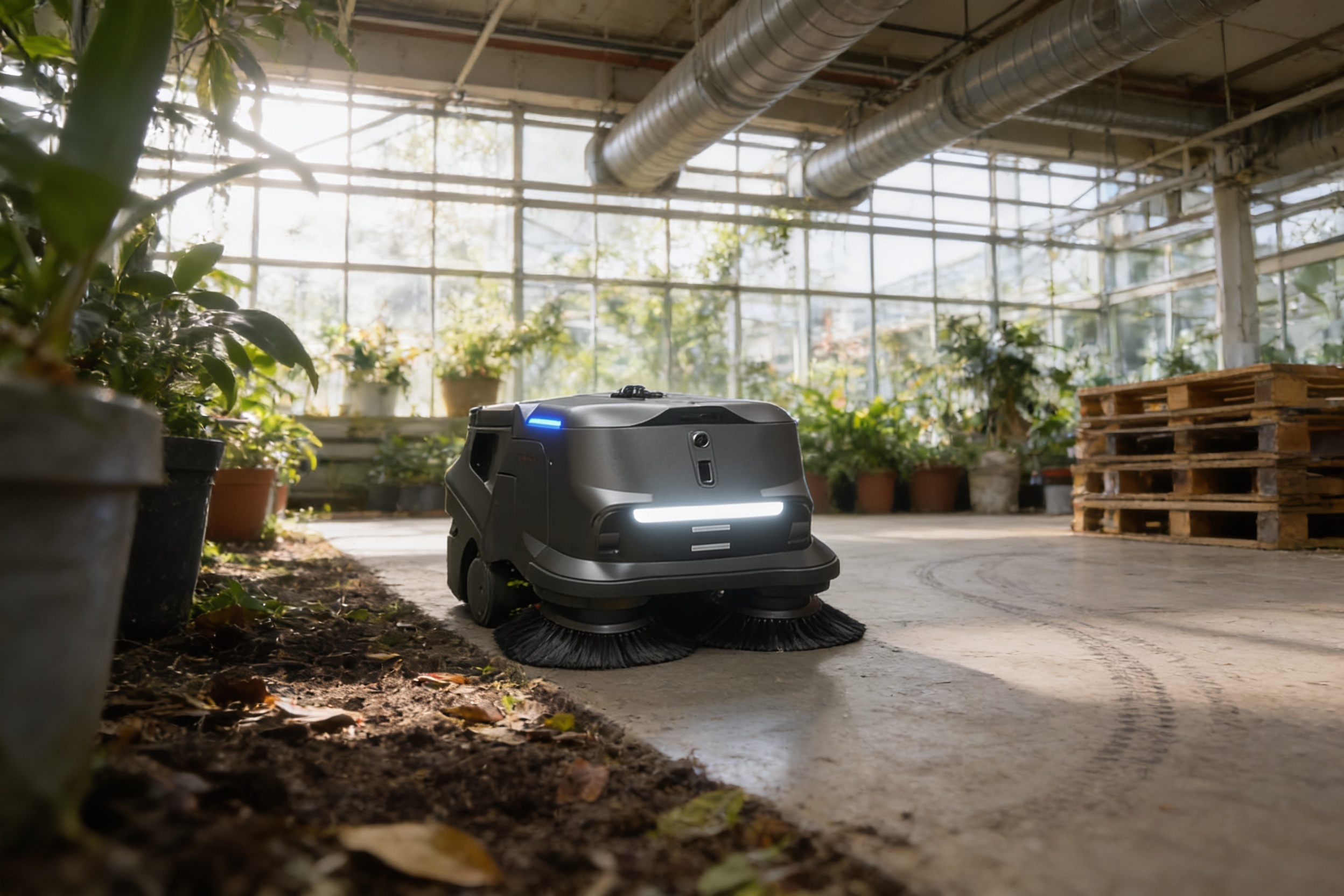
A fair comparison helps the decision. A robot does well on repeat passes, runs when the building is quiet, and does not call out sick. It does not handle the unexpected, interact with residents, or judge whether a dining room is clean after a spill. The table sets the two side by side.
The person wins on judgment, on resident contact, and on any task that changes from minute to minute. The robot wins on the schedule and on the repeat pass. The return comes from giving the robot the predictable part of the floor work and keeping people on everything else. A plan that tries to remove people from the unpredictable work will create gaps on the first bad night.
- Repeat floor passes
Cleaning Robot
Runs the same route on a set schedule
Staff
Same route, but with breaks and slower on large floors
- Night coverage
Cleaning Robot
Runs without an operator on site
Staff
Needs a person on shift, with the staffing cost that brings
- Unexpected spills and debris
Cleaning Robot
Stops and waits for staff
Staff
Responds on the spot and judges the mess
- Resident contact
Cleaning Robot
None
Staff
Can help a resident, notice a change, and report it
- Consistency of the route
Cleaning Robot
Same pass every time
Staff
Varies with the person and the shift
- High touch surfaces
Cleaning Robot
Outside its job
Staff
Done by staff under protocol
- Open shifts
Cleaning Robot
Keeps the scheduled passes running
Staff
Cannot cover a shift they are not on
What is the timeline from site assessment to payback?

The sequence runs from a free site assessment to a lease quote, then to deployment and integration, staff training and go live support. During the assessment our team maps the building, marks the zones and routes, times the existing floor work with your staff present, and returns a savings range with the lease quote. Nothing is leased until the people who sign off have reviewed the assumptions.
Deployment is phased. The first building or wing goes live with staff trained on routes, checks and escalation, and the route list is adjusted over the first weeks. Payback is measured against hours actually completed, not planned hours. Expect the early months to show less offset than the steady state, because setup, tuning and training take time. We review logged hours at set intervals so the number tracks the building you actually run.
How do you get a precise figure from a free site assessment?
A precise figure needs data from your building. Bring the floor plan, the existing housekeeping schedule, the hours of scheduled floor work per shift and per week, the surface types by zone, and a note of any shifts that are open or hard to fill. We walk the space, map the route, and time the work with your team present, so the hours come from the floor and not from memory.
The output is a savings range with each assumption named: the hours taken over, the share of work the robot completes, the local wage for this job from the government wage data on this page, and the lease cost. Because each assumption is listed, you can change one and see how the range moves. The assessment is free and comes before any lease quote, so the decision is made with numbers from your own building.
If the assessment shows a small share, we say so. A small offset is a reason to start with one building, to change the schedule, or to skip the robot for now. A lease that does not fit the building helps no one.

Is a cleaning robot lease worth it for a senior living community?
It is worth evaluating when the scheduled floor work is large enough, the floors suit a robot, and the staffing gap or overtime is real. It is harder to justify when the floors are cluttered, most of the work is hands on, or the housekeeping team is stable with no open shifts. In those cases the honest answer may be a smaller pilot or no robot at all.
Check two things in your own building. Does the scheduled floor work fill enough hours that a share of it matters after the robot does its part? And does the staff time for setup, checks and high touch protection stay in place? If both answers hold, a free site assessment is the next step. After go live, we service the robot nationwide.
Frequently asked questions
Want a cleaning robot at your senior living community?
Tell us about your site. We will recommend the robot, quote the lease, and keep it serviced.