
The short answer
Cleaning robot ROI in Detroit comes from the janitorial floor hours a site can hand off to a leased robot, valued at the local wage for Janitors and Building Cleaners shown on this page. The savings range depends on how much of the floor work a robot realistically takes, the lease cost quoted after a free site assessment, and how the freed hours are used. It is an estimate, not a promise, and the site assessment turns it into a figure for your building.
Key takeaways
- The return comes from floor hours a leased robot takes over, not from cutting people on paper.
- The local wage for Janitors and Building Cleaners on this page sets the value of each hour offset.
- A robot takes a share of the floor work, so the savings are always a range.
- Floor layout, shift coverage and staff turnover move the number the most.
- A free site assessment and a lease quote give the precise figure for your building.
Run the numbers for your site
Auto-detected from your location - we use the real BLS wage here. Not right? Pick your city or state above.
What do you want to automate?
The robot runs the open floor overnight; your crew keeps detail and edges.
What return can a Detroit business expect from a cleaning robot?
Cleaning robot ROI in Detroit is mostly a labor question. A leased floor robot takes over repetitive floor work, usually scrubbing and sweeping on open routes, so the return is the janitorial hours that a crew no longer has to cover. Each of those hours is valued at the local wage for Janitors and Building Cleaners, which appears in the government wage data panel beside this text.
A robot does not clean bathrooms, empty bins, handle spills or move furniture, so for most sites it is not a headcount cut. What changes is how many floor hours the crew must cover, and whether a shift can run without a second person on the floor. Those are the hours this page models.
We are a commercial robot integrator. We pick the robot that fits the floor, arrange the lease through financing, deploy and integrate it, train the staff who run it, and service it nationwide. The savings range on this page uses the same inputs we check during a site assessment.
Why is janitorial labor a recurring cost for Detroit businesses?
Janitors and building cleaners is a large and steady occupation. According to the Bureau of Labor Statistics, about 2.4 million jobs were held in 2024, and BLS projects 2% growth from 2024 to 2034, which is slower than the average for all occupations. The work is common and is not shrinking, so the hours must be covered every week and the cost of covering them recurs.
Turnover is the harder number to pin down. BLS publishes no turnover rate for this occupation on its page. Its projected openings, which combine growth and replacement, are the closest official proxy, and an earlier edition covering 2023 to 2033 projected about 350,300 openings a year. Treat that as a planning proxy, not a measure of how many people leave a given crew.
For a Detroit site, the useful questions are local. How many shifts go unfilled, how often overtime covers the floor, and how long a new hire takes to clean to standard. For planning, we assume four people on the cleaning crew at a single site of this kind. That is a working assumption, not a published figure, and your own roster should replace it.
Median hourly wage, Janitors and Building Cleaners
$3,999
Monthly cost of one full-time worker in Detroit, MI, at the median wage plus payroll costs (an estimate, not a quote).
How does the cleaning robot ROI math work, step by step?
Start with the hours. Count the floor hours your crew spends on routes a robot can run, such as main corridors, open halls, the loading apron, aisles and lobby floors. Leave out bathrooms, detailed dusting, waste removal and anything that needs a ladder or hands. The result is the robot-eligible hours each week, taken from your own cleaning log.
Then apply a realistic share. A robot does not take all of those hours. Setup, route checks, charging, refills, clearing obstacles and handling exceptions stay with staff. The share depends on layout, clutter and how well the route can be mapped, and it is confirmed during the site assessment rather than assumed.
Next, value the hours at the local wage for Janitors and Building Cleaners from the government wage data on this page. Subtract the lease cost, which is quoted after assessment, and the staff time for checks and supervision. Equipment makers publish rated output by machine size, but those are vendor claims that separate theoretical from practical output, so use the practical rate when you estimate how long a route takes. What remains each year, shown as a range, is the savings estimate.

What changes the savings up or down?
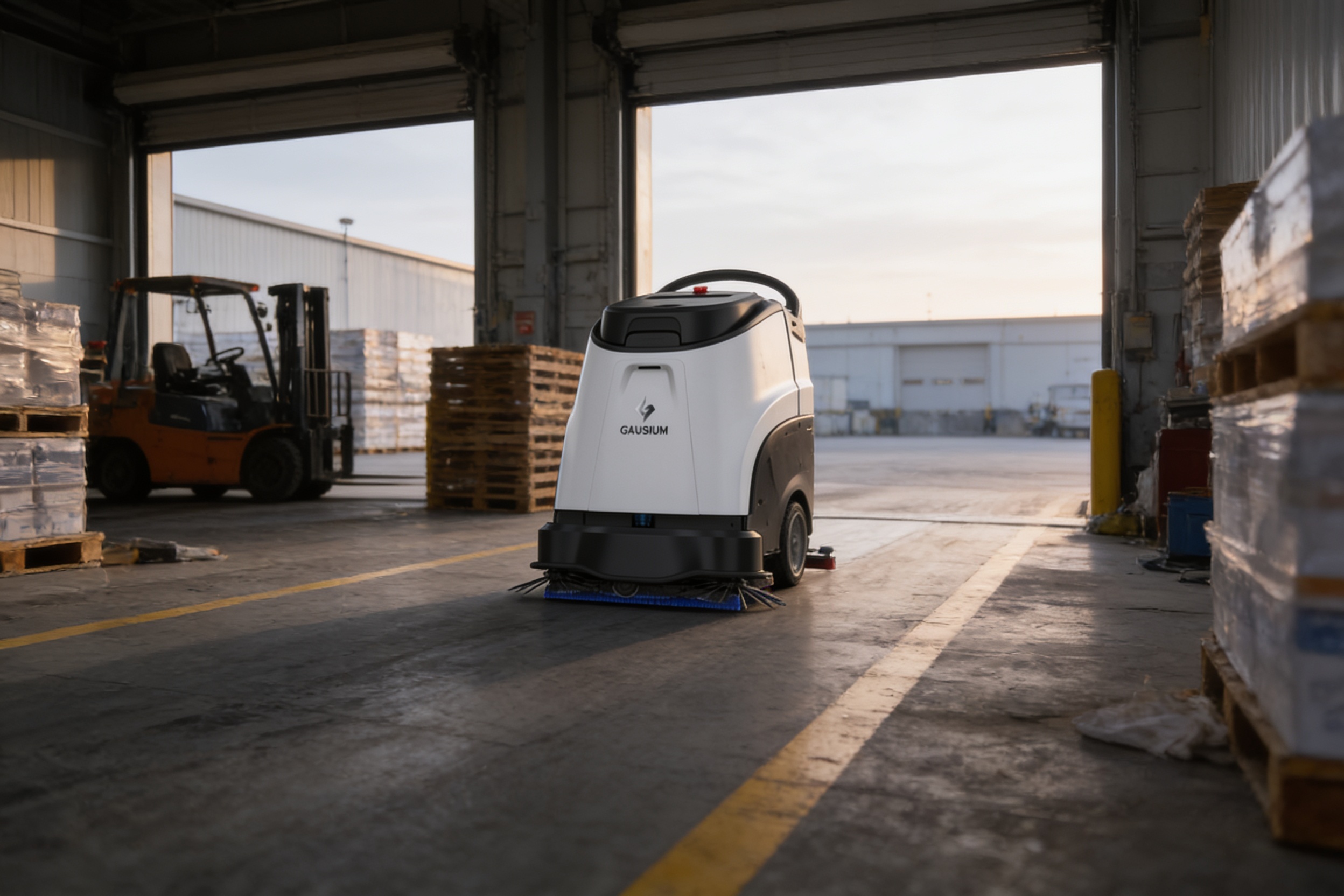
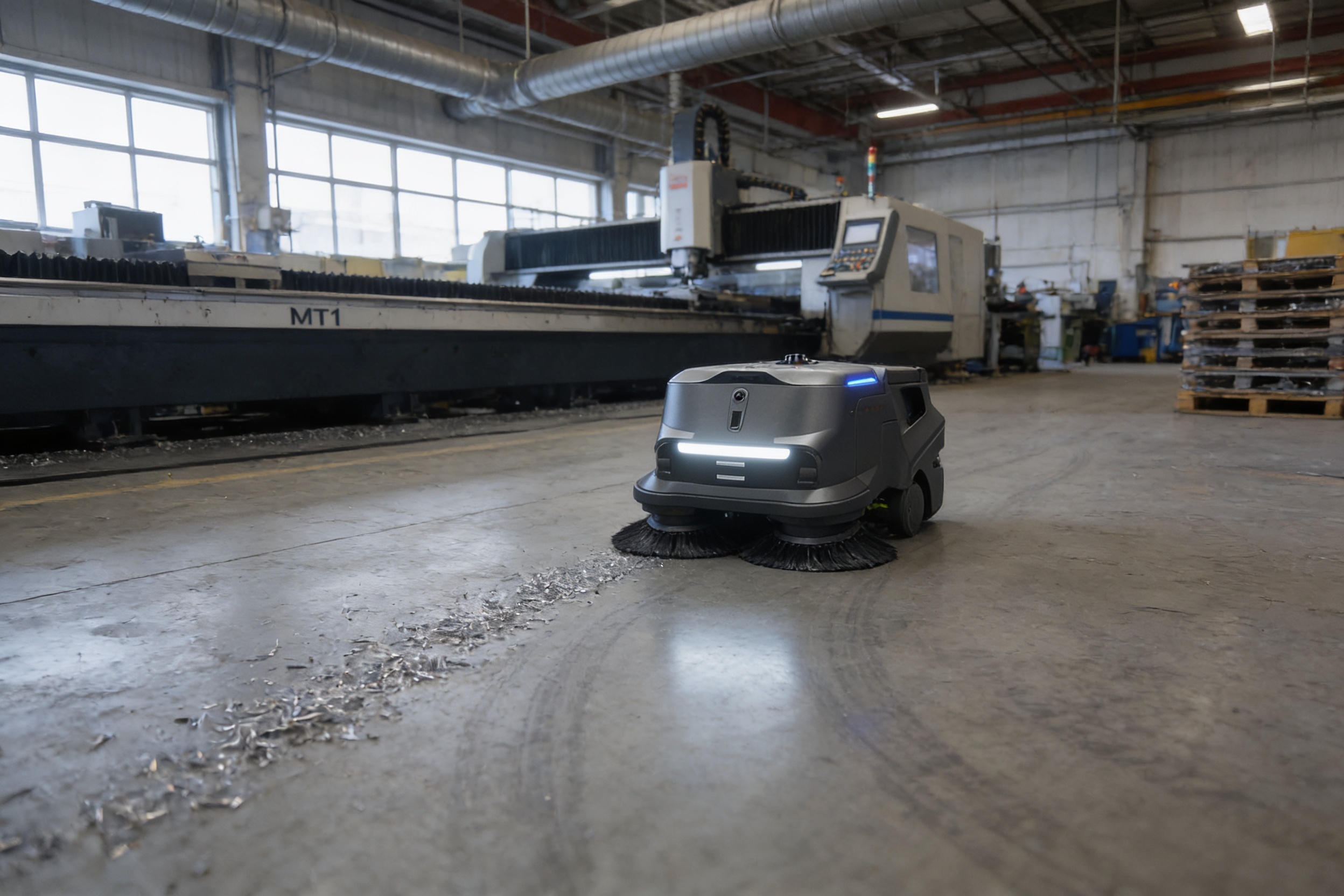
The biggest driver is how much of the crew's day is floor work a robot can repeat. Large, open floors give a robot long clear routes and more offset hours per pass. Cramped aisles, heavy clutter, many small rooms and frequent stops pull the number down, because the robot spends its time turning and waiting rather than cleaning.
Off-hours coverage matters. Hours that a robot covers when nobody is on site add floor time without adding a shift. The morning check and any exception handling still need a person, so the saving is smaller if the crew would have been on site anyway.
Turnover moves the number too. A robot does not fill a vacancy, but it lets a smaller crew keep the same floor covered. Where unfilled shifts are common, the case is stronger. Where the roster is stable and overtime is rare, the saving is more modest and should be stated that way.
What are the risks to the return, and how do you avoid them?
The most common risk is overestimating the hours. Teams often count the whole cleaning shift as robot work. Measure only the routes the robot would actually run, and leave room for breaks, turnarounds, refills and the trips needed to clear a route.
Floor condition is the second risk. Uneven surfaces, wet patches and loose cords slow a route or stop it, and a stopped robot hands the floor back to the crew. Fix the worst problems first, or count the time to fix them in the estimate. A site assessment maps the floor so these issues show up before the lease starts.
Safety deserves a number in the plan, not a guess. The Bureau of Labor Statistics snapshot for janitors and cleaners, except maids and housekeeping cleaners, covering 2016 to 2020, recorded 21,100 nonfatal cases with days away from work, a rate of 191.6 per 10,000 full-time equivalent workers (FTE). The 2015 to 2019 snapshot for janitors put the rate at 157.4 per 10,000 FTE. A robot can take some of the repetitive push work, but people still handle spills, ladders and chemicals, so the plan should keep those tasks with trained staff.
How does a robot compare with a person on the floor?
Adoption is moving. According to the International Federation of Robotics, professional service robot shipments rose 24% to almost 250,000 units in 2025. That count comes from the suppliers the federation surveyed, so it is a sample and not a full census of the industry, but the direction is clear.
A robot wins on repetition and on hours when nobody is in the building. It runs the same mapped route each shift and needs no handover. A person wins wherever the work changes from one hour to the next.
Be honest about the trade. A robot stays on its route and waits or reroutes around anything it does not recognize, so someone must still respond. A person notices stains and damage and adapts when the building changes. The comparison below shows where each one fits.
- Repeat floor routes
Cleaning Robot
Runs the same mapped route each shift without drifting from it
Staff
Varies the pass but tires and needs breaks
- Overnight hours
Cleaning Robot
Runs with no operator on site once the route is mapped
Staff
Needs a scheduled shift, a supervisor and a handover
- Spills and exceptions
Cleaning Robot
Stops or routes around them and waits for help
Staff
Responds, cleans up and decides what happens next
- Bathrooms and waste
Cleaning Robot
Does not take this work
Staff
Handles it with the tools and training it needs
- Noticing detail
Cleaning Robot
Covers only the mapped floor and misses stains or damage off the route
Staff
Notices stains, damage and details a route does not cover
- Where the person wins
Cleaning Robot
Less flexible when the layout changes
Staff
Adapts to layout changes and new tasks without a route update
What is the timeline from assessment to payback?
The first step is a free site assessment. We map the floor, record the route hours from your log, check floor condition and power access, and confirm where the robot would work. A fixed robot lease payment is quoted after that visit, so the number reflects your building rather than a template.
Next comes lease approval and integration. The financing is set up, the robot is deployed and integrated into the building routine, and staff are trained to run and check it. Go live support covers the first shifts, when routes and exception handling are still being tuned, and that tuning can decide how much of the planned share is reached.
Payback follows measured hours, not the calendar. Track the floor hours the robot covers against the plan from go live, and compare them with the lease cost and any startup costs. The lease term you choose and the shift coverage you need set the length of the payback period, so the assessment, not a template, sets the timeline for your site.

What does a robot shift look like in a Detroit building?

On a typical night shift, the crew leaves the floor in a state the robot can work from. Loose items are cleared from routes, doors are set, and the charging dock is clear. The robot starts its mapped route, runs its passes and returns to charge. Staff check its status at the end of the shift.
During the shift, a robot that meets an obstacle it cannot pass stops and waits, or reroutes if the map allows. Someone reviews these events in the morning and clears the cause, so the next run is cleaner. Those checks are part of the labor side of the math, and they belong in the estimate.
The morning crew handles what the robot could not, such as spills, bathrooms, waste and detail work. The floor is covered for more hours in the day, while the people on site do the work that needs judgement.
How do you get a precise figure from a free site assessment?
Cleaning robot ROI in Detroit becomes a precise number only after a site visit. Bring the information below so the assessment can measure the real floor, not a guess. We are a commercial robot integrator, so the same team picks the robot for the floor, arranges the lease through financing, deploys and integrates it, trains staff, and services it nationwide.
Ask for the lease quote in writing, with the service plan and any maintenance included, so you can compare the fixed payment with the floor hours it offsets. Robots are only leased, through financing, and the payment is set in the quote that follows the assessment, not on this page.
- Cleaning log for recent shifts, showing routes and hours
- Floor plans or a rough sketch of the main routes
- Shift times, overnight coverage and unfilled shift history
- Notes on floor condition, clutter and power access
- Service and supervision time the cleaning crew uses today
Frequently asked questions
Put a robot to work in Detroit.
We walk your site, learn the job, and recommend the unit that fits. Then we quote the lease, deploy it, and keep it serviced.
Sources
- US Bureau of Labor Statistics, Occupational Employment and Wage Statistics (OEWS May 2024)
- Bureau of Labor Statistics, Occupational Outlook Handbook: Janitors and Building Cleaners
- Bureau of Labor Statistics, Occupational Outlook Handbook, earlier edition (archived copy)
- Bureau of Labor Statistics, injury and illness snapshot: janitors and cleaners, except maids and housekeeping cleaners, 2016 to 2020
- Bureau of Labor Statistics, injury and illness snapshot: janitors, 2015 to 2019
- International Federation of Robotics, World Robotics service robots report