
The short answer
Cleaning robot ROI in Des Moines, IA comes from the janitor and building cleaner hours a robot takes over, valued at the local wage for that job, minus the fixed robot lease payment quoted after a free site assessment. The range depends on how much of the floor a robot can realistically cover and how many hours the existing crew spends on that floor each week. Treat the savings range on this page as a planning range that a measured site survey will narrow, not as a promise.
Key takeaways
- The return comes from janitor and building cleaner hours the robot takes over, not from the robot itself.
- The share of floor a robot can realistically cover matters more than total floor area.
- High turnover adds staffing risk that the return calculation should reflect, but it is not a saving on its own.
- The lease is a fixed robot lease payment, quoted after a free site assessment.
- Use the savings range as a planning figure and confirm it with measured hours from your own building.
Run the numbers for your site
Auto-detected from your location - we use the real BLS wage here. Not right? Pick your city or state above.
What do you want to automate?
The robot runs the open floor overnight; your crew keeps detail and edges.
What is cleaning robot ROI in Des Moines, IA?
Cleaning robot ROI in Des Moines, IA is the relationship between the janitorial hours a robot takes over and the cost of leasing that robot across the lease term. It is not one fixed number. A site where most cleaning time goes into hard floor passes has a return that looks very different from a site where the crew spends most of its hours on restrooms, glass, trash and detail work that a robot cannot do.
The local labor pool is large. According to the BLS Occupational Outlook Handbook, there were 2,447,700 jobs for janitors and building cleaners in 2024, but that national count is broader than the group this page covers because it includes maids and housekeeping cleaners. For the Des Moines metro, a jobs data site citing BLS May 2024 data reports 6,410 janitors and cleaners, while a second jobs data site citing May 2025 OEWS data reports about 5,720. That gap is large for a single year, so always state the year with the figure and check it against the BLS table.
The government wage data for this job in Des Moines appears in the panel beside this text. Every hour in the calculator is valued at that local wage, so the range moves with the hours you measure rather than with a guess about labor cost.
How does the savings math work for a cleaning robot?
The savings range rests on three inputs. The first is the hours of janitor and building cleaner work the robot realistically takes over each week. The second is the local wage for that work, taken from the government wage data on this page, which gives each hour a value. The third is the fixed robot lease payment, quoted after a free site assessment, along with any setup or training cost the quote does not already cover.
The basic offset is simple. Multiply the weekly hours the robot covers by the value of one hour at the local wage, then subtract the lease cost for the same week. Run the same calculation over a full year so that seasonal changes in floor use show up in the figure. The version that holds up in practice adjusts for two things the simple version leaves out. One is the time staff still spend on setup, emptying bins, checking runs and handling areas the robot cannot reach. The other is whether the robot's hours fall on shifts the crew would have worked anyway, because only hours that come off a real schedule produce savings.
Because a robot covers part of a floor and not all of it, the realistic share is the most sensitive input. A calculator that assumes the whole building is robot ready will overstate the return, and a site survey is the only reliable way to correct that assumption. A useful check is to compare the hours counted for the robot's routes with the total cleaning hours on the same floor. If the share is larger than the floor plan supports, the estimate is too high.
Median hourly wage, Janitors and Building Cleaners
$3,955
Monthly cost of one full-time worker in Des Moines, IA, at the median wage plus payroll costs (an estimate, not a quote).
Where do janitor hours actually go in a typical site?
Janitorial hours are spread across tasks that are not equally suited to a robot. Long hard floor passes in corridors, lobbies, stockrooms and open office areas are the most repeatable and the easiest to automate. Restrooms, glass, stairs, detail work around furniture and moving debris are not. The table below shows how the work breaks down and where the robot takes its share.
Our research did not find published hour counts for this exact task mix, so the table uses relative shares. The site assessment replaces those with measured hours for your building. Ask the crew to log a normal week before you set a target, and count travel, setup and walking between areas as part of the job rather than as free time. Those transition minutes are often what separates a plausible range from an optimistic one.
How many people clean one site, and how does turnover affect the return?

The labor pool is large enough that finding workers is rarely the only issue. The 2024 BLS release for the Des Moines metro covered a sample of 3,109 establishments with a 58 percent response rate, across all occupations. That sample describes how the wage tables are built. It does not tell you how many janitors any one business employs.
We did not find a published per-site headcount for a typical business of this kind. The calculator therefore starts from a planning figure of two people, which is an assumption and not a verified count. Replace it with the number of people who actually clean your space, including part-time and contract staff, because that is the count the hours are measured against.
Turnover is a labor cost that a wage table does not show. A janitorial trade reader survey reports an industry average janitorial turnover of 73 percent. Vendor blogs quote turnover ranges that are wider still, with no clear method, so we do not rely on them. A robot keeps its route running while a position is open and new staff are trained, so the return is usually stronger where turnover is high. Turnover does not add a saving to the formula, but it changes what an open shift costs the schedule, and that cost belongs in your review of the range.
Robot or person: where does each one win?
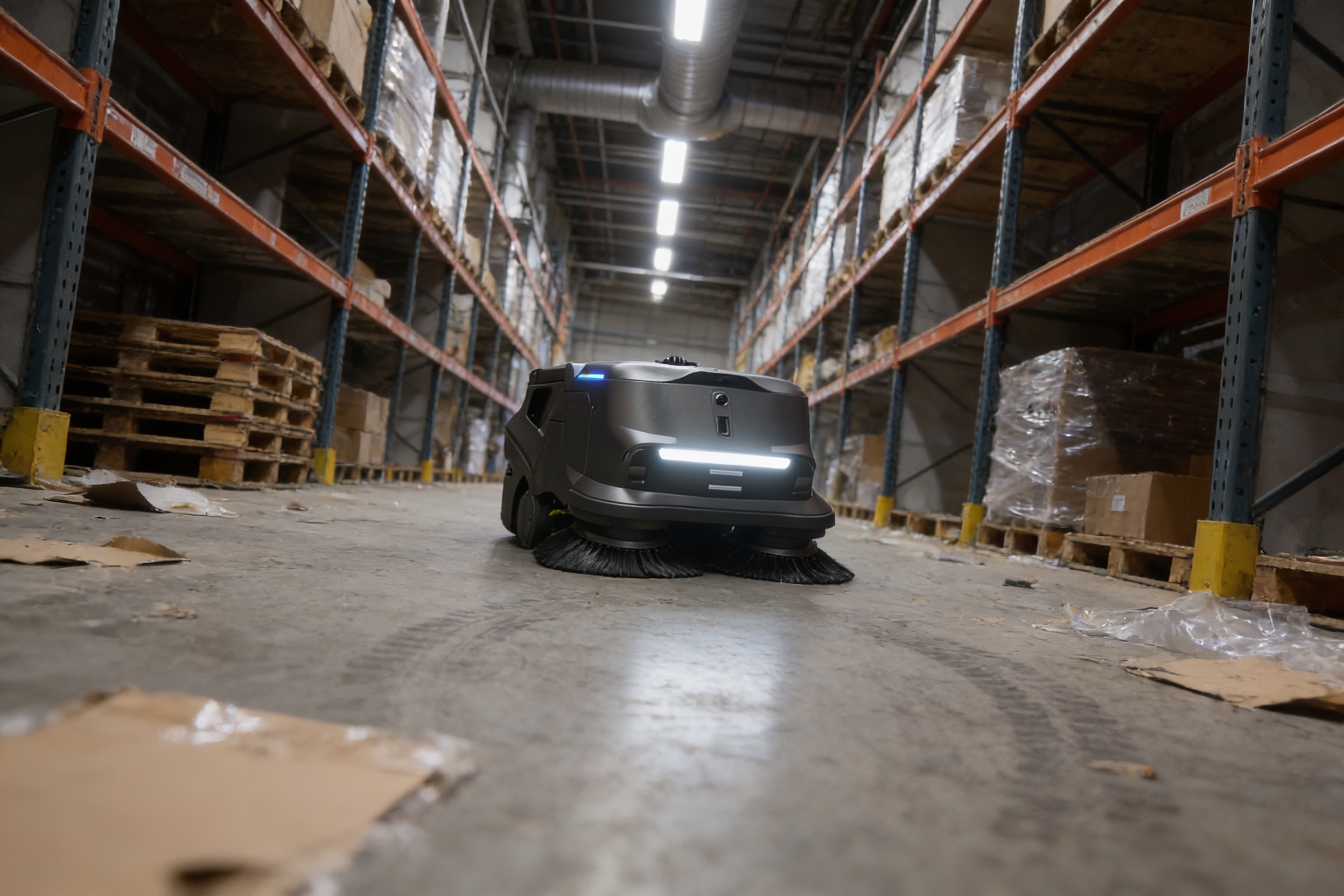
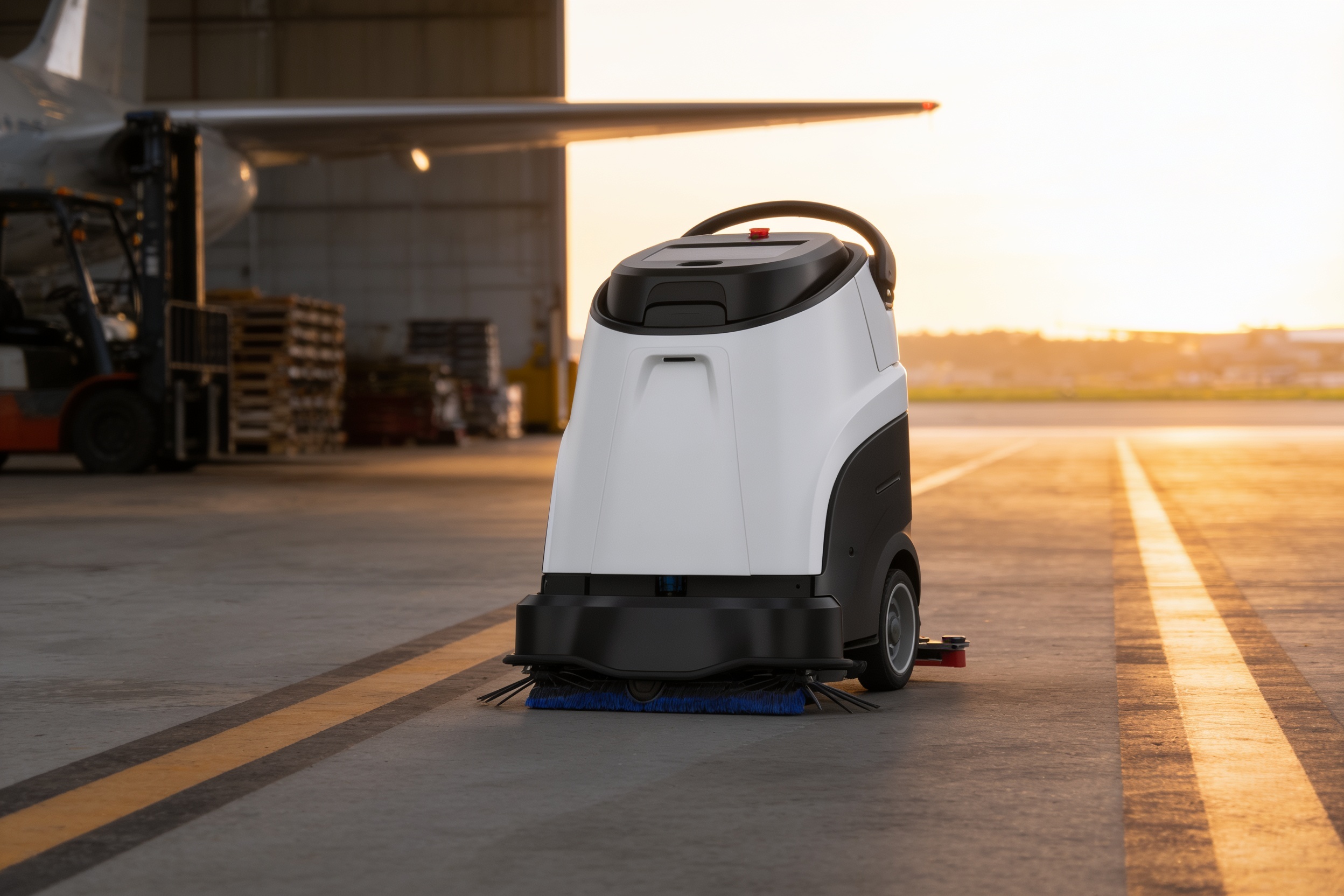
A robot and a person do different parts of the same job. The comparison below is meant to show where each one is the better choice, not to argue that one replaces the other everywhere. The clearest pattern is that the robot wins on repetition and hours, while the person wins on judgment, detail and response.
Most sites that get a good return do not drop their janitorial staff. They shift staff hours toward the work that needs a person, such as restrooms, spills and detail, and let the robot carry the repeatable floor passes. That is where the savings show up on the schedule.
- Repeatable hard floor passes
Cleaning Robot
Runs the same route on schedule, including overnight
Staff
Adjusts when the floor is unusual or a route is blocked
- Restrooms and glass
Cleaning Robot
Cannot do this work
Staff
Does it to standard
- Spills and debris
Cleaning Robot
Can detect some obstacles, but a person usually clears a spill
Staff
Responds to a spill at once
- Night coverage
Cleaning Robot
Works in an empty building without a shift change
Staff
Needs a scheduled shift and trained staff on site
- Turnover disruption
Cleaning Robot
Route keeps running while a position is open
Staff
Brings judgment and continuity once trained
What changes the cleaning robot ROI up or down?
Floor type and condition matter most. Sealed hard floors support full routes, while carpet, ramps, worn tile and uneven thresholds cause early stops or keep the robot off parts of the route. Layout is next. Clear aisles and few obstacles let the robot run its full route, while a crowded stockroom forces repeated stops and cuts the hours it can cover.
Schedule and use also move the number. A robot that runs while the building is empty adds coverage without pulling staff off their shifts. A robot that runs while people still work in the same space needs routes and timing set around them, which reduces the hours it can take. On the cost side, the lease term and the service terms change the result, so compare quotes on the same basis, with the same term, the same service scope and the same downtime handling.
Does a cleaning robot reduce injuries for janitors?
Janitorial work carries real injury exposure. The BLS Occupational Injury and Illness snapshot for janitors and cleaners, except maids and housekeeping cleaners, reports an incidence rate of 191.6 per 10,000 full-time equivalent workers in 2020. That figure describes the occupation as a whole, not any single site, and the snapshot covers 2016 to 2020, so check for a newer release before you cite it.
A robot cannot lift a bucket, step over a broken threshold or handle a spill safely. It can take repetitive floor passes off a person, which reduces the hours spent on the most repetitive task. Record that as a safety benefit rather than adding it to the savings formula, because the injury data does not give a value for your site, and do not present any reduction in incidents as a guaranteed result.
How long does a cleaning robot take to pay back?
The timeline runs from a free site assessment, where the floor is mapped and the hours are measured, through lease approval, deployment and go-live support. A supervised period follows, when staff confirm routes, schedules and hours. Payback is measured from the point the robot runs on a real schedule, not from the day the agreement is signed. The span from assessment to go-live depends on site readiness and lease approval, so ask for a written schedule in the quote.
The early months usually show the weakest offset because staff still watch the robot and routes are being tuned. A site that tracks hours from the first week can see whether the robot is taking the intended work, and can adjust routes before the lease term is half complete. Set a checkpoint at the end of the supervised period and compare measured hours with the assessment. If they differ, update the range rather than defending the original estimate.
What are the risks to the return and how do you avoid them?
The biggest risk is overcounting hours. A site that assumes the robot takes the whole floor will overstate the return, so measure the real route, the real hours and the real share the robot covers before you sign. The second risk is downtime. A robot idle during a service call removes savings for those days, so ask how repairs are handled and how quickly a replacement unit can arrive.
The third risk is a route that stops working. A stockroom reorganized without notice, a new floor runner or a moved fire door can break a route that was measured the week before. Assign one person to review routes after any change in the building, and log every stop the robot makes so the cause shows up in the data.
Adoption is still early, which is useful context rather than a benchmark. The AACEM and ISSA Autonomous Cleaning Survey from 2019 described adoption as being at an early stage, and about one-third of non-adopters said they were somewhat likely to adopt within a year. A CMM survey, with the sample and year not stated in the results we reviewed, found that 68 percent of respondents answered no to using autonomous or robotic cleaning equipment. Read both as a sign that the market is still forming, not as a figure for your site.

How do you get a precise figure for your building?
A free site assessment replaces the range on this page with a figure for your building. We map the floor, measure the janitorial hours in the areas a robot can take over, select a robot that fits the floor, and then quote the fixed robot lease payment with the service terms written out. The result is one document that shows the hours, the assumptions and the range together.
We are a commercial robot integrator. We choose the robot for the site, lease it through financing, deploy and integrate it, train the staff and service it nationwide. To prepare for an assessment, bring your staffing schedule, a floor plan and a normal week of cleaning hours. With those, the range on this page becomes a figure you can defend in your review.
Frequently asked questions
Put a robot to work in Des Moines.
We walk your site, learn the job, and recommend the unit that fits. Then we quote the lease, deploy it, and keep it serviced.
Sources
- US Bureau of Labor Statistics, Occupational Employment and Wage Statistics (OEWS May 2024)
- BLS Occupational Outlook Handbook, Janitors and Building Cleaners
- BLS Occupational Employment and Wages, Des Moines metro, 2024 release
- BLS Occupational Injury and Illness snapshot, janitors and cleaners, 2016 to 2020
- Janitorial trade reader survey on industry turnover
- AACEM and ISSA Autonomous Cleaning Survey, 2019, as reported by FMLink
- CMM survey on autonomous and robotic cleaning adoption
- Janitor and cleaner employment, Des Moines metro, jobs data site citing BLS May 2024
- Janitor and cleaner employment, Des Moines metro, jobs data site citing OEWS May 2025