

The short answer
Cleaning robot vs janitor in Des Moines comes down to how much of the shift is a repeatable floor pass. A cleaning robot makes sense for large, open, mostly level floors that get the same route each night, especially when the building is quiet after close. It does not replace the person who handles restrooms, spills, trash and anything that changes from shift to shift, so the strongest setup is a robot plus fewer staff, not a robot in place of the crew.
Key takeaways
- A cleaning robot fits large, open, repeatable floors that can run after close.
- Restrooms, spills, trash and judgment calls stay with people.
- Turnover and injury data in the research favor taking repeatable floor passes off staff, not removing the crew.
- The right model is always a robot plus fewer staff, never zero staff.
- A free site assessment turns the question into measured hours before any lease quote.
Cleaning robot vs janitor in Des Moines: when does a robot make sense?
A cleaning robot makes sense when the floor is large, mostly open and level, the route repeats the same way every night, and the building is quiet enough after close for a machine to work alone. Retail floors, warehouse aisles, lobbies and parking garages often fit that pattern. Small buildings with many rooms, heavy furniture and frequent spills usually do not.
It does not make sense when most of the shift is restroom service, trash, spot cleaning and reacting to problems, because those jobs need a person who can move between rooms and decide what is wrong. It also does not make sense as a plan to run with no one on site. In most buildings the strongest setup is a robot plus fewer staff, with the person keeping the tasks the robot cannot take.
Start with one measurement: how much of the janitor's shift is the repeatable floor pass. That share, more than any machine specification, decides whether a closer look is worth the time. The government wage data on this page gives the local wage for this job, which is the other half of the same calculation.
What does a janitor actually do in one shift in Des Moines?
A janitor's shift is usually split between a fixed floor pass and the work that interrupts it. The pass covers sweeping, mopping or scrubbing the main corridors, lobbies and open areas. The interruptions are restrooms, spills, trash and recycling runs, glass and door cleaning, and requests from tenants or staff who need something done now.
Most of the interruptions cannot be scheduled. A spill can appear in the afternoon in a building that was clean that morning, and a restroom needs restocking whenever supplies run low. That is why the day rarely matches the floor plan, and why any plan that replaces some of the work has to account for the interruptions, not only the route.
The Bureau of Labor Statistics Occupational Outlook Handbook reports 2,447,700 jobs for janitors and building cleaners in 2024, with 2% projected growth from 2024 to 2034, which it describes as slower than average. Those are national figures, so local staffing will differ, but they show how large the occupation is and how slowly it is expected to grow.
Median hourly wage, Janitors and Building Cleaners
$3,955
Monthly cost of one full-time worker in Des Moines, IA, at the median wage plus payroll costs (an estimate, not a quote).
Which floor work can a cleaning robot take, and which can't it?
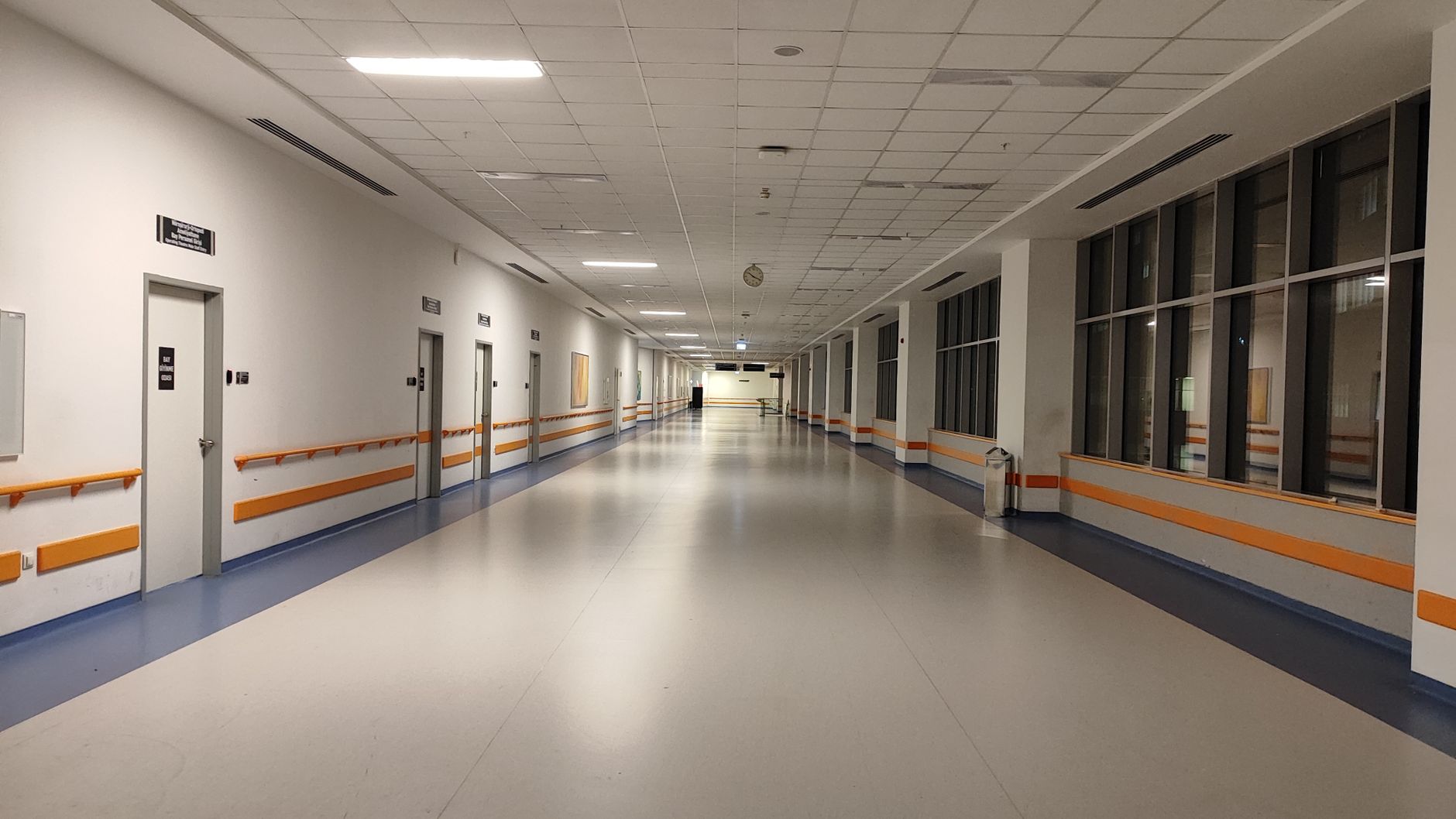
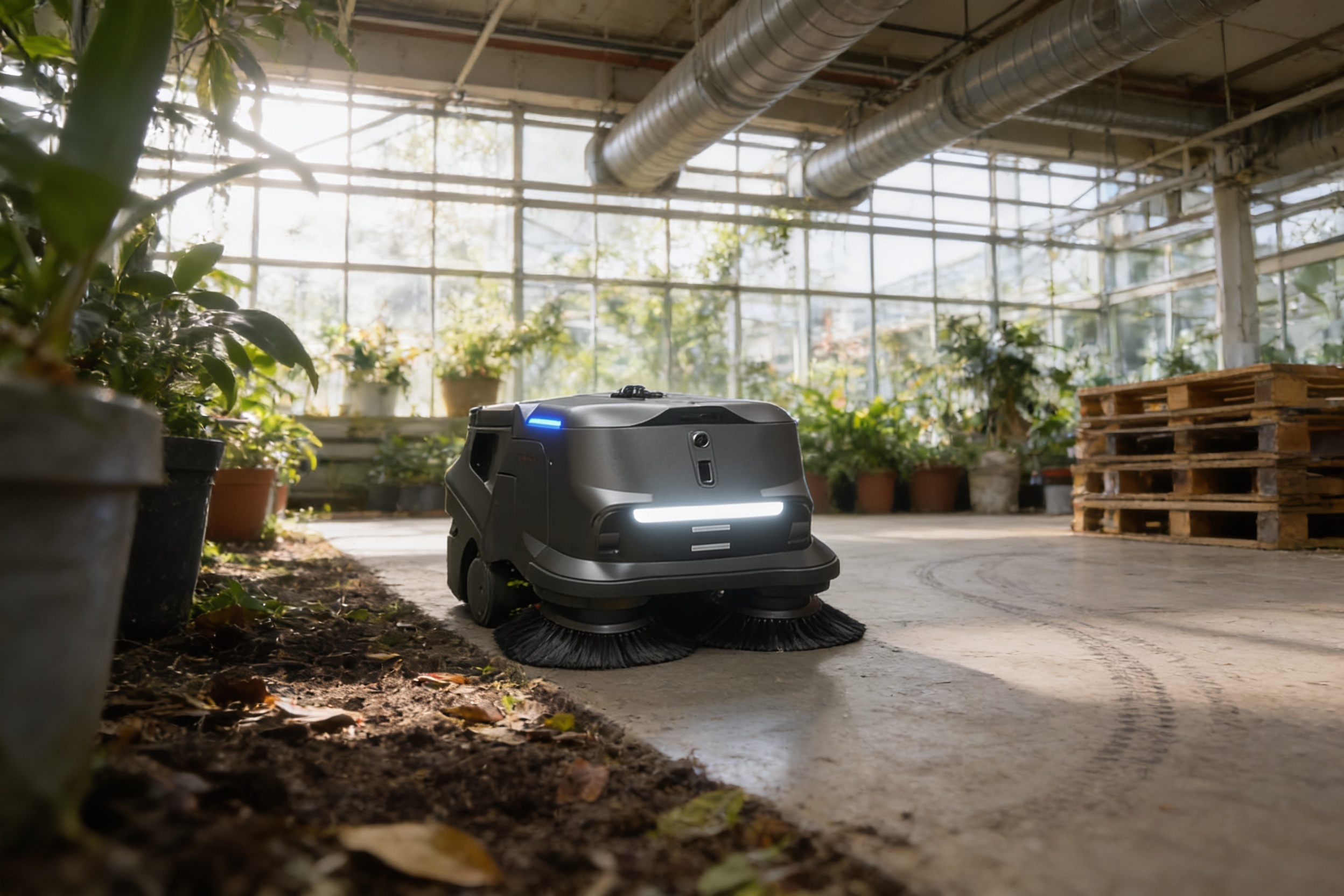
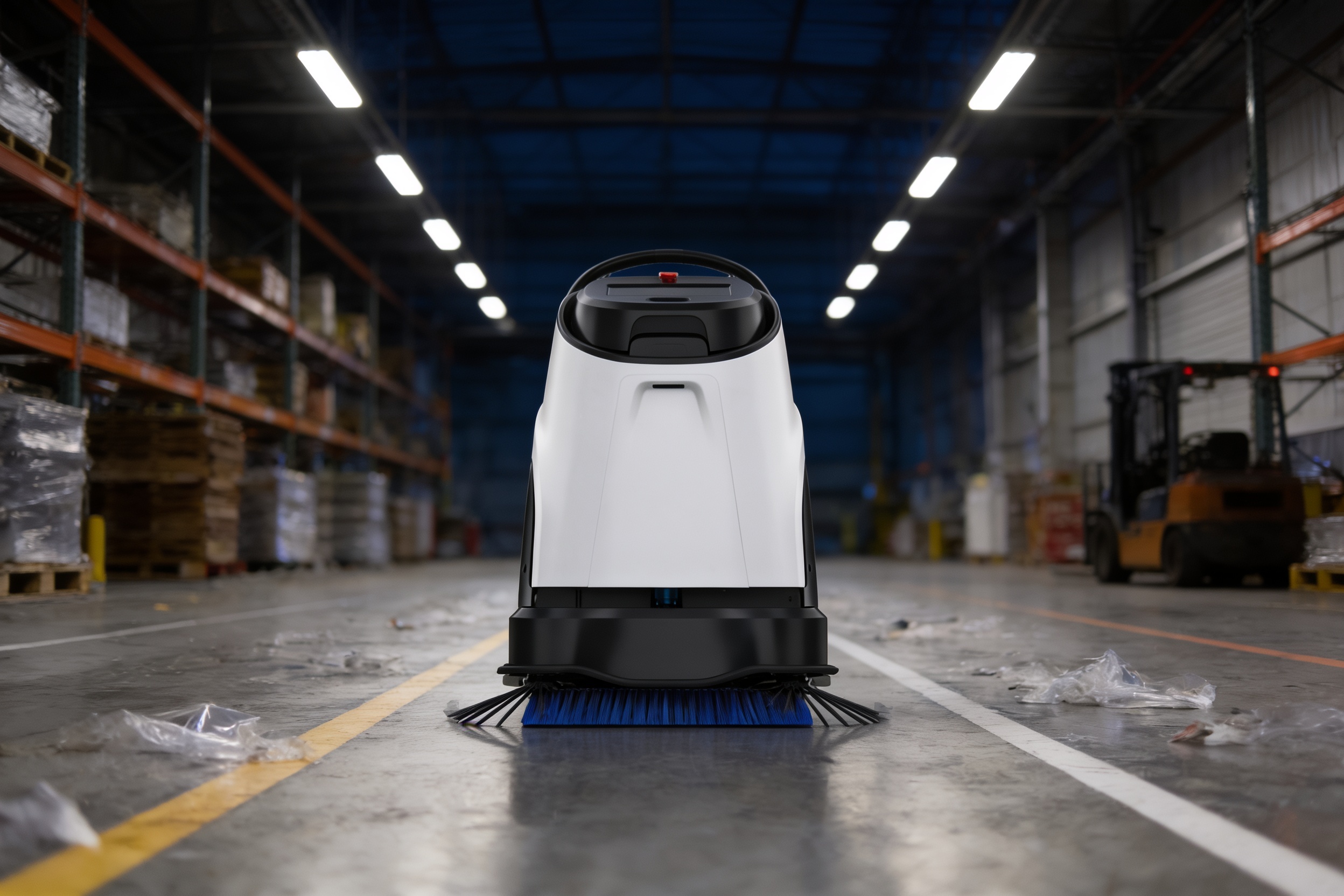
A cleaning robot can take the repeatable floor pass on mapped, clear, mostly level surfaces. That usually means scheduled sweeping or scrubbing of open corridors, lobbies, warehouse aisles and large retail or garage floors, running on a route set during deployment. Staff then check the run, clear blockages and handle exceptions instead of pushing the machine.
It cannot take restroom cleaning, spill response, trash and recycling removal, glass and detail work, edge work in tight spaces, or tasks that depend on judgment about what is dirty. It also needs the route clear of pallets, cords, furniture and temporary signs. Any task that puts a person's hands on a surface, or requires a decision about what to do next, stays with staff.
The practical test is to walk the building and mark each task as repeatable floor work or not. Everything outside the floor pass still needs a person, which is why most sites end up with a robot plus fewer staff rather than a robot instead of staff.
- Scheduled floor pass
Cleaning Robot
Runs the same mapped route after close without a crew on the floor
Janitor
Covers the same route at the set time and adjusts when carts or furniture are in the way
- Restroom service
Cleaning Robot
Cannot do it
Janitor
Restocks, cleans fixtures and spots problems
- Spill response
Cleaning Robot
Not suited. It can stop or route around, but it cannot clean up the spill
Janitor
Responds at once, cleans the spill and checks the area around it
- Night coverage
Cleaning Robot
Works alone once the route is set, but needs a staff check at the start and end
Janitor
Needs a shift and a second check, and can respond to problems as they happen
- Consistency on the same route
Cleaning Robot
Repeats the same pass each night
Janitor
Varies with fatigue, sick days and gaps in staffing
- Layout changes
Cleaning Robot
Needs the map and route updated after changes
Janitor
Adapts to the change within the same shift
How much labor is the floor work, and how many hours does it take?
Cleaning contractors estimate labor by converting task time into square footage per hour. A worked example from BSCAI shows a 25,000 square foot medical facility cleaned in 10 crew-hours, or 2,500 square feet per man-hour, as a daily whole building rate for that building. Rates vary by building type, so a figure from one site should not be copied to another.
Floor size is the other input. According to the EIA's 2018 Commercial Buildings Energy Consumption Survey, mean floorspace per floor across commercial buildings was 11,061 square feet, and 84% of office buildings had one or two floors. Those are averages across all commercial buildings, so the number that matters is the floor area your robot's route would cover.
The hours the robot takes are the repeatable floor pass, usually the largest block of crew time in an open building. The table below shows the shape of that shift. Only the BSCAI example carries a verified hour figure, so the other timings are qualitative until a site walk produces real numbers.
What do turnover, injuries and local staffing data mean for the decision?
Turnover is the labor problem most managers raise first. A CleanLink reader survey puts the industry average turnover at 73%, but it is a survey of readers, not a government figure, and its date was not confirmed in our research. Higher turnover figures from vendor blogs were not used because they could not be traced to a primary source.
Injury data points the same way. The BLS snapshot for janitors and cleaners, except maids and housekeeping cleaners, reports 191.6 nonfatal days-away-from-work cases per 10,000 full-time equivalent workers in 2020, with 42 fatalities that year. A separate BLS snapshot for janitors reports 157.4 cases per 10,000 full-time equivalent workers in 2019, with 18,680 cases. Those rates argue for moving heavy, repetitive floor work to a machine where the layout allows it.
For local size, an aggregator citing BLS May 2025 occupational data lists about 5,720 people employed as janitors and cleaners in the Des Moines-West Des Moines metro. We did not verify that count against BLS, so treat it as an approximate local size. The government wage data on this page gives the local wage for the job.
We found no verified figure for overtime or sick days in this occupation. Your own payroll, overtime records and call-out logs are the numbers to use, and they will tell you more than any national average.
How does a team work with a robot in place?
A robot plus fewer staff is the working model, not a robot with zero staff. The person on site still owns restrooms, spills, inspections and any exception the machine cannot handle. The robot takes the scheduled floor pass, and staff stop spending their shift on it.
In practice the shape of the shift changes. Staff check the route and the site at the start, clear the lanes, then move to restroom and spot work while the robot runs. At the end they review the run, note issues and reset the route if the layout changed. The task list does not shrink to zero, so the staffing plan should be built around what remains.
Training matters as much as the machine. Staff need to know how to start, stop and clear a lane, and what to do when a unit stops in a corridor. We train the staff who will run the robot as part of deployment, along with mapping and go live support.
What can a cleaning robot not do?
A cleaning robot cannot clean restrooms, respond to a spill it cannot see, handle trash or glass, or decide what counts as dirty. It is not a substitute for inspection, and it will not catch a leak or a broken fixture unless someone on site is looking for it.
It also depends on the route. A blocked lane, a cart left in a corridor or a new pallet stack can stop the run until a person clears it. A layout change needs the map updated, and that work falls on staff time or on a service visit.
It does not fix turnover on its own. The robot reduces the number of floor passes that need a person, but it still needs trained people on site to start, check and handle exceptions. If the building's problem is that the crew cannot be filled, a robot helps with the floor pass and leaves the rest of the shift unchanged.
Is a cleaning robot worth it? Cost, savings and payback in Des Moines
Cost depends on the site, floor area, route complexity and the service needed, so no price is given here. A lease quote is prepared after a free site assessment, which maps the route and measures the hours of floor work. Payback depends on how much of the shift moves to the robot, measured against the local wage in the government wage data on this page.
Adoption is still early, according to an AACEM and ISSA survey whose date was not confirmed in our research. A follow-up article reported 27% of respondents as active users, and about one-third of non-adopters said they were somewhat likely to adopt within a year. The full report is for members only, so these are the public summary figures.
A fair test compares the quote with the staff hours it actually replaces, not with a full shift of work. If the scheduled floor pass is a small part of the day, the savings will be small, and a robot may not be worth it. The assessment shows which case applies to your building.
How do you get started in Des Moines?
Start with a free site assessment. We walk the building, map the route, measure the floor area and time the repeatable work, then recommend a unit that fits the floor. The quote follows the assessment, and the lease is set through financing.
Many teams begin with one unit in one building and a short pilot before adding more. A phased deployment means the site does not need to shut down for a full install. We integrate the robot with your schedule, train the staff who will run it and provide go live support.
We service robots nationwide, so a Des Moines site gets the same service path as any other. Ask for the service terms in writing, including response expectations and what happens when a unit is down, and compare them before you choose.
Frequently asked questions
Put a robot to work in Des Moines.
We walk your site, learn the job, and recommend the unit that fits. Then we quote the lease, deploy it, and keep it serviced.
Sources
- US Bureau of Labor Statistics, Occupational Employment and Wage Statistics (OEWS May 2024)
- Bureau of Labor Statistics, Occupational Outlook Handbook: Janitors and Building Cleaners
- BLS Injuries, Illnesses and Fatalities snapshot: Janitors and Cleaners, except Maids and Housekeeping Cleaners, 2016-20
- BLS Injuries, Illnesses and Fatalities snapshot: Janitors, 2015-19
- Wagedex: Janitors and Cleaners, Des Moines-West Des Moines metro
- CleanLink: Facility Cleaning Decisions reader survey on turnover
- AACEM and ISSA autonomous cleaning survey follow-up (ISSA)
- EIA Commercial Buildings Energy Consumption Survey, 2018 Commercial Buildings Characteristics
- BSCAI: Commercial Cleaning Production Rates, A Key to Successful Bidding and Estimating