
The short answer
Cleaning robot vs janitor in Detroit comes down to floor layout, how much of the building is open and repeatable, and when the cleaning has to happen. A floor robot makes sense for large, mostly clear floors cleaned on a fixed route, especially overnight when staff are hardest to schedule. It does not make sense as a full replacement for crowded rooms, restrooms, high-touch surfaces or spill response, where a person still does most of the work, so the usual answer is a robot plus fewer staff rather than a robot in place of the whole team.
Key takeaways
- A floor robot fits large, open, repeatable routes, most often overnight.
- Restrooms, clutter, spills and high-touch surfaces stay with people.
- Federal data show a large janitor workforce with many openings each year, so staffing is a real constraint.
- Federal injury data for janitors are substantial, so check who ends up with the heaviest repetitive work.
- The lease quote comes after a free site assessment that measures your actual floor area and route.
Cleaning robot vs janitor in Detroit: which makes sense?
For most Detroit facilities the question is not robot or no robot. It is which floors, at which hours, go to a machine and which still need a person. A floor robot earns its place where the work is a large, mostly clear floor cleaned on the same route again and again, such as warehouse aisles, open retail halls, distribution corridors and empty public areas after close.
It does not earn its place in rooms full of furniture, cords, pallets left out or stairs. It also cannot take restrooms, trash, high-touch surfaces or a spill that needs someone to decide what to do. Those tasks keep a janitor in the building, and they often set the pace of the whole shift.
Floor condition matters as much as floor size. Thresholds, transitions between carpet and tile, and uneven joints can stop a route, so a floor that looks open on a drawing may still need changes before a robot can run it reliably.
The realistic answer for most Detroit sites is a robot plus fewer staff. The robot covers the repeatable floor work and the remaining people handle the rest of the building. A plan that assumes zero staff should be tested hard before anyone signs off on it.
What does a janitor actually do in a Detroit shift?
A janitor's shift is a mix of short, scattered tasks and a few long ones. Typical work includes emptying trash and recycling, restocking restrooms, wiping handrails and door hardware, spot cleaning, answering calls from tenants or managers, and mopping or scrubbing floors on a route. The order changes with the building and the day.
Much of the time goes to walking between rooms and waiting for access, so a shift that looks like heavy floor work may cover less floor than the map suggests. A site walk with a timed route is the most reliable way to see that split. Published hour figures for this job in the Detroit metro were not found in this review, so the hours have to be measured on your site.
Night work adds its own pattern. Buildings cleaned after close have an empty floor, but access codes, lighting, alarm schedules and security checks still shape the route. A janitor working alone at night also has to be reachable, which is part of why night shifts are harder to keep covered.
Median hourly wage, Janitors and Building Cleaners
$3,999
Monthly cost of one full-time worker in Detroit, MI, at the median wage plus payroll costs (an estimate, not a quote).
- Repeat floor route
Cleaning Robot
Runs the same mapped path every time, without breaks
Janitor
Covers the same route with variation, and stops for restrooms, calls and spills
- Scattered tasks
Cleaning Robot
Cannot empty bins, restock restrooms or wipe high-touch surfaces
Janitor
Handles trash, restrooms, calls and small problems in one pass
- Night coverage
Cleaning Robot
Runs unattended once the route is mapped and the floor is clear
Janitor
Must be scheduled, staffed for the full shift and reachable
- Clutter and obstacles
Cleaning Robot
Needs a clear path, and stops or reroutes when blocked
Janitor
Works around furniture, cords and pallets using judgment
- Spills and unusual problems
Cleaning Robot
Cannot judge what a spill is or how to respond
Janitor
Assesses and responds on the spot
- Call-outs and sick days
Cleaning Robot
Does not call out
Janitor
Call-outs need coverage, so a backup plan matters
Which parts of the job can a robot take, and which can't it?
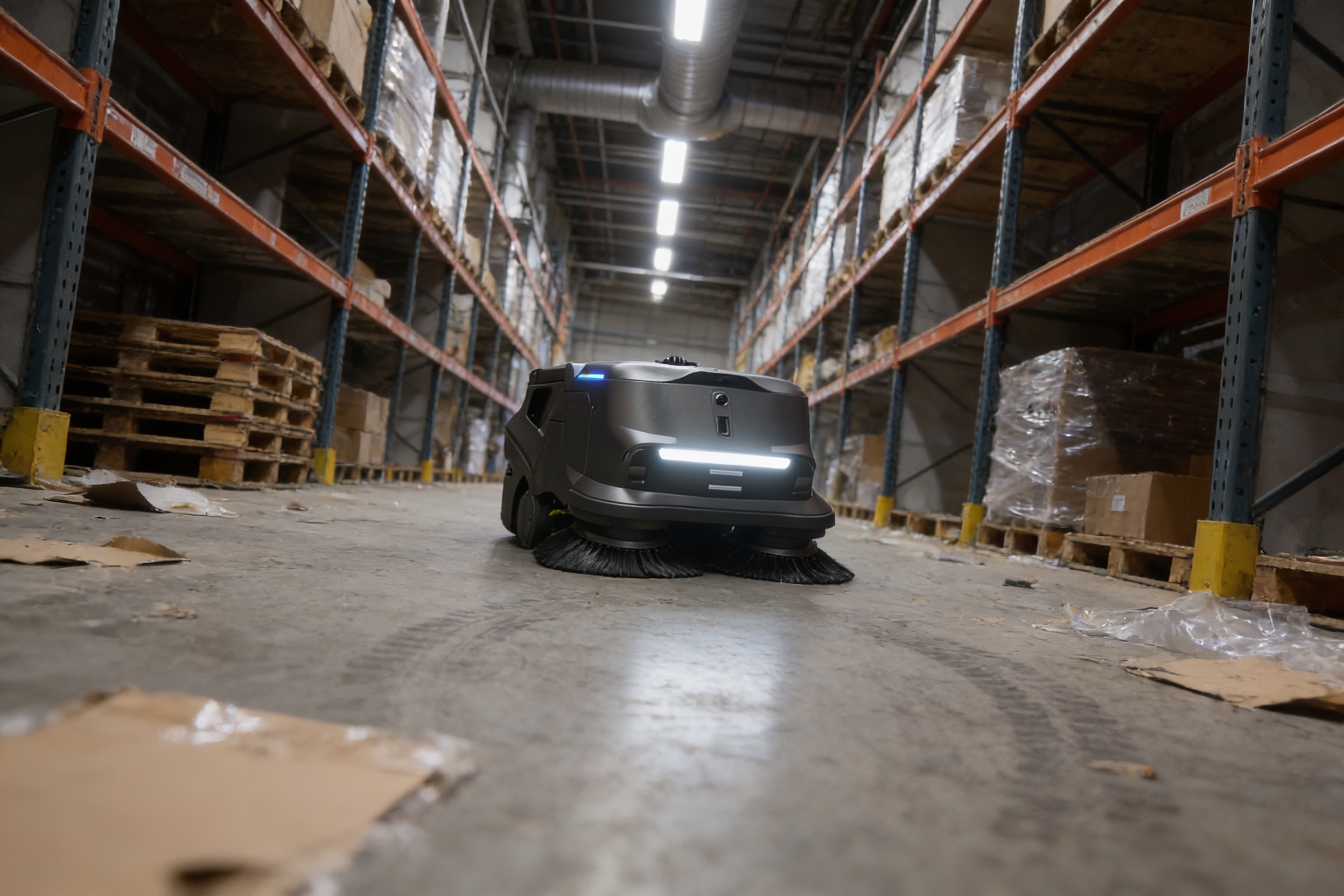
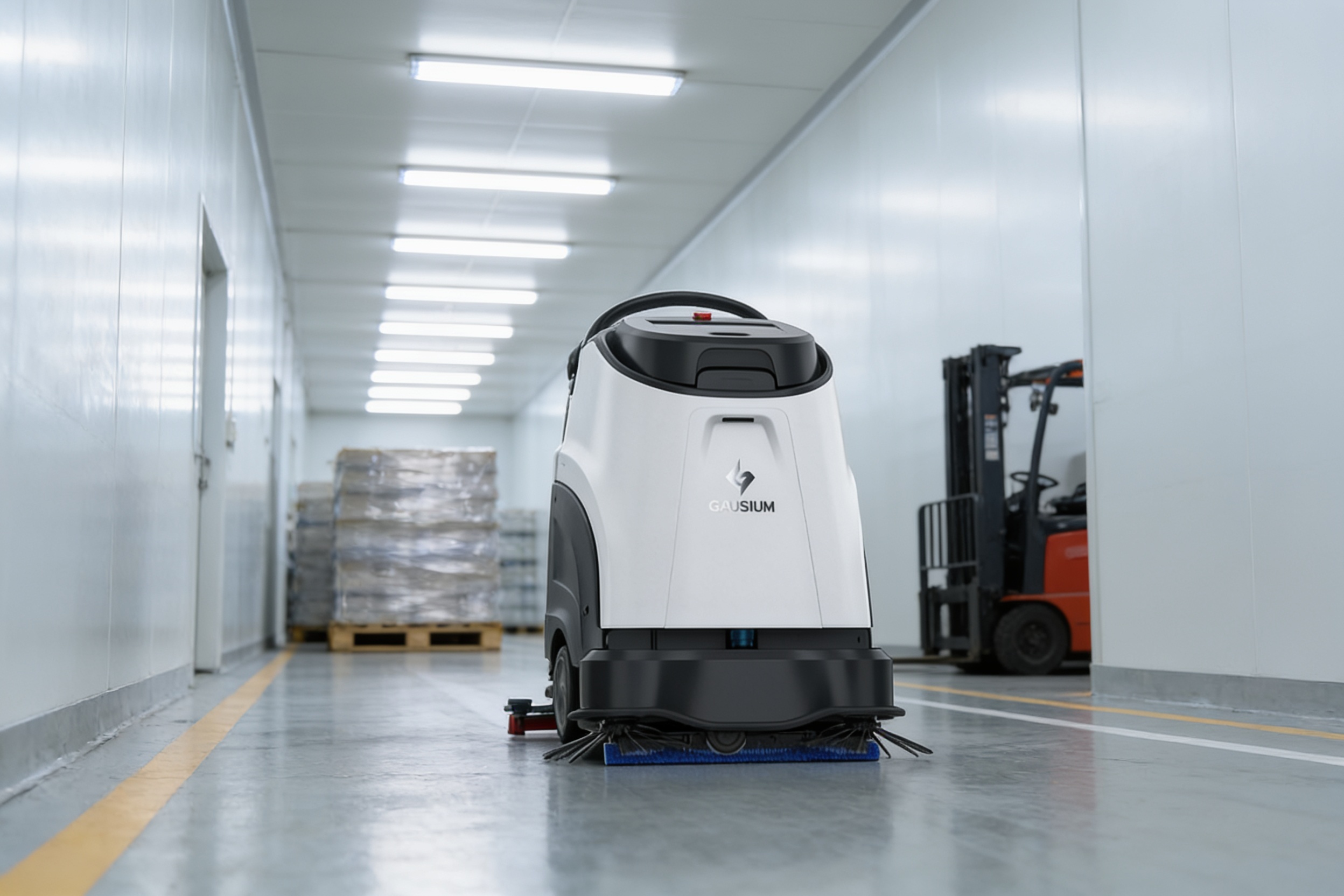
A floor robot can take the mapped, flat, open floor passes: sweeping or scrubbing aisles, corridors and open halls on a fixed route, then returning to its charging point. Those parts repeat most and need the least judgment, so they are the first to hand over.
It cannot take restroom cleaning, trash collection, restocking, high-touch surface wiping or the edges where furniture and fixtures stand. It also cannot judge a spill, a leak, a broken item or an unexpected person in its path, unless a staff member is alerted and goes to the spot.
Test the route before deciding. A robot that stops every time a pallet is left in an aisle will cost staff time instead of saving it. The site assessment should record blocked doors, thresholds, ramps, elevator use and any spot where people often stand.
What do the labor numbers say about staffing and turnover in Detroit?
According to the U.S. Bureau of Labor Statistics Occupational Outlook Handbook, about 2,447,700 janitors and building cleaners held jobs in 2024. Projected growth is 2 percent from 2024 to 2034, which the handbook labels slower than average, and about 351,300 openings a year are expected, mainly from replacement needs. When most openings are replacements, the job churns even when headcount holds steady.
According to DataUSA, about 2,237,882 people were in the janitors and building cleaners workforce in 2024, down from 2014. The two sources count differently, so their figures should not be compared directly.
A Detroit metro employment count for this occupation was not verified in this review, so the local wage picture comes from the government wage data on this page. A union figure adds context: according to Michigan Advance in 2022, a SEIU Local 1 contract covered about 1,700 janitors in Southeast Michigan. That is a union-covered subset, not a total for the area.
Turnover is where the staffing risk sits. According to the U.S. Bureau of Labor Statistics Job Openings and Labor Turnover Survey, total separations were about 5.3 million in December 2025 across all industries, a rate of 3.3 percent. That release did not give a building services figure in this review, so it is national, all-industry context rather than a janitor benchmark.
Trade and vendor estimates for contract janitorial work are far higher, but they are not verified against federal data and they vary widely between sources. Treat them as a reason to pull your own turnover records, not as a benchmark.
The sources reviewed did not publish overtime, night premium or sick-day figures for janitors in the Detroit metro. Those costs sit in your own payroll records. A vacant overnight shift may land on someone already working, or the clean may not happen at all.
How do injury rates change the decision?
Janitors and cleaners carry a real injury load. According to the BLS injury and illness snapshot for janitors and cleaners except maids and housekeeping cleaners, covering 2016 to 2020, the rate was 191.6 days-away-from-work cases per 10,000 full-time equivalent workers. An earlier BLS snapshot for janitors, covering 2015 to 2019, showed 157.4 per 10,000 full-time equivalent workers. No 2024 occupation-level rate was found in this review.
For all private industry, according to Business Insurance reporting on BLS 2024 results, the total recordable case rate was 2.3 cases per 100 full-time equivalent workers in 2024, down from 2.4 in 2023. The illness case rate fell to 13.9 per 10,000 full-time equivalent workers from 19.0. These measures differ from the occupation snapshots, so the all-industry and janitor figures should not be compared directly.
A robot does not remove the strain of carrying bins, reaching, bending or mopping. Those tasks stay with people. What a robot can change is how much repetitive walking and pushing each person carries across a long route. Check that on your floor, because a route that is half robot may leave the remaining person with the heaviest tasks.
Also check whether staff are asked to move the robot, clear its path or lift it. Safety setup is part of deployment, not an afterthought. The rollout plan should name who is trained to stop the robot, reset it and keep its charging area clear.
How does a team work with a robot?

The team works as a robot plus fewer staff. The robot owns the mapped floor routes and people own everything else. The person who remains typically checks the robot before the shift, clears its path, handles calls, cleans restrooms, responds to spills and resets the robot when it stops. This is a different job, not a missing one.
A single person often ends up stretched on a large site. If that person is pulled off the robot's route to deal with a problem, the route may not finish. Assign one person to own the robot checks and exception calls, even on a smaller floor.
Plan for call-outs. If the robot is the only thing covering a route and no one is trained to reset it, the floor may not be cleaned at all. Name a backup for the robot checks, the same way you name a backup for the janitor.
Keep a short handoff note. The person doing the checks should log stops, blocked doors and any area left uncleaned, so the next shift does not meet the same stop without warning.
What does a robot's shift look like in Detroit?
Here is a typical night at a site with a mapped floor route. The times below are a sample schedule for planning, not measured results. Your site assessment replaces them with timings from your own building.
The most important slot is the one people skip: the pre-shift check. Blocked aisles, a pallet left out or a door left open are the kinds of problems that stop a route, and a check at the start of the shift is the cheapest way to catch them.
The route length on a clear night says little about the route on a bad one. A night when pallets or carts change the path can take much longer than a clear night, so judge the plan on a range of nights, not the best one.
What can't a cleaning robot do?
It cannot clean a restroom, empty trash, restock supplies or deal with a spill, a leak or a broken fixture. It cannot climb stairs, enter a blocked or closed room, or decide that a stain needs a different method. Those limits are the reason most sites keep people on the team.
It also cannot be the only plan. A robot that stops needs a person to reset it, and a robot that is down needs repair. The time between the stop and the repair is a gap in cleaning. Plan for on-site dispatch, remote triage and a backup unit before the route depends on the machine.
The robot does not solve the staffing problem by itself. It reduces how many people the mapped floor needs, but it does not guarantee those people will be there. The labor plan still has to cover hiring, retention and call-outs.
Expect an early learning period. The first weeks often expose doors that open the wrong way, thresholds the route did not account for and surfaces that behave differently at night. Plan time for that rather than judging the robot by its first shift.
How do you get started with a cleaning robot in Detroit?
According to ISSA Today in its November-December 2025 issue, the question has shifted from whether robots will be used to how to deploy, scale and measure them. Measuring the result is the part a pilot most needs to plan for, so decide the measures before the robot arrives.
Start with the building, not the robot. Walk the floor at the hours it will run, time the existing route, and note where people, pallets, carts and doors get in the way. That record lets a site assessment produce a real plan instead of a generic one.
Our team picks the robot for the site, leases it through financing, deploys and integrates it, trains the staff who will own the checks, and services it nationwide. We do a free site assessment first, and the lease quote comes after that assessment, so it reflects your floor area, route and service plan. Maintenance can be included, with on-site dispatch, remote triage and emergency response nationwide.
Consider a pilot on one route first. Running one unit on one floor for a defined period shows how the route, staff checks and spill calls actually work. Then compare the results against the shift record you pulled before the pilot.
Frequently asked questions
Put a robot to work in Detroit.
We walk your site, learn the job, and recommend the unit that fits. Then we quote the lease, deploy it, and keep it serviced.
Sources
- US Bureau of Labor Statistics, Occupational Employment and Wage Statistics (OEWS May 2024)
- U.S. Bureau of Labor Statistics, Occupational Outlook Handbook: Janitors and Building Cleaners
- U.S. Bureau of Labor Statistics, Job Openings and Labor Turnover Survey release
- U.S. Bureau of Labor Statistics, injury and illness snapshot, janitors and cleaners except maids and housekeeping cleaners, 2016 to 2020
- U.S. Bureau of Labor Statistics, injury and illness snapshot, janitors, 2015 to 2019
- Business Insurance, reporting on BLS 2024 workplace injury results
- DataUSA, janitors and building cleaners profile
- Michigan Advance, 2022 coverage of janitor wage rally in Detroit
- ISSA Today, November-December 2025 issue, article From Chasm to Scale