

The short answer
Cobot ROI for boat builders comes from repeatable hull and deck sanding and grinding hours that a robot arm takes over from the finishing crew, set against a fixed lease payment. The return is a range, not a promise, and it turns on how much of each part's finishing is flat or gently curved work a cobot can repeat. A free site assessment measures those hours on your floor and sets the lease quote.
Key takeaways
- The return is repeat sanding and grinding hours offset against a fixed lease payment, not a guaranteed saving.
- Flat deck panels and gently curved hull sections are the robot-suited share, while seams and tight radii stay with people.
- Measure the hours on your own floor before you read any savings range.
- Model a low-volume case too, because 2025 new boat retail unit sales fell 8.8 percent.
- The lease payment is quoted after a free site assessment, not before.
Run the numbers for your site
Pick your city or state for a real regional number - we use the real BLS wage there. (On the live site this auto-detects from your location.)
What do you want to automate?
The cobot stacks the repetitive end-of-line pallets; your team handles changeover and QA.
What is cobot ROI for boat builders?
Cobot ROI for boat builders comes from one place: hours of repeatable sanding and grinding that a robot arm takes over from the people who finish hull and deck parts. A shop with a hard-to-staff finishing bay has a clear question, which is how many of those hours a cobot can realistically carry and what the lease costs against them. The answer is a range set by the shop's own parts and volume, not one fixed figure.
The setting explains why this matters. According to NMMA, the recreational boating industry supports more than 812,000 US jobs and about 36,000 businesses, and about 93 percent of those enterprises are small businesses. Small builders rarely have spare labor or a robotics team, so a single leased cell can change the staffing math more than the same cell would in a large yard.
How many boat building businesses and workers are there in the US?
Counts differ by source, and the differences are useful. A third-party business data aggregator reports 845 firms, 903 establishments and 48,087 employees for NAICS 336612, boat building, with the year not stated. An EEOC EEO-1 aggregate for the same code shows 26,285 employees in 2004, but EEO-1 covers only filers, so that figure is a partial count.
Market size adds context. Trade press reports that new boat retail unit sales fell 8.8 percent in 2025, to 215,237 units from 236,070 in 2024. NMMA also says 95 percent of boats sold in the US are made in America, so the finishing labor question sits with domestic shops. A news summary of IFR data puts US industrial robot installations at roughly 38,000 units in 2025, up 11 percent.
The falling 2025 volume matters for the return. A shop with fewer orders has fewer finishing hours to offset, so the payback has to hold at the lower volume, not only at the peak.
Median hourly wage, Laborers and Freight, Stock, and Material Movers, Hand
$4,380
Monthly cost of one full-time worker, at the median wage plus payroll costs (an estimate, not a quote).
How many sanding and grinding hours does a boat part take?
No verified hours-per-shift figure for hull or deck sanding came up in the research behind this page, so this page does not state one. The number that matters is measured on your floor: minutes per part per pass, passes per part, parts per shift, and shifts per week.
Start by sorting the work. Flat deck panels and gently curved hull sections are where a cobot repeats a pass cleanly. Seams, corners, tight radii, and areas that need a person's judgment about surface condition stay with the crew. Only the first group should feed the robot hours in the model.
Once the sort is done, multiply the robot-suited minutes by parts and shifts. That product is the hours the cell could take over. The table below shows the task breakdown used to structure the measurement.
| Task | Today | With a robot |
|---|---|---|
| Flat deck panel sanding passes | measured at site assessment | robot runs the passes, a person checks finish |
| Gently curved hull section grinding | measured at site assessment | robot runs fixed passes, a person handles tight areas |
| Seams, corners and tight radii | measured at site assessment | stays with the finishing crew |
| Loading and unloading parts | measured at site assessment | a person loads fixtures, the robot cycles |
| Cleanup and dust collection | measured at site assessment | unchanged, done by the crew |
The research behind this page did not verify hours per shift for hull or deck sanding, so no hour figures are published here. Each today entry is filled from timed observation on your shop floor during the free site assessment.
Who does the finishing work, and which labor does the robot replace?
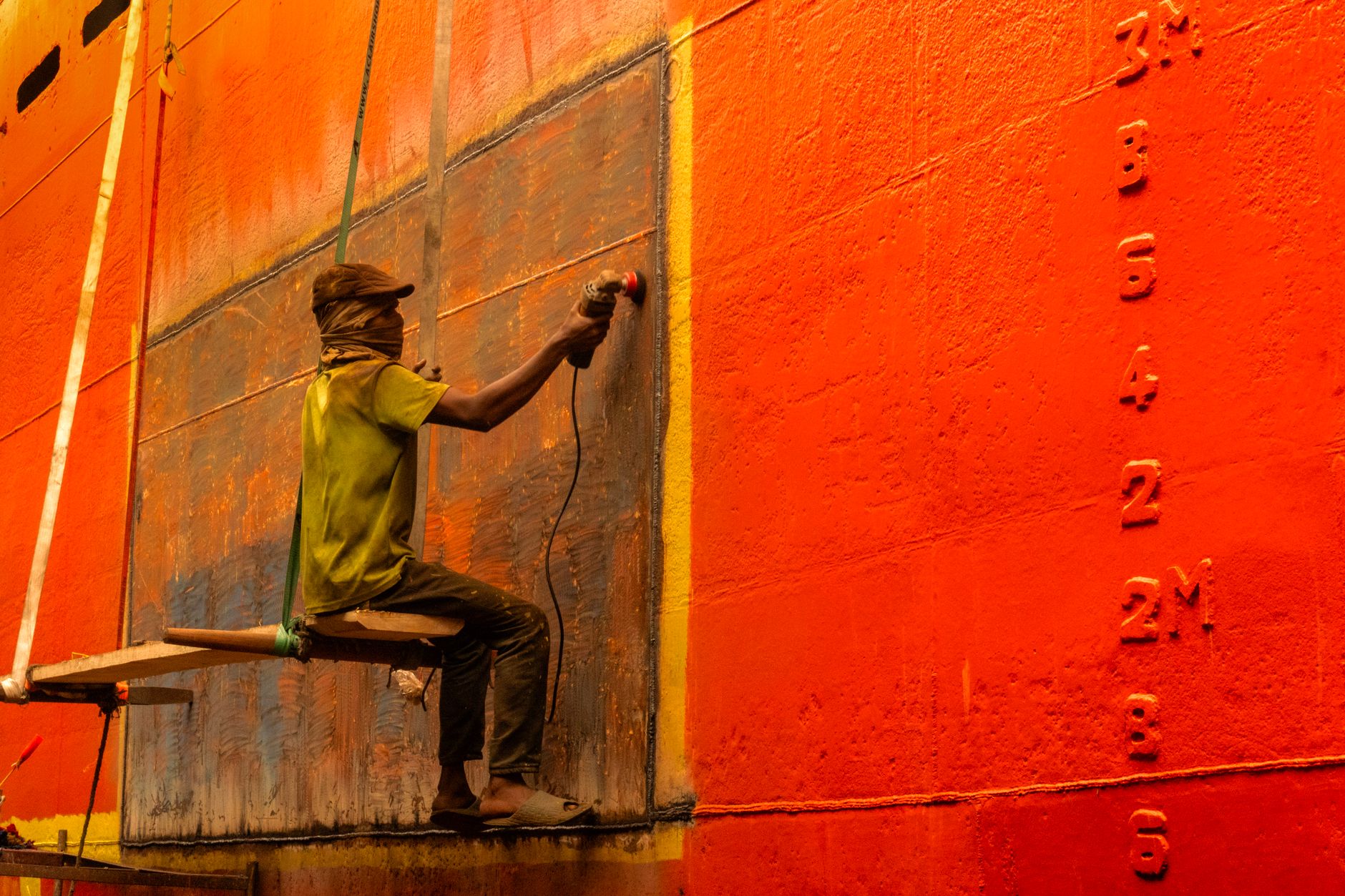
In most boat shops the people who sand and grind are a finishing crew, not one job title, so the labor side is framed by the type of work they do. The work the cobot takes over is the repetitive pass work of the laborers and freight, stock, and material movers, hand type. According to the BLS Occupational Outlook Handbook, employment in that occupation was 2,988,900, and the broader hand laborers and material movers group held about 7.0 million jobs in 2024.
The government wage data on this page, from the OEWS May 2024 national table for that occupation, is the rate used to price those hours. The savings range is built from the hours you enter and that rate. Finishing crew time is not priced separately, because the robot takes over that type of work, not the crew's trade skill.
Headcount is the other input. Dividing the aggregator's 48,087 employees by its 903 establishments gives about 53 people per boat building establishment. That average covers every role in the business, so it overstates the finishing crew. The shop's own count of people on sanding and grinding is the number to use.
How does the lease math offset labor hours?
The core math is simple. Take the hours a cobot will realistically carry each month, meaning the robot-suited share of the measured hours. Multiply that by the government wage data rate for the work, then compare the result with the fixed lease payment plus setup, training, and any added supervision. If the gap is positive, that gap is the offset that drives payback.
Two shares do most of the work. The first is the robot-suited share, which is usually well below the total because seams, corners, and judgment steps stay with people. The second is uptime, meaning the share of scheduled hours the cell actually runs. A model that assumes full coverage of every panel will overstate the return, so the quote should use the realistic share.
Cobot ROI for boat builders also depends on how the lease is structured. Because the robot is leased through financing, the shop does not need a large upfront outlay, but the fixed payment must still be covered in slow months. Our company picks the robot for the site, arranges the lease, deploys and integrates the cell, trains the staff, and services it nationwide, and the quote prices that whole arrangement.
What changes the return up or down?
The inputs below move the number most. Check each one against your own records before you accept a model, and ask the assessor to show the assumption behind each.
- Repeat passes on flat panels
Cobot
Holds the same pass and speed from part to part once programmed
Staff
Slower, and quality can vary across a long shift
- Tight radii, seams and corners
Cobot
Needs fixtures and extra programming, and often falls short of a skilled hand
Staff
Adjusts by feel and spots surface defects early
- Coverage when shifts go unfilled
Cobot
Runs the scheduled cell without a sanding hire
Staff
Covers only while a person is present and willing to work
- Change over to new part families
Cobot
Needs reprogramming and new fixtures for each part family
Staff
Adapts to a new part within a shift
- Surface judgment
Cobot
Follows its program, so defects outside the program can pass unnoticed
Staff
Decides when rework is needed and why
Robot or finishing crew: where does each win?
A cobot does not replace the finishing crew. It takes the repeat passes and leaves the judgment work. IFR's preliminary 2026 report puts cobots at about 11 percent of industrial robot installations in 2025, roughly 66,000 units, against about 12 percent in 2024, out of 603,000 total installations that rose 11 percent. The comparison below is honest about where a person is the better choice.
What are the risks to the return, and how do you avoid them?
The main risk is overestimating the robot-suited share. Teams often assume the cell can cover every panel that comes off the line, then find that many parts need rework or hand work. Measure the sort before the quote, and build the model from the part families that run most often.
Volume is the second risk. With retail unit sales down 8.8 percent in 2025, a shop with a lighter order book needs the payback to hold at fewer hours. Model a low-volume case alongside the expected one, and set the lease term against the lower case.
Safety belongs in the model too. A CDC document reproducing BLS data gives a 1998 recordable incidence rate of 22.4 per 100 full-time employees for shipbuilding and repair, against 9.7 for manufacturing and 6.7 for all industries. That is a 1998 shipbuilding figure, not a recreational boat building figure, so use it as direction only. It still points to the same practice: guarded cells, lockout steps, and operator training before the robot runs.
How long does it take from assessment to payback?
The timeline runs in stages, and payback is only known once the first real hours are logged. Stage one is the free site assessment, where the part sort, hours, floor layout, power, and dust collection needs are measured. Stage two is the lease quote, built from those measurements rather than from an industry average.
Stage three is deployment: mapping the cell, installing the arm, integrating it with fixtures and the finishing schedule, and training the staff who load parts and check finish. Stage four is go-live support, where the cell runs its scheduled passes while the team checks output and quality each week. Payback is measured from the hours the cell actually carries, so the first month of logs deserves close tracking.
We deploy and integrate the cell, train the staff, and service it nationwide, which keeps one partner accountable from assessment through repairs. Timing depends on the site and the part families, so the timeline in your quote is the number to plan around.

How do I get a precise figure from a free site assessment?
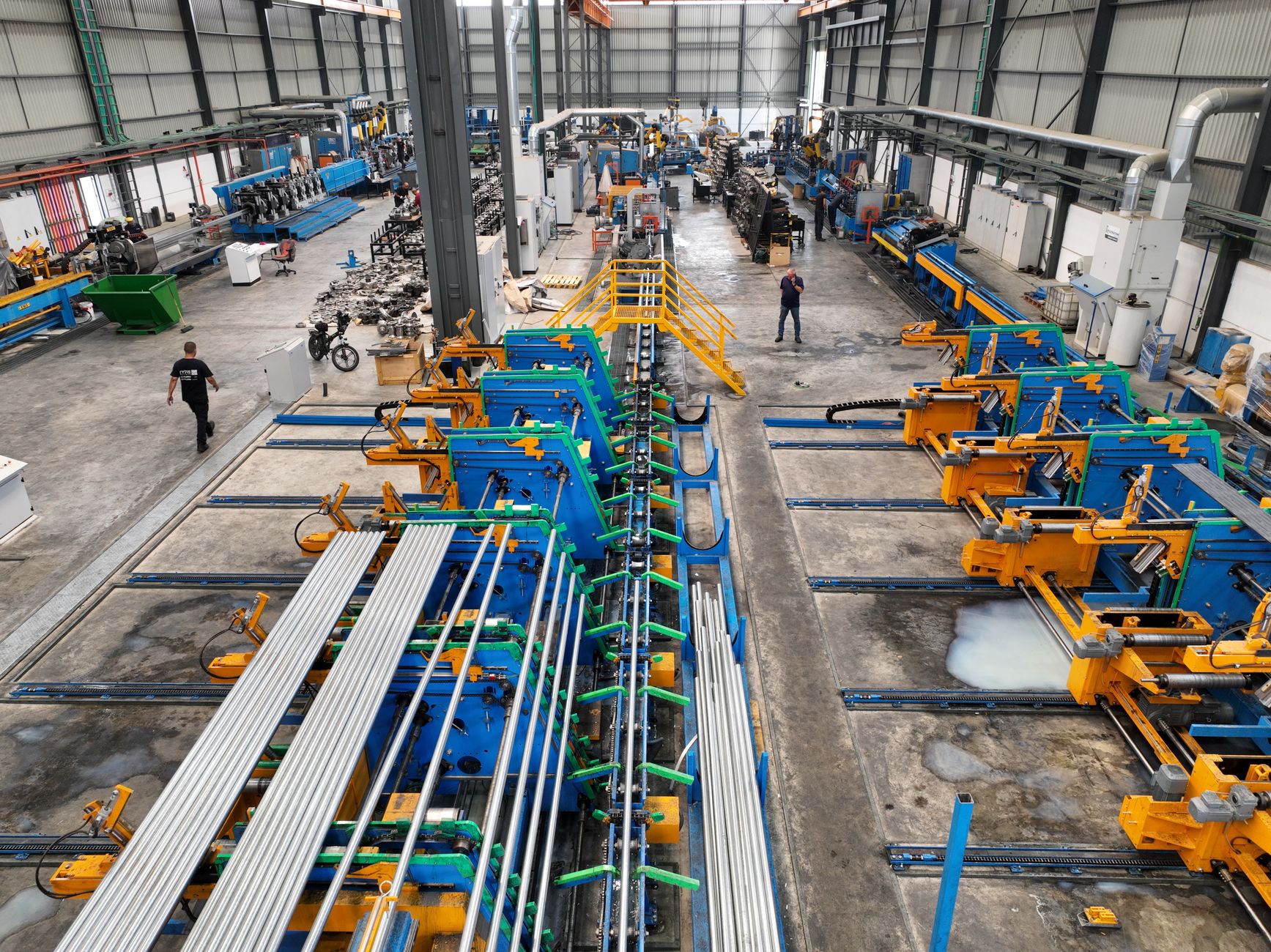
Bring the part list, weekly counts by part family, the number of finishing shifts, and notes on which parts are hardest to finish. Add a sketch of the finishing bay that shows power, dust collection, and where parts stage. These inputs let the assessment measure the robot-suited share instead of guessing it.
The output is a lease quote with a savings range built from your measured hours and the government wage data rate, plus the fixed lease payment through financing and the service terms. Lease options vary by robot and cell, so the quote is the only valid source for a payment. Ask for maintenance and repair coverage, dispatch response times, and what happens while a unit is repaired, and get each item in writing.
A useful test of any quote is whether it shows the hours it assumes. If the offset cannot be traced to measured hours and a stated share, ask for the model before you sign.
Frequently asked questions
Want a cobot at your boat builder?
Tell us about your site. We will recommend the robot, quote the lease, and keep it serviced.
Sources
- US Bureau of Labor Statistics, Occupational Employment and Wage Statistics (OEWS May 2024)
- NMMA press release on recreational boating
- Marine Business World, 2025 retail boat sales report
- EEOC 2004 EEO-1 aggregate report, NAICS 336612
- BLS Occupational Outlook Handbook, hand laborers and material movers
- CDC document reproducing BLS shipbuilding incidence data, 1998
- IFR presidents report, 2026 preliminary
- Third-party business data aggregator, NAICS 336612
- News summary of IFR robot installation data