

The short answer
Cobot ROI for jewelry manufacturers comes mainly from labor hours: a collaborative robot arm that loads small castings and runs repeatable polishing or deburring passes takes over hours of work that would otherwise pull bench jewelers away from detail work. The savings range is the value of those hours, based on the local wage for this job, minus the lease cost over the financing term. The true range depends on how repeatable your finishing is, so a free site assessment is the way to get a figure you can sign off on.
Key takeaways
- Cobot ROI for jewelry manufacturers comes from repeatable hours, not from cutting bench jewelers.
- Only the share of finishing work that repeats on consistent parts is a realistic target for a robot.
- Savings are ranges built from measured hours, minus the lease cost over the financing term.
- Most jewelry businesses are small, so one leased unit on one process is the usual starting point.
- A free site assessment turns this range into a lease quote and a figure for your shop.
Run the numbers for your site
Pick your city or state for a real regional number - we use the real BLS wage there. (On the live site this auto-detects from your location.)
What do you want to automate?
The cobot stacks the repetitive end-of-line pallets; your team handles changeover and QA.
What is cobot ROI for jewelry manufacturers?
Cobot ROI for jewelry manufacturers is the return from a collaborative robot arm that takes over the repetitive part of finishing work, measured as labor hours taken over compared with the lease cost. In a small shop the bench jeweler is the most valuable person on the floor. The hours spent loading castings, moving trays and running the same polishing or deburring pass again and again are hours that pull that person away from detail work.
The decision question is narrow. How many hours a week of repeatable tending and finishing could a robot take, and what does leasing that robot cost over the financing term? The answer is a range, not one number, because part variety, batch size and staffing all change the result.
Start with the work, not the machine. A cobot earns its place on consistent parts run in batches. It struggles with one-off pieces that need a jeweler's judgment at every step. Most early return comes from simple repetitive passes, so that is where the math begins and where a site assessment should look first.
A robot lease is a commercial financing arrangement. The lease payment is set in a quote after a free site assessment, and this page does not state a payment because the right robot and terms depend on the shop.
Where does the return come from in jewelry finishing?
The return comes from three places: fewer hours of hand loading and unloading, more consistent passes on small castings, and bench time freed for detail work. Each of those is a labor hour question that can be measured. The robot does not change what a finished piece must look like. It changes how many hours a person spends on the repeatable steps that lead to that finish.
Consistency matters as much as speed. Hand finishing output varies from one worker to the next, and a casting that comes back for rework uses more time than the pass that caused the problem. A cobot repeating the same approach on every cycle gives a more predictable finish, which lowers the share of parts that need another round at the bench.
Skilled finishing labor is hard to hire, and that raises the value of freed bench time. When repetitive tending moves to a robot, experienced people spend more of their week on work only they can do, such as stone setting, detail finishing and final inspection. The gain is in the hours they keep for skilled work, not in a headcount cut.
Median hourly wage, Laborers and Freight, Stock, and Material Movers, Hand
$4,380
Monthly cost of one full-time worker, at the median wage plus payroll costs (an estimate, not a quote).
How big is the jewelry manufacturing base?
IBISWorld estimates US jewelry manufacturing at 10,069 businesses in 2024, up 0.6% from 2023, and reports 26,756 people employed in the industry that year. The same source gives an average of 2.7 employees per business. These are market research estimates, and its employment page showed placeholder values in places, so treat those figures with care. The most recent official establishment count we could check is from the 1997 census, which is too old to size the industry today.
The Bureau of Labor Statistics reports about 35,100 jewelers and precious stone and metal workers employed in 2024. About 34% of them are self-employed and about 32% work in jewelry, luggage and leather goods retail, so a large share of this trade works in small shops or stores rather than production floors. Employment is projected to fall about 5% from 2024 to 2034, and the Bureau projects about 4,000 openings a year, mostly to replace workers who leave.
For a cobot, this means small sites with few people. An average of 2.7 employees per business works out to a typical headcount of about 3 people, and not all of them do finishing. A single leased unit on one process fits that kind of floor, and the hours test should be run on the people who actually do the work.

How does the savings math work?
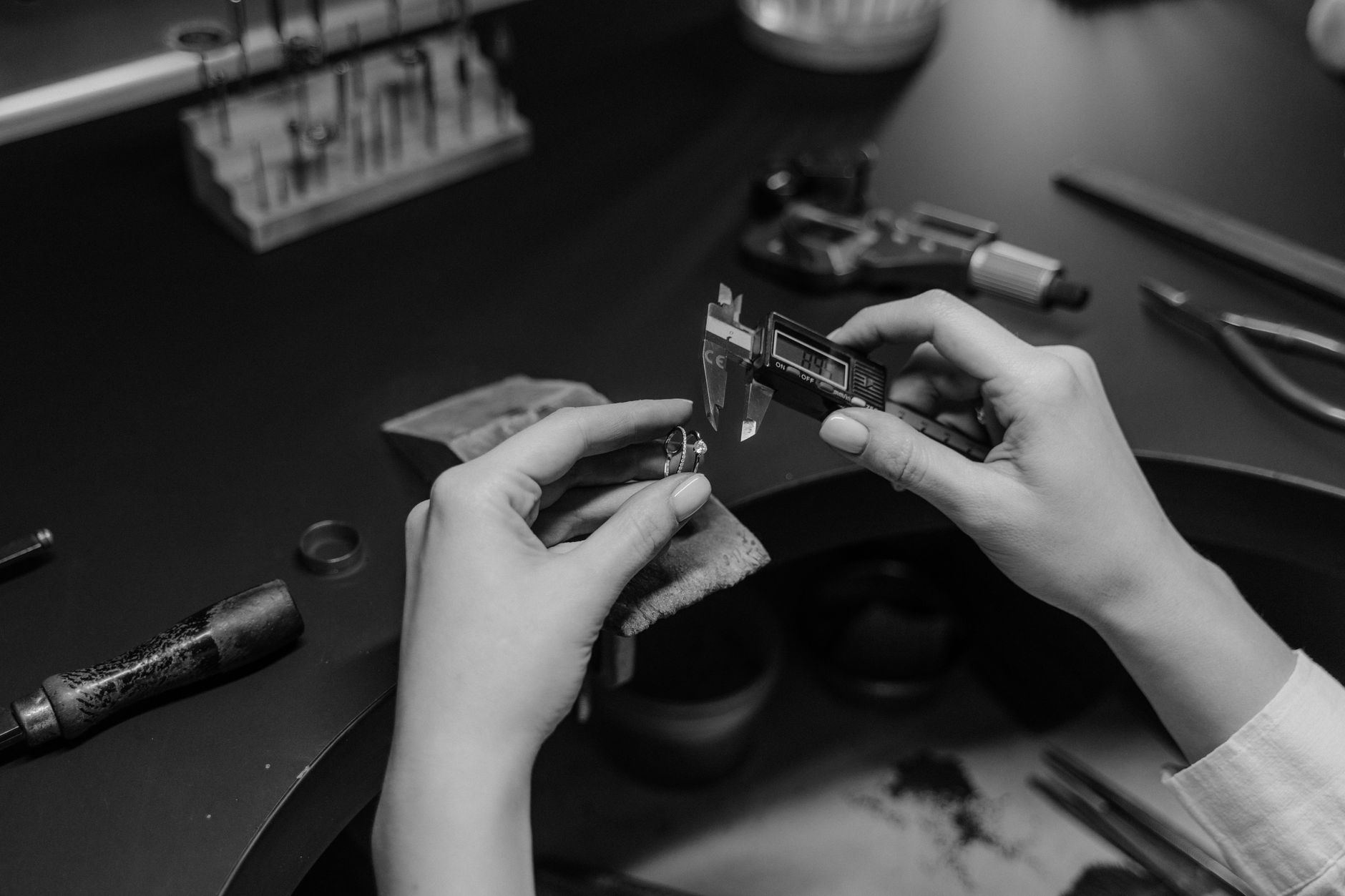
The savings range is built from hours. First, the shop measures how many hours a week go into repeatable tasks a robot can do, such as loading and unloading small castings, feeding trays and running fixed polishing or deburring passes. Those hours are valued as laborers and freight, stock, and material movers, hand work, using the local wage for this job from the government wage data on this page.
Second, the share of those hours a robot realistically takes over is estimated, not assumed to be all of them. Setup, part changes, inspection and any step that needs a jeweler's eye stay with people. Third, the lease cost over the financing term is subtracted from the value of the hours taken over. Each of the three inputs has a span, so the result is a range rather than a single figure.
The wage data covers the occupation nationally, not jewelry shops. The Bureau's May 2023 estimate counts about 3.0 million laborers and freight, stock, and material movers, hand workers, which shows how common the work is across the economy. It does not show what any one shop pays, so the site assessment replaces the national benchmark with local hours.
What changes the number up or down?
Four things move the range more than others: how repeatable the parts are, how many batches a week run the same pass, how much setup each change takes, and how many shifts the cell covers. A shop with varied one-off pieces sees a smaller share of work taken over. A shop running the same casting family in long batches sees a larger share.
Lease terms also matter. The lease cost is spread over the term, so a longer term changes the periodic payment and the total paid over the life of the agreement. Compare options on the same basis, with the same hours and the same service terms, before choosing a term.
The number is also pushed down by unplanned downtime and rework. A cell that waits for parts or stops for repairs earns less of the value of the hours it could take over, while the lease cost continues. Those factors belong in the assessment, not in a later surprise.
What are the risks to the return, and how do you avoid them?
The biggest risk is overstating the share of work a robot can take. Finishing that needs a jeweler's judgment on each piece stays with people, and a shop that counts those hours as savings will be disappointed. The fix is to measure the repeatable hours during the site assessment and build the range on those hours only.
The second risk is an underused cell. A robot that sits idle between batches or waits for parts earns little, while the lease continues. Plan the parts flow, the tray routes and the batch schedule before installation, and assign one person to own the cell's schedule.
The third risk is downtime with no fast fix. Our team picks the right robot for the site, leases it through financing, deploys and integrates it, trains staff and services it nationwide, with on-site dispatch and remote triage. Confirm the service terms and any spare unit coverage in writing before you sign the lease.
A fourth risk is injury. The sources we reviewed give no jewelry-specific injury rate, so do not assume a robot removes strain on its own. Review how operators load and check parts, and keep a human check on finish quality.
How do cobots perform on castings and deburring?
The closest evidence comes from metal casting work. A Belgian aluminium foundry tested a cobot to sand runner and riser remnants on castings through a research project called COBOFIN, and after those tests began initial tests on other products. The project frames the cobot as an assistant that takes repetitive, dirty and stressful tasks while an experienced operator stays in charge.
The same project targets small series and single pieces, where manual sanding or deburring is common, which is closer to jewelry batches than high volume lines. It notes that force feedback from sensors is needed for quality sanding and deburring, and it lists cell design, part handling and tool management as open questions. Those are the same questions a jewelry shop must answer.
Globally, the International Federation of Robotics reports more than 64,500 cobots sold in 2024, nearly 12% of new installations. That shows broad adoption, but it says nothing about jewelry specifically. We found no jewelry manufacturer case study with hours or output figures, so jewelry results have to come from a site trial.
What is a realistic timeline from assessment to payback?
Expect the first step to be a site assessment. It measures the hours, maps the floor, and tests part flow and fixtures. A lease quote follows the assessment, so no lease terms are known before then. The time from there to a working cell depends on how quickly the site prepares fixtures, parts routes and staff training.
A common sequence runs assessment, quote and financing, deployment and integration, staff training, then a go live period. During go live the team checks the hours the robot actually takes over against the assessment. Payback arrives when the value of those hours, using the local wage for this job, covers the lease cost over the term.
Shops that start with one unit on one process get a clear reading sooner than shops that try to change every station at once. Phased deployment keeps the rest of the floor working during the rollout. After the first review, decide whether a second process is worth adding, and set the next checkpoint in writing.

How do you get a precise figure from a free site assessment?
A free site assessment is the only way to replace the range on this page with a figure for your shop. We measure the repeatable hours on your shift, map the cell, check part flow and fixtures, and test whether a fixed pass gives the finish you need. The result is a savings range built from your hours, plus a lease quote for the term you choose.
Bring the details that drive the answer: the casting families you run, batch sizes, hours a week spent on loading and tending, rework rates, shift patterns and the staff who will run the cell. Ask the assessment to separate what the robot can take over from what stays with people, so the person signing off can see both sides.
We pick the right robot for the site, so the recommendation follows the work rather than a single product line. Once you accept a quote, deployment, integration, staff training and nationwide service run through one team and one contact, and go live support covers the first weeks of real production.
Frequently asked questions
Want a cobot at your jewelry manufacturer?
Tell us about your site. We will recommend the robot, quote the lease, and keep it serviced.
Sources
- US Bureau of Labor Statistics, Occupational Employment and Wage Statistics (OEWS May 2024)
- BLS Occupational Outlook Handbook: Jewelers and Precious Stone and Metal Workers
- BLS OEWS May 2023: Laborers and Freight, Stock, and Material Movers, Hand
- IBISWorld: Jewelry Manufacturing number of businesses
- IBISWorld: Jewelry Manufacturing employment
- International Federation of Robotics: World Robotics 2024 press conference
- COBOFIN robotic sanding and deburring project summary
- COBOFIN foundry case summary on castings sanding
- Manufacturing injury rates by industry (third-party summary citing BLS)