
The short answer
Cobot ROI for foundries comes from the repetitive grinding and fettling passes a cobot can take over on castings with consistent geometry. It is measured as the hours of laborers and freight, stock, and material movers, hand type of work the cell offsets, set against a fixed lease payment. The savings range is a planning estimate, not a promise, and a free site assessment measures the hours on your floor to set the real figure.
Key takeaways
- Savings come from the repetitive grinding and fettling passes a cobot takes over on consistent castings, while staff keep setup and inspection.
- The math is measured hours times the local wage for this job, minus a fixed lease payment, so the range moves with the hours you measure.
- Cobots fit assist arms and tending cells, and we found no source describing a fully autonomous cobot fettling cell.
- Labor is tight: more than half of metalcasting survey respondents said shortages significantly affected operations in 2025.
- A free site assessment turns the range into a lease quote built on your casting families and shifts.
Run the numbers for your site
Pick your city or state for a real regional number - we use the real BLS wage there. (On the live site this auto-detects from your location.)
What do you want to automate?
The cobot stacks the repetitive end-of-line pallets; your team handles changeover and QA.
What is cobot ROI for foundries?
Cobot ROI for foundries is the return from putting a collaborative robot arm on the repetitive finishing passes in a cleaning room: the grinding and fettling that removes gates, risers, parting line flash and fins from castings. The return is measured in hours. Each hour the cell carries out work a person would otherwise do offsets labor, and the savings range on this page is built from those hours. It is a range because no two plants run the same mix of castings, shifts and inspection rules.
The setting is bigger than it looks from outside. According to AFS, its About Metalcasting page lists 1,750 metalcasting facilities in the U.S. and about 490,000 people employed, and AFS says 75% of firms are small businesses with fewer than 100 employees. Many of those firms are small, so the cell has to fit a modest floor and a modest team rather than a line built for mass production.
Plant size is also a planning question. IBISWorld estimates an average of 138.3 employees per U.S. ferrous metal foundry products business across all roles, and its page carries no date. We could not find a published count of the people who work grinding and fettling at one foundry, so the headcount on this page is a planning placeholder to replace with your own roster.
Where does the return come from in a cleaning room?
A cleaning room takes a casting after shakeout and removes what the mold left behind. Much of that is grinding, which is repetitive, dusty and loud. The return comes from passes that repeat on the same casting geometry, since that is the condition a cobot needs to hold a consistent path and cut the same way on each part.
Cell design decides how much of the work changes hands. A hand-guided assist arm takes the weight of a grinder and lowers operator strain, but the operator stays on every pass. A tending cell takes the passes themselves. Foundry Magazine describes a robot-operated fettling and grinding cell for iron castings, with a quick-change tool system and a rotary clamping table so the casting can be turned for reach. We did not find a source describing a fully autonomous cobot fettling cell, so plan for people at setup and inspection.
Adoption is no longer the open question. According to the International Federation of Robotics, about 66,000 cobots were installed in 2025, roughly 11% of industrial robot installations, out of 603,000 industrial robot installations in total, which were up 11%. That is a broad market across all industries, not a foundry-specific figure, so check the cell against your own castings rather than the market average.
Median hourly wage, Laborers and Freight, Stock, and Material Movers, Hand
$4,380
Monthly cost of one full-time worker, at the median wage plus payroll costs (an estimate, not a quote).
Which parts of the job can a cobot take over?
Split the cleaning room into what repeats and what needs a person. A cobot can take the repetitive grinding passes on a known casting, the handling that moves a part between passes and into the fixture, and the reorientation that turns the casting for reach. That is the laborers and freight, stock, and material movers, hand type of work that comes off the floor.
People keep the work that depends on judgment and on what is unknown. Setup and changeover when a pattern or casting drawing changes stay with staff, and so does the call on whether a defect is within specification. Final inspection and the first article after a fixture change also stay with people. A cell cannot take these on its own, and it still needs someone who can stop it when a part looks wrong.
Limits set the boundary. An arm has a rated payload and reach, and a heavy casting may need a larger arm or a turning table. The clamping table Foundry Magazine describes turns the casting so the arm can reach each surface, which is the kind of support that makes an arm usable on mid-weight parts. Check every casting in each family against the arm's payload and reach before you commit to a cell design.
How does the savings math work?
The savings range is hours multiplied by wage, offset by the lease. Start with the hours of laborers and freight, stock, and material movers, hand type of work the cell takes over each shift. Multiply those hours by the local wage for this job, using the government wage data on this page, and subtract the fixed lease payment for the cell. The result is a range rather than a single figure, because the hours move with casting mix, shift count and how reliably the cell runs.
Two inputs do most of the work. The first is the share of each pass the cell can reliably carry out, which is not the same as the share it managed in a demonstration on one good part. The second is utilization. A cell that waits for castings or for someone to clear a jam saves few hours, however good its arm. We set both from a time study and your casting drawings, not from a general figure.
We could not find a published figure for hours per shift or week spent on grinding and fettling, so the table below shows the structure and leaves the hours for your floor. Measure a normal week, including rush days, rather than a best week. Do not borrow another plant's hours, because its casting mix is what sets them.
| Task | Today | With a robot |
|---|---|---|
| Repetitive grinding passes on one casting family | Set by your time study | Cell carries the passes; staff check at set intervals |
| Moving castings between passes and into the fixture | Set by your time study | Cell handles transfer; staff load and unload the cell |
| Reorienting castings for reach | Set by your time study | Turning table and cell handle the reorientation |
| Setup and changeover | Set by your time study | Staff keep this work and plan it into the hours |
| Final inspection | Set by your time study | Staff keep this work |
No source in our research gave verified hours per shift or week for grinding or fettling. Fill the today column from a time study on your floor before using the savings range.
How tight is foundry labor, and what does that do to the return?
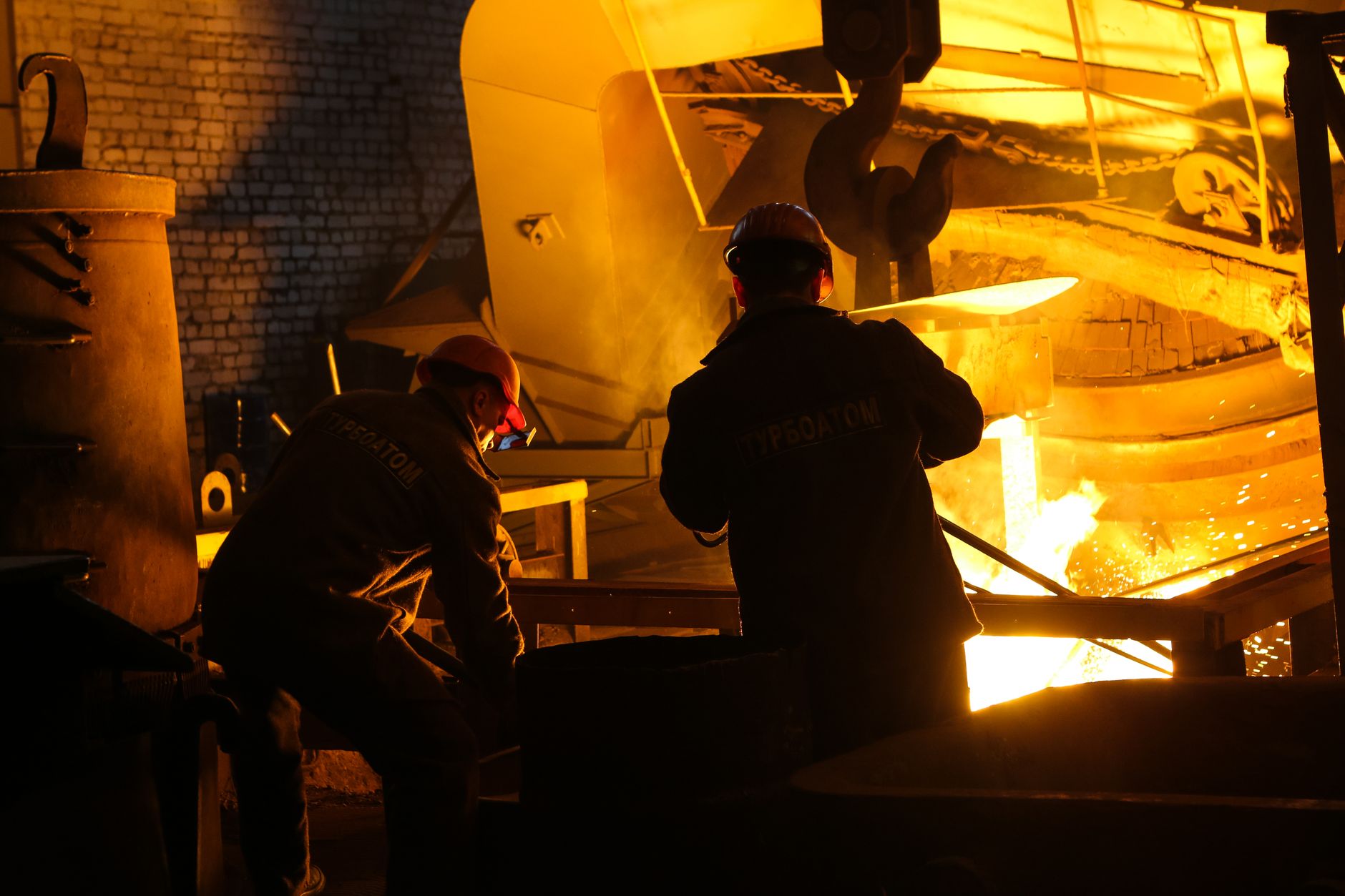
Labor is what makes the math matter. According to NFFS, in its 2026 Metalcasting Business Outlook, more than half of survey respondents said labor shortages significantly affected operations during 2025, and skills shortages are expected to stay the top challenge. A cell does not fill an empty station on its own, but it can take the repetitive passes off the people you do have.
The workforce is also projected to shrink. Data USA, which draws on BLS data for NAICS 3315 Foundries, reports 18.5% women and 81.5% men in the foundry workforce for 2024 and projects a national decline. Its two pages give projected declines of 12.3% and 14.7% over ten years, and they do not match, so treat the exact figure as uncertain and plan for a smaller pool.
NFFS also says informal onboarding and inconsistent skill development slow productivity and increase early turnover. It gives no turnover rate, and we did not find a measured 2025 metalcasting turnover percentage. For the return, the point is that each new grinder takes time to train, and a cell that takes the repetitive passes shortens the stretch where new hires are slowest.
What changes the number up or down?
Several inputs push the range up or down. More castings from the same family, longer runs and fewer changeovers raise the hours the cell can offset. Heavier parts, many part families, frequent pattern changes and uneven casting consistency lower them, because the cell then spends its time on setup rather than on passes.
Site factors matter too. A cell that runs only on the day shift leaves hours on the other shifts unused, so match run time to the shifts that do the grinding. Existing fixtures and floor space lower the cost of integration. The inspection standard matters as well: if every part needs a person to sign off, the cell still takes the passes but the hours saved shrink.
What are the risks to the return, and how do you avoid them?
The biggest risk is committing to a range before the floor is measured. A pilot on one casting family, with the hours recorded, tests the share of the work the cell actually takes. The number you carry forward should come from that pilot, not from a demonstration.
Safety is the second risk. California's 2018 data for primary metal manufacturing, which includes foundries, reports a total recordable rate of 6.0 and a days-away rate of 4.2 per 100 full-time workers. These figures cover NAICS 331, not foundries alone, and we found no national BLS rate for foundries, so use them as context rather than as your baseline.
Other risks are worth planning for before the cell goes in.
- Casting design changes that invalidate the fixture. Agree a change protocol with the people who own the patterns and drawings before the cell goes in.
- A single point of failure. Plan a manual fallback at the grinder and a service agreement with on-site dispatch and remote triage.
- Undertrained staff. Train the grinder operators to run, clear and stop the cell, so the people who know the castings are in charge of it.
- An overstated share of work. Re-measure after the pilot and set the range from the measured share, not the expected one.
What is a realistic timeline from assessment to payback?
The sequence is more useful than a calendar date, because fixturing and casting variation set the pace. First comes the site assessment, where we map the cleaning room, time the grinding, fettling and handling, and check casting weights against the arm. Then we design the cell and fixtures for one casting family, deploy and integrate the arm, and train staff.
Next comes a pilot with go-live support, so the people who run the grinders see the cell work on real parts. The pilot measures the share of the work the cell takes, and that number resolves most of the range. Expansion to other casting families follows once the pilot has run long enough to show a stable result. We set the dates in the assessment rather than from a general rule.
Payback is the point where the hours the cell offsets, valued at the local wage for this job, cover the lease cost. Because the lease is fixed and the hours are measured, payback can be checked against pilot results rather than estimated in advance.
How do you get a precise figure from a free site assessment?
A free site assessment replaces the range on this page with a figure for your floor. Bring casting drawings, part weights grouped by family, your shift pattern and your inspection rules. We time the grinding, fettling and handling passes, record the changeovers, and check the arm's reach and payload against each part family.
We pick the arm for the site, not from a catalog. We lease it through financing, deploy and integrate it, train the staff who will run it, and service it nationwide. One partner handles all of that, so the lease, the install, the training and the service are not split across vendors.
The lease quote comes after the assessment, once the hours and the cell design are known. Expect the quote to set the fixed lease payment next to the hours it has to offset, so you can check the math yourself. Ask for the maintenance terms in writing, including what happens when a cell stops.
Frequently asked questions
Want a cobot at your foundry?
Tell us about your site. We will recommend the robot, quote the lease, and keep it serviced.
Sources
- US Bureau of Labor Statistics, Occupational Employment and Wage Statistics (OEWS May 2024)
- AFS About Metalcasting
- Data USA NAICS 3315 Foundries
- NFFS Workforce Development 2026
- California DIR Injury Table 2018
- International Federation of Robotics President's Report 2026
- IBISWorld Ferrous Metal Foundry Product Manufacturing
- Foundry Magazine