
The short answer
Drone ROI for construction sites mostly comes from fewer hours spent walking the site to measure earthwork volumes and track build progress, because a drone can repeat the same flight and crews can compare results over time. The savings range depends on how often you check progress, how much of the work a drone realistically takes, and the lease quoted after a free site assessment. According to the ABC drone usage survey, 80.8% of drone-using respondents named site progress monitoring as a primary use.
Key takeaways
- The return comes from repeat progress flights, not from a single survey.
- Earthwork volumes are the clearest saving to measure against your current process.
- Price the saving in walking hours, using the government wage data on this page for security guard type work.
- Published accuracy results are good, but they depend on ground control and processing.
- Judge the pilot across several progress cycles, because payback follows the check schedule.
Run the numbers for your site
Pick your city or state for a real regional number - we use the real BLS wage there. (On the live site this auto-detects from your location.)
What do you want to automate?
The unit runs the repetitive patrol and watch; guards handle the judgment calls.
What return can construction sites expect from drones?
Drone ROI for construction sites is mostly a labor return. A drone flies the same route over earthwork, pads and framing, and the output is a set of measurements that crews can compare from one check to the next. The return is the walking and measuring time the flight takes off the people who used to do it by hand.
The savings range on this page is a planning estimate, not a promise. It depends on how often you check progress, how much of the site one flight covers, and what the lease costs once a site assessment sets the scope. Treat the range as a starting point for a conversation, not a number to plan around on day one.
Adoption is already common enough that the open question is which jobs drones fit first. According to the ABC drone usage survey, 36.1% of ABC member respondents said they fly drones on jobsites, and among those drone users 80.8% named site progress monitoring as a primary use.
Where does the return come from on a construction site?
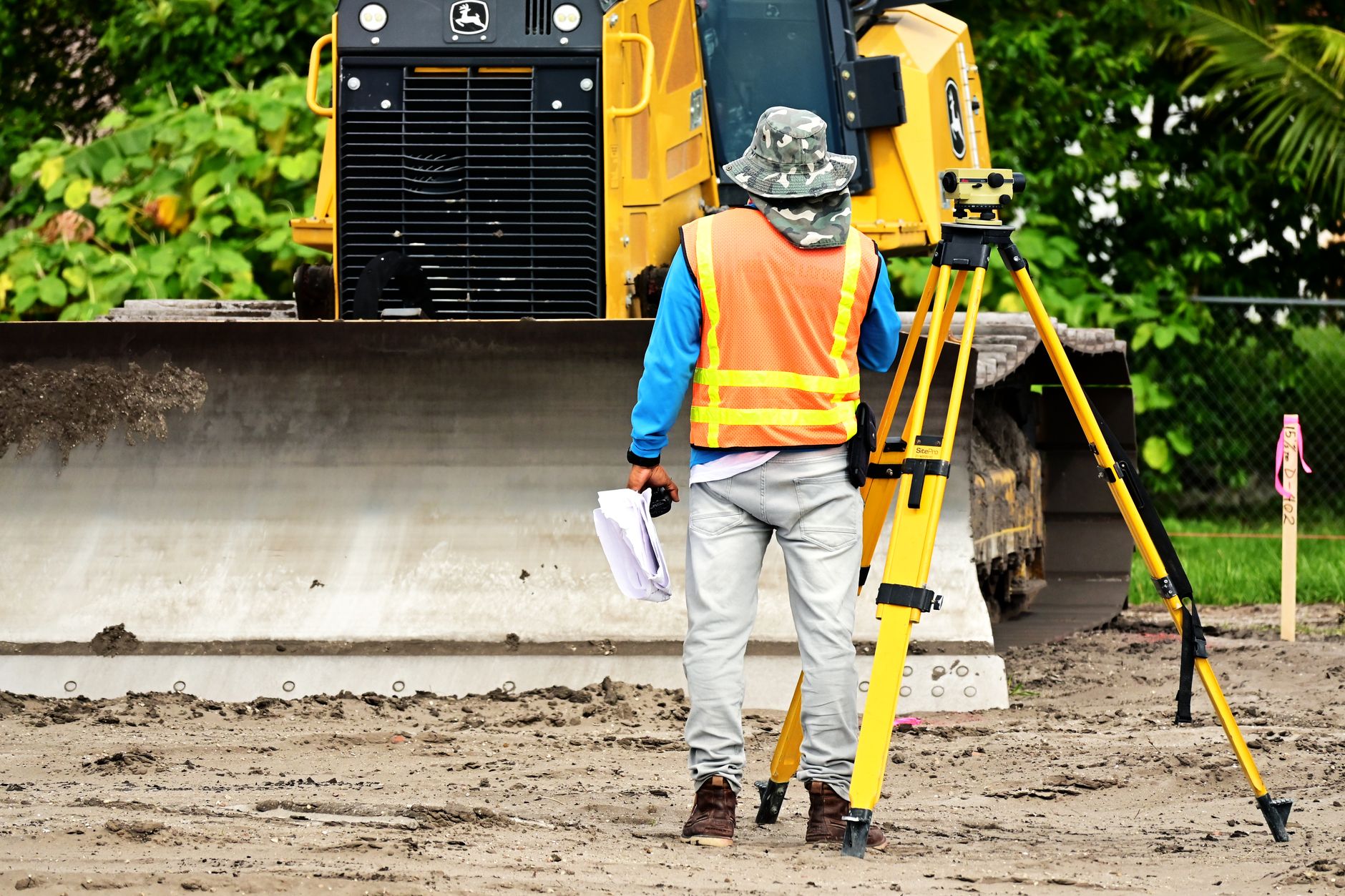
Most of the return comes from progress checks and earthwork volumes. Earthwork is the clearest case because volumes are measured against a design surface, and a cut or stockpile has to be measured repeatedly as the work moves. A drone covers that area in one pass instead of a crew walking grade with survey rods.
Build progress is the second source. Superintendents want to know whether a slab, wall or roof section matches the schedule without walking the whole site every week. A repeated flight gives the same view of the same area, so the comparison from one check to the next is where the value sits.
The return is not the flight itself. It is the walking, the rod work and the waiting for a surveyor that a drone removes from routine checks. Surveyors still set control and sign off wherever the contract requires it.
Median hourly wage, Security Guards
$4,317
Monthly cost of one full-time worker, at the median wage plus payroll costs (an estimate, not a quote).
How does the drone ROI math work?
The math has three inputs. The first is the hours of site walking and measurement the drone takes over in a typical month. The second is the share of that work a drone realistically takes, which is less than all of it, because boundary work, sign-off surveys and covered areas still need people. The third is the lease cost, which we quote after the site assessment.
The labor side is priced on the hours of walking and watching that a security guard type of role would cover, using the government wage data on this page for that job. The people who usually walk a construction site for progress are superintendents and project engineers, and we do not price their time. The drone takes the repetitive walk off their plate, so the saving is measured in hours of that kind of work.
Lease cost is a fixed payment set through financing, so the net return is the hours offset minus the lease cost, plus any rework avoided by catching problems earlier. The calculator on this page shows that net as a range. Changing the share of work the drone takes moves the range more than any other input.
What does survey research say about drone time and accuracy?
Peer-reviewed work gives the clearest picture. Lee, Han and Song (2022, Sensors and Materials) studied an expressway site, where UAV volumes were 2.36 to 2.51% higher than traditional surveying. Their first UAV job took about twice the work time and 1.4 times the work cost of traditional methods, and on later jobs team work time and cost were roughly halved.
The learning curve matters for your ROI. The first flight is the expensive one because the crew is learning the route, the control points and the processing. The savings show up on repeat flights, so a pilot on one site should run through several progress cycles before anyone judges the return.
Accuracy is the other half of the picture. Ajayi and Ajulo (2021, Quaestiones Geographicae) measured a gravel stockpile, where the UAV result was 2.94% from the reference volume and the ground survey was minus 2.31%. A Makerere University thesis on road earthworks found GNSS differed from actual volume by 2.93% and UAV by minus 0.54%, and that capturing thousands of points by UAV takes seconds. These are specific studies, not guarantees for your site.
What changes the drone ROI number up or down?
Three things move the range most: how often crews need a check, how large and obstructed the site is, and what the current process already costs. A site that checks grade weekly with a full survey crew sees a larger offset than one that checks monthly with a single surveyor.
Site shape matters too. A long linear job such as a road or pipeline corridor covers ground quickly, while a tight urban site with tall cranes and overhead lines needs more flight planning and yields fewer usable flights. Wet and windy days cancel flights, so a wet-season schedule lowers the offset for that stretch of the build.
What are the risks to the return, and how do you avoid them?
The largest risk is regulatory and compliance overhead. In the ABC survey, regulatory and compliance issues were the top barrier at 53.5%, ahead of training and staffing at 43.4%. Plan permits, airspace checks and insurance before the first flight, not after the first complaint.
The second risk is staff turnover. According to an AGC analysis of JOLTS data reported by Construction Owners, the construction quits rate was 1.3% for February 2026. Trained pilots and data staff can leave, so train more than one person per site so the program does not stop when one person moves on.
The third risk is the data itself. A volume or progress number is only as good as the ground control and the processing settings. Keep a fixed flight plan, the same control points and a written procedure so results from different months can be compared fairly.
What is a realistic timeline from assessment to payback?
Start with a free site assessment that maps the work, the airspace and the flight routes. From there, a pilot runs on one site through a set of progress cycles, so the team can measure hours before and after. The lease quote follows the assessment because the scope sets the equipment and the service level.
After the pilot, the program moves to go-live with trained staff and a regular flight schedule. Payback comes after enough repeat flights to offset the lease, and its length depends on check frequency and the share of work the drone takes. We set the expected timeline in the quote, not in a sales pitch.
Expect the first phase to cost more time than it saves. The drone repays itself through repeat use across the project, not on the first flight. A pilot that ends after one earthwork cycle often judges the program too early.
How do you get a precise figure from a free site assessment?
A free site assessment turns the range on this page into a site-specific number. We walk the site, map the flight area, check airspace and permit requirements, and record the current hours of walking and measuring. The output is a written estimate of the offset with the assumptions listed.
We are a US commercial robot integrator. We pick the right robot for the site, lease it through financing, deploy and integrate it, train your staff and service it nationwide. One partner handles selection, leasing, setup, training and service, so you have one point of contact for the whole program.
Bring three things to the assessment: the current progress schedule, the survey method you use now, and a list of the people who walk the site and how often. Those inputs let the assessment price the hours that matter to your decision.

Who does this work on a construction site today?
The typical headcount for drone progress work is one trained pilot per flight program. The research for this page did not return a verified site-level headcount, so one pilot is the planning assumption, and the assessment checks it against the real crew. Superintendents, project engineers and surveyors are the people who read the output and act on it.
Training and staffing is the second barrier cited by ABC drone users, at 43.4%, so the people who fly and process data need time set aside for it. Safety context matters too. According to the BLS Census of Fatal Occupational Injuries, 1,034 construction workers died on the job in 2024, down from 1,075 in 2023. Walking open grade and edges carries real risk, and a drone can reduce how often people do it, though it does not replace fall protection or site safety rules.
Frequently asked questions
Want a drone at your construction site?
Tell us about your site. We will recommend the robot, quote the lease, and keep it serviced.
Sources
- US Bureau of Labor Statistics, Occupational Employment and Wage Statistics (OEWS May 2024)
- ABC drone usage survey (May 2026)
- AmeriSurv write-up of the ABC drone usage survey
- Lee, Han and Song (2022), Sensors and Materials
- Ajayi and Ajulo (2021), Quaestiones Geographicae
- Makerere University thesis on road earthworks
- KOREC Group guide (vendor, not peer-reviewed)
- BLS Census of Fatal Occupational Injuries, 2024
- Construction Owners report on AGC analysis of JOLTS data