
The short answer
Drone ROI for warehouses comes mainly from counting inventory locations in high racking without stopping picking, which removes lift and ladder hours from aisle counts and cuts the errors that follow. Published results vary widely because they come from vendors describing their own customers, so the savings range shown with the calculator is an estimate, not a promise. Your real range depends on racking height, locations counted per cycle and the counting hours the drone takes over, and a lease quote follows a free site assessment.
Key takeaways
- Most of the drone return comes from counting high racking without a lift or a stopped aisle.
- Vendor case figures are wide and self-selected, so use them as a range of outcomes, not a forecast.
- Ground checks on drone flags stay on the labor side, and they belong in the math.
- Racking height, locations per cycle and the error rate before the drone move the number most.
- A free site assessment turns this range into a lease quote for your building.
Run the numbers for your site
Pick your city or state for a real regional number - we use the real BLS wage there. (On the live site this auto-detects from your location.)
What do you want to automate?
The unit runs the repetitive patrol and watch; guards handle the judgment calls.
What is drone ROI for warehouses and where does it come from?
Drone ROI for warehouses comes from one job: counting inventory locations without stopping picking. A drone flies the aisle, reads labels and location tags on high racking, and sends what it sees to the warehouse system. The return is the counting hours that no longer go to ladders and lifts, plus the errors that no longer have to be chased by hand.
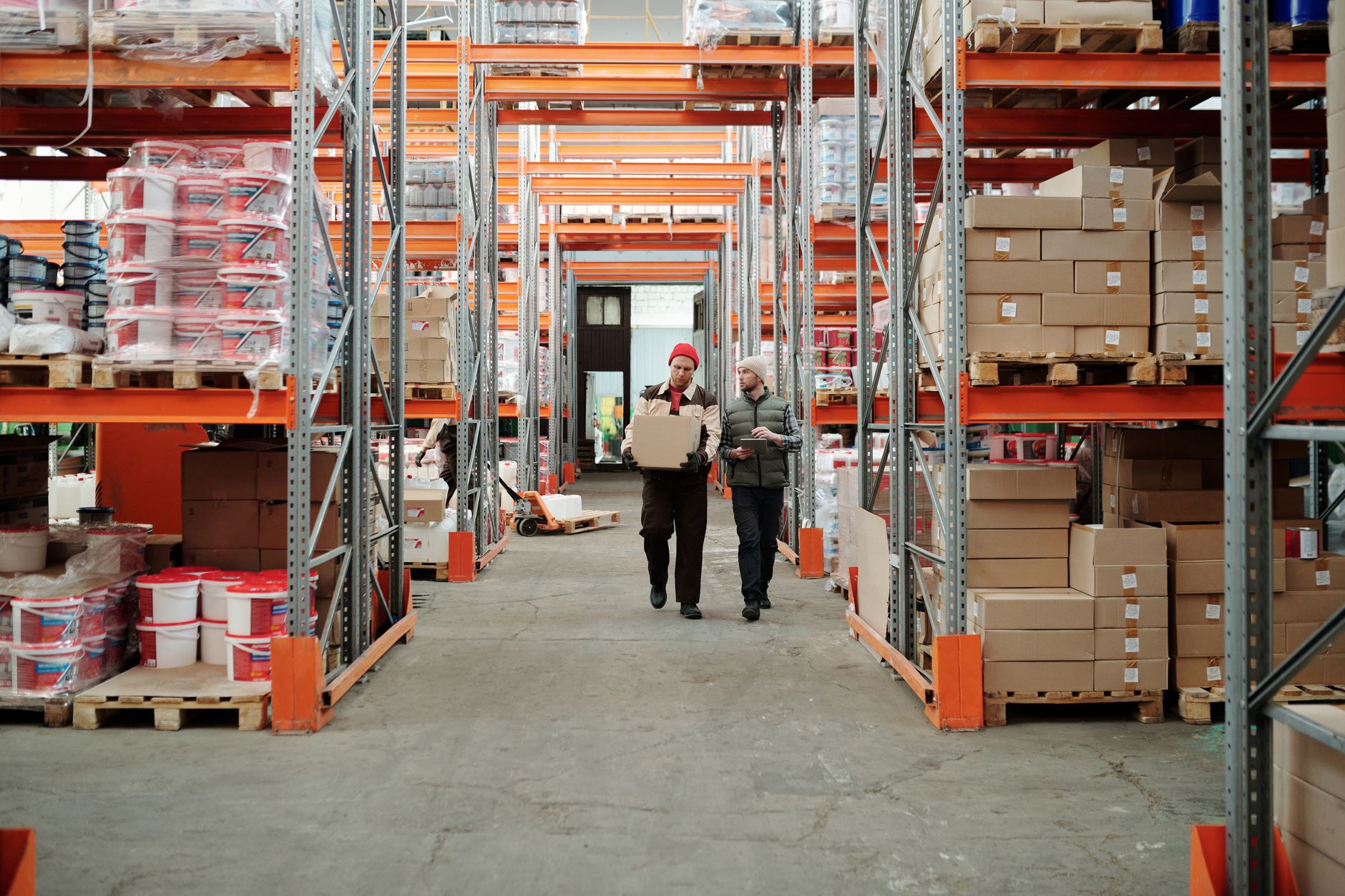
Most of that return sits in the aisles that are hardest to reach. Counting high racking by hand usually means a person on a lift, working aisle by aisle, and often slowing the picking that happens in the same space. A drone reads those locations from the aisle and flies up to the labels, so counting can run alongside picking instead of stopping it.
The return is real but it is a range, not a flat rate. Published results come from a small number of operations, and most come from vendors describing their own customers. Read them as the outer edge of what has happened, then build the math from your own racking and count schedule.
How many US warehouses and workers could use drone counts?
The potential market is large. According to IBISWorld, an industry research firm, there were 42,427 General Warehousing and Storage businesses in 2026, up 6.0% from 2025. That is a count of businesses, not buildings, so it does not say how many sites run the high racking where drones add the most.
The workforce is large too. According to the Bureau of Labor Statistics, warehouse employment for December 2025 was revised to 1,833,100 after the annual benchmark, up from an initial figure of 1,791,500, as a trade publication reported on the revision. According to the St. Louis Fed's FRED data series, which republishes BLS figures, All Employees, Warehousing and Storage stood at 1,830.6 thousand in March 2026.
No verified 2025 national count of US warehouses or distribution buildings was found, and sources define the category differently. Use the business and employment counts for context. The number that drives your decision is the count of locations in your own racking.
Median hourly wage, Security Guards
$4,317
Monthly cost of one full-time worker, at the median wage plus payroll costs (an estimate, not a quote).
What did drone counts change at operating sites?
The best-documented gains come from vendor-published case studies, so they describe the vendor's own customers. According to a trade article reporting on one such case, a drone customer's inventory accuracy rose from about 97 to 98% to nearly 99% after deployment. The same article reported an 87% reduction in time spent fixing cycle-count errors, which the vendor data describes as vendor-reported.
A separate vendor-published case, also reported in a trade article, described a warehouse cutting its WMS error rate from 11% to 3% within three months. Those results show the upper end of what sites have reported, and the sample is limited to operations that chose to publish.
What these cases share is the shift in work. Counting moves from people on lifts to a drone flying the aisle, and the people who remain spend their time on flagged items and corrections. The gains show up in fewer errors to chase as well as fewer hours on the count itself.
How does the math work for a drone lease in a warehouse?

The math has four inputs: the counting hours the drone takes over, the share of those hours it realistically takes, the ground-check hours that stay with people, and the lease cost. The savings range on this page is priced on the government wage data for security guards, so the labor side counts hours of that kind of work the drone takes over. Warehouse counters do a separate job, so the drone takes counting work off their plate and their time is not priced in the range.
Start with hours, not equipment. Take a typical cycle, total the labor hours spent on high-rack and lift counts, and estimate how much of that moves to flying. Subtract the ground checks, because drone-flagged variances usually need a handheld scan before anyone changes the system. The research did not turn up a verified figure for counting hours per shift at a typical site, so take that baseline from your own records.
Then compare the labor side with the lease cost, which comes in a quote after a free site assessment. The drone ROI for warehouses is the net of those two, expressed as a range. Realistic outcomes sit in the middle of that range, and the top assumes the full drop in hours that some vendor cases report.
What changes the drone ROI for warehouses up or down?
Racking height and aisle access matter most. The taller the racking, the more lift time a drone can remove, and the more it gives back. A site with low racking and easy reach gains less, and a handheld scanner may fit it better.
Baseline accuracy matters too. A site that is already near the top of its accuracy range has less room to gain than one with a high WMS error rate, which is where the largest reported drops appear. Measure today's error rate before you model anything.
The government employment data on this page shows how large the workforce is, but it does not say how many counters your site has. Staffing is a site number. Ask for it in the assessment, along with the hours each count takes and how often locations are counted.
What risks could cut the return, and how do you avoid them?
The biggest risk is counting on the drone to remove work it only moves. Practitioner guides describe the change as a shift from ladder time to exception handling, not elimination. Flagged variances usually still need a ground check with a handheld scan, so build those hours into the math before you commit to a number.
The second risk is a broken data path. If reads do not reach the warehouse system cleanly, staff re-key results and the savings disappear into admin time. Test integration on one zone before expanding, and settle who owns the data mapping.
The third risk is downtime. A grounded drone in the middle of a cycle sends the count back to people or pushes it a day. Ask for on-site dispatch, remote triage and a spare unit as part of the lease, and keep one manual route for any aisle the drone cannot cover.
How does a drone compare with a person counting by hand?
Drones win on reach in high racking. A person needs a lift or ladder for each high location, while a drone reads labels from the aisle. Drones can also run alongside picking, which a manual lift count usually cannot do without slowing the aisle.
People still win on judgment. Damaged labels, mixed pallets and stock in the wrong place need a human at the location, and a person can resolve an exception on the spot. A drone can flag a mismatch, but it cannot fix one.
The labor shift the return depends on is fewer hours on ladders and lifts, and more hours on exceptions and ground checks. That is why the math should price the ground checks instead of assuming they disappear.
- Reach in high racking
Drone
Reads labels at height from the aisle, without a lift
Staff
Needs a lift or ladder for each high location
- Time spent on counts
Drone
Counts alongside picking, so the aisle stays in use
Staff
Works aisle by aisle, which slows picking in the same space
- Damaged or unusual items
Drone
Flags a mismatch but cannot resolve it
Staff
Inspects, handles and resolves the exception on the spot
- Ground checks
Drone
Flags variances that usually need a handheld scan
Staff
Performs the handheld scan and closes the variance
- Setup and oversight
Drone
Needs a mapped site, system integration and staff who review flags
Staff
Needs training and supervision for each count
What is the timeline from site assessment to payback?
The sequence starts with a free site assessment: a walk of the racking, a count of locations and aisles, a look at the warehouse system, and a baseline for error rates and counting hours. The lease quote is built from those inputs, so the timeline reflects your racking rather than a national average.
A pilot usually comes next, often on one zone. According to a vendor-published case study of a third-party logistics operator, a deployment began in 2023 with one to two drones per building and later scanned 51,000 locations. Integration, staff training and a go-live period follow, with early cycles compared against manual counts.
Payback comes when the counting hours the drone takes back, net of ground checks, cover the lease cost over the lease term. Expect the first zones to show the clearest result, and expect the rest of the building to take longer as zones are added. Your site quote shows the timeline in your own numbers.
How do we set up drone counts for a warehouse?
We are a US commercial robot integrator. We pick the right drone for the site, lease it through financing, deploy and integrate it with the warehouse system, train the staff, and service it nationwide. One partner handles deployment and the service calls that follow.
The precise figure comes from a free site assessment. We map the racking, count locations per cycle, measure the error rate and set the share of flags that need a ground check. The lease quote follows from those inputs, so the range on this page becomes a number for your building.
If you are unsure, start with one leased unit on one zone. A pilot on a single area gives you a measured baseline and tests integration before the program grows. Ask for pilot terms in the quote.
Is it safe to fly drones in a working warehouse?
According to the Bureau of Labor Statistics industry profile for warehousing and storage (NAICS 493), the sector recorded a total recordable cases rate of 4.8 per 100 full-time workers. The same profile reports 32 fatal injuries in warehousing and storage in 2024, up from 28 in 2023.
Drone counts reduce the time people spend on lifts and ladders, which is one reason to plan for them. A flying device in a live aisle still brings its own requirements, so the plan has to address who may enter the aisle while the drone is in it.
Set flight windows, keep staff out of the flight path and brief pickers on the schedule before go-live. Confirm the safety plan during the site assessment, including which aisles the drone can enter while picking is active.
Frequently asked questions
Want a drone at your warehouse?
Tell us about your site. We will recommend the robot, quote the lease, and keep it serviced.
Sources
- US Bureau of Labor Statistics, Occupational Employment and Wage Statistics (OEWS May 2024)
- Trade article on drone-based cycle count accuracy
- BLS industry profile for warehousing and storage (NAICS 493)
- FreightWaves report on the BLS annual revision
- FRED, All Employees, Warehousing and Storage
- IBISWorld, General Warehousing and Storage businesses
- Vendor-published case study of a third-party logistics operator