
The short answer
A cleaning robot ROI for warehouses comes from floor scrubbing hours that move off staff and onto a set route, including overnight, measured against a fixed lease payment. The savings range on this page is an estimate built from the hours the robot takes over and the government wage data for the job, not a promise. A free site assessment turns that range into a lease quote for your floor.
Key takeaways
- The return comes from floor scrubbing hours that move to a set route, net of the fixed lease payment.
- Flat, sealed concrete with long, clear aisles suits a floor scrubber best.
- Overnight coverage with no operator is the strongest lever, but staff still handle spills and edges.
- Measure a zone by zone baseline before you trust any savings range.
- A free site assessment turns the range on this page into a lease quote for your floor.
Run the numbers for your site
Pick your city or state for a real regional number - we use the real BLS wage there. (On the live site this auto-detects from your location.)
What do you want to automate?
The robot runs the open floor overnight; your crew keeps detail and edges.
What return can warehouses expect from a cleaning robot?
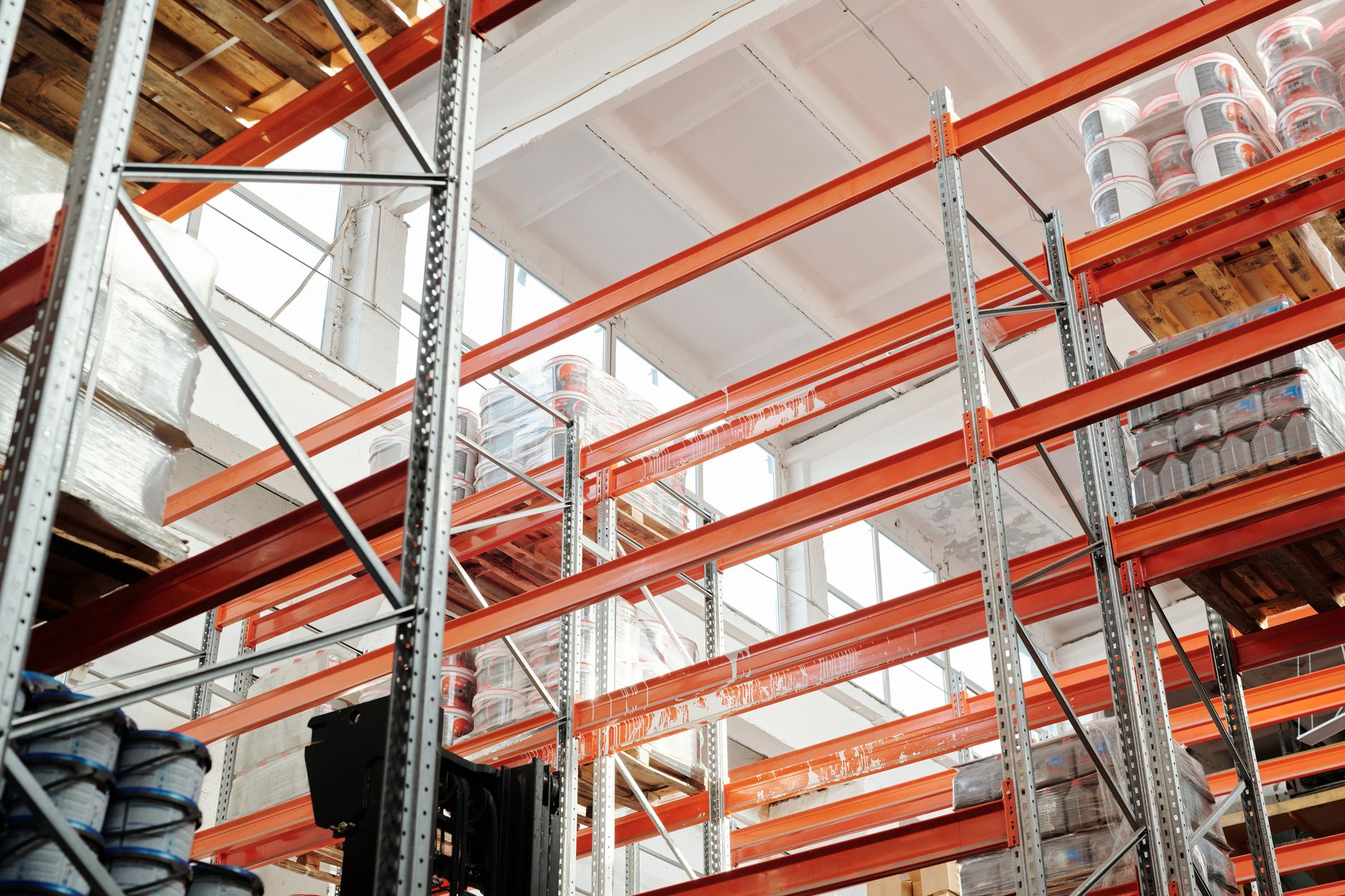
A cleaning robot ROI for warehouses comes from one kind of work: scrubbing large, flat concrete on a repeating schedule. That work is the janitors and building cleaners type of work, so the labor side of the math is valued with the government wage data on this page, not with the pay of the warehouse crew who run the floor. The calculator on this page is set for this industry and shows a savings range from the hours the robot takes over.
Scale explains why the category is worth testing. The Bureau of Labor Statistics put seasonally adjusted employment in warehousing and storage at about 1,835,000 in February 2026, and counted 23,539 private-industry establishments in the third quarter of 2025, according to its Industries at a Glance page. Those are many buildings with open floors and shift schedules, although BLS does not break out floor cleaning inside those totals.
The range is not a promise. It assumes the robot takes a share of the route rather than all of it, and that the staff time left over is counted honestly. Treat it as a starting estimate to test against your own baseline.
How much floor does a warehouse actually need cleaned?
Floor area is the main input, and it is easy to overstate. A logistics trade article reported on a 1.2 million square foot head office and warehouse in Milton, Ontario, where autonomous scrubbers started running in summer 2020. From deployment through April 2021, the robots cleaned just over 3.5 million square feet and saved more than 300 hours of labor compared with conventional cleaning, according to that article.
Read those figures carefully. The 300 hours is cumulative over the whole period and is not split by shift, so it does not tell you hours per night. The site is also in Canada, not the US. A janitorial benchmark cited in a facility management trade article says cleanable area is often about 55 percent of total square footage. That is an office-based estimate and not warehouse specific, but it is a fair warning that aisles, racking bases and dock edges are not all cleanable by a scrubber.
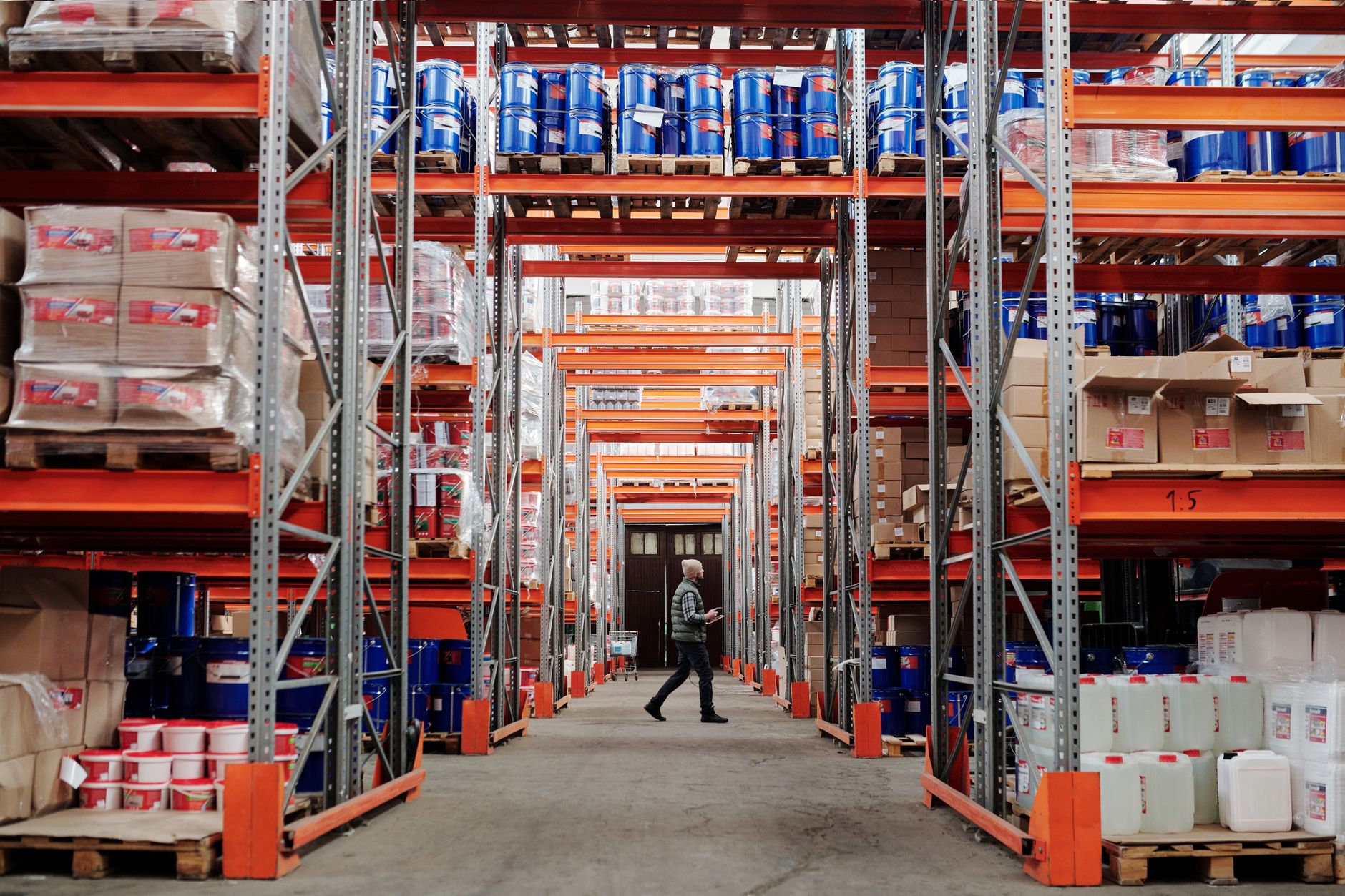
Measure your own floor. Split the building into zones, mark the smooth sealed concrete, and count the stops, joints and drains. The return follows cleanable area on the routes, not the square footage printed on the lease.
Median hourly wage, Janitors and Building Cleaners
$4,041
Monthly cost of one full-time worker, at the median wage plus payroll costs (an estimate, not a quote).
Where does the labor offset come from?
The labor offset is the floor scrubbing hours that move from staff to the robot, valued at the cost of that work. For the janitors and building cleaners type of work, that value comes from the government wage data on this page. From that gross figure, subtract the time staff still spend on the same floors, such as spill response, edges and corners, supervision and start of shift checks.
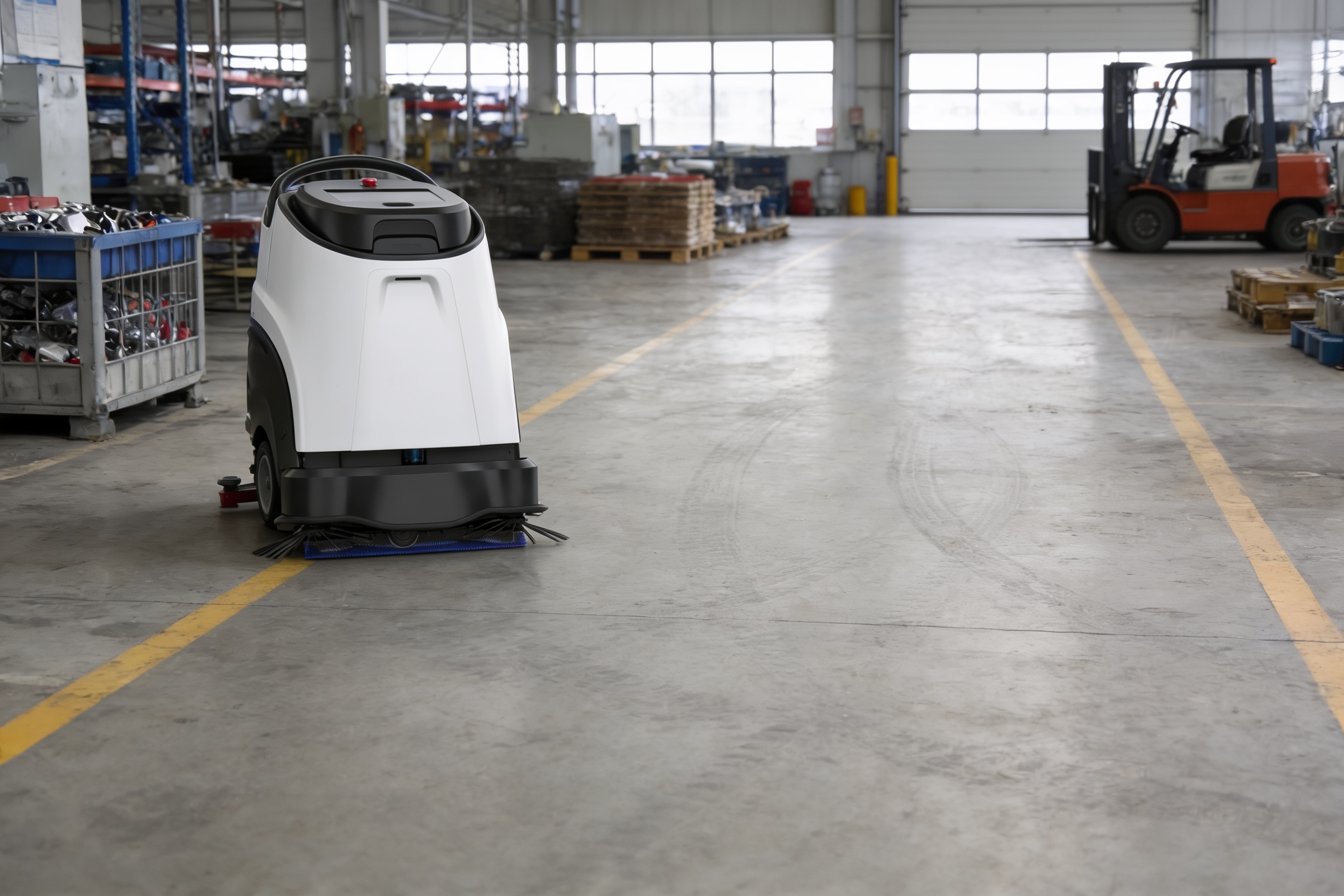
The robot does not take the whole floor. Robots cover open, repeatable routes well. Edges, tight corners, racking bases and spills stay with people, so the honest share is smaller than the floor area suggests. A site with clear aisles and a fixed scrub window will see a higher share than one where pallets are staged in the route every night.
Warehouse staff are mostly doing other work. BLS counted about 286,750 industrial truck and tractor operators in 2025, so the people running pallet moves and forklifts are another job from floor cleaning. The robot takes cleaning hours off the floor. It does not take operator time, and it should not be priced as if it did.
How is the savings range calculated?
The calculator takes the floor scrubbing hours the robot is expected to take over, values them at the labor cost of that work using the government wage data on this page, and sets the result against the lease payment and service for the same period. The result is shown as a range because the inputs are ranges. The lease side is a fixed robot lease payment quoted after a free site assessment, so the variable side is the hours.
Net return is the labor offset less the lease payment, less the staff time that remains on the same floors. Overtime and backfill hours count only if they actually go away. A robot that runs overnight but leaves the day crew unchanged saves hours only on paper until the schedule changes.
Payback is the point where the cumulative net turns positive. The range narrows as your baseline improves, which is why the first step is measurement, not a forecast built from averages.
Does night shift coverage change the return?

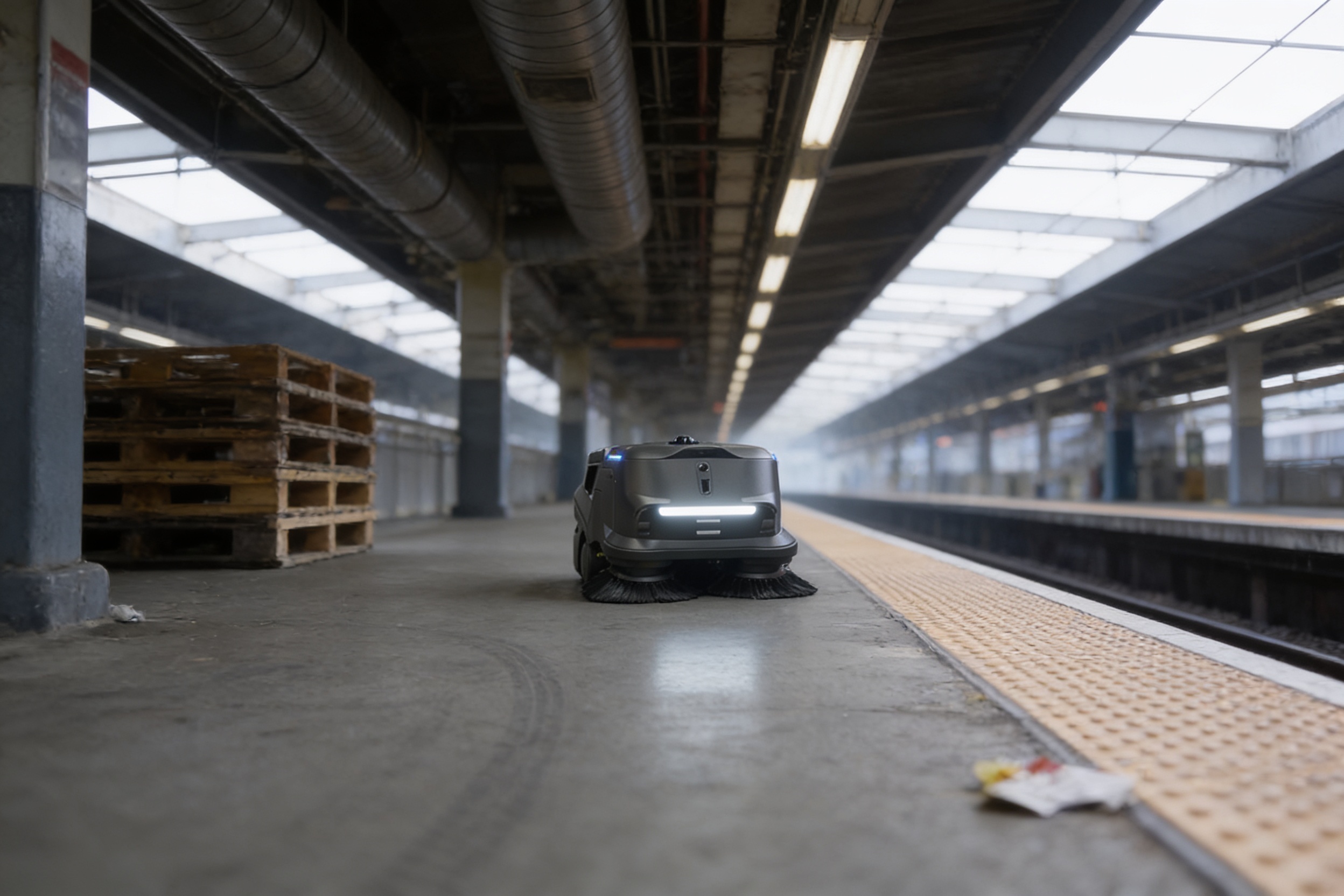
Yes, and this is where the case is strongest. A scrubber can run a set route overnight with no operator on site, so the floor is clean before the day shift and aisles are clear while trucks are not moving. If a site staffs a cleaning shift only to get the floor done, that labor can shrink or move to the tasks the robot cannot reach.
BLS counted about 2,447,700 janitors and building cleaners in 2024 and projects growth of 2 percent over the decade, which it calls slower than average. It also projects about 351,300 openings a year, mostly from replacement needs. A labor pool that grows slowly and turns over a lot is where a fixed route helps most, because the route runs the same way no matter who starts on the next shift.
A cleaning reader survey cited in the trade press puts average annual turnover near 73 percent, though the article is undated, so treat it as a rough signal. A facility management benchmark, drawn from office settings, gives a median of about 20,000 gross square feet cleaned per janitorial worker, with an example of 15 workers covering a 250,000 square foot facility. Warehouses are not offices, so use that as a reference point and not a standard.
The night value falls if the floor is not open at night, if racking changes keep blocking the route, or if the overnight crew mainly does work other than floor scrubbing.
Robot or person for floor scrubbing: who does what?
People stay the better choice for some of this work. A robot runs the same route with the same coverage every time, and it needs no break and no shift start. A person can step around a spill, move a cone, or skip a blocked aisle on the spot, and call for help only when needed.
Safety is part of the comparison too. BLS reports a total recordable case rate of 4.8 per 100 full-time workers in warehousing and storage for 2024, and a combined transportation and warehousing rate of 4.4 for the same year. BLS does not break out floor cleaning, so this page makes no claim that scrubbing changes those rates.
Read the table as a split of tasks, not a vote for one side. Most sites end up with the robot on the open route and people on the edges, spills and exceptions.
- Overnight coverage
Cleaning Robot
Runs a set route with no operator on site
Staff
Needs a scheduled shift, breaks and supervision
- Repeat accuracy on a fixed route
Cleaning Robot
Follows the same path each run
Staff
Pace and coverage vary from shift to shift
- Spills and debris
Cleaning Robot
Needs staff to clear and reset
Staff
Handles it on the spot, a clear win for people
- Pallets, cones and people in the path
Cleaning Robot
Slows or stops, and the route may need a reset
Staff
Steps around and decides in the moment, a clear win for people
- Edges, corners and racking bases
Cleaning Robot
Covers open floor, edges usually need hand work
Staff
Does the detail work
- Cost structure
Cleaning Robot
Fixed lease payment with service, quoted after assessment
Staff
Hours tied to shift schedules and the government wage data on this page
- Staffing risk
Cleaning Robot
Does not depend on filling a cleaning shift
Staff
Depends on hiring and training in a high turnover job
What are the risks to the return and how do you avoid them?
The most common risk is an overstated share. If a plan assumes the robot covers the whole floor, the offset will look better on paper than it does in practice. Ask for the route map and a list of the zones the robot will not cover, then check both against the floor.
Floor condition is the next risk. Cracks, uneven joints, drains and surface changes slow routes and cause stops, and staged pallets or floor trucks in the route cut the hours the robot takes over. Most of these are fixed by changing the staging rule or repairing the worst joints, not by changing the machine.
Downtime is a risk on any unit. Plan for it before signing, and make sure the payback math counts a lost night. Ask how spare unit coverage works, how remote triage runs, and how on-site dispatch and emergency response are handled across the country.
- Overstated share: test the route map against the floor before you sign.
- Floor surprises: survey joints, drains and surface changes in every zone.
- Blocked routes: agree a staging rule for aisles and dock edges with the operations lead.
- Downtime: confirm how a lost night is covered and who responds.
- Unmeasured baseline: log zone hours before deployment, not after.
What is a realistic timeline from assessment to payback?
The timeline runs in stages. It starts with a free site assessment, where the floor is surveyed, the route is mapped, and the baseline is set. The lease quote follows, based on floor condition, route count, lease term and service level. Deployment and integration come next, along with staff training and a go-live period in which the route is tuned and the actual hours are logged.
Payback is not a fixed date. It arrives when the cumulative labor offset passes the cumulative lease and service cost, and that depends on the hours the robot takes over in practice. The early months are the least certain, because routes and staging rules are still settling and the logged hours are still short.
A phased start lowers the risk. Many sites begin with one leased unit on the largest, cleanest zone, then add units once the logged hours match the estimate. The expansion decision then rests on the site's own numbers instead of an average.
How do you get a precise figure from a free site assessment?
A precise figure needs four inputs: cleanable square footage by zone, today's floor care hours by zone and shift, floor condition, and the hours the floor is open. We collect them on a free site assessment and use them to set the robot count, the route and the lease quote. The quote is the number to set against the calculator range on this page.
We are a US commercial robot integrator. We pick the robot that fits the floor, lease it through lease financing programs, deploy and integrate it, train the staff, and service it nationwide. One partner handles the lease, the deployment and the service calls, so you deal with one team instead of three.
Before the assessment, pull floor plans, note each zone's surface, log cleaning hours for a few weeks if you can, and list the shifts when the floor is open. Ask for the quote in writing, with the lease term, maintenance included and warranty terms stated before you decide.
Frequently asked questions
Want a cleaning robot at your warehouse?
Tell us about your site. We will recommend the robot, quote the lease, and keep it serviced.
Sources
- US Bureau of Labor Statistics, Occupational Employment and Wage Statistics (OEWS May 2024)
- BLS Industries at a Glance: Warehousing and Storage (NAICS 493)
- BLS Occupational Outlook Handbook: Janitors and Building Cleaners
- BLS injury and illness rates by industry chart
- Logistics trade article on autonomous floor scrubbing at a warehouse
- Facility management trade article on janitorial staffing needs
- Cleaning industry reader survey article (undated)