
The short answer
Cleaning robot ROI for gyms comes mainly from the open-floor hours a night crew spends on repeat sweeping and scrubbing, offset against a fixed lease cost. Published gym cleaning estimates put a 5,000 sq ft gym with locker rooms at 2 to 4 hours per visit for a two-person crew, so a robot covers a share of those hours rather than the whole clean. The calculator on this page gives a savings range for your floor, and the lease quote follows a free site assessment.
Key takeaways
- Gym cleaning robot ROI rests on open-floor hours that a night crew spends on repeat work.
- Published vendor estimates put a 5,000 sq ft gym with locker rooms at 2 to 4 hours per visit.
- A robot takes the share of those hours that your mapped floor allows, not the full clean.
- Locker rooms, restrooms and high-touch surfaces stay with staff.
- The lease quote comes after a free site assessment, so the net figure comes last.
Run the numbers for your site
Pick your city or state for a real regional number - we use the real BLS wage there. (On the live site this auto-detects from your location.)
What do you want to automate?
The robot runs the open floor overnight; your crew keeps detail and edges.
What return can a gym expect from a cleaning robot?
A gym that runs a floor robot on its open training area can expect the return to come from labor hours, not from a lower cleaning standard. The robot takes the repeat sweeping and scrubbing of the open floor, which is the janitors and building cleaners type of work, and the staff keep the parts of the clean that need hands and judgment. The savings range on this page is built from that offset, minus the lease cost. It is a range because floor layouts, visit schedules and crew habits differ from one site to the next.
Cleaning robot ROI for gyms is easiest to judge with three numbers: the crew hours spent on open floor each visit, the share of those hours a robot can cover on your mapped floor, and the lease cost quoted for your site. The calculator on this page is pre-set for this industry. You adjust floor area, visit frequency and crew hours, and it returns a savings range. Treat that range as a planning tool. The lease quote, and the net figure after it, come from the site assessment.
Expect the return to look modest in the first weeks. The first runs show how much of the floor the robot actually clears, and that measured share is what turns an estimate into a number your finance team can check.
Why are gyms a good fit for floor cleaning robots?
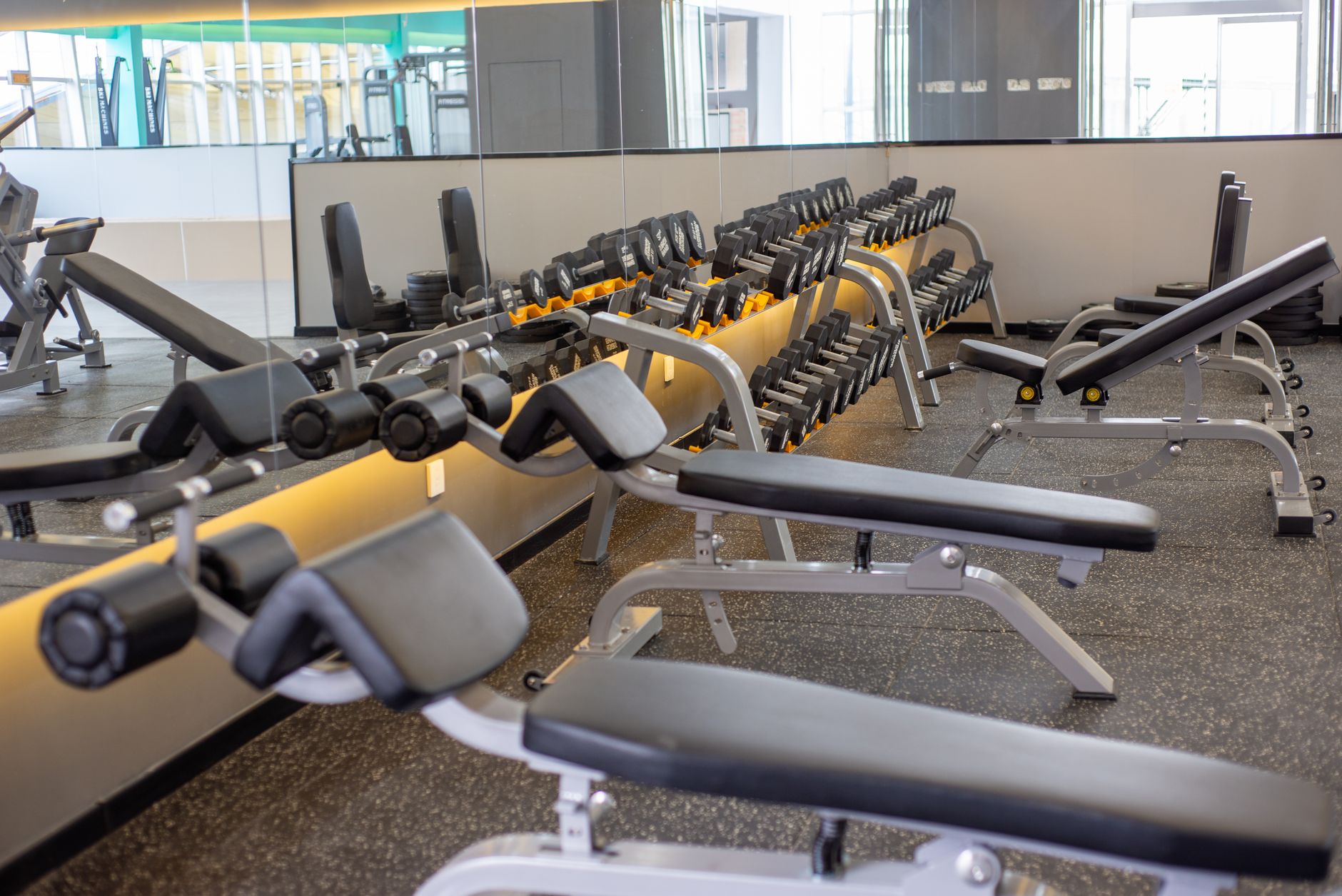
An industry research count puts gym, health and fitness club businesses in the US at 93,874 in 2025, with growth of 0.4% in 2025. That is a large base of sites that run much the same cleaning routine most nights. Many of these sites share a layout: a training floor with mats and open space, a set of locker rooms, a front desk, and a stretch of equipment that gets wiped down. The repeat nature of the floor work is what makes it suitable for a scheduled robot.
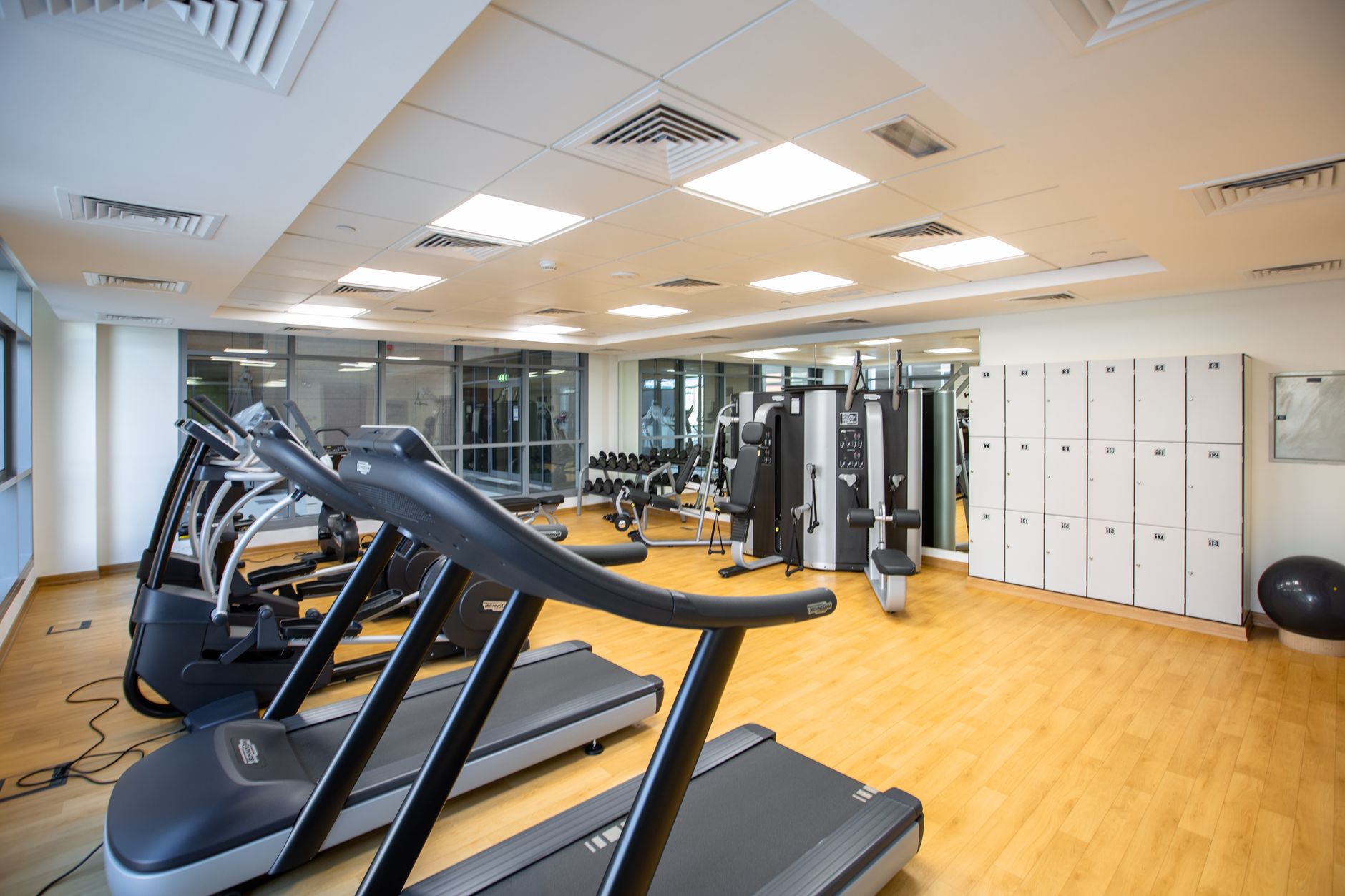
The fit is strongest on large open floors. A training floor with few fixed obstacles gives a robot long, predictable routes. Locker rooms, showers and tight zones around machines do not suit a robot, and they need a person. So the useful question is not whether a site is a gym. It is how much clear floor the site has and when that floor is empty. A large club with a wide open training floor and a steady closing routine is a very different case from a small studio with a crowded room.
Because the sites are common and mostly similar in layout, the same few questions decide most cases. Where is the clear floor, when does it empty, and what does the crew do with the hours that become free. Answer those before you look at any figure.
Median hourly wage, Janitors and Building Cleaners
$4,041
Monthly cost of one full-time worker, at the median wage plus payroll costs (an estimate, not a quote).
Where do the labor hours go in a gym?
Cleaning vendor estimates give the most concrete picture of gym labor, though they are not government data. According to published estimates from a gym cleaning vendor, a 5,000 sq ft gym with locker rooms takes a two-person crew about 2 to 4 hours per visit, and a 15,000 sq ft club takes about 6 to 10 combined labor hours per visit. The same source gives an example of two cleaners at 5 hours each on a 15,000 sq ft club with daily service.
Those hours cover more than the floor. A full visit includes locker rooms, showers, restrooms, front areas and the wiping of machines and high-touch points. The open floor is usually one part of that list. This matters for the offset, because the robot can only take the open floor, and the rest of the visit stays in the crew's hands.
Job postings point the same way on shift length. One gym cleaner job posting describes mostly part-time work, with some weekday shifts of about 3 to 4 hours. Short shifts mean the floor work is a meaningful share of what a cleaner does in a night, and it is also the part most exposed to scheduling gaps when someone calls out. A robot on a fixed route does not call out.
How does the ROI math work for a gym?
The math has three parts. The first is the labor offset: the crew hours the robot takes off the floor, valued at the government wage data on this page for janitors and building cleaners. The second is the share: a robot does not take the whole clean, only the open floor it can map and clear. The third is the lease cost, quoted after a free site assessment and paid as a fixed lease payment over the lease term. Net savings is the labor offset minus the lease cost, with the range set by how much floor the robot really covers.
Here is the shape of the calculation, without any figure. Suppose a visit includes a block of open-floor work and a larger block of locker rooms, restrooms and surfaces. The robot takes the open-floor block, but only the part it can clear on a clean route. If the route clears most of the floor, the offset is real. If clutter on the floor stops the route, the offset shrinks and the crew still does the work. The calculator asks for these inputs and produces a range. The low end assumes less floor cleared or a visit cut short. The high end assumes a clear, mapped floor and steady visits.
Two points keep the math honest. The lease cost is fixed, so the payoff depends on whether the freed hours actually leave the schedule or are simply reassigned to tasks that were not getting done before. And the offset is measured in janitor hours, so it does not claim to replace a front desk or member services role. Count only the hours that move.
What makes the savings range go up or down?
Four factors move the number most: the clear floor area the robot can map, the number of visits each week, how many crew hours the floor work takes today, and how much clutter the floor carries at close. A large, empty training floor with a steady nightly schedule sits at the high end. A floor full of racks, machines and loose gear, or a schedule that changes from week to week, sits lower. Schedule stability matters more than many owners expect, because a route set for a night the crew has since changed no longer lines up with the hours it was meant to replace.
The checklist below lists what to check before you ask for a quote. Each item affects either the labor offset or the lease side. You can gather most of it from your schedule and floor plan before the site visit, which makes the assessment faster and the quote more accurate.
What are the risks to the return, and how do you avoid them?
The biggest risk is freed hours that never leave the schedule. If the crew keeps the same length because the robot is seen as an add-on, the return does not show up on the books. Set the new crew schedule before go live. Decide which tasks move to the robot, which stay with staff, and which are dropped on purpose. A written schedule makes the offset visible a month later.
The second risk is a floor the robot cannot clear. Loose mats, stacked equipment and cords across the route stop a run or leave a dirty patch. The fix is a closing routine that clears the route, and we include that routine in deployment and in staff training. Check the first few runs against the route map and adjust the floor setup where the robot stalls.
The third risk is downtime. A robot that sits idle after a fault loses the offset for that night, and a few idle nights add up. Write repair response terms into the lease, and check how remote triage and on-site dispatch work before you sign. The lease should say what happens when a unit is out, not only what it costs.
How common are cleaning robots, and what does the safety data say?
Adoption is still early in this industry. A trade publication's write-up of the 2019 AACEM and ISSA survey reported that 69% of facility and property managers had not used autonomous cleaning equipment. The 2025 ISSA benchmarking survey found 43% of respondents reported plans to adopt autonomous cleaning equipment. That is a plan figure, not a count of current use, and the excerpt we reviewed did not include a prior-year baseline, so it shows direction rather than a measured trend.
On safety, the government data points at the work itself. According to the BLS injury snapshot covering 2016 to 2020, janitors and cleaners, except maids and housekeeping cleaners, had 21,100 nonfatal cases involving days away from work in 2020. The incidence rate was 191.6 per 10,000 full-time equivalent workers in 2020, up from 157.4 in 2019. The snapshot does not isolate scrubbing or sweeping, so it does not prove a robot lowers injuries. It does show that this work carries a real injury burden, which is a reason to look at repeat manual push work.
For all private industry, the BLS total recordable incident rate was 2.3 per 100 full-time workers in 2024, down from 2.4 in 2023, according to a safety compliance write-up of the BLS release. That broader trend is context. It is not a gym figure, and it should not be used to claim a particular gym's rate.
What is the timeline from assessment to payback?
The timeline runs in a fixed order: site assessment, floor mapping and route design, deployment with staff training, go live support, then a review of measured hours against the estimate. This page does not give a fixed payback period, because timing depends on the lease term, how stable the crew schedule is, and how the first few weeks of runs go. The site assessment produces that date for your building, and the review after go live confirms it.
A common approach is to start with one leased unit on one floor. Run it through a set of normal weeks, measure the hours that actually leave the schedule, and then decide on a second unit or a second site. That keeps the first step small and gives you measured hours to set the next one. Backup coverage matters here too, since a spare unit keeps the route running when a primary unit is out.
The overnight routine below shows what one shift looks like once the robot runs. The crew's role shifts from floor work to setup, exceptions and the surfaces that need a person.
How do you get an exact figure from a free site assessment?
A free site assessment turns the savings range into a number for your building. We map the floor, measure the clear area, log the current crew hours and visit schedule, check power and access for charging, and confirm which tasks stay with staff. From that we select the robot that fits your floor, and we quote a fixed lease payment with the service terms that go with it. The quote follows the assessment, so nothing is committed before you see the numbers for your site.
We are a US commercial robot integrator. We pick the unit for the site, lease it through financing, deploy and integrate it, train the staff who run the schedule, and service it nationwide, with one contact for dispatch and repairs. To get the most accurate figure, bring your floor plan, your current cleaning schedule and your visit counts. The assessment then gives you a lease quote and a realistic range to compare against the calculator on this page.
Frequently asked questions
Want a cleaning robot at your gym?
Tell us about your site. We will recommend the robot, quote the lease, and keep it serviced.
Sources
- US Bureau of Labor Statistics, Occupational Employment and Wage Statistics (OEWS May 2024)
- Industry research count of US gym and fitness club businesses, 2025
- BLS Occupational Outlook Handbook: Janitors and Building Cleaners
- BLS injury and illness snapshot: Janitors and Cleaners, 2016-20
- Safety compliance write-up of BLS 2024 nonfatal injury release
- ISSA benchmarking survey 2025, autonomous cleaning equipment (AACEM and ISSA)
- AACEM and ISSA autonomous cleaning survey 2019 write-up
- Gym cleaning vendor estimates for labor hours per visit
- Gym cleaner job posting, weekday shift length