
The short answer
Cleaning robot ROI for parking garages comes mainly from overnight deck and ramp scrubbing that frees janitor and building cleaner hours, not from a fixed savings figure. The savings range depends on how many of those hours the robot realistically takes over, the lease quoted after a free site assessment, and how often the decks need washing. Our calculator is pre-filled for parking garages and shows a range, not a promise.
Key takeaways
- The return comes from janitor and building cleaner hours the robot takes over, so deck area and cleaning frequency set its size.
- Concrete decks and ramps are large, flat and repetitive, which suits overnight scrubbing without an operator on the floor.
- Coverage is the number most likely to be overstated, so measure the share the robot takes on your own deck plan.
- The lease payment is quoted after a free site assessment, and the calculator shows a range until your numbers replace the estimates.
- Sweeping, drain checks and inspection stay with staff, and the hours they take belong in the comparison.
Run the numbers for your site
Pick your city or state for a real regional number - we use the real BLS wage there. (On the live site this auto-detects from your location.)
What do you want to automate?
The robot runs the open floor overnight; your crew keeps detail and edges.
What return can a parking garage expect from a cleaning robot?
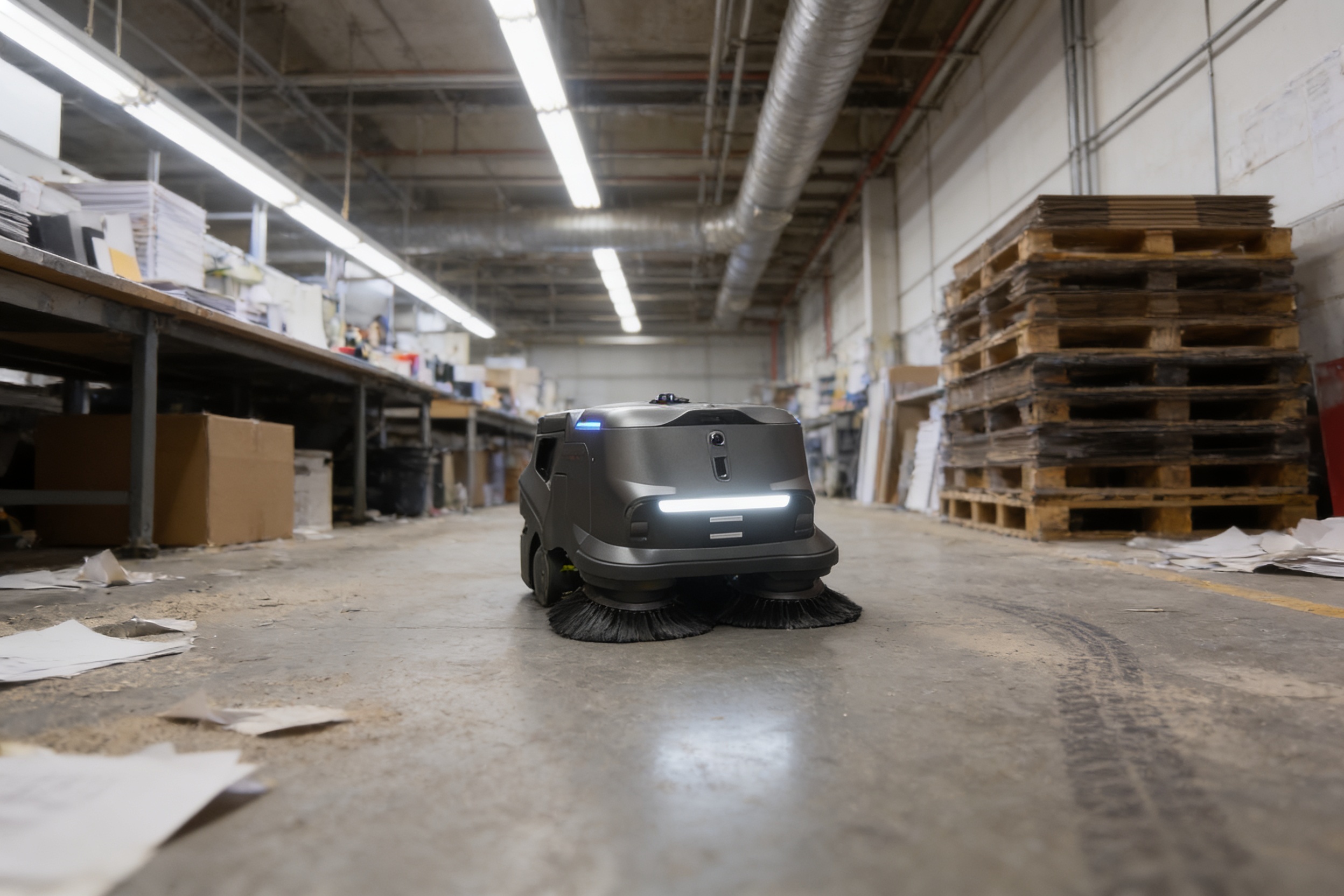
The return comes from labor hours, not from the machine itself. A cleaning robot takes over the repeat work on flat deck floors and ramps, the work a janitor or building cleaner would otherwise do by hand or with a walk-behind machine. It can run in the quiet hours when the garage is nearly empty, so the staff time it frees goes to other tasks. How large that return gets depends on how much of this work your garage has, how much of it the robot can realistically take, and what the lease costs against those hours.
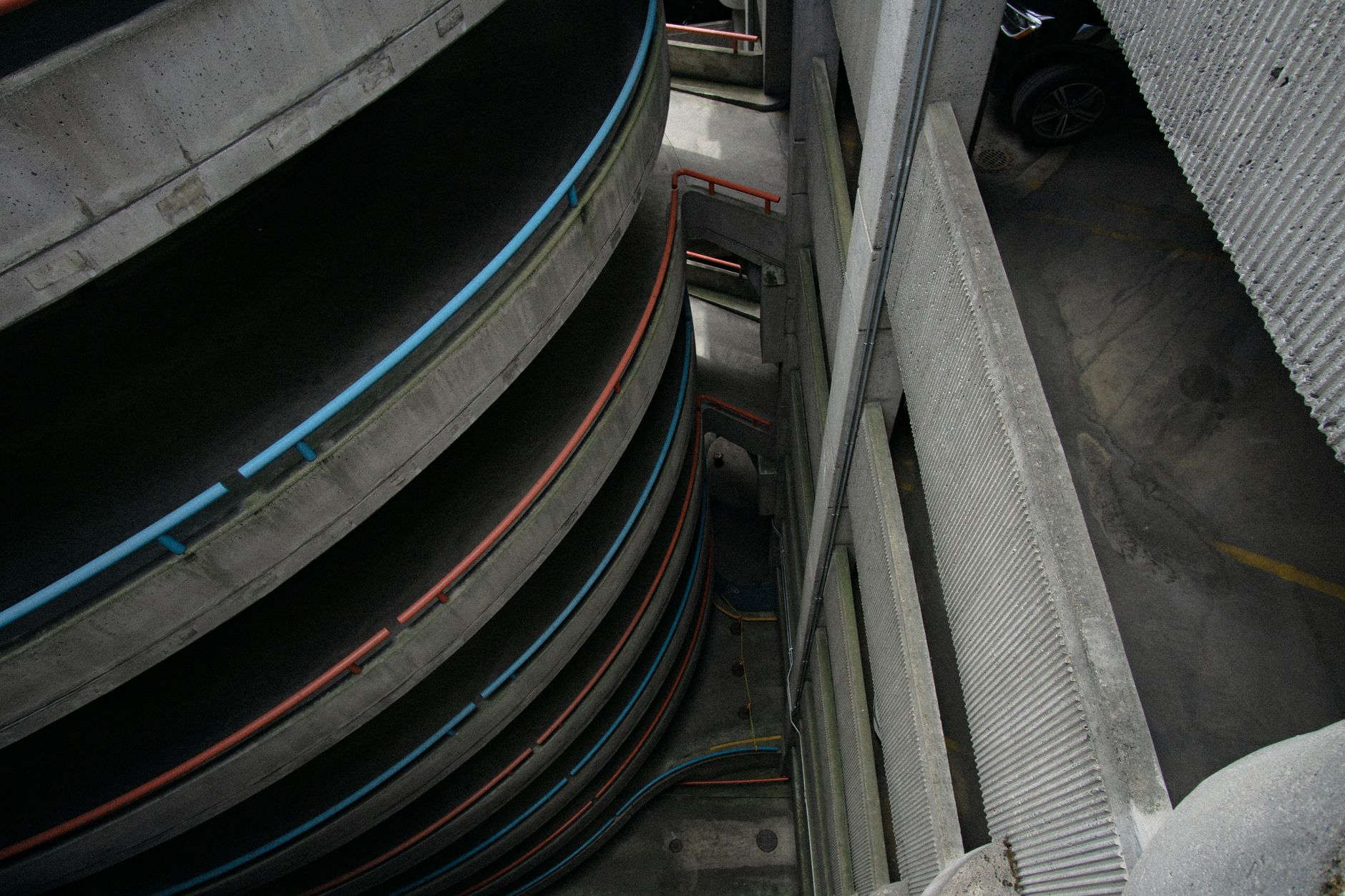
Parking decks suit this kind of work for a simple reason. Concrete decks and ramps are large and flat, they collect grit, oil and road salt that need regular removal, and they can be worked through overnight with fewer obstacles than a busy lobby or a retail floor. Our ROI calculator is pre-filled for parking garages and shows a savings range built from your inputs. The rest of this page explains how that range is built and what moves it.
How many parking garages are there in the US, and how big is the work?
According to IBISWorld, the US parking lots and garages industry had 7,592 businesses on one of its business count pages, with a 1.1 percent compound annual growth rate from 2021 to 2026. A separate IBISWorld page shows 7,783 businesses in 2025, with the count falling 1.0 percent a year from 2019 to 2024. The two counts do not match, so treat the total as approximate, and remember that the industry covers surface lots as well as garages.
The labor pool behind this work is large. According to the Bureau of Labor Statistics, about 2.45 million people held janitor and building cleaner jobs in 2024, and the occupation is projected to grow 2 percent from 2024 to 2034. Services to buildings and dwellings is the largest employer group, with 35 percent of those jobs. National totals do not tell you your own hours, which is why the site assessment measures them.
Garage size varies widely, from small street-level structures to multi-level decks serving offices, hospitals and airports. For a cleaning robot, what matters is the flat floor area that gets dirty, not the number of spaces. Ask for the deck area, the number of levels and the total ramp length during the site assessment. Those three numbers set how much work the robot can take over.
Median hourly wage, Janitors and Building Cleaners
$4,041
Monthly cost of one full-time worker, at the median wage plus payroll costs (an estimate, not a quote).
Where does the return come from in a parking garage?
Most of the return comes from the deck floors and ramps, the largest flat areas in the building. Stairwells, elevator lobbies, entry and exit lanes and drain channels also need cleaning, but they are smaller and more irregular, so a robot usually takes only part of that work. The zones below show where the robot works and where people keep the job.
A useful way to split the job is by surface. Decks and ramps are where a scrubber earns its time, because the work is repetitive and the route is predictable. Corners, stairs, curbs, the bases of pillars and the areas around drains usually need a person with a hand tool. Those tasks stay with your staff, and the calculator asks you to set the share of floor area the robot covers.
The return also depends on who does the work today. Where janitors and building cleaners do the deck scrubbing, the freed hours are a direct labor offset. Where other staff, such as attendants or maintenance workers, pick up floor tasks, the robot takes janitor-type work off their plate, and the calculator does not price their time. A single garage usually has one or two people on this work, which is our estimate and not a published count.
How does the savings math work?
The math has three parts. The first is the hours of janitor and building cleaner work the robot takes over each week. The second is the share of those hours the robot realistically covers, since it rarely covers the whole garage. The third is the lease, a fixed robot lease payment quoted after a free site assessment, set against the value of the hours freed.
The labor side is priced on the government wage data on this page for janitors and building cleaners, because that is the work the robot takes over. The wage data is shown in the panel next to this text, so the calculator uses that same reference. If your garage is staffed mainly by another job, the robot takes janitor-type work off those people, and their time is not priced.
In practice the range comes out like this: freed janitor hours, times the wage reference, minus the lease, with an allowance for the staff time that still goes into the work. Each input is a separate question for your site. If the lease quote is higher than the freed hours justify, the honest answer is a smaller deployment, not a bigger one.
How much cleaning does a parking deck need, and how many hours does it take?
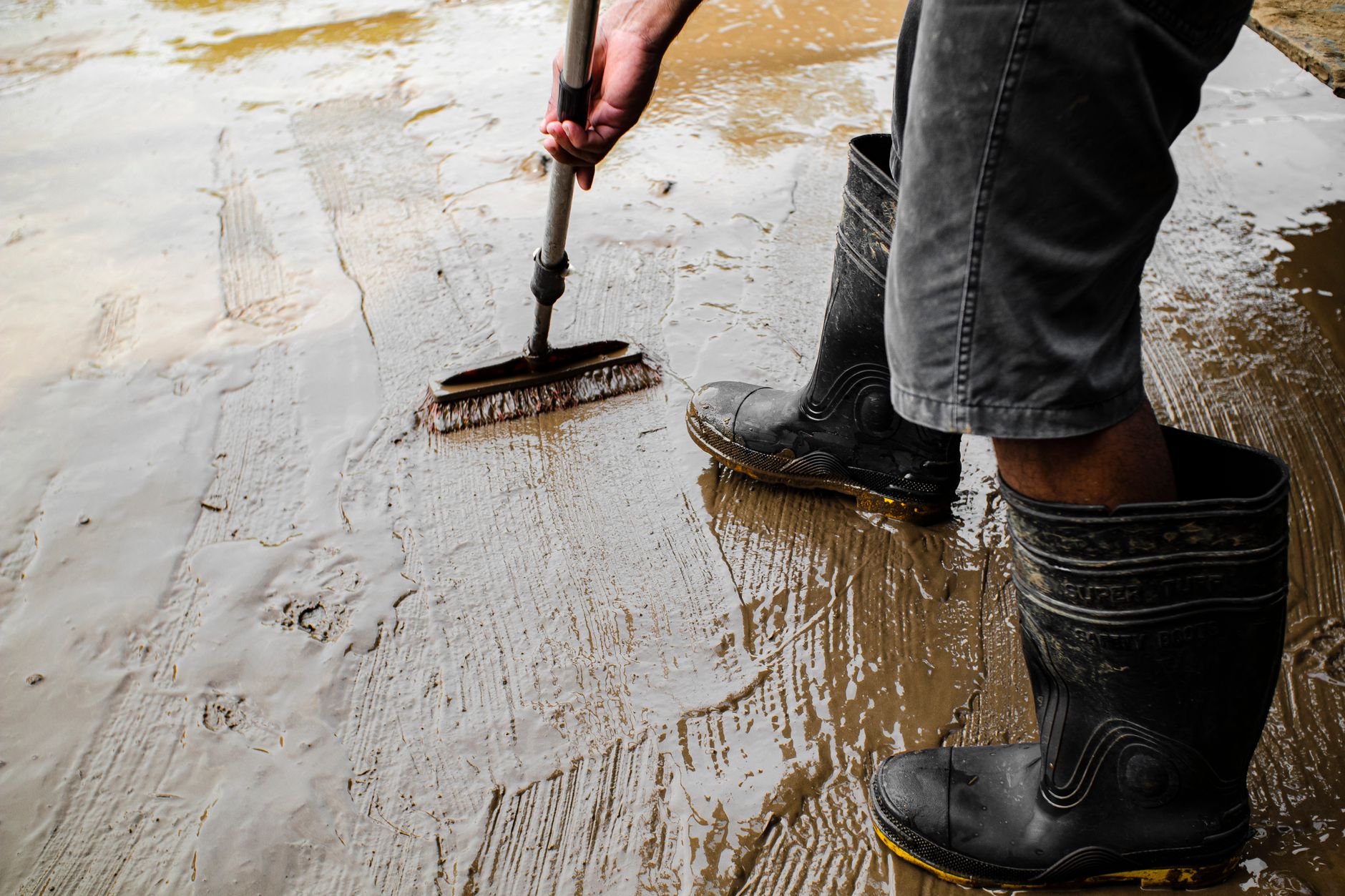
Cleaning frequency sets the hours. A trade guide on parking garage surfaces recommends power washing decks at least twice a year, in early spring and early fall, and says quarterly washing is preferred. Decks exposed to coastal air or road salt need more frequent washing, and one guide recommends washing every month in those areas, while inland decks can be washed less often.
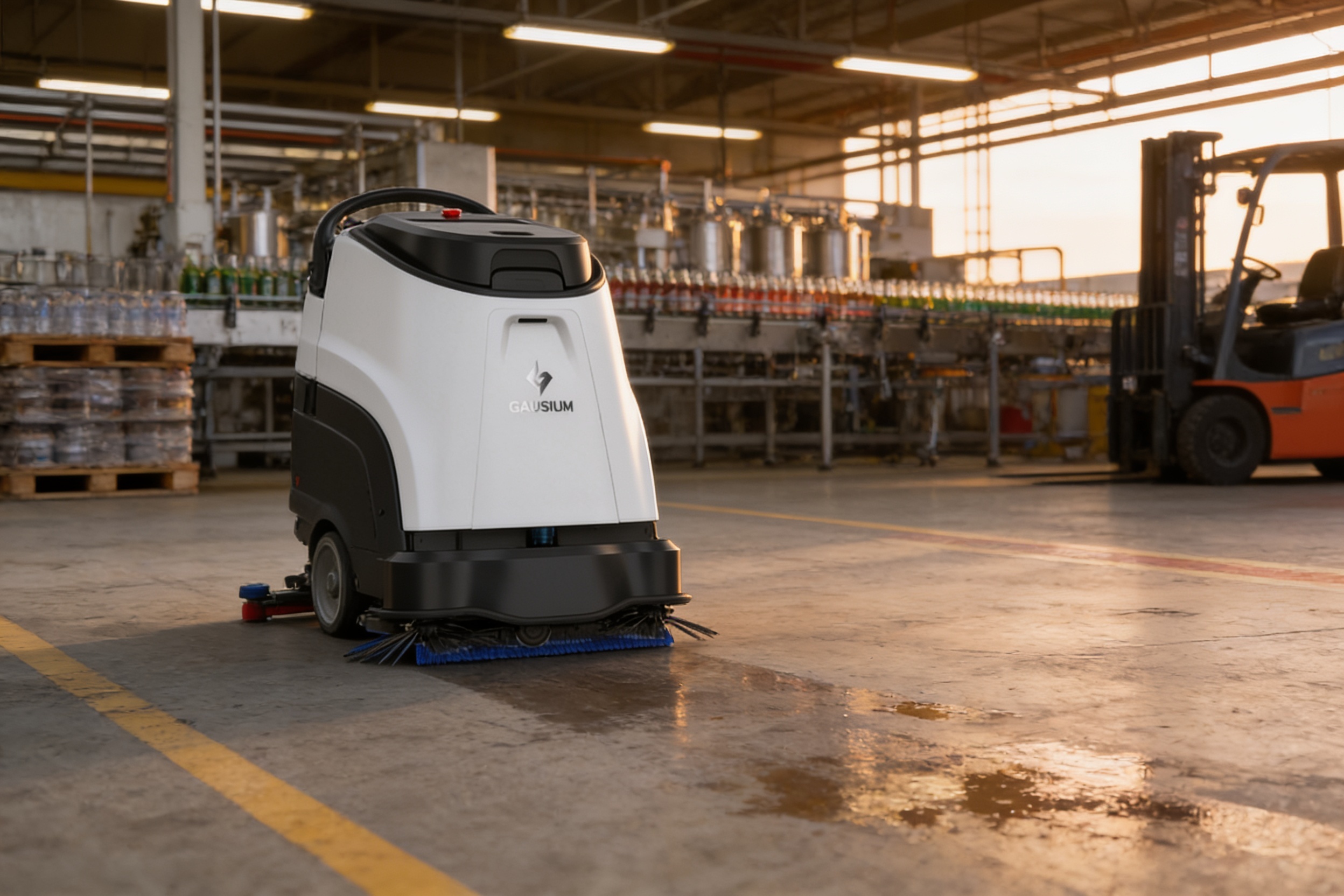
Sweeping is the other lever. Dry sweeping between washdowns removes the grit that wears coatings and blocks drains, and it reduces how often a deck needs a full wash. A scrubbing robot is a wash-and-dry tool, so a deck that is swept regularly usually has a smaller scrubbing load to hand over.
Plan for the inspection work too. Staff walk the decks weekly to check drains, and a professional inspection follows washing once a year. The robot does not replace these checks, so they stay in the staff schedule and must be counted when you compare hours before and after.
What changes the number up or down?
Five things move the range most. Deck area and the number of levels set the total work. Cleaning frequency sets how often that work recurs. The share of floor the robot can cover, after you account for pillars, curbs and stairs, sets the hours it takes off your staff. Lease cost depends on the deployment you choose. Staffing and turnover decide how much of the freed time turns into real savings.
Turnover is worth a close look. We did not find a verified turnover figure for janitors and building cleaners that we could cite, so the calculator asks for your own records. A site with frequent vacancies may find that a robot covers shifts that would otherwise sit empty, which is a separate gain from cutting paid hours. Both gains are real, but they should be counted separately.
What are the risks to the return, and how do you avoid them?
The biggest risk is assuming the robot does everything. A scrubber covers flat deck area well and little else, so an overstated coverage share inflates the savings range. Ask for the coverage share to be measured on your deck plan, not estimated from the total square footage.
Safety is the second risk, and the injury data is worth reading. According to the Bureau of Labor Statistics, janitors and cleaners, except maids and housekeeping cleaners, had 191.6 nonfatal injury and illness cases with days away from work per 10,000 full-time equivalent workers in 2020. For all occupations in 2019 the figure was 86.9. The years differ, so read this as a direction, not a same-year comparison. The same BLS snapshots report 42 fatalities for this occupation in 2020 and 45 in 2019.
Adoption is the third risk. An industry survey by ISSA and AACEM reported that 27 percent of respondents actively used autonomous equipment, and the survey was fielded around 2019. An earlier survey found that 68 percent of building service contractors did not use autonomous equipment and were not considering it. Crews may need time to trust the machine, and the return depends on the robot running most nights rather than sitting idle. The most common ways the return falls short are these.
- Overstated coverage: the robot covers flat deck, not corners, stairs or pillar bases, so measure the share on your own plan.
- Idle nights: a robot that does not run most shifts returns less than the calculator assumes.
- Drain blockage: sweeping and drain checks still need staff, and a blocked drain undoes the washing.
- Staff trust: crews that do not trust the machine may keep doing the work by hand, which erases the offset.
- Downtime: confirm the lease covers maintenance, repair dispatch and a warranty, so a broken unit does not leave a deck uncleaned.
What is a realistic timeline from assessment to payback?
Timelines depend on how quickly the assessment, mapping and install go, and on whether you start with one deck or the whole structure. The usual sequence is a site assessment and deck mapping, a pilot on one deck or level, a review of the freed hours against the pilot, and then a phased rollout across the remaining decks. Each step gives you measured hours to check the savings range against.
Payback is the point where the freed hours, net of the staff time still needed, cover the lease. A vendor-published case study of a mixed nightly cleaning program, about 500,000 square feet with five floor-care robots, reported an 18-month ROI and about 2.5 full time equivalent staff reallocated. That is not a parking garage figure, and the anonymized case gives little detail on the garage setup, so treat it as a reference for scale, not a forecast for your decks.
Expect the first weeks to show the most variation. Routes need tuning, staff need a routine for start-of-shift and end-of-shift checks, and the first measured hours replace the estimates. The decision on the full rollout should wait for those measured hours.
How do you get a precise figure from a free site assessment?
A free site assessment replaces our estimate with your numbers. Bring the deck area and levels, the ramp length, the existing cleaning schedule, the hours spent on floor work, the number of people on that job, the turnover you have seen, and any drain or coating issues. We map the decks, measure the share the robot can cover and set the deployment size.
After the assessment, the lease is quoted as a fixed robot lease payment, with deployment, maintenance and warranty terms in the same quote. We choose the robot that fits your floor, lease it through financing, integrate it with your cleaning schedule, train your staff on start-of-shift checks and handover, and service the unit through on-site dispatch and remote triage. The payment is not shown on this page. It comes only in the quote, after the assessment, so the savings range here stays a range until your numbers replace it.
Frequently asked questions
Want a cleaning robot at your parking garage?
Tell us about your site. We will recommend the robot, quote the lease, and keep it serviced.
Sources
- US Bureau of Labor Statistics, Occupational Employment and Wage Statistics (OEWS May 2024)
- Bureau of Labor Statistics, Occupational Outlook Handbook: Janitors and Building Cleaners
- Bureau of Labor Statistics, Injury and Illness Snapshot: Janitors and Cleaners 2016 to 2020
- Bureau of Labor Statistics, Injury and Illness Snapshot: Janitors 2015 to 2019
- IBISWorld, Parking Lots and Garages in the US: number of businesses
- ISSA, AACEM/ISSA Autonomous Cleaning Survey report
- FMLink, AACEM/ISSA Autonomous Cleaning Survey
- Facilities Management Advisor, parking structures maintenance
- FMLink, three tips to preserve parking garage surfaces