
Key takeaways
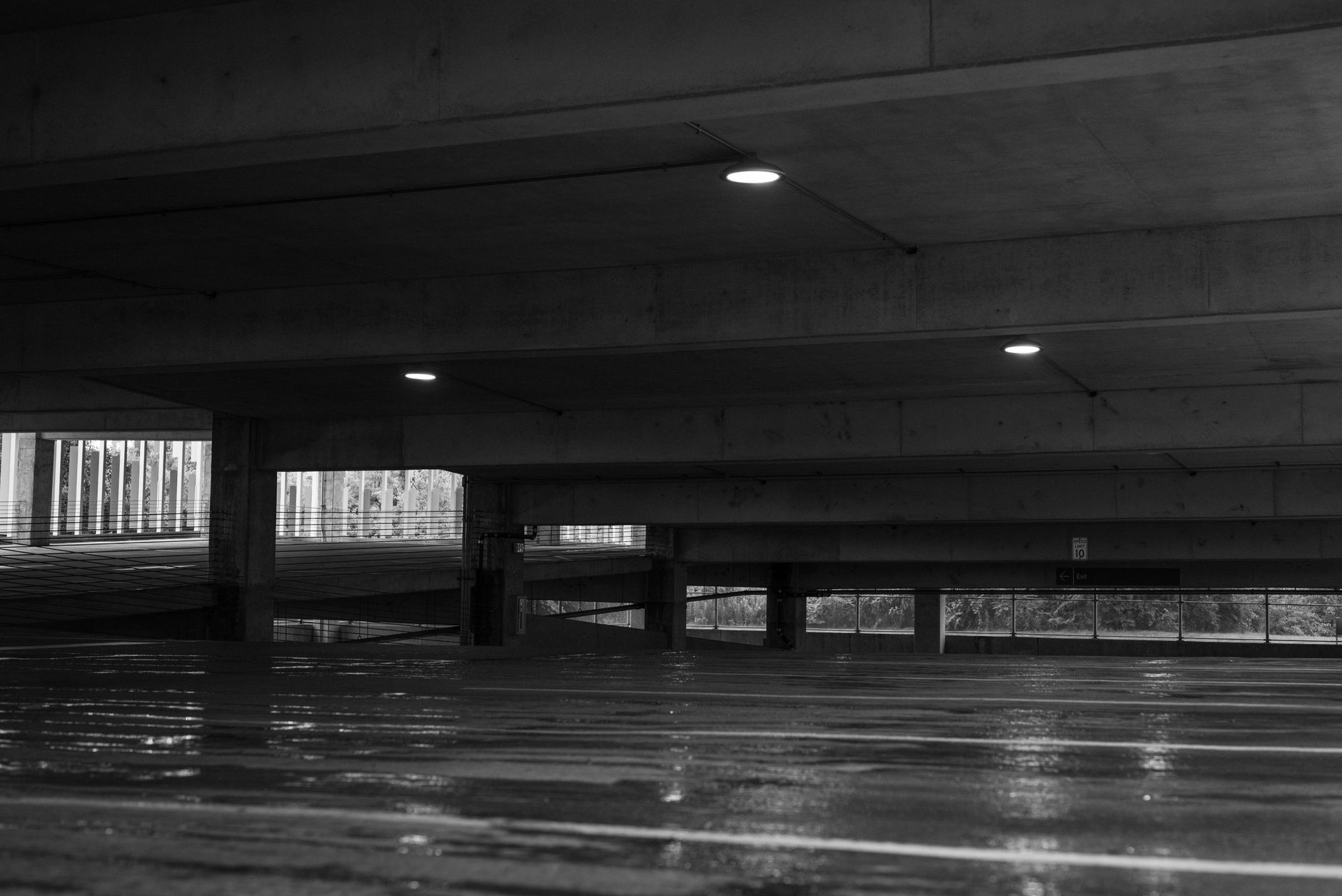
- Parking decks are large, flat and repetitive, the kind of floor a floor cleaning robot covers on a fixed schedule.
- Low occupancy overnight windows are where most robot coverage happens.
- Plan for a 40 to 70 percent cut in area labor hours, not a full replacement of the crew.
- Stairwells, pay stations, restrooms and spills stay with staff.
- Start with a free site assessment before any quote.
How can cleaning robots benefit parking garages?
Cleaning robots for parking garages mainly take over the flat, repetitive work of scrubbing and sweeping concrete decks on a fixed schedule. That frees your crew to spend its hours on the places people touch, such as stairwells, handrails and pay stations, and on jobs a machine cannot do. A parking deck is large, mostly open and driven over the same paths every day, which is exactly the kind of floor a floor cleaning robot covers well.
The benefits come in three main forms. Floor passes run on a set schedule instead of whenever a crew can fit them in. Deck coverage happens during the low occupancy hours when most stalls are empty. Staff hours shift away from repetitive passes and toward detail work. None of this removes the need for people. It changes what they do with a shift.
Below we cover what the work looks like today, why decks suit a robot, how a night actually runs, which areas it covers, how it works beside your team, what drives the hours saved, what it cannot do, and how to get started.
What does keeping a parking garage clean take today?
Deep cleaning a deck by hand is slow work. A contractor's blog estimates that about 15,000 square feet per day of power washing is possible, so a 150,000 square foot garage ties up maintenance staff for about ten days, according to that source. A cleaning contractor's guide advises that high-traffic garages be cleaned at least quarterly, moderate-traffic garages semi-annually and low-traffic garages once a year. Between deep cleans, regular sweeping is what keeps grit and debris from building up on the deck.
The real problem is the calendar. Crews are split between lobbies, restrooms, elevator areas and stairwells, so the deck gets squeezed into whatever time is left. Work that runs on evening or early morning shifts is also harder to staff and hold steady from night to night. When the deck slips, the results show up as debris at entries, grime on ramps and complaints from drivers and tenants who notice first.

Why do parking decks suit a floor cleaning robot?
Parking garages are large, flat and repetitive, and that is the combination a floor cleaning robot handles best. An aggregator dataset lists 21,148 parking garages in the United States as of October 2025, with California at 1,862 and Florida at 1,106. That is not a government count, and a separate directory lists 16,033 garages as of October 15, 2025, so the total depends on the source. An industry research profile says the US parking lots and garages industry includes about 12,000 establishments. Whichever figure you use, many of those sites share the same problem: big concrete decks and limited crew hours.
Timing matters as much as the floor. A parking garage cleaning vendor's blog reports that a single robot needs 2 to 3 hours to clean a 100,000 square foot level in a low-occupancy window, and that a three-level, 300,000 square foot garage would need a robot running from 11 PM to 8 AM. The same source reports 85 to 95 percent floor coverage between 11 PM and 5 AM at 0 to 20 percent occupancy, but only 40 to 60 percent at midday, when occupancy is 70 to 90 percent and the robot is limited to drive aisles and lobbies. These are vendor-reported figures, so treat them as planning estimates to check against your own deck.
A vendor comparison blog also points to a size threshold. It says the minimum viable facility for an autonomous scrubber is generally 10,000 square feet or more of continuous cleanable floor. A multi-level garage clears that easily. A small lot broken into short runs may not, and the site assessment is where that gets settled.
How does the robot work there day to day?
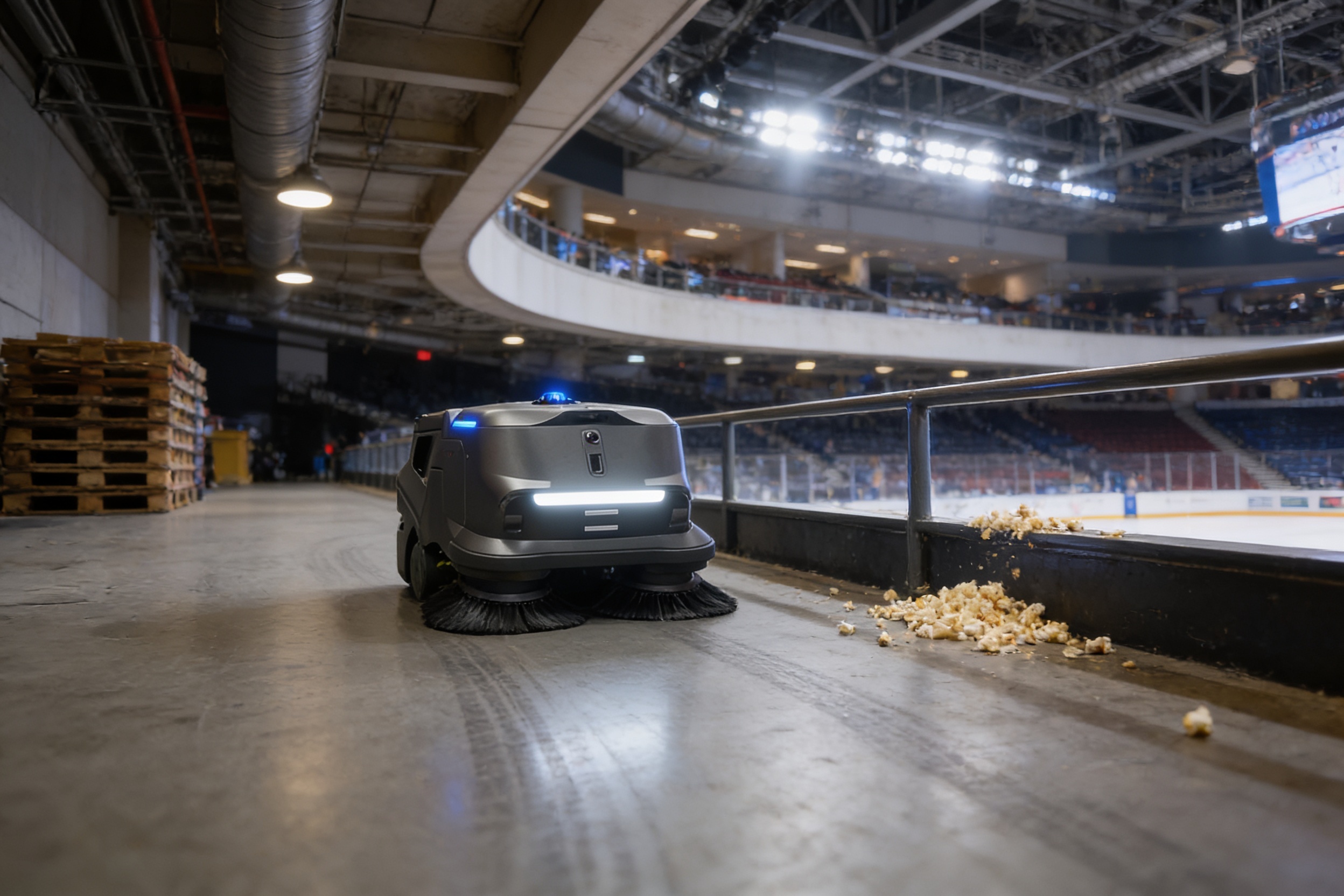
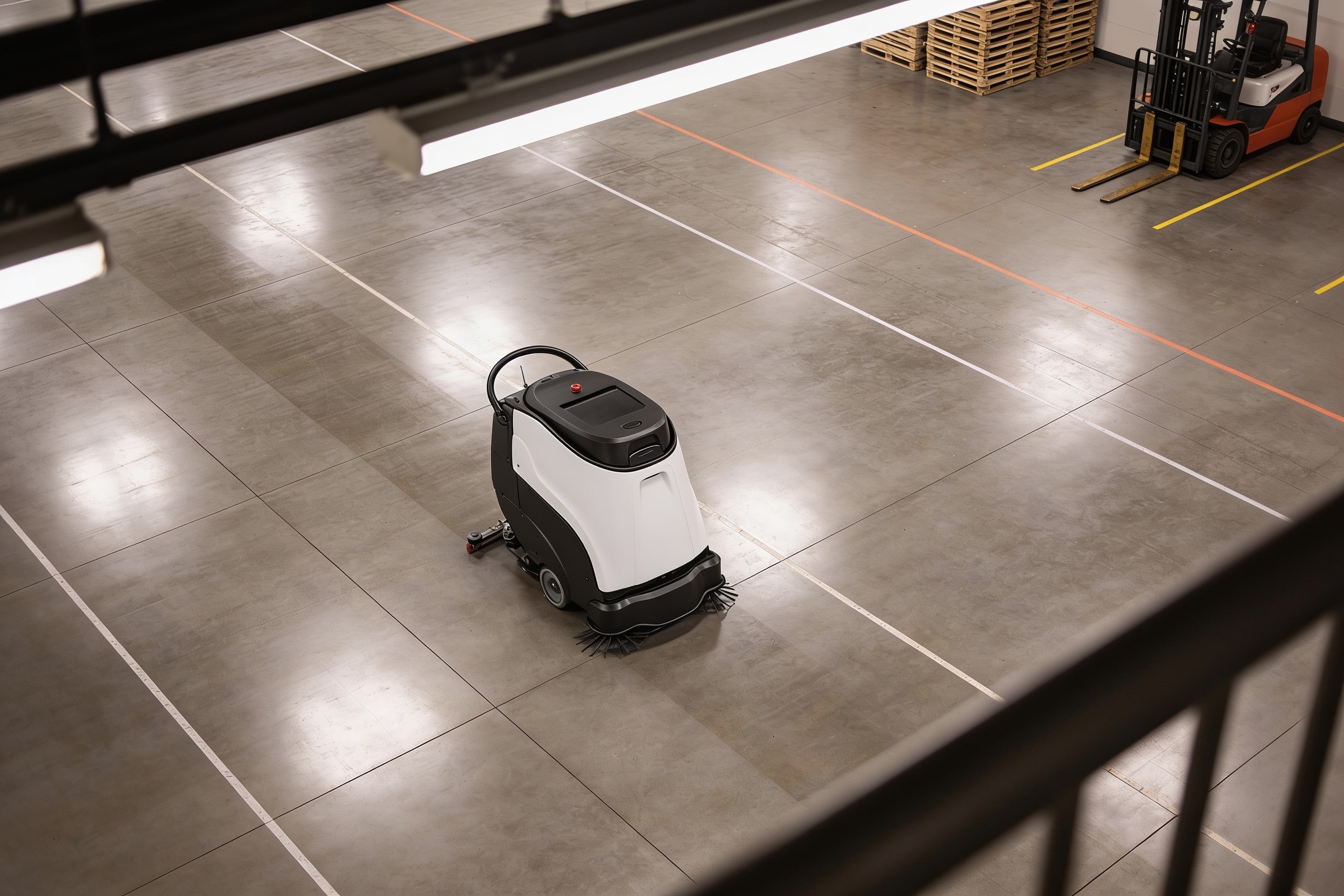
A typical night starts with staff, not the robot. Before the window opens, someone walks the active level, clears loose debris and trash, confirms the route is clear and checks that the charging spot and dock are working. Then the robot runs its pass while the crew moves to the work it cannot do. The schedule below shows a typical sequence.
Morning matters too. Staff review the robot's log, note any skipped area or fault, and check whether the coming night has events or closures that change the route. The route is a plan you adjust, not a fixed setting, and the crew's notes are what make the next night's pass better than the last.
Which areas does the robot cover?
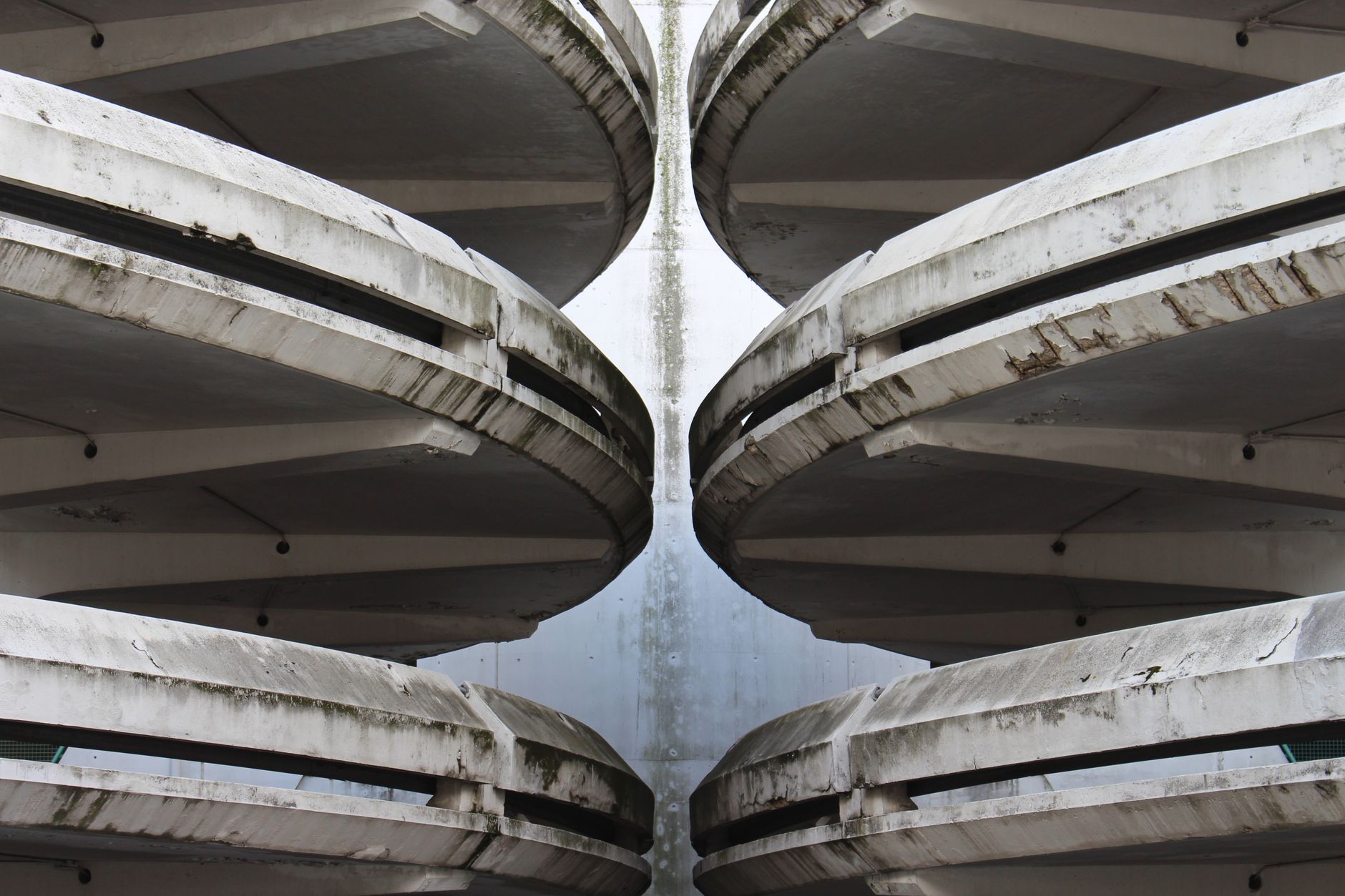
The robot works on flat, open floor, which covers most of a garage but not all of it. Upper and lower decks get the main passes along marked drive aisles and open bays, where coverage is highest in the quiet window. Ramps and helical driveways are scheduled as their own pass, so the route can match the slope and the traffic on it.
Other areas stay with people. Stairwell landings, handrails, elevator areas, attendant spaces and restrooms need hands-on detail work. Entry and exit lanes and automatic pay stations get wiped down by staff, because they are touchpoints rather than open floor. Entry lobbies and walkways can take robot passes during quiet hours, when they are clear.
How does the robot work alongside existing staff?
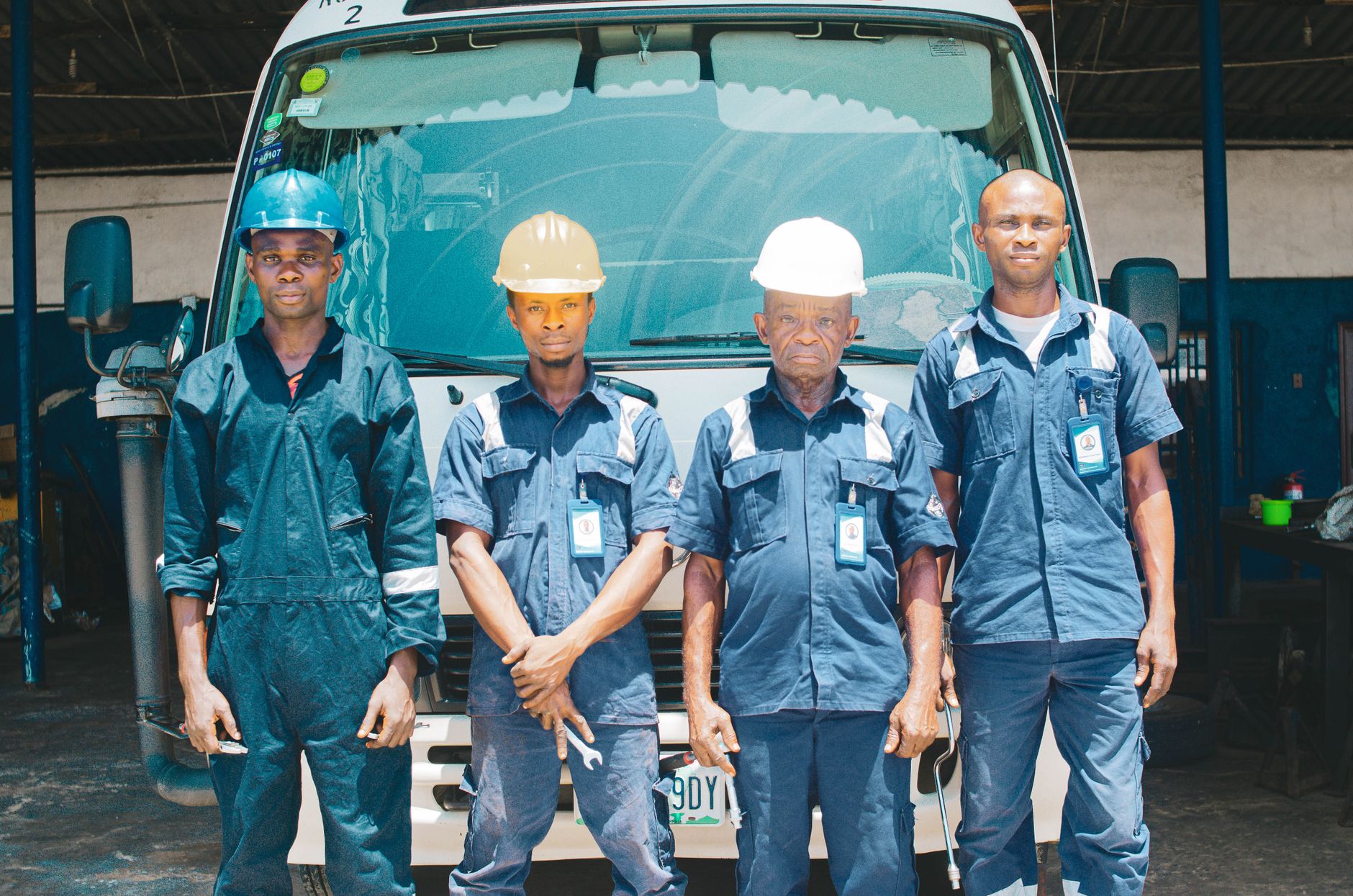
Most sites run both robots and staff, and that is the model we set up. The robot takes the recurring floor passes while people handle restrooms, touchpoints and detail work. Vendor guides describe the same split. You are not replacing your whole team with a machine. You are giving a smaller team a reliable floor schedule and clearing time for the jobs that need judgment.
Staff still own a set of tasks, including:
- Pre-run checks on the route, charging spot and dock
- Stairwells, handrails, elevator areas and pay stations
- Restrooms and attendant spaces
- Spill response and trash removal
- Clearing exceptions and skipped areas the robot reports
- Routine service checks and handoff to repairs
What drives the savings in hours?
The savings come from hours, not from a guarantee. An independent trade source reports that a skilled operator on a manual ride-on scrubber covers 8,000 to 12,000 square feet per hour under ideal conditions, and typically 6,000 to 9,000 square feet per hour in real facilities. The same source reports that a large US retailer's autonomous scrubbers each saved approximately 2.5 labor hours per day in a typical store. That is a third-party account of company data, not a promise for your deck.
A vendor comparison blog models labor reduction at 40 to 70 percent of area hours, not 100 percent, because machines still need monitoring, exception handling and maintenance. Use that range as the planning band, then narrow it with your own numbers. The drivers are the ones you already track: square feet per level, number of levels, the occupancy window you can actually use, how many exceptions staff clear each night, and how often the deck needs deep cleaning by hand.
The manual baseline is a useful yardstick. At about 15,000 square feet per day of power washing, a 150,000 square foot garage takes about ten days of maintenance time. Keep that periodic work on the schedule, so the hours you save go to the jobs that need people.
What can a floor cleaning robot not do?
It does not clean stairs, handrails, pay stations or restrooms, and it should not be expected to. It needs a clear route, so debris, trash and blocked lanes must be handled first. Heavy occupancy limits what it can reach. At midday, with most stalls full, robot coverage can drop to drive aisles and lobbies, according to the vendor-reported figures above.
Deep cleaning is still periodic work. Power washing a deck and dealing with salt or heavy staining are jobs that come round a few times a year, not each night. A robot also cannot judge a spill it has not been told about, so staff keep that responsibility. Monitoring, maintenance and repairs stay with the team as well.
How do you get started?
Start with a free site assessment. We map the levels, measure the cleanable floor, review occupancy by hour and mark the stairwells, ramps, pay stations and restrooms that stay with your staff. That map tells us whether a floor cleaning robot fits your deck and which window it should run in.
We are a US commercial robot integrator. We pick the right robot for your site, lease it through financing, deploy and integrate it, train your staff and service it nationwide. The payment comes in the quote after the site assessment, so you can compare it against your own schedule and hours before you commit.
When you get the quote, ask for the route plan, the occupancy window it assumes, the training schedule, the go-live support and the service plan in writing. Check the hours it claims against your own numbers from the assessment, not against a headline figure. A sensible start is one level and one window, expanded once the crew trusts the routine.
Frequently asked questions
Sources
- U.S. Bureau of Labor Statistics, May 2024 occupational employment
- Poidata parking garage count, United States
- First Research, Parking Lots and Garages industry profile
- Parking garage cleaning robot vendor blog (vendor-reported figures)
- Robolist, where cleaning robots pay back (independent trade commentary)
- Autonomous floor scrubbers vendor comparison blog
- Contractor blog on parking deck maintenance
- Cleaning contractor guide on how often parking garages should be cleaned