

Key takeaways
- A floor cleaning robot can cover wide grocery aisles on a schedule that fits your open hours.
- Savings come from labor hours that are cut or redeployed, not from the machine alone.
- Restrooms, compactor areas and cluttered fixtures stay manual.
- A robot plus a smaller team keeps the floors covered and the store staffed.
- The start is a free site assessment, then a quote for a lease through financing.
How can cleaning robots for grocery stores help with floor work?
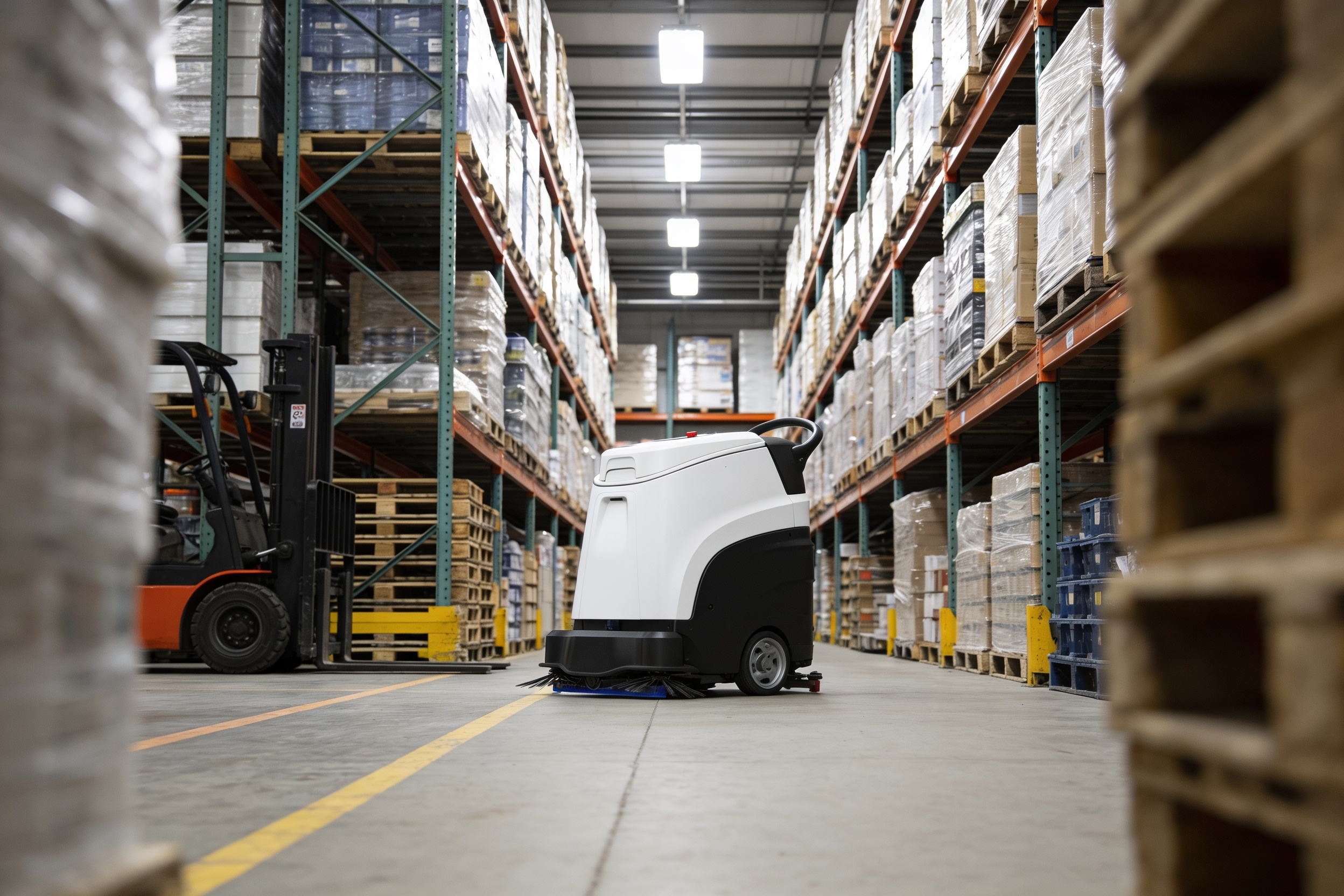
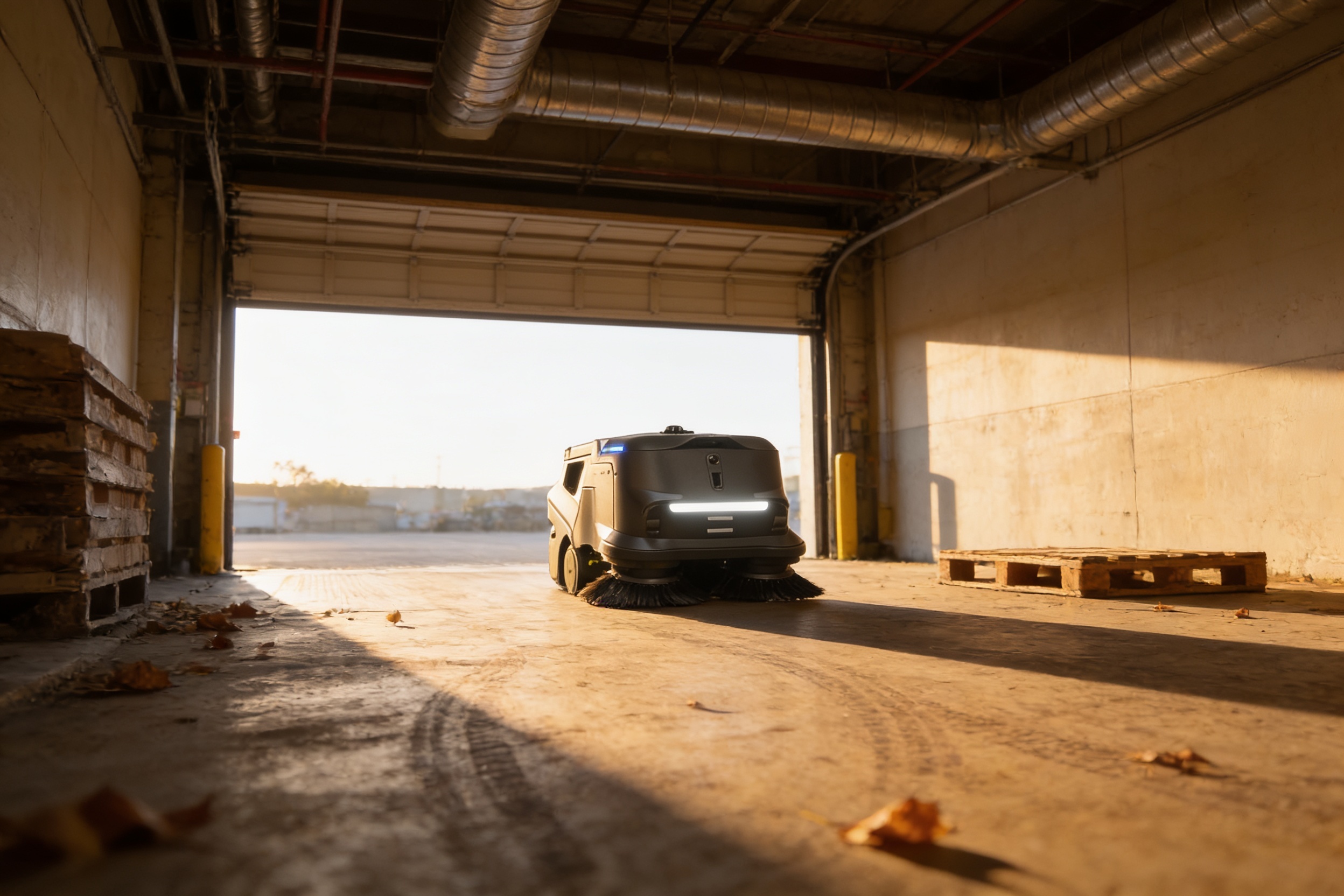
Cleaning robots for grocery stores take on the repetitive floor work that eats up staff time, mostly the long main aisles, perimeter lanes and stockroom corridors. A floor cleaning robot runs a set route on its own, so the work can happen overnight or in quiet stretches of the day instead of pulling someone off the sales floor. For a store with wide aisles and long hours, that timing is the main benefit.
The benefits are concrete: less manual scrubbing per shift, floors that get a full pass on a consistent schedule, and staff hours that move to restocking, receiving and customer help. How much of that becomes a saving depends on how the store uses the freed hours, and we cover that below.
A cleaning robot fits best when the floor is open and mostly clear. It is a weak fit when the layout is crowded with temporary displays. Service Robot Co. begins every project with a free site assessment before recommending any machine.
What problem does floor cleaning create at a grocery store today?
A typical US supermarket covers a lot of floor. According to FMI, as quoted in a packaging industry bulletin, the average US supermarket is 42,453 square feet, down from over 51,000 square feet a few years earlier. That means a large hard floor to keep clean between produce, the bakery, the deli and the front end.
Floor work competes with everything else. According to Census County Business Patterns, as reproduced by an industry aggregator, 62,947 US supermarkets and grocery stores had paid employees in 2023, employing 2,808,118 people. Most of those stores face the same squeeze: the floor needs attention at the same hours customers are shopping.
Manual scrubbing is slow work. According to a trade article on robot payback, a skilled operator on a manual ride-on scrubber covers 6,000 to 9,000 square feet per hour in real facilities, and 8,000 to 12,000 square feet per hour under ideal conditions. Those rates push many managers toward an overnight window, which then depends on having the right people on the right shift.
What are the main benefits for a grocery operator?
The first benefit is coverage on a schedule. A robot does not skip the back aisle because the shift is short. One vendor deployment in the Upper Midwest, reported by the vendor, cleaned 644,632 square feet in a month and logged more than 345 robot uptime hours each month in a large-format store. Those are the vendor's own figures, so treat them as a reference point and not a promise.
The second benefit is consistency. Manual passes vary by who is on shift and how busy the floor is. A robot follows the same route, records its coverage and can be checked the same way every night.
The third benefit is staff time. A floor cleaning robot takes the repetitive pass, which lets your team spend its hours on restocking, receiving, spill response and shoppers. When a spill appears in produce, a frozen aisle or a checkout lane, a person can handle the wet spot while the machine keeps working the rest of the route.
How does the robot work day to day?
A robot runs a mapped route, slows for obstacles and stops when it meets something it cannot pass. Most stores start with an overnight full pass and add targeted runs during open hours, which is the pattern described in several vendor guides. Battery life sets how long each run lasts. Manufacturer specifications in our research list up to 4 hours for one mid-size retail scrubber, up to 5 hours for another mid-size grocery model, and 3 to 8 hours for a compact retail model that charges in under 2 hours.
Some models can detect shoppers and carts while they run during open hours, according to a vendor page. Remapping after end caps or seasonal layouts change is a routine task, so the route follows the store and not the other way around.
Which areas of the store does the robot cover?
Main aisles and perimeter lanes are usually the first routes automated, because the labor is repetitive and highly visible. Stockroom and receiving corridors also rate high value. Checkout approaches work best after close or in low-traffic periods, and produce prep areas are a conditional fit that needs a site review.
Restrooms and compactor areas are a poor fit and stay manual. Tight fixture zones do too. Ask for the route map during the site assessment so you can see exactly which areas are covered and which are left out.
How does the robot work alongside your existing staff?
A cleaning robot works best as part of a team, not as a replacement for one. Stores in this sector already run lean. According to the Bureau of Labor Statistics, grocery and food store jobs in 2025 included 666,380 stock clerks and order fillers and 933,680 cashiers. Those are the people whose hours a robot frees up for restocking and front-end service, so the schedule should keep them on the floor.
Retail robots redeploy labor and do not eliminate all human cleaning. A daily check, refills, exception handling and wet spots still need a person. Plan for a robot plus a smaller team, with one named associate who owns the machine, reviews the coverage log and clears blockers at the start of each shift.
What drives the savings, and what does the math look like?

Savings come from labor hours, and those hours come from the route. One scrubber selection guide puts the threshold for robots at roughly 40,000 square feet or more of open floor cleaned nightly. Its worked example for a 60,000 square foot retail floor estimates 4.3 manual labor hours a night versus 1.0 staff hour with a robot, and about 1,190 hours saved per year. Those are the guide's own assumptions, so your store's numbers should come from your own floor plan.
The number becomes a saving only when freed hours are cut or redeployed. If a shift is trimmed, or the hours go into restocking that was already short, the value is real. If the hours disappear into more unplanned work, the value shrinks. We model the hours during the site assessment so the quote reflects your floor and your staffing plan.
What can a cleaning robot not do?
Cleaning robots have clear limits. A trade article on robot payback names unexpected obstacle stops as the most common deployment failure, and busy retail floors generate many of them. Highly cluttered formats with frequent temporary fixtures are a weak first fit, and staff who block the route slowly erode the return.
- Restrooms and tight fixture zones stay manual.
- Compactor and waste areas are a poor fit.
- Daily checks, refills and exception handling stay with staff.
- Heavily cluttered floors with frequent temporary displays need a site review before a route is set.
How do you get started with cleaning robots for grocery stores?
Service Robot Co. is a US commercial robot integrator. We pick the right floor cleaning robot for your site, lease it through financing, deploy and integrate it into your operations, train your staff and service it nationwide. The payment comes in the quote after the site assessment, so you can compare it against your own labor plan.
Start with a free site assessment. We map the floor, measure the open square footage, review your shift pattern and note the zones that still need manual work. You receive a quote after that review. Ask for the hour estimate and the coverage plan along with it so you can check the numbers against your schedule.
Go-live support is part of the deployment, with a plan that keeps your team on the floor during the first weeks. Service covers nationwide dispatch, so a problem on a Tuesday night does not wait for a visit from across the country.
Frequently asked questions
Sources
- U.S. Bureau of Labor Statistics, grocery store productivity spotlight
- U.S. Bureau of Labor Statistics, food and beverage store employment data
- Packaging industry bulletin on supermarket size, citing FMI
- Census County Business Patterns, reproduced by an industry aggregator
- Scrubber selection guide, robotic versus manual comparison
- Trade article on robot payback in cleaning
- Manufacturer specification, mid-size retail scrubber
- Vendor deployment figures, large-format store