
Key takeaways
- Autonomous forklifts for paint and coatings plants work best on fixed, repeated routes between mixing, filling and storage.
- Idle forklift time is the lever to measure first, since vendor data puts typical manufacturing utilization at about 30 to 55 percent.
- People stay on the floor. The forklift takes the repeated trips while staff handle exceptions, checks and spills.
- Public evidence from paint and coatings plants is thin, so test one route with your own time study before scaling.
- Start with a free site assessment, then review a lease quote through financing before anything is installed.
How can autonomous forklifts for paint and coatings plants help?
Autonomous forklifts for paint and coatings plants do one job well. They carry finished drums and pallets between production lines and storage on fixed routes, so a load does not sit waiting for a free driver. In a plant where mixing, filling and storage each run on their own clock, that waiting is often the least visible drag on the floor. The robot does not change what gets made. It shortens the gap between steps.
The fit is strongest where movements repeat. Paint and coatings sites send similar loads along similar paths every shift, from the mix room to the filling line, from the line to staging, and from staging to the warehouse. A forklift that runs those routes the same way each time keeps pallets moving while operators stay on loading, checks and exceptions.
The gain comes from steadier moves between steps rather than from one headline number. The figures below come from vendor reports, trade press and an academic abstract, and each is labeled with where it came from.
What goes wrong with pallet moves at these plants today?
A typical paint or coatings plant has connected stages that do not share a clock. Mixing runs in batches, filling runs at the pace of the line, and storage takes whatever the other two can release. Between them, finished drums and pallets sit on the floor until someone with a forklift and a free hour arrives. Each wait is short, but it repeats on every batch and adds up across a week.
According to the American Coatings Association, there were over 46,900 paint and coatings establishments in the US in its 2016 fact sheet, which makes the pattern worth studying. The waiting also has a measurable cause. One productivity benchmarking vendor puts typical manufacturing forklift utilization at about 30 to 55 percent, which by its arithmetic means roughly 3.5 to 5.6 hours of an eight hour shift are idle or non-productive.
A second vendor, looking at factory material flow, says forklifts spend less than 50 percent of their time moving material. Neither figure measures your plant. Both are a reason to time your own pallet waits before you plan a change.
What are the main benefits for paint and coatings plants?
The first benefit is steadier flow between steps. When a filled drum has a route to storage that does not depend on who is free, the filling line keeps moving and the mix room stops waiting on a truck that has not arrived. Staging lanes stay clear because loads leave on schedule, and that alone eases the crowding that slows the whole floor.
The second is time back for people. A forklift that handles the repeated run frees the operator for work that needs judgment, such as checking labels, spotting leaks and moving a load that does not fit the route. Night and weekend shifts follow the same route pattern as day shifts, so the plant is not relying on whoever happens to be free.
The third is a clearer picture of where time goes. Ask any provider what each run records, because a log of waits by route shows where to tune the schedule. That is more useful than a vague sense that the floor feels slow.
How does the robot work there day to day?
The robot follows fixed routes between a small set of stops, such as the mix room, the filling line, the staging lane and the rack aisles. It moves at the pace the site allows and stops for people and obstacles. In one trade-reported rollout, navigation used lidar and mapping software with no added infrastructure on the floor, which matters when markers or wires are hard to add in a working plant.
Requests come from the line or the warehouse, and the fleet sends the nearest available unit. Operators load and unload at each stop the way they do now, and the forklift handles the trip between them. Your production plan sets how often each route runs, so the work follows the schedule rather than a driver's break.
That trade-reported rollout is useful context. A paint producer's distribution network chose autonomous forklifts for four more distribution centers after a trial that used three robots in a space-constrained facility. Those are distribution sites, not plants, and no post-deployment results have been published.
Which areas of the plant does the robot cover?
Most of the value sits in the paths that repeat. The map usually covers the material routes between the mix room, filling line, staging, storage and dock, not the whole building. That keeps the project small enough to check, and it keeps people and forklifts apart in the areas they do not need to share.
At a coatings site in France, a 2016 ramp-up report describes two automated trucks serving a pallet warehouse of about 3,500 pallets, alongside a miniload system and conveyors. No later outcome data was published, but the report shows how a pallet warehouse of that size can be planned around automated trucks.
The common stops on those routes are listed below. Each has its own loads and its own risks, so the route plan treats them separately.
How do robots and existing staff work together?
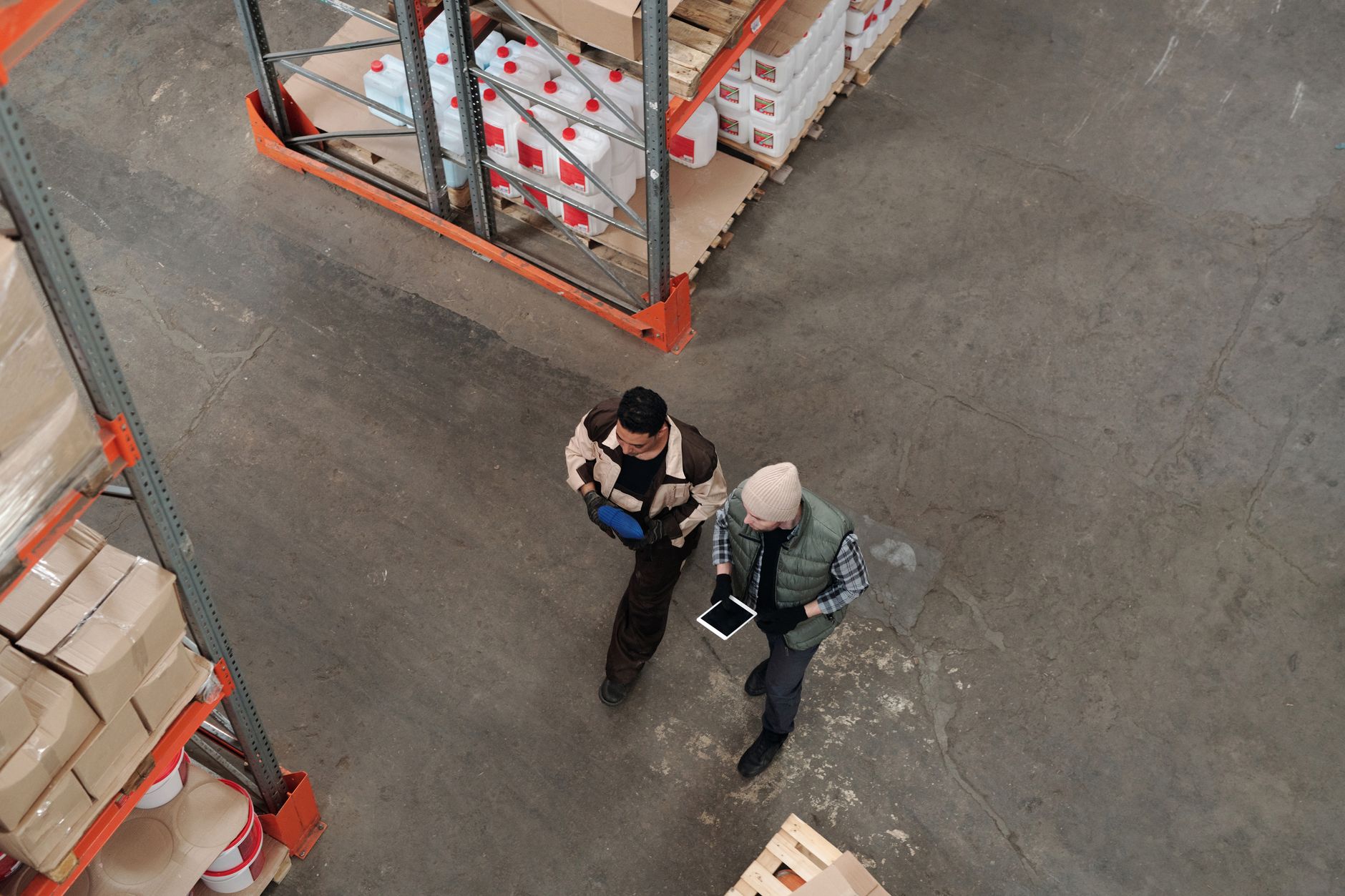
The robot does not replace the team in a paint or coatings plant. It takes repeated moves from the people who would otherwise drive them, and the people keep the parts of the job that need a decision. A plant with a robot still needs operators, line leads and maintenance staff on every shift.
In practice the crew shifts toward loading and staging decisions, label and quality checks, spill response and exceptions the route did not plan for. Sites decide how many drivers stay available for work outside the mapped routes, and that choice belongs to the plant rather than the vendor.
Training matters. Operators need to know how the forklift signals its path, what to do when a route is blocked, and who to call. Training is part of our deployment work, so the crew is ready before the first route goes live.
What drives the savings, and what do the ranges show?
The savings come from hours. Each forklift hour that moves material instead of waiting is an hour the plant does not have to schedule by hand. A vendor analysis of factory material flow says forklifts spend less than 50 percent of their time moving material, which is the room a fixed route can work in.
An academic thesis abstract compared manual front forklifts with an autonomous forklift. It reports manual units averaging about 5 hours of total working time per day, against about 4 hours for the autonomous unit. The setting and sample were not checked, so treat it as one data point rather than a benchmark for your plant.
Shift timing matters too. A productivity benchmarking vendor says day shift typically beats night shift by 15 to 30 percent in tasks per forklift per shift. A fixed route that runs the same way on every shift is a fair test of whether night work is losing ground. Your own time study, with a log of waits and idle hours, is the figure to trust.
What can autonomous forklifts not do?
They do not handle everything. They run mapped routes, and anything off the route still needs a person. A spilled drum, a damaged pallet, an unusual load or a blocked aisle needs trained staff. Solvent and flammable areas also need a check of the equipment rating for those zones, because site rules for storage vary.
Layout changes need remapping. If a line moves or a rack row is added, the route plan needs an update before the forklift can use the new path. Allow time for that work when you sketch your first route, so the change does not catch the crew off guard.
The evidence also has limits. We did not find an independent, quantified result from a paint or coatings plant pallet move. The published figures come from vendors, trade reports and an academic abstract. Ask any provider for site-specific results, and treat the examples here as directions to test, not outcomes to expect.
How do you get started?
Getting autonomous forklifts for paint and coatings plants running starts with a free site assessment. We walk the floor, map the routes between mixing, filling and storage, check the loads and the zones the forklift would enter, and note where people and forklifts already cross. You get a route plan to review before anything is installed.
Then comes the lease. We pick the right robot for the site, lease it through financing, and quote the payment after the assessment, so you see the terms before you commit. One sensible way to begin is one leased unit on one route, with more units added once that first route proves out.
After signing, we deploy and integrate the unit, train your operators, and provide go live support. Service is available nationwide, with on-site dispatch and remote triage for faults. We can talk through backup coverage during the quote, so the floor has a plan if a unit needs attention.
Frequently asked questions
Want an autonomous forklift at your paint and coatings plant?
Tell us about your site. We will recommend the robot, quote the lease, and keep it serviced.