
Key takeaways
- Autonomous forklifts suit the fixed, repeated pallet moves between receiving and outbound docks.
- Reported travel time savings vary widely, so the numbers that matter come from your own site assessment.
- The unit takes over the travel while your people handle loading, checks and exceptions.
- A single leased unit is a common first step, and the lease quote follows a free site assessment.
How can autonomous forklifts for appliance distributors help?
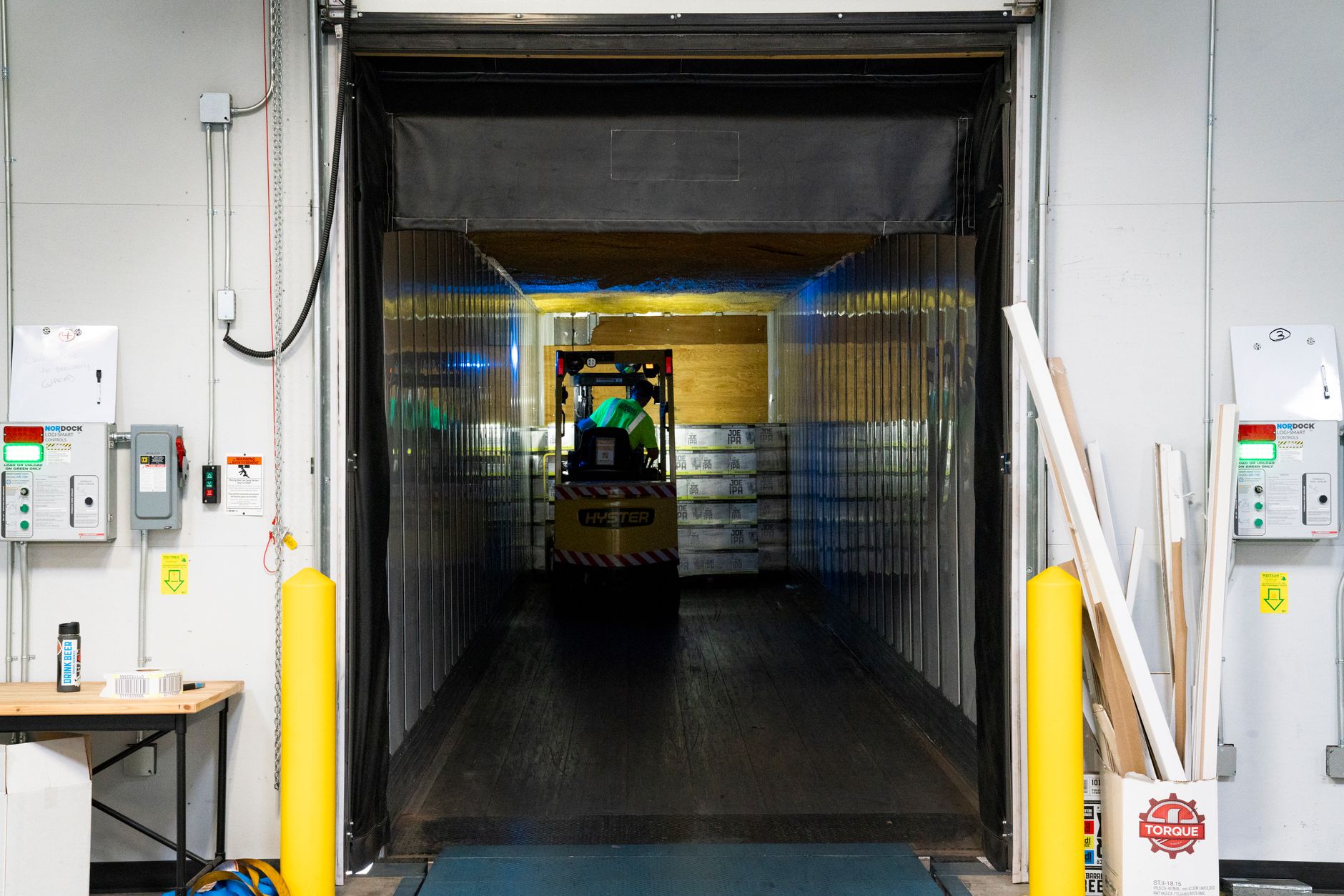
Autonomous forklifts for appliance distributors take over the repeated pallet moves that eat up dock time, carrying loads from the receiving dock to staging and from staging to the outbound doors. The work is fixed in location and high in volume, which is the pattern these machines handle best. Much of a forklift driver's shift goes to travel between the same handful of points, and that travel is where autonomous equipment gains the most.
The benefit is rarely one dramatic change. It is fewer minutes lost per move, fewer pallets waiting at a door, and a clearer split between machine travel and human judgment. Before any lease is quoted, Service Robot Co. assesses whether your dock flow fits this pattern.
Appliances make the case stronger. Pallets are heavy, bulky and awkward to steer through tight staging, so every extra trip takes more effort than a lighter load would. Moving those pallets along the same fixed routes each shift is where a leased unit can return time to the people who run the dock.
What problem does this kind of place face today?
An appliance distributor receives full trailers, breaks them down, puts pallets away or stages them, and then pulls and ships them against orders. The dock is the busiest part of the building, and every bulky pallet moved between receiving and outbound docks is a trip that a person makes by hand or by forklift, often over the same route many times a shift.
Margins are thin. Heavy, high-value goods leave little room for a slow dock, because a small delay turns into late trucks, extra handling and damaged corners. Safety adds weight to the case: a safety compliance summary, which attributes its figures to OSHA, puts forklift injuries at about 35,000 serious and 62,000 non-serious a year, though the summary does not clearly date those counts.
Staffing makes the problem harder to plan around. Turnover is not low in materials handling, and a dock that depends on a few experienced drivers loses pace each time one leaves. Long, repetitive routes also tie skilled people to movements that do not need their skill.
What are the main benefits?

The gains show up mostly in travel time and the rhythm of the dock. The figures below come from published sources. Several are vendor or trade figures from other settings, not appliance distributors, so read them as direction rather than forecast.
None of those figures is an appliance distributor's own baseline, and the site assessment exists to build that baseline. Your dock times, trailer schedule and pallet counts decide how much of this applies to your building.
- Less travel per shift: a logistics company's infographic says one robot can save 3 to 4 hours of traveling time per 8-hour shift.
- Shorter pallet transport: a business news site reported that in a major distribution center pilot, average pallet transport travel times dropped 25 percent, with near-zero near-misses.
- More pallets per hour: a forklift trade publication reported a 20 percent increase in hi-lift pallets per hour and a 20 to 30 percent reduction in manned travel from putaway at one installation.
- Fewer damage incidents: a maintenance software vendor reports 28 percent more pallet moves per hour and 62 percent fewer damage incidents, in a fast-moving consumer goods setting.
How does it work day to day at the docks?
The unit runs fixed routes between points it has been taught on a map of the building, such as a receiving door, a staging lane, a reserve aisle and an outbound door. The site assessment maps those routes and marks where pallets wait. Once running, the unit picks up a load where a person or conveyor has set it, travels the route, sets the load down at the next point, and returns to the queue for the next call.
In most setups a supervisor can decide which moves go first, such as outbound trucks ahead of putaway. Staff see where each unit is and what it is carrying, so the dock lead can adjust the queue when a truck runs late. The routine repeats all shift without a driver making each trip.
The unit stops when a path is blocked and waits for a person to clear it. That pause is part of the design. It is also why routes should stay clear of loose packaging and staging that drifts into the lane.
Which areas of the building does it work in?
An appliance distributor has a handful of spaces where pallets move between fixed points, and the unit works best where those routes repeat and stay clear. The areas below are where this work tends to concentrate, though the final map comes from the site assessment and the building's own layout.
What these areas share is stable start and end points. Dock doors, staging lanes and aisles stay where they are from shift to shift, so a route can be taught once and then repeated all shift.
How does it work alongside the people already on the floor?
The unit works best as part of a team, not as a replacement for one. It takes the repeated travel, while your people keep the work that needs judgment: checking damaged pallets, handling exceptions, loading trucks and deciding what to do when a route is blocked. A plan that leaves the dock with no people on it is not the one we design.
Most changes come from reassigning drivers from travel to loading, checking and exception work. Turnover is part of the context. In its annual survey of materials handling professionals, Modern Materials Handling reported average occupational turnover of 11.8 percent in 2023, up from 9.1 percent in 2022. When people change often, simpler routes and clearer handoffs let new staff work with the unit sooner.
Service Robot Co. trains the staff who will work with the unit, so drivers and supervisors know how to read its status, clear a path and call for help. Training is part of the deployment, and the team stays with you through go live.
What drives the savings?
Savings come from hours and from the way the dock is paced, not from a single headline percentage. The clearest hours figure comes from a logistics company's infographic, which says one robot can save 3 to 4 hours of traveling time per 8-hour shift. That is a vendor estimate, so the assessment should replace it with your own measured dock times.
Travel is the first lever. In a distribution center pilot reported by a business news site, average pallet transport travel times dropped 25 percent. In one installation, a trade publication reported 20 to 30 percent less manned travel from putaway. Multiply the travel time you measure by the number of moves through each door, and the hours become visible to the people who schedule the shift.
Damage is the second lever. A maintenance software vendor reports 62 percent fewer damage incidents alongside 28 percent more pallet moves per hour, in a fast-moving consumer goods setting. Treat that as the direction of the effect in another industry, and let your own damage log and move counts show what changes on your floor.
The lease quote follows the site assessment, so the financial picture is built on your hours, your door count and your route lengths rather than on averages from other buildings.
What can an autonomous forklift not do?
It cannot judge a damaged pallet, decide whether a load is stable enough to move, or read a handwritten note on a crate. Those tasks stay with people, and the site plan should say so plainly.
It works within the routes it was taught, so it does not handle a one-off move across an open yard or into an unmapped corner. It needs a clear, mapped path, a stable floor, and staging that holds pallets where the route expects them. Dock plates, trailer positions and doors need coordination so the unit can reach each trailer safely.
It is not a replacement for a forklift operator on unpredictable work, and it does not remove the need for supervision. Most distributors keep some manual equipment for moves outside the mapped routes, and the dock plan should allow for that from the start.
How do you get started?
Start with a free site assessment. We map your docks and routes, measure how moves run today, and identify the unit that fits the building. We choose the right unit for the site rather than fitting the site to a unit, and we do not quote a lease until that work is done.
The equipment is leased through lease financing programs. The payment comes in the quote, which follows the site assessment. Many operators begin with one leased unit on the busiest dock route, prove the flow, and then add units in phases so the dock keeps running throughout.
After the quote, we deploy and integrate the unit, train the staff, and support go live. We service units nationwide, so one partner handles the questions from the first walk through the building onward. A pilot on a single route is often the simplest first step for an appliance distributor.
Frequently asked questions
Want an autonomous forklift at your appliance distributor?
Tell us about your site. We will recommend the robot, quote the lease, and keep it serviced.
Sources
- Safety compliance summary of forklift statistics
- Logistics company infographic on automated forklift travel time
- Forklift trade publication news report
- Business news site report on autonomous forklift pilot
- Maintenance software vendor page on autonomous forklifts
- Modern Materials Handling annual survey article