
Key takeaways
- Autonomous forklifts suit printing plants because paper stock and finished skids repeat the same routes every shift.
- DHL, in a vendor-reported infographic, puts travel time savings at 3 to 4 hours per 8-hour shift.
- Printing employment fell an average of 2.2% a year from 2020 to 2025, so returning driver time matters.
- Start with a free site assessment, then a lease quote, one route at a time.
How can autonomous forklifts for printing plants help?
Autonomous forklifts for printing plants can take over the repetitive moves that eat up a driver's shift: bringing paper stock from receiving to the press room, and carrying finished skids from the bindery and finishing lines to the shipping dock. The vehicle runs a set route, stops at marked stations, and returns to charge when idle. Your forklift drivers stay on the work that needs judgment.
The fit is strong because the moves repeat. Paper rolls and finished job skids travel the same aisles at about the same times every shift, in a plant with defined lanes and predictable traffic. That is the setting where an autonomous vehicle performs best, and where the payoff shows up as hours returned to people.
How much time is at stake? According to DHL, in an infographic on automated pallet transport, one robot can save 3 to 4 hours of traveling time per 8-hour shift. That figure is vendor-reported and does not show its method, so treat it as a planning estimate to test on your own floor during a site assessment, not as a guarantee.
What forklift problems do printing plants face today?
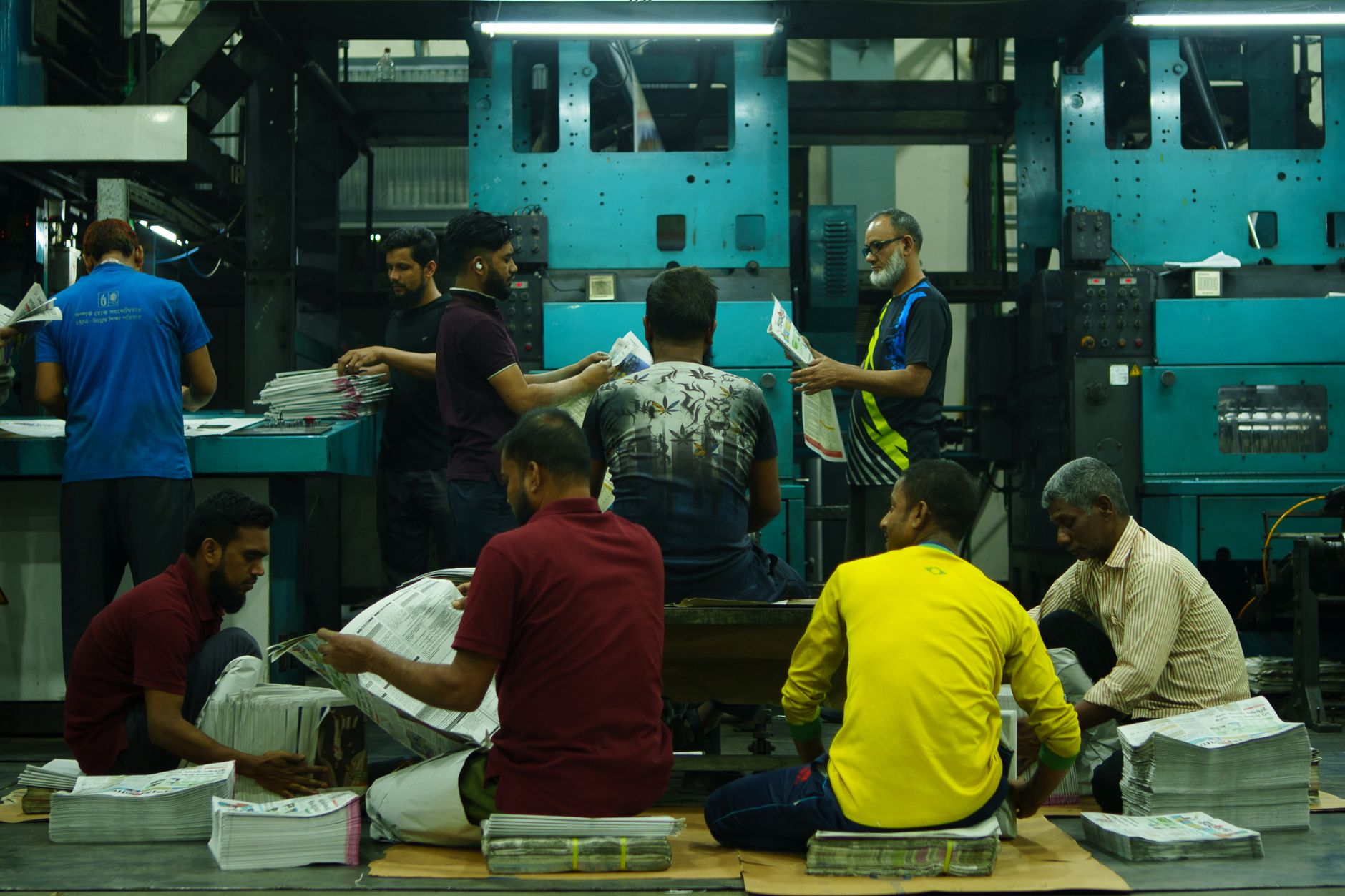
A printing plant runs on paper. Stock arrives in heavy rolls and pallets, moves to the press room by the load, and waits for press time. Finished work comes off binding and finishing lines as skids that must reach shipping on schedule. Forklift time is split between those two flows, and when a truck is late, presses or packing lines sit idle.
Plants of this kind are numerous and the staffing picture is tight. According to 2023 County Business Patterns data, 21,354 establishments were classed as printing (NAICS 32311). According to IBISWorld, a commercial research firm, US printing employment was estimated at 358,855 people in 2026, and employment fell an average of 2.2% a year over 2020 to 2025. That is an estimate, not an official count, but the direction matters: fewer people are left to cover the same material flow.
The forklift labor pool is finite too. According to the Bureau of Labor Statistics, 778,920 people were employed as industrial truck and tractor operators in May 2023. Printing plants compete for those drivers with warehouses and distribution centers, so keeping every shift covered with trained drivers is not easy.
What are the main benefits for a printing plant?
The benefits cluster around four things: steadier material flow, fewer drivers tied up on repeat moves, less pedestrian exposure in busy aisles, and a clearer record of where stock is. None of these depend on the vehicle being new or fast. They depend on the route being the same every time.
- Steady timing: stock reaches the press room at the same point before each run, so pressmen are not waiting on a truck.
- Driver time released: people who made the same trips can take on setup, quality checks, and changeovers.
- Fewer interactions in aisles: the vehicle follows set lanes and is designed to stop for people in its path, so staff walking to the bindery and dock meet fewer forklift passes.
- Clear movement history: each move is logged against a station, which helps when a job is held up and someone asks where a skid went.

Why does safety matter so much at these sites?
Safety is the reason many operators look at this first. According to Voxel, the National Safety Council counted 67 forklift-related fatalities in 2023. Per OSHA data summarized by Markel and SafetyNow, 2020 saw 78 work-related forklift deaths and 7,290 nonfatal injuries involving days away from work. Those numbers come from across the whole country, and the same moving parts exist inside a printing plant.
Enforcement is active too. According to Voxel, citing OSHA, 2,248 forklift-related violations were cited in 2024, which put Powered Industrial Trucks sixth on OSHA's top 10 list for that year. Controls that keep vehicles on marked routes make sense for a plant where people and loads share the same aisles.
How does the robot work there day to day?
A typical shift starts with a route plan. The first loads of paper stock are staged at receiving, and the vehicle carries them to the press room lines in order. Operators at the press confirm each load. Between runs the vehicle returns to a charging point and waits for the next call from the plant's job system or a staff member at a terminal.
Finished skids follow the reverse path. Once a job clears the bindery, a staff member confirms the skid is ready, the vehicle lifts it, and it runs to the shipping dock or staging area. In one vendor case study with DHL, a system was programmed in under a day and moved up to eight pallets per trip, according to that case study. That figure shows the capacity of one trip, not a promise for your plant.
Setup is where good integration counts. A site assessment maps the aisles, marks stations, and sets clearances around press lines and fixed equipment before any vehicle runs a load. Staff are trained on the call and confirm steps so the workflow does not depend on one person's memory.
Which areas of a printing plant does it work in?

The vehicle works where material flows are repetitive: receiving to paper storage, paper storage to the press room, finishing and binding to the shipping dock, and between staging areas inside the plant. It does not usually work in areas where the layout changes every shift or where loads need hand placement.
Each area has its own rules, and the site assessment sets them. Aisles need enough width and clear sightlines. Doorways and dock plates need a defined approach. Pinch points near press feed lines and sheet handling equipment need marked standoff zones.
How does it work alongside your existing staff?
The vehicle does not replace the crew. It takes the repeat trips, and your team keeps the work that needs judgment: checking stock condition, adjusting loads, handling a damaged skid, and responding when a press goes down. Plan for a robot plus a smaller team, never zero staff.
Staffing shifts rather than vanishes. Drivers move to setup, quality, and exception handling. Someone still confirms loads at the stations, watches the plant's lanes, and responds to alerts. Plants that expect unattended operation on day one tend to find the crew stays close to the process during the first weeks.
Operators also need to know what the vehicle is doing. Training covers the call and confirm routine, how to clear an interruption, and when to stop a vehicle and call for service.

What drives the savings in hours?
Savings come from hours, not from one lump of time. The main driver is travel time: fewer empty trips, fewer waits for a truck, and fewer interruptions to the press schedule. DHL's infographic puts the savings at 3 to 4 hours of traveling time per 8-hour shift, and that figure is vendor-reported. Your own numbers depend on distances, the number of stations, and how often loads arrive.
Vendor pilots point the same direction at different scales. Cyngn, an autonomous vehicle developer, reported in a press release dated July 2022 a 33% efficiency increase for its autonomous stock chaser versus an electric pallet jack. That result came from a four-week pilot on a different vehicle type, so use it as evidence of direction, not as a benchmark for your plant.
Measure before you commit. Log existing trips, idle time, and waits for a week or two. That baseline is what you compare against after go-live, and it is what the site assessment uses to size the first deployment.
What can an autonomous forklift not do?
It cannot handle loads that need a human eye. Damaged rolls, mixed pallets, and skids with shifted wrap need a person to check them before the vehicle moves them. It also cannot reach areas its route does not cover, such as tight spaces between press feeds, cluttered floors, or spots where staff leave materials in the lane.
It does not run without oversight in a busy plant. Someone needs to clear blocked stations, confirm loads, and handle alerts. It also depends on a clean, mapped floor and on the plant keeping routes clear. A vehicle that meets an unexpected obstacle stops and waits for help rather than improvising.
Its gains are capped by layout and volume. A plant with few moves in a shift may not get much from it, and a plant with a difficult layout may need changes before the vehicle runs well. An honest assessment comes before any lease decision.
How do you get started?
Start with a free site assessment. We map the aisles and stations, measure your existing trips, and identify the routes that repeat most often. From there we recommend the right vehicle for your floor and routes, and we give you a lease quote after that assessment.
Service Robot Co. is a US commercial robot integrator. We pick the right robot for the site, lease it through financing, deploy and integrate it, train your staff, and service it nationwide. The lease payment comes in the quote, with deployment and service terms laid out before anything goes live. Phased deployment often starts with one unit on one route, so you can measure before you expand.
Plan the first step around a single route, such as paper stock to the press room, and set a baseline. Once that route runs well for a few weeks, you can decide whether the next route is worth adding. That sequence keeps risk and crew workload small while you learn.
Frequently asked questions
Want an autonomous forklift at your printing plant?
Tell us about your site. We will recommend the robot, quote the lease, and keep it serviced.
Sources
- Bureau of Labor Statistics, Occupational Employment and Wages, May 2023
- IBISWorld, printing employment estimate
- DHL, automated pallet transport infographic
- Cyngn press release, July 2022
- Seegrid and DHL customer case study
- Markel and SafetyNow, powered industrial truck statistics
- Voxel, forklift accident statistics