
Key takeaways
- Repeat receiving to staging moves are the part of a glass warehouse that autonomous forklifts handle most predictably.
- Reported figures point to 3 to 4 hours of empty travel saved per 8-hour shift for one unit, but those are claims to test, not promises.
- Staff shift toward inspection, handoff and exception work, and a robot plus a smaller team runs the route.
- Results depend on mapped paths, consistent pallet handling and a well-run manual handoff zone.
- Start with a free site assessment, then review a lease quote from financing options.
How can autonomous forklifts for glass distributors help?
Autonomous forklifts for glass distributors do one job well: they carry heavy pallets from the receiving dock to staging lanes on routes that repeat every shift. Glass is heavy, fragile and tightly scheduled, so the same move happens many times a day, often along the same path. A vehicle that drives a mapped route, stops for people and places each pallet where the staging plan says is a natural fit for that rhythm.
The benefits show up in the hours experienced drivers spend traveling empty between the dock and staging, and in fewer moments when a heavy load is steered by hand near a busy aisle. According to a logistics operator's infographic, one robot can save 3 to 4 hours of traveling time per 8-hour shift. That is a vendor claim with no stated method, so treat it as something to test on your own floor, not as a guarantee.
Service Robot Co. is a US commercial robot integrator. We assess the site, choose the right robot for it, lease it through financing, deploy and integrate it, train your staff and service it nationwide. Most glass operators begin with a free site assessment, because the layout, dock doors and pallet types decide what is practical.
What problem does a glass distributor face today?
Glass distribution runs on heavy, awkward loads. A single pallet can be heavy enough that every move is a physical task, and a broken pane costs material and time. Receiving crews unload, check and set pallets down, and then the same loads are moved again to staging lanes where orders are built. Each handoff adds handling, waiting and risk.
Timing adds another layer. Trucks arrive in waves, and when the receiving team falls behind, staging lanes fill unevenly and the order builders wait. A slow handoff at the dock holds up the whole building, not only the people at the door.
The safety picture makes this worth examining. According to a safety statistics summary citing National Safety Council data, there were 67 forklift fatalities in 2023. A summary of OSHA Severe Injury Reports for 2022 to 2023 lists 1,190 severe forklift injuries, including 994 hospitalizations and 196 amputations. These are industry-wide numbers rather than glass-specific figures, but they describe the exposure wherever people and forklifts share the same aisles.
The labor side is just as real. According to the US Bureau of Labor Statistics, hand laborers and material movers held about 7.0 million jobs in 2024. Material moving is a broad occupation, but the work is repetitive. Every hour a skilled operator spends on empty travel is an hour not spent inspecting glass, checking labels or resolving exceptions.
Why do repeat receiving to staging moves suit an autonomous forklift?
Autonomous forklifts work best where the route is predictable. Receiving to staging is that kind of route: the same dock doors, the same lanes and pallets that follow a consistent sequence. A mapped path lets the vehicle plan its run, slow for doorways and keep a safe distance from people without a driver deciding every turn.
Staging lanes are where the detail matters. A vendor datasheet for an inbound to end-of-aisle application says its vehicles scan staging lanes with a safety laser to detect and clear pallets before placing a load. Read that as a vendor description, but it shows the kind of sensing a lane-based route needs.
Glass-specific deployments do exist. An integrator describes a flat-glass logistics hub in Belgium that was automated with inloader transporters. The project description gives no figures, so use it as evidence of the workflow, not as proof of results at your site.
The fit is strongest when the route repeats and the loads are alike. A glass operator with mixed pallet sizes, irregular truck arrivals or a dock layout that changes often will need a tighter route plan before a vehicle can run reliably. Repetition is the reason to start, and the assessment checks whether your floor has it.
What are the main benefits for a glass distributor?

The clearest benefit is travel time. According to a logistics operator's infographic, which gives no methodology, one robot can save 3 to 4 hours of traveling time per 8-hour shift. Do not plan around that number as a promise. Ask your integrator to measure your own empty-travel time before and after the pilot.
A second benefit is consistency. In a retail support center running operator-reported autonomous units, manned travel from putaway fell 20 to 30 percent, and hi-lift pallets per hour rose 20 percent. That comes from a different kind of site, so treat it as a direction to test rather than a forecast for your docks.
A third benefit is throughput. A vendor-authored case study from a consumer goods factory, not a distribution center, reports throughput rising from 185 to 253 pallets per shift after 50 AMRs were deployed. The same study reports a 91 percent cut in manual material handling. Those figures come from a different setting, so use them to frame questions for your own pilot.
How does the robot work day to day at a glass distributor?
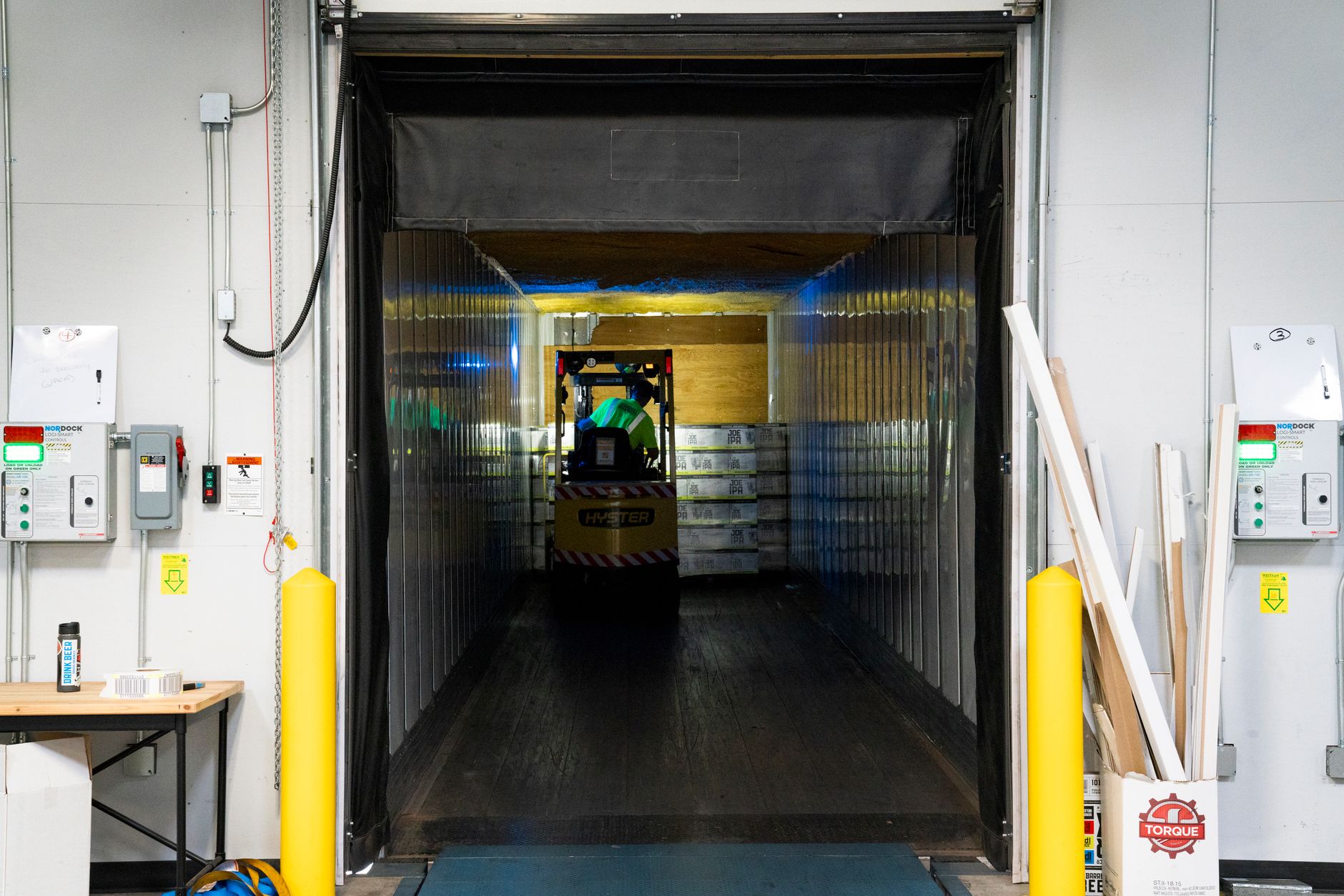
A typical day starts before the first trailer arrives. The vehicle receives its route and pallet queue, drives the mapped path to the receiving dock, and waits at a defined handoff point while your receiver unloads and checks the load. Once a pallet is confirmed, the vehicle carries it to the assigned staging lane and sets it down.
Handoff zones are where many sites succeed or struggle. A trade news report on a first US automated deployment described a manual to autonomous handoff zone between storage and receiving. That design keeps people and vehicles in clearly separated spaces, and it gives your team a predictable point to stage glass for pickup.
Between runs, the vehicle charges, reports faults to a dashboard and waits for the next task. When a pallet sits off position or a lane is blocked, the vehicle stops and alerts staff rather than guessing. Your people clear the exception, then release the vehicle back to the route.
Which areas of a glass distributor does it work in?
The robot works in the lanes between the dock and the racks. Its job is the pallet route, not the whole building. That keeps the scope clear: receiving, staging and the moves that connect them, with people still handling inspection, labeling and order picking.
The six areas below show where the work lands. Each one has its own rules, so set the route and handoff for each before the vehicle goes live. Outbound staging is a second, smaller route worth scoping separately, because lanes turn over with each truck and the timing differs from inbound work.
How does it work alongside existing staff?
A robot does not replace the team; it changes what the team spends time on. In the consumer goods factory case, 32 of 36 operators were redeployed to other work, according to the vendor-authored study. A glass distributor should expect a similar shift in focus: fewer hours on empty travel and more time on inspection, load checks and the exceptions a vehicle cannot resolve.
Plan for a robot plus a smaller team, never zero staff. Someone must own the route plan, watch the dashboard, clear exceptions and run the handoff zone every shift. Service Robot Co. trains your staff on those tasks at go live and keeps service coverage in place nationwide, so the site does not depend on one person's knowledge.
Name the roles before go live. The route owner, the handoff lead and the exception responder should each know their shift and their escalation path. Cross-train at least two people on the dashboard so a single absence does not stop the route.
What drives the savings, and what should you measure?
Savings come from hours and labor. The main drivers are empty travel time, pallets handled per shift and the number of manual handling moves per load. Reported figures include 3 to 4 hours of travel saved per 8-hour shift and a 20 to 30 percent drop in manned travel from putaway. These come from other sites, so they are not promises for yours.
Measure before you commit. Time one shift of receiving to staging moves and record these four counts, which show where the hours actually go:
That baseline tells you whether a pilot should cover one dock or the full receiving area, and it gives your integrator a number to beat. Repeat the same count after the pilot, on comparable shifts, before you judge the result.
- Empty travel minutes per shift between the dock and staging
- Pallets handled by hand per shift at the handoff
- Manual handling moves per load, including re-stacks
- Near misses and stops logged at the handoff zone
What can an autonomous forklift not do?
It cannot improvise. A mapped route works when pallets arrive in a predictable form, lanes stay clear and staff respect the handoff zone. Damaged loads, unlabeled pallets, a blocked dock or an unusual load shape still need a person. Expect the vehicle to stop and call for help in those cases, and decide in advance who responds on each shift.
It also does not replace inspection of the glass itself. A person still checks edges, packaging and labels, and decides when a pane should be pulled from the flow. The vehicle moves the pallet; your team owns the quality call.
Layout limits matter too. Narrow aisles, uneven floors or heavy traffic from other equipment can slow the route or force a redesign of the path. Those constraints are better discovered in the assessment than on the first live shift.
How do you get started with autonomous forklifts for glass distributors?
Start with a free site assessment. We map the dock, staging lanes and aisles, check floor condition and pallet types, and recommend the right robot for the site. The lease is quoted after that assessment, through financing, and the payment comes in that quote. Robot lease options and lease financing programs differ by site, so the quote is where you compare them.
Deployment, integration, go live support and training follow. We work through a phased rollout so one route can prove itself before the rest of the receiving area changes. Service stays in place nationwide, including on-site dispatch and remote triage, and emergency response is available when a unit goes down.
Many operators begin with one unit on one route, then add units once the measured numbers hold. That approach keeps the first decision small, gives your team time to learn the handoff, and makes the next quote easier to judge.
Frequently asked questions
Want an autonomous forklift at your glass distributor?
Tell us about your site. We will recommend the robot, quote the lease, and keep it serviced.
Sources
- Vendor datasheet, inbound to end-of-aisle application
- Integrator project description, flat-glass logistics hub
- Logistics operator infographic on automated forklift travel time
- Trade news report, first US AGV deployment
- Trade news report, retail support center automation
- Consumer goods factory case study, vendor-authored
- US Bureau of Labor Statistics, Occupational Outlook Handbook
- Safety statistics summary citing National Safety Council and OSHA data