
Key takeaways
- Carts that cross several floors take staff away from the bedside, and a fixed route can move them without a person pushing each one.
- A published comparison found robot delivery cut delivery time by 32% to 36% against manual delivery.
- Elevator congestion, not navigation, is the main limit the published hospital data has measured.
- Robots work best as a robot plus a smaller team that loads, unloads and handles exceptions.
- Start with a free site assessment, then review a quote that includes the payment through financing.
How can autonomous mobile robots for hospitals help?
Autonomous mobile robots for hospitals take over the repeatable runs that move heavy carts, linens, meals, medications and supplies between a loading area and the nursing units they serve. On a fixed route through corridors and elevators, the robot does the pushing and the traveling, while staff keep the decisions about what goes where and when. The practical benefit is that trained people spend less of their shift on transport and more of it at the bedside or on tasks only they can do.
The case is strongest where carts have to cross several floors. Each delivery ties up a person for the walk, the wait for an elevator and the walk back, and those runs repeat every shift. According to a study posted on arXiv, non-nursing activities such as food tray delivery and equipment retrieval consume approximately 40% of nurses' time, citing a 2018 study by Yen and colleagues. According to the American Hospital Association's 2026 fast facts, the U.S. has 6,100 hospitals and 907,216 staffed beds, so the same problem repeats in a very large number of buildings.
What problem does cart and supply transport create today?
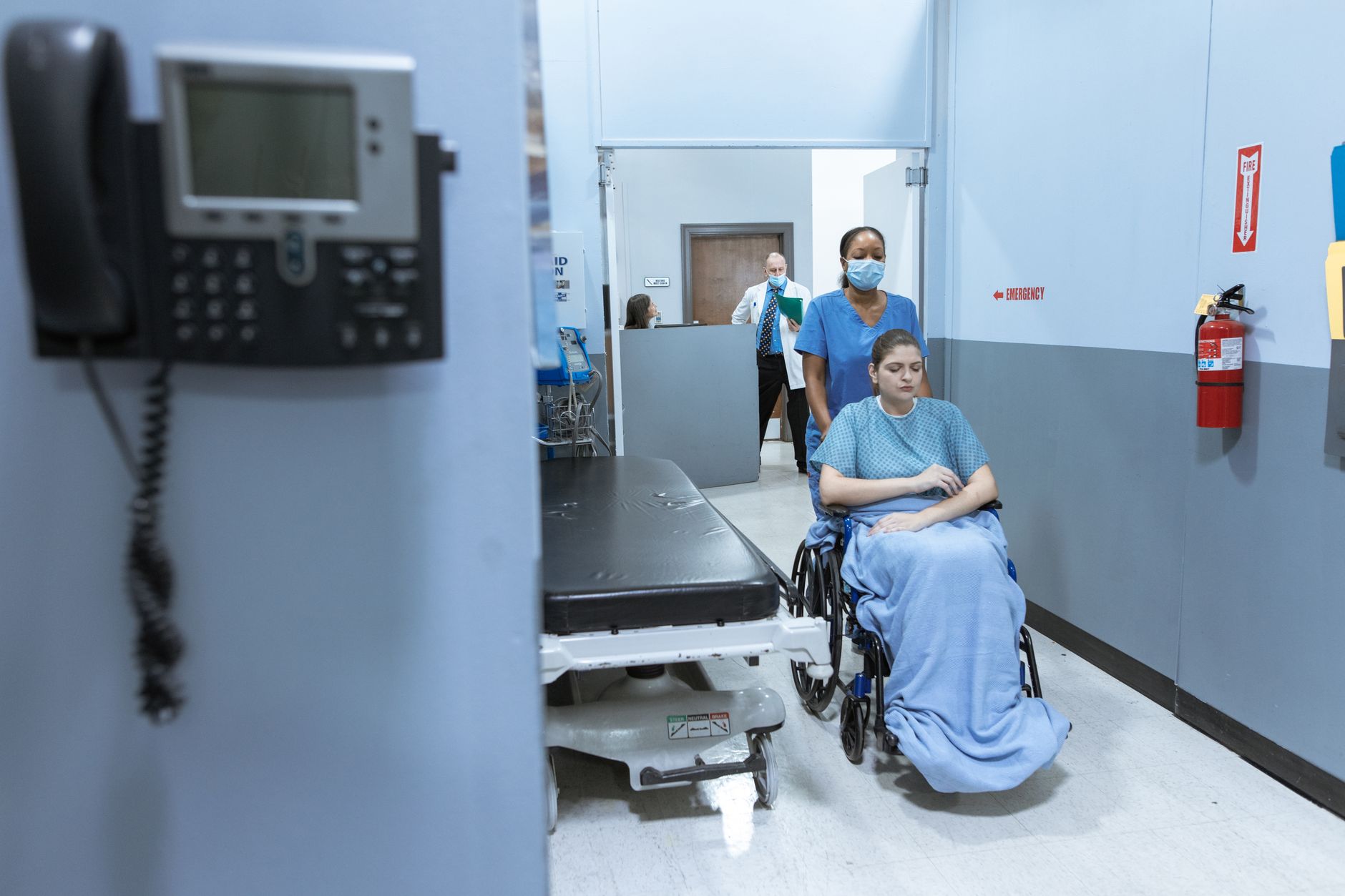
Most hospitals still move carts with people. A nurse, tech or transport aide pushes a cart from a receiving area to a unit, waits for an elevator, rides up, walks the corridor and returns. Carts and manual transport equipment struggle in narrow corridors and crowded areas, and each trip slows around patients on stretchers and visitors. The cart is rarely the only thing waiting for a person, so transport tends to be squeezed in between other tasks.
Staffing makes that gap harder to close. According to the 2026 NSI National Health Care Retention and RN Staffing Report, the RN vacancy rate in acute care settings in the U.S. is 8.6%, down from 9.6% in 2024. The same report, as summarized by Boostpoint, puts hospital RN turnover at 17.6% in 2025, and the time to fill an RN vacancy came down five days, to seventy-eight. A unit that is short staffed cannot easily spare a person to push carts, so any routine task a machine can take from the shift has real value.
What are the main benefits?
The most direct benefit is faster and more consistent delivery. In a published study comparing robot delivery with manual delivery, robot delivery reduced delivery time by 32% to 36% (p < 0.001), according to the study abstract on ResearchGate.
Volume is the second benefit. In a six-month study at a tertiary hospital published in Nature, a fleet of 10 autonomous mobile robots completed 7.3 times more delivery trips than 19 manual workers. The same robot group achieved 100% verification accuracy and item integrity rate. For a supply chain, more runs with fewer errors means fewer missed deliveries and fewer items that need rechecking.
The third benefit is on the staff side. When routine transport moves to the robot, nurses and support staff regain the minutes that were spent walking, waiting and re-routing. Those minutes are hard to see on a single shift but add up across a week of deliveries.
How does the robot work day to day?
The robot is loaded at a dock or supply room, given a destination through the hospital's existing request or scheduling process, and sent along a route it already knows. It travels the corridors and rides the elevator with staff clearing a path where needed. When a path is blocked, the robot waits or reroutes instead of forcing its way through. Staff load and unload at each end, so the robot never needs a person to push it.
Routine runs follow a schedule. Meals, linens and medication orders are the easiest to plan because they recur at set times, and the robot can run them on that clock. Urgent requests can be sent by a staff member from a screen or handheld device. Between runs the robot returns to a charging station, and the route timing is reviewed with the nursing and environmental services leads so it matches how the unit actually works.
The operating team also handles upkeep. Batteries, sensors and wheels need routine checks, because sensors collect dust and lose calibration and battery cells wear with each charge cycle. A service plan covers scheduled inspection as well as calls when something goes wrong.
Which areas of the hospital does it work in?
The robot works where a hospital moves things between fixed points on a predictable route. That usually means a loading dock or central supply, the elevator banks that connect floors, nursing unit supply rooms, pharmacy and laboratory, and the kitchen and laundry service areas. Each of these has a designated stop, a clear path and a person at each end, which is what makes a route reliable.
The six areas below are the ones most often included in a route plan. Each one needs a site visit to confirm door widths, elevator timing and blockage points. The route is then mapped and tested before any live loads move on it.
How does it work alongside existing staff?

The model is a robot plus a smaller team, not a robot in place of the team, and no site should run it with zero staff. The robot takes over the walking and pushing. A smaller team still loads, unloads, confirms orders, clears blockages, answers alarms and handles the exceptions a machine cannot judge. Those people also set priorities when a request is urgent.
Roles shift in practice. A transport aide or tech becomes the person who manages the request queue and the dock. A nurse who used to leave the unit for a supply run can stay on the floor. Environmental services staff focus on cleaning and stocking. Each group needs a short hands-on training session covering loading, dispatching and what to do when a robot stops in a corridor.
Clear written rules help most. Elevator etiquette, where the robot waits and who clears a blocked path should be settled before go-live, so every shift handles a stopped robot the same way.
What drives the savings?
Savings come from three places: the hours that move off routine transport, fewer delays in delivery, and fewer items to recheck. The clearest measured figure so far is delivery time, which fell 32% to 36% in one published comparison with manual delivery. Hours saved at your site depend on how many runs you make, how far they travel and how long each waits for an elevator, which is why we measure those first.
Think in ranges, not single figures. Start with a count of runs per shift, the distance and elevator wait for each, and the share of staff time they take. Then apply the delivery gain only to the runs the robot can actually take. A site with long multi-floor routes will usually see more gain than one with a single short corridor.
What can the robot not do?
Elevators are the main limit. In a study of a hospital in South Korea, the researchers identified an operational cutoff near 59.01% on their measure. Below that point delivery success approximated 95.5%, and above it failure was likely to rise sharply. The dominant failure mechanism was elevator blockage, where passengers or carts restricted the doorway. Routes therefore need a plan for crowded elevator times, and some runs are better moved to off-peak windows.
Robots also need the site to suit them. A two-site case study of a mobile robot in hospitals found that improvements were still needed to adapt the robots to each site before long-term use, including changes to size and screen. Expect a period of adjustment, with some changes to route design, doorways and displays.
Autonomous mobile robots for hospitals do not do fine handling. A robot carries items in bins or on a deck. It cannot pick a small item from a shelf, and doors on the route may still need an automatic opener or a staff member to hold them. Clinical judgment, patient contact and any task that needs hands stay with staff.
How do we get started?
We are a US commercial robot integrator. We pick the right robot for the site, lease it through financing, deploy and integrate it with your routes and elevators, train the staff who will use it, and service it across the country. Start with a free site assessment. We walk the dock, supply rooms, pharmacy, kitchen and elevator banks, count the runs and map the route.
After the assessment you receive a quote that shows the robot, the plan for deployment and service, and the payment. The payment comes in the quote. Routes are tested before full rollout, and training happens on the floor, not only in a classroom. Ask us to compare the run counts and elevator timing in the quote with your current process, so you can judge the change on your own numbers.
Frequently asked questions
Sources
- 2026 NSI National Health Care Retention and RN Staffing Report, via AACN
- Boostpoint, hospital RN turnover summary
- arXiv 2311.15302, nursing time study
- ResearchGate, Autonomous Mobile Robots in Hospital Logistics
- Nature, six-month tertiary hospital study (2026)
- PMC, hospital delivery robot elevator study
- ACM, two-site mobile robot usability case study
- American Hospital Association, Fast Facts on U.S. Hospitals 2026