
Key takeaways
- Repeated log and lumber runs between the yard and sawmill infeed follow fixed routes that suit autonomous mobile robots.
- US sawmill and wood preservation employment was about 82,800 in Q1 2026, so fewer hands are left for hauling.
- Automated log transport is still at pilot stage, with one Finnish test moving over 60 tons of logs in a single trip.
- A robot plus a smaller crew keeps the yard moving, and people stay on inspection, grading and exceptions.
- Start with one leased route after a free site assessment, and let your own hour data decide the next step.
How can autonomous mobile robots for sawmill yards help?
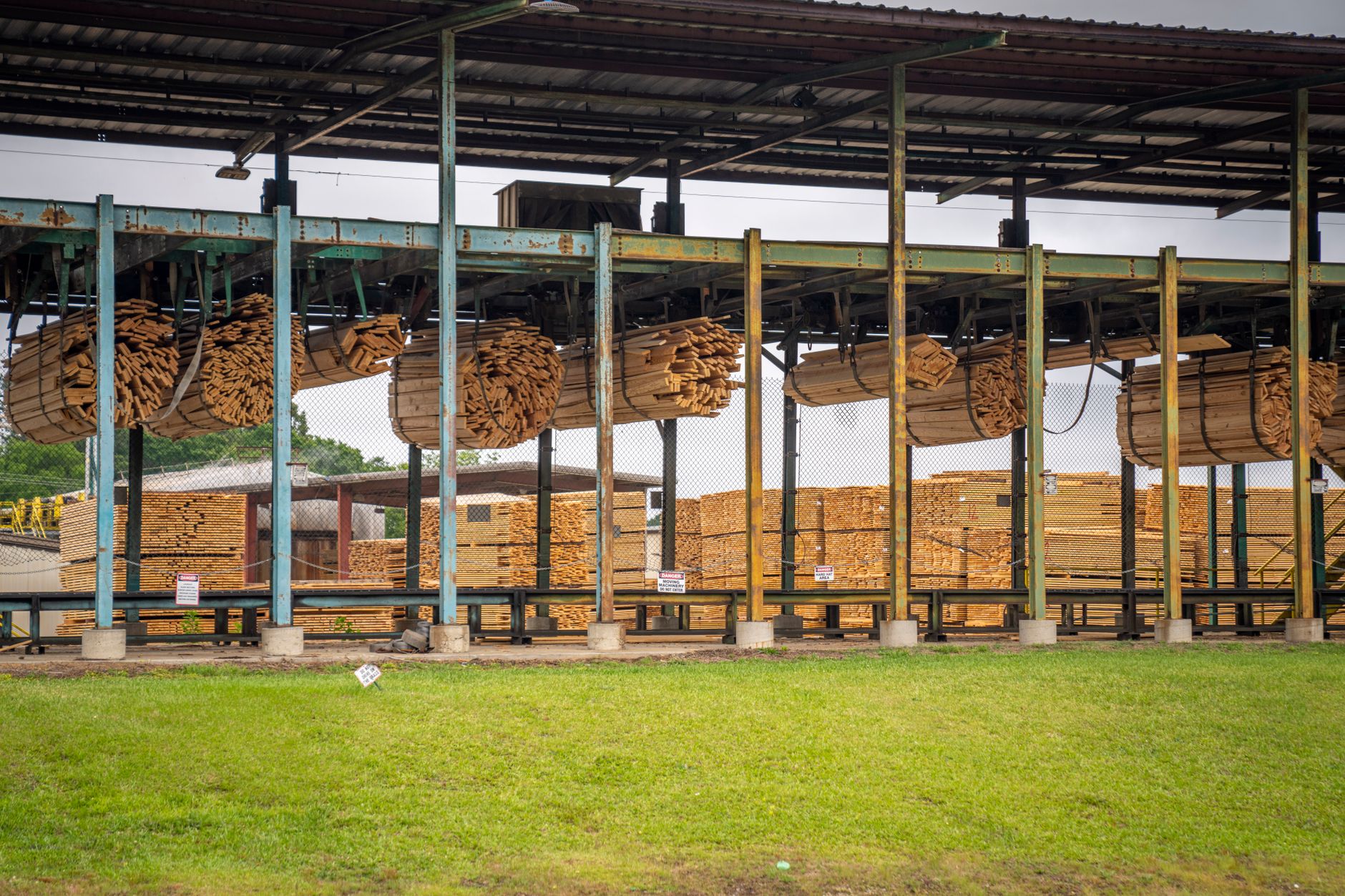
Autonomous mobile robots for sawmill yards take over the repeated hauling that moves logs and lumber between the yard and the mill. The job repeats many times in every shift: pick up a load at a known point, drive a set route, and drop it at the sawmill infeed or a stack. That repetition is what makes a yard a good fit, because the robot can follow the same paths trip after trip without a driver in the seat.
The main benefits are steadier infeed, fewer loader and forklift trips crossing busy lanes, and crew time freed for work that needs a person. The robot does not replace the yard team. It handles the transport loop while people manage the logs, the grading, the saw line and the exceptions that come up during a shift.
The technology is real but still early for this kind of place. A Finnish sawmill has tested automated log transport that moved over 60 tons of logs in one trip, and the Swedish studies described below are still at feasibility stage. Because every yard has its own layout, the first step is a free site assessment rather than a choice of machine.
What does log and lumber transport look like at a sawmill yard today?
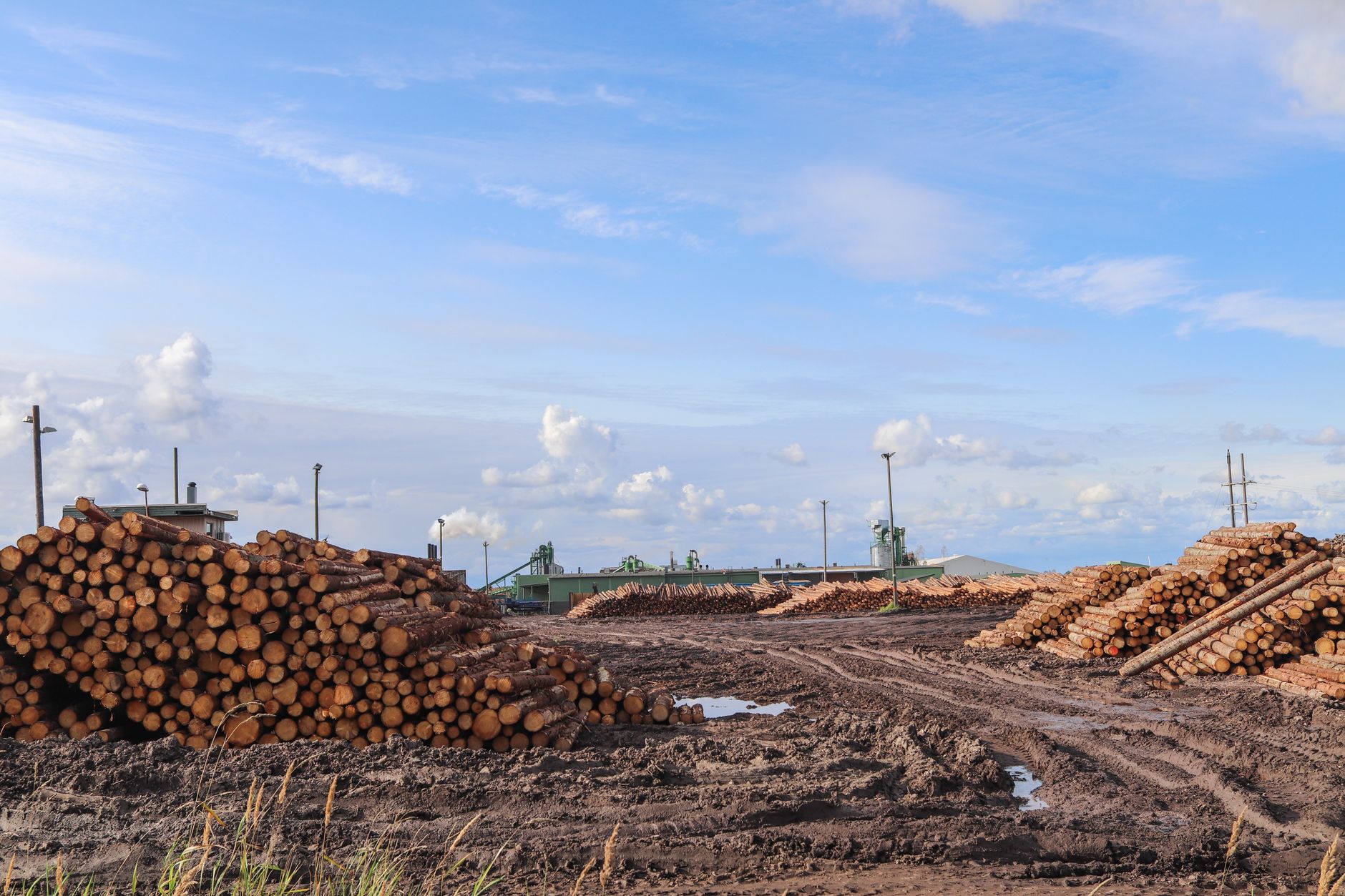
A sawmill yard runs on a steady flow. Logs arrive by truck or rail, get unloaded into a deck or storage area, and wait their turn to feed the mill. Finished lumber moves the other way, from the mill exit to stacking, drying and shipping areas. Much of this movement is still done by loaders, forklifts and trucks driven by people who know the yard well.
The difficulty is the mix of moving parts. Stockpiles change shape through the day, trucks back in at odd angles, and people walk between loads. A study of autonomous machine operation in mill yards describes the environment as dynamic, complex and partly unstructured, which is why yard automation takes more care than a clean warehouse floor.
Staffing is the other pressure. According to NAHB, citing the Bureau of Labor Statistics, sawmill and wood preservation employment was about 85,400 in Q3 2025, the tenth straight quarterly decline. By Q1 2026 the count was about 82,800, the lowest since 2010. The Federal Reserve Bank of St. Louis reports an annual average of 96.6 thousand in 2025 for the same combined sector, down from 104.0 thousand in 2024.
Yards that already run with fewer people per shift have less room to spare for the hauling that keeps the mill fed. When a loader is pulled to cover a gap, other work slows. That is the operating problem a repeatable transport route can address.
Why do repeated yard routes suit autonomous mobile robots?
A robot works best when the work repeats along paths that stay put. In a sawmill yard, a large share of the moves run between a small set of points: the unloading area, the log storage, the sawmill feed table and the return lane for empty cages. Those points and routes are known well ahead of time, so the robot is not guessing at each trip.
The Finnish pilot shows how this plays out. Sensors around the yard build a real-time digital twin, and the vehicle positions itself under the log cages with sub-10 cm accuracy, according to the vendor and partner case page. The route runs from the train unloading area to the sawmill feed table, and empty cages return along the same path.
Two Swedish forest industry companies are studying autonomous vehicles with an engineering partner to move timber and sawn wood within their sites. The work is a feasibility study for now, with a live-production pilot planned if it succeeds. Finnish university research has also examined autonomous vehicles and machinery in forest industry mill yards.
Mapping is the groundwork. Before a route is trusted, the yard is surveyed so that every pickup point, lane edge and turn is recorded. Once the map is confirmed, the route can be repeated with the same steps every shift, which is exactly the kind of work that reduces hand driving.
Which areas of the yard does the robot work in?
The robot earns its place where a load moves between fixed points again and again. The six areas below are the ones that most often carry repeated moves in a sawmill yard, and the site assessment decides which of them to cover first.
Start with one or two areas instead of the whole yard. A narrow first route is easier to map, easier to check, and easier to hand back to staff when a load needs a person. Expansion follows once the first route runs steadily.
A common first pair of points is the unloading area and the sawmill infeed, since the log supply sets the pace for the rest of the mill. Cages and lumber packages then join the route as the crew gains confidence in it.
How does the robot work day to day in the yard?
The day starts with a check. The crew confirms which logs or lumber packages are waiting, which cages are empty, and which lanes are clear. The robot then takes its first job and works the route in a loop, with the crew watching the flow rather than driving each trip.
On each leg, sensors help the robot find its position and stop for people, equipment or obstacles. When a load is ready at the pickup point, the robot positions itself and drives the route at the pace the yard allows. The map of the yard stays up to date from the same sensors, so the crew can see where each trip is at any time.
When something unexpected happens, a person takes over. A blocked lane, a stuck load or a stockpile moved overnight is a job for the crew, and the robot waits or reroutes until the lane clears. That split keeps people on the decisions and the robot on the repeated moves.
At shift end, the route log shows how many trips ran, where delays built up, and which lanes need attention. That log is the starting point for the next day's plan and for the hour figures the site assessment tracks.
How does the robot work alongside the existing crew?
The robot is a teammate for the yard crew, not a replacement for it. The arrangement that makes sense for most yards is a robot plus a smaller team. The robot covers the repeated route, and people cover inspection, grading, the saw line, and the exceptions that no route can plan for. A yard should never run with zero staff.
Our team trains the people who will work beside the robot before it goes live. Operators learn how to clear a lane, how to read the status display, how to take manual control, and when to call for service. The crew members who know the route best are usually the ones who spot the first problem, so we build the training around their knowledge.
Daily work changes in a way crews tend to notice quickly. Less time spent on the same route means more time on tasks that need a person, and the operator's job moves from driving to supervising the flow. That shift gives experienced people more of the work they know best.
What are the main benefits for the mill?
The benefits show up first at the infeed. When loads arrive on a steady schedule, the mill spends less time waiting and the crew spends less time chasing a load across the yard. Steadier flow also makes the rest of the day easier to plan.
Other gains are harder to put a number on but matter just as much to a yard manager. Steadier infeed, fewer interrupted shifts and a clearer record of each trip all help the mill plan its days. A record of trips also gives the next site review something concrete to work from.
What drives the savings in hours?
The savings from autonomous mobile robots for sawmill yards come from the hours the robot takes off the repeated route. Every trip that no longer needs a driver returns time to the crew for work that needs a person. Those hours add up across a shift, a week and a year, and they show most clearly on the routes that run the most often.
We do not promise a number before we see the yard. The hours saved depend on how many trips the route makes, how long each leg runs, how often loads wait for the robot or the crew, and how much of the flow sits on a fixed path. The site assessment measures those inputs and turns them into a plan specific to your mill.
Sourced figures help set the scale. According to the Bureau of Labor Statistics, about 43,570 people work as sawing machine setters, operators and tenders nationwide, the occupation that runs many of the saws in these mills. The hours spent on hauling are the figure to track, and staffing is the figure to watch as the labor pool shrinks.
What can the robot not do?
A robot does not handle every load in the yard. It follows set routes between known points, so irregular moves, one-off jobs and loads that need judgment still go to a person. Stockpiles reshaped by the day, trucks that arrive out of schedule and loads that shift on the forks are examples of work to keep with the crew.
It cannot fix a poorly mapped yard. A route that changes every week is a poor fit, and the site assessment will say so plainly. Mud, standing water, slick ground and uneven surfaces can all limit speed and routing, and those limits belong in the plan rather than in a surprise after go live.
It also needs ongoing care. Sensors, batteries and mechanical parts need routine checks and a service plan, and the robot needs repair when something breaks. Our service team handles maintenance and repairs nationwide, so the yard does not have to become a robot repair shop.
Finally, a robot cannot make a yard safer by itself. Pedestrian and vehicle rules still apply, and the crew sets the working zones, warning signs and lane markings that the robot follows. Keep people trained on those rules, because the robot is one part of a yard that already has many moving parts.
How do you get started with a robot lease?
Start with a free site assessment. We walk the yard, map the candidate routes, check the ground and traffic, and identify the one or two areas where a robot would begin. The output is a written plan that shows where the robot will work and where it will not.
We pick the right robot for the site, lease it through financing, and then deploy and integrate it with the yard flow. Staff training comes before go live, and our team stays on for the first runs. The lease payment comes in the quote after the assessment, so the figure reflects your yard rather than a generic plan.
Begin with one route. A single leg of the yard lets the crew learn the robot and gives you hour data from your own operation before you decide on more routes. We service the robot nationwide, so the first unit gets the same support as any later ones.
Frequently asked questions
Want a warehouse robot at your sawmill yard?
Tell us about your site. We will recommend the robot, quote the lease, and keep it serviced.
Sources
- Automated log transport case study (vendor and partner page)
- Trade news on a Swedish sawmill autonomous vehicle feasibility study
- Abdelsalam et al., peer-reviewed study on autonomous machines in mill yards (2022)
- Aalto University, autonomous vehicles and machinery in forest industry mill yards
- NAHB Eye on Housing, sawmill employment citing BLS
- Federal Reserve Bank of St. Louis (FRED), NAICS 3211 employment
- US Bureau of Labor Statistics, sawing machine setters, operators and tenders