
Key takeaways
- Bulk sugar and packaging move on fixed routes between silos, lines and dispatch, which suits a mobile robot.
- Dust controls come first, since a robot route does not reduce dust hazards.
- Measure trips and minutes per shift before the quote, because the public sources do not give refinery hours.
- A robot works beside the existing team, and every shift keeps people on the job.
- The first step is a free site assessment, and the lease payment comes in the quote.
How can autonomous mobile robots for sugar refineries help?
Autonomous mobile robots for sugar refineries are most useful on the fixed, repeated runs that fill a shift: moving bulk sugar and packaging from storage silos to packing lines, and moving packed product from the lines to palletizing and dispatch. A robot follows the same mapped routes each time, carries totes, bags or pallets, and takes over trips that would otherwise tie up forklift drivers and laborers.
The benefits are steadier material flow, fewer manual trips through the plant, and staff time freed for changeovers, sampling and housekeeping. The robot also keeps a log of every run. It does not remove dust, does not replace the dust control program, and does not handle every load, and those limits are covered in the sections below.
We are a US commercial robot integrator. We pick the right robot for the site, lease it through financing, deploy and integrate it, train the staff, and service it nationwide. The first step is a free site assessment, and the lease quote follows from it.
What does moving sugar look like at these plants today?
A sugar refinery moves material in two directions. Bulk sugar leaves the storage silos for load-out and packing, usually in totes, bags or bulk containers. Empty bags, packaging materials, pallets and finished cases travel the other way. In many plants that movement still depends on people pushing carts or driving forklifts through the same aisles at the same times, which pulls experienced staff away from the lines they are needed on.
The sector is small, so each role matters. According to IBISWorld, sugar production had 14,106 people employed as of 2026 across 55 businesses. That count covers all sugar production, not refineries alone, so read it as the size of the industry around your plant. A USDA presentation citing the American Sugar Alliance counted 45 operations in 2021, including 8 cane refineries. That count is dated, but it shows how few refineries there are and why a plant's own routes are worth getting right.
Dust shapes every material handling decision in this kind of plant. According to OSHA guidance, an explosion cannot occur if one of the five elements of the dust explosion pentagon is missing. Any robot route that runs near the loading and conveying points has to be planned around the plant's dust controls and the equipment rating of each area, not around the robot.
What are the main benefits?
The first benefit is consistency. A mobile robot runs the same route at the same pace, so bulk sugar and packaging reach the packing infeed when the line expects them. Fewer waits for material means fewer gaps on the line and fewer rushed runs.
The second benefit is where people spend their time. Forklift drivers and laborers spend less time on repeat runs between silo, line, palletizing and dispatch, and more time on changeovers, sampling, cleaning and the checks that keep a dusty plant running safely. The robot takes the repeat trips. The team keeps the judgment calls.
The third benefit is a record. Every run is logged, so you can see which route runs most often, where a line waits for material, and how often a route is blocked. That data is useful for the plant's own planning, and it is the first thing to bring to a site assessment.
How does the robot work there day to day?
Before the first run, the site is mapped and the routes are set. Each route has fixed stops: a load-out point at the silo, the packing line infeed, the palletizing cell, and the staging lane. A staff member loads the robot with a tote, bag or pallet at the stop, confirms the job at the line terminal, and the robot drives the route and waits at the destination until someone unloads it.
Between jobs the robot returns to its charging dock on its own. When a person, a cart or another vehicle blocks the path, the robot stops and waits, or takes an alternate path if one is mapped. A route change is made in the mapping software and tested before it goes live, so a change in the layout is a planned update, not a rebuild.
Most of the planning effort goes into route changes after a line change or a new packing format. Bring the people who run those lines into the planning from the start, because they know where material actually waits.
Which areas of the plant does the robot cover?
The robot works where the route is fixed and the traffic is steady. In a refinery those are the links between storage, packing, palletizing and dispatch. It does not belong on the open process floor, and it does not go into any dust-classified area unless its equipment is rated for that area.
The zones below are the usual candidates. Each needs a site assessment before anything is decided, because the area rating, floor condition, door widths and clearance at each stop decide what the robot can do there.
How does it work alongside existing staff?
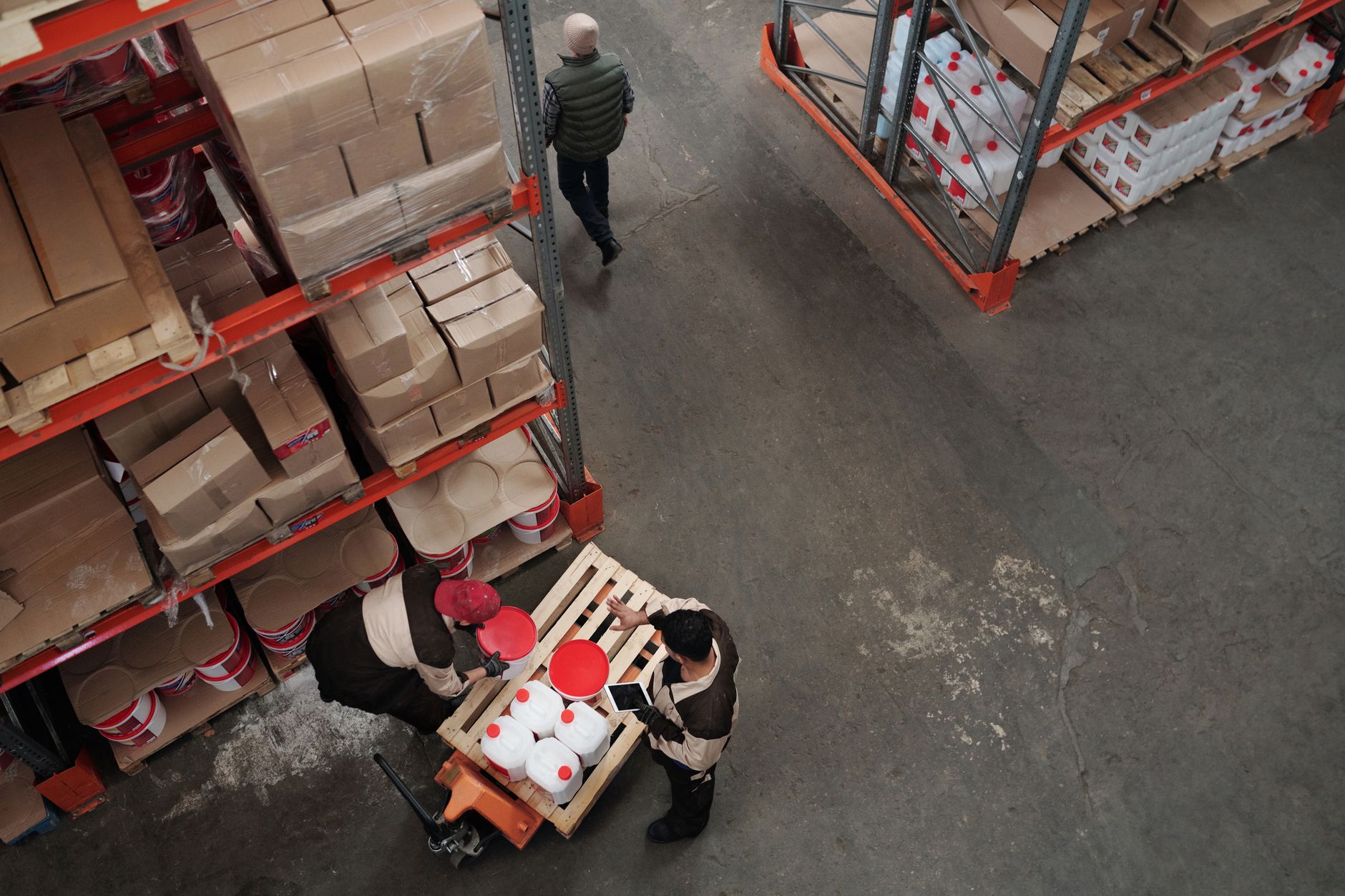
The robot is an addition to the crew, not a replacement for it. A sugar refinery still needs people on the packing lines, at the silo load-out, on palletizing, in quality and in maintenance. The robot handles the repeat transport so those people stay at their stations instead of walking the aisles.
A practical start is one or two robots working alongside the existing team, with at least one trained operator on every shift who can handle a stop, clear a blockage and call for service. Training covers loading, selecting a route, the pause and resume controls, and what to do when a route is blocked. Over time some transport hours may move off the team through attrition and reassignment, but the plant keeps people on every shift.
Expect a learning period. Staff need time to trust the route and to learn when to let the robot wait instead of going around it. Schedule that period with a lighter load, not with no one on the job.
What drives the savings, and what can you measure?
Savings come from fewer manual trips, fewer idle minutes on the line, and less time spent on the same walk or drive. How large that is depends on how many trips each shift makes today, and that number is one your plant can record in a week.
The public sources reviewed here do not give refinery hours per shift, so this page does not put a figure on it. They do show the labor pool around this work. According to the Bureau of Labor Statistics, material moving machine operators held about 867,700 jobs in 2024, and industrial truck and tractor operators made up most of that group with 792,500 jobs. Employment in the group is projected to grow 1% from 2024 to 2034, which is slower than the average for all occupations.
For the operator, a slow-growing occupation leaves less room to add these roles quickly from outside, so the transport work is worth examining before the next hire.
Measure before you ask for a quote. For two weeks, count the trips per shift between silo, packing, palletizing and dispatch, note the minutes each trip takes, and note how often a line waits for material. Those three numbers are the basis of the savings case, and the site assessment reviews them first.
What can the robot not do?
A mobile robot does not remove dust, does not make a dusty area safe, and does not replace the controls that keep combustible dust from building up. A route is one part of a system, and it must be designed around the controls, not used as a substitute for them.
The Chemical Safety Board recommended in 2006 that OSHA adopt a combustible dust standard. The sources reviewed here do not confirm whether OSHA has issued that rule, so check osha.gov and your state requirements before finalizing any layout.
A robot also has real limits on the floor. The main ones to plan for are these:
A jam at a conveyor, screw or silo outlet still needs a trained person to clear it.
No route goes into a dust-classified area unless the equipment is rated for it.
A route with an unmapped gap, a blocked door or an uneven floor will stop until it is fixed.
Loads outside the robot's rated weight or size need different equipment.
Dust housekeeping, inspection and the shift schedule stay with your plant's team.
A robot pausing when someone steps into its path is intended behavior. It is part of the safety case, not a fault to work around.
How do you get started?
For autonomous mobile robots for sugar refineries, the starting point is a free site assessment. Our team maps the plant layout, reviews the routes between silos, packing lines, palletizing and dispatch, checks the floor, doors and clearances at each stop, confirms the area rating, and talks with the people who run each shift. From that work we select the right robot for your site, and a lease quote follows.
Robots are only leased, through financing. The payment comes in the quote after the site assessment, and it depends on the robot selected, the number of units and the service arrangement. Robot lease options can include a pilot with one leased unit and spare unit coverage for routes that cannot pause. We integrate the robot with your routes and line equipment, train your staff, and service it nationwide.
Before you sign, ask for a route by route plan, a written list of what the site assessment found, and the service arrangement in writing. Start with one route, measure the trips per shift you counted, and widen the deployment only when those numbers hold up.
Frequently asked questions
Want a warehouse robot at your sugar refinery?
Tell us about your site. We will recommend the robot, quote the lease, and keep it serviced.