
Key takeaways
- Hauling frames and parts between welding and paint is the job autonomous mobile robots take over most directly.
- Trailer plants run modest crews, so every hour a handler spends hauling is an hour taken from the line.
- Fixed routes keep frames and parts on schedule without tying up forklifts or staff.
- The robot works beside your crew, which still handles loading, inspection and exceptions.
- Savings come from your own haul logs, measured in a free site assessment before the lease quote.
How can autonomous mobile robots for trailer manufacturing plants help?
Autonomous mobile robots for trailer manufacturing plants take over the hauling that eats into a material handler's shift. They carry heavy frames, axles, floor assemblies and bulky parts between stations on fixed routes, so the people on the line can stay on the line.
The payoff is clearest between welding and paint. A frame that leaves the weld cell has to reach the paint feed on time, and when it arrives late the line waits. A robot on a set route makes that move on the same schedule every shift, without a forklift or a person walking the load across the floor.
Robot leasing for business spreads the commitment over a schedule rather than one large sum. We lease the robot through financing, deploy and integrate it on your floor, train your staff and service it nationwide. The fixed robot lease payment comes in the quote, which follows a free site assessment.
What does hauling cost a trailer plant today?
Trailer plants move a lot of heavy, awkward material. Frames, axles, floor assemblies and bulky parts travel from station to station, and in many plants that movement falls to a pallet truck, a forklift driver waiting for a free slot or whoever is nearest. None of it adds to the trailer, yet all of it takes time.
The plants themselves tend to be modest in size. According to a private market research estimate, 45,654 people were employed in truck trailer manufacturing in 2025, down 0.3 percent from 45,779 in 2024, and the average business in that category employs about 89.9 people. A separate estimate puts trailer and camper manufacturing at 60,813 employed in 2025, with growth of minus 1.3 percent that year.
In a crew that size, one person pulled off the line to haul frames is a large share of the material handling capacity. Hiring for these roles is also competitive. According to the U.S. Bureau of Labor Statistics, the total job openings rate averaged 4.3 percent in 2025 across the economy, and the manufacturing openings rate was 3.3 in December 2025, seasonally adjusted. Those are economy-wide and sector figures, so they describe the market your hiring competes in, not your plant alone.
What are the main benefits for the plant?
The first benefit is line flow. A fixed route runs on the same schedule every shift, so frames reach the paint feed when the paint line expects them. Stations stop waiting on a late move, and the line stops depending on whoever happens to be free.
The second is labor moved to skilled work. Hours spent walking loads across the floor go back to welding, fit-up, inspection and setup, the tasks that need a trained person. We measure those hours with you before anything is promised, because the plant's own haul logs are the honest starting point.
The third is handling consistency. A robot follows the same path and speed on every trip, which tends to reduce the bumps and drops that come from loads moved in a hurry. Fewer damaged parts means fewer frames held back for rework.
The fourth is a record. Each trip is logged, so the plant gets a view of where material waits, based on logged trips rather than floor guesses.
How does the robot work day to day?
The robot runs fixed routes that are set during deployment. A load is staged at a pickup point, usually at the weld exit or the parts rack, and the robot takes it once the crew confirms the load is secure at that point.
It travels to the drop point, such as the paint feed or a sub-assembly cell, and waits there until the cell is ready to take the load. Between runs it returns to a charging point during planned gaps. Along the way it slows or stops for people, forklifts and carts it meets in the aisle.
Routes do change. When a line is reconfigured or a station moves, we remap the route and test it before the new layout goes live. Your supervisor can see the trip queue and move a run up when a line needs a frame sooner.
Which areas of the plant does the robot work in?
Most of the value sits in the material path between stations rather than inside the stations. The robot can cover the receiving dock to parts storage, the kitting area, the weld exit, the paint feed, the final assembly lines and the finished trailer staging area. The zones below show what it does in each.
Aisles, doors and floors decide how well a route runs. The path must stay clear of permanent obstacles, doors must open or stay open on the schedule the route needs, and the floor must be level enough for the robot's wheels. The site assessment checks each of these before a route is drawn.
How does the robot work alongside your existing staff?
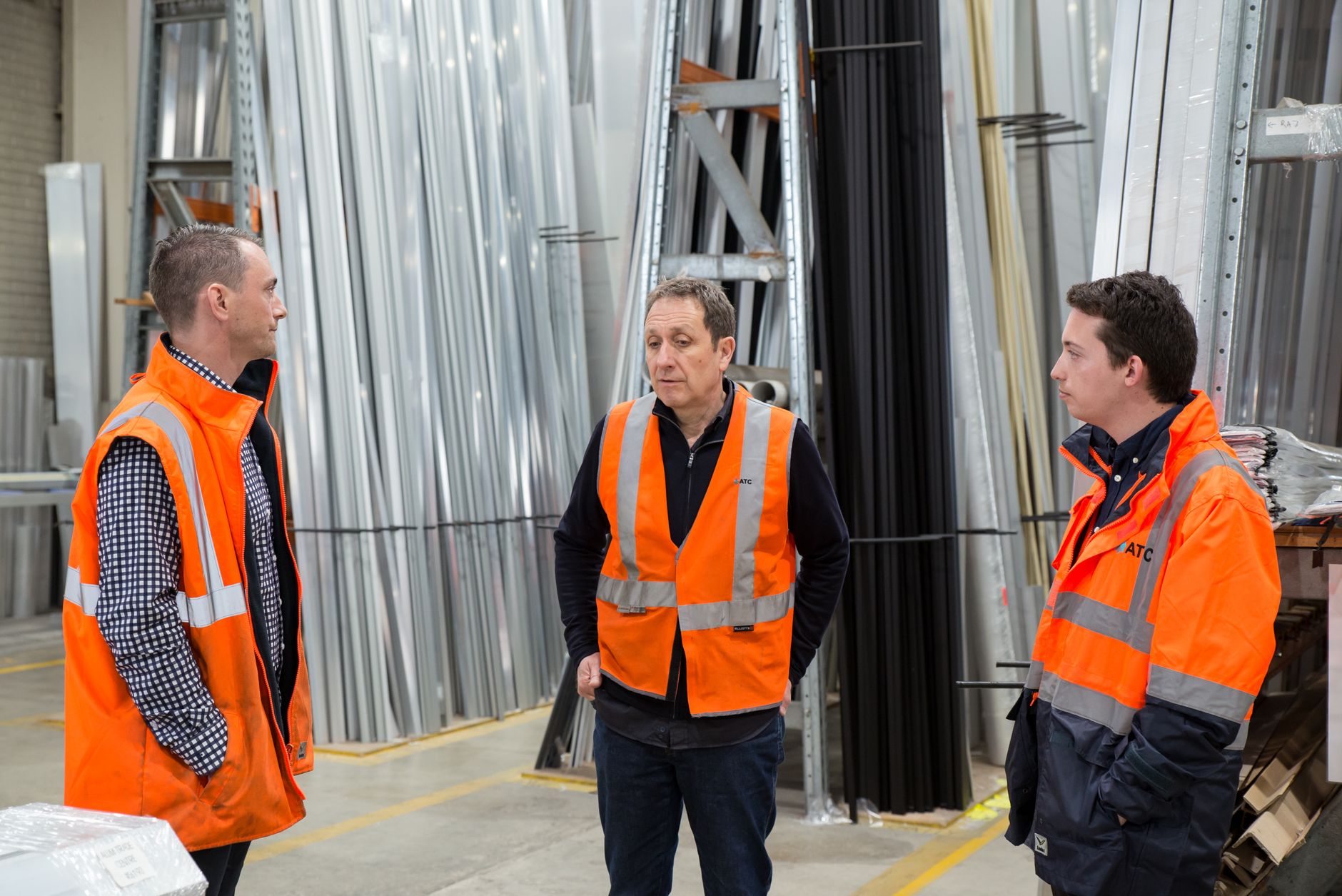
The robot does not replace the crew. It takes the repeated haul off the people who were doing it, and they move to loading carts correctly, inspecting frames, clearing jams and handling anything off the route. The plant still needs its team, and that team spends its shift on work that needs judgment.
A few trained staff own the system day to day. They confirm loads at the pickup points, respond to the robot's alerts, keep the charging points clear and call for help when a route is blocked. Training is part of deployment, so the people who run the robot know how to recover it before they need to call us.
We service the robot nationwide, and our team dispatches to your plant when a repair needs hands on the floor. That matters on a line where a stopped robot can stop a route, so we agree on support hours during the site assessment.
What drives the savings, and how do we measure them?
Savings come from four sources: the hours the robot takes over from hauling, the hours that return to skilled work, fewer stations waiting on a late move, and fewer parts handled twice. Each one is a labor and time effect, and each depends on how many trips your plant makes per shift.
We do not have a verified hours range for trailer plants, and we will not offer one before we have looked at your floor. During the free site assessment we count your haul trips, measure the distances and time the waits at each station, then build the savings from your own figures.
The labor outlook supports planning around the crew you have. According to Department of Labor occupational data, employment for hand laborers and freight, stock and material movers is projected to grow 1.5 percent by 2034. That is a modest outlook, so a plant should not count on hiring its way out of hauling strain.
What can the robot not do?
The robot is a transport tool, and it has clear limits. It does not weld, fit, paint, inspect a joint or judge whether a part is good. It does not load itself onto a truck, and a route that changes often takes more mapping time.
Being straight about these limits is part of the job. A route planned around them runs well, and one expected to do everything disappoints the crew.
- It moves only the load its rating allows, which the site assessment confirms against your heaviest frame.
- It follows mapped routes, so a layout change needs a remap before it runs again.
- It slows or stops for people and obstacles, so a blocked aisle holds the route until it clears.
- It cannot resolve exceptions alone, such as a shifted load or a cart left in the path.
- It needs charging points and planned charging time, which a multi-shift plant must schedule.
How do you get started?
Start with a free site assessment. We map the floor, count your haul trips and identify the route that causes the most waiting. A site assessment is where autonomous mobile robots for trailer manufacturing plants get their route, load rating and lease quote. A pilot on one route is a practical place to begin.
Lease options are handled through financing. The quote comes after the site assessment, once we know the robot, the route and the support your plant needs, so you see the full commitment before deciding. The payment comes in that quote, and nothing is quoted before we have seen the floor.
After you sign, we deploy and integrate the robot, train your staff and provide go live support. Service continues nationwide. If you keep haul logs or a list of your heaviest loads, bring them, because they make the first visit faster and the lease quote more accurate.
Frequently asked questions
Want a warehouse robot at your trailer manufacturing plant?
Tell us about your site. We will recommend the robot, quote the lease, and keep it serviced.
Sources
- Private market research estimate, truck trailer manufacturing employment
- Private market research estimate, trailer and camper manufacturing employment
- BLS job openings data, trade news summary (January 2026)
- BLS job openings data, trade news summary (Q4 2025)
- BLS manufacturing job openings rate series, federal economic data
- Department of Labor occupational outlook data, hand laborers and material movers