
Key takeaways
- Hangar floors need repeat scrubbing between jobs, and a floor robot can run that work on a set schedule.
- Technicians stay on aircraft work when floor care moves to a scheduled machine.
- Published hangar hour counts are scarce, so we measure your floor hours at a free site assessment.
- A robot works beside your crew and does not replace the team.
- The lease payment comes in a quote after a site assessment.
How can cleaning robots for airport hangars help?
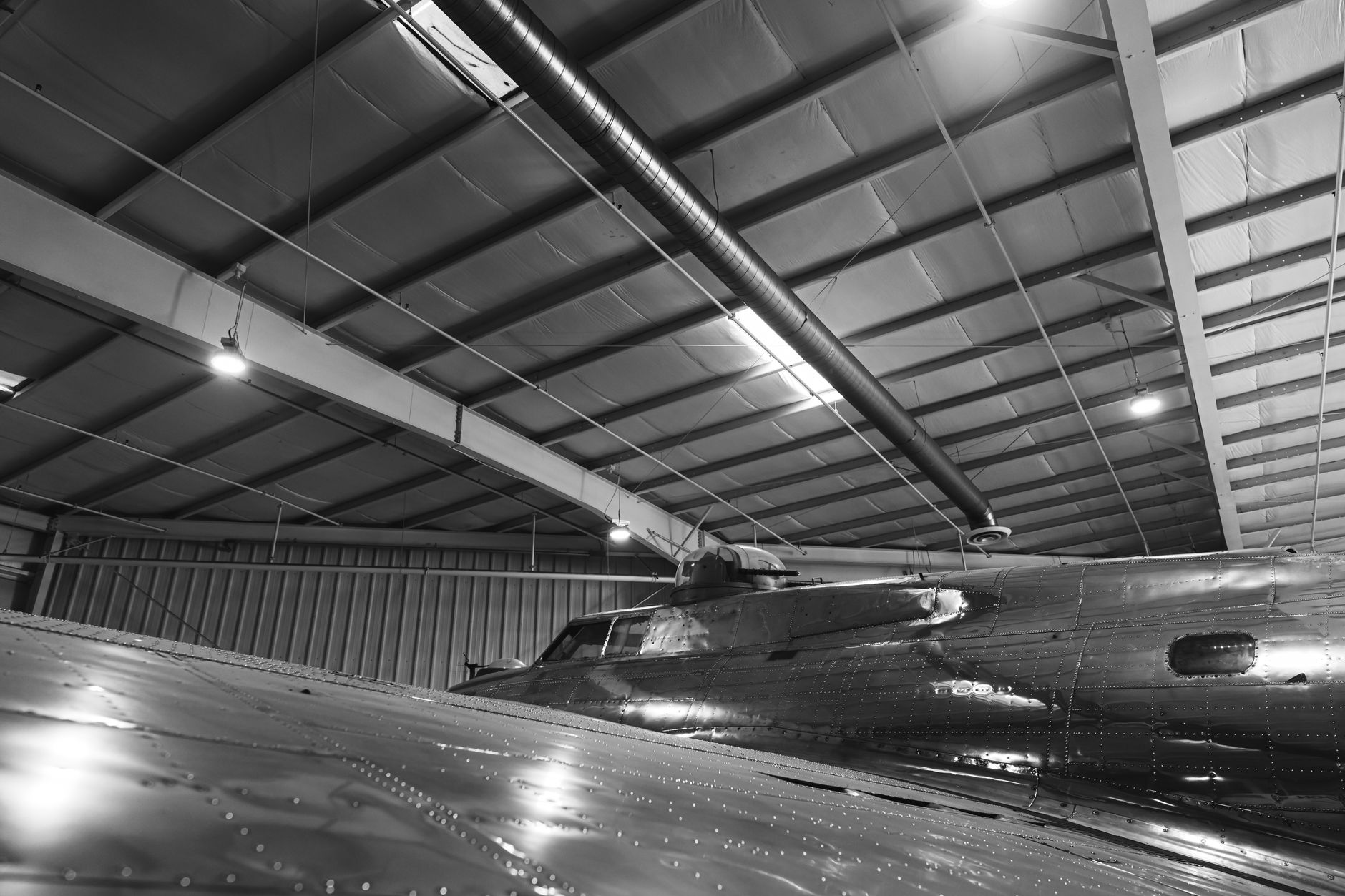
Cleaning robots for airport hangars take over the repeated floor scrubbing that otherwise pulls technicians away from aircraft work. A hangar floor is large, smooth and open, and between maintenance jobs it picks up oil spots, tracked-in grit and dust. A floor cleaning robot can scrub that surface on a set schedule, usually after the bay is cleared, so the floor is ready when the crew comes back.
The payoff is not only the hours returned to the crew. A scheduled machine follows the same route the same way each time, so floor condition is more predictable from one shift to the next. That consistency matters in a space where a stray tool, a wet patch or a dusty surface can hold up a job.
We are a US commercial robot integrator. We pick the robot that fits the site, lease it through financing, deploy and integrate it, train the staff and service it nationwide. The payment comes in a quote after a free site assessment, so the general points on this page are a guide and not a promise for your bay.
What does floor cleaning take from a hangar crew today?
Most hangar floors are cleaned in the gaps between aircraft jobs. The people who clean are often the same people who handle tooling, inspections and paperwork, so floor work competes directly with the aircraft. When a bay is cleared, someone has to sweep, scrub and check the surface before the next job can start, and that work often lands at the end of a long shift.
The labor market makes this harder to solve by adding staff. According to the US Bureau of Labor Statistics, employment of janitors and building cleaners is projected to grow 2 percent from 2024 to 2034, which the agency describes as slower than the average for all occupations. A hangar cannot count on a larger cleaning team arriving on demand, so floor work has to be planned rather than hoped for.
Night work is part of the trade too. An archived Bureau of Labor Statistics page from 2010 noted that many cleaning workers work evening hours because buildings are cleaned while empty. That page is old, so we treat it as background rather than a current figure. The point still holds: quiet hours are when floor work fits best around an active shop.
What are the main benefits for an airport hangar?
The first benefit is crew time. Technicians spend their hours on the aircraft, not behind a floor machine. A scheduled robot takes the repeat task, so the lead can plan the day around inspections and repairs instead of around cleaning gaps.
The second is a floor that is ready on time. A machine set to run at a fixed hour finishes before the first crew arrives, so floor readiness becomes a schedule item rather than a request to someone who may be busy. That helps a lead plan the start of a shift with confidence.
The third is a record of the work. Each run follows the same route, and the machine keeps a log of what it covered and when. For a facility that wants a clear record of floor care, that log is useful at audit time and when a supervisor asks whether a bay was cleaned before a job.
The fourth is steadiness. Hand cleaning varies with who is on shift and how tired they are. A scheduled machine gives the floor the same pass every time, which lowers the chance that one bay gets a thorough scrub while another gets a quick sweep.
How does the robot work there day to day?
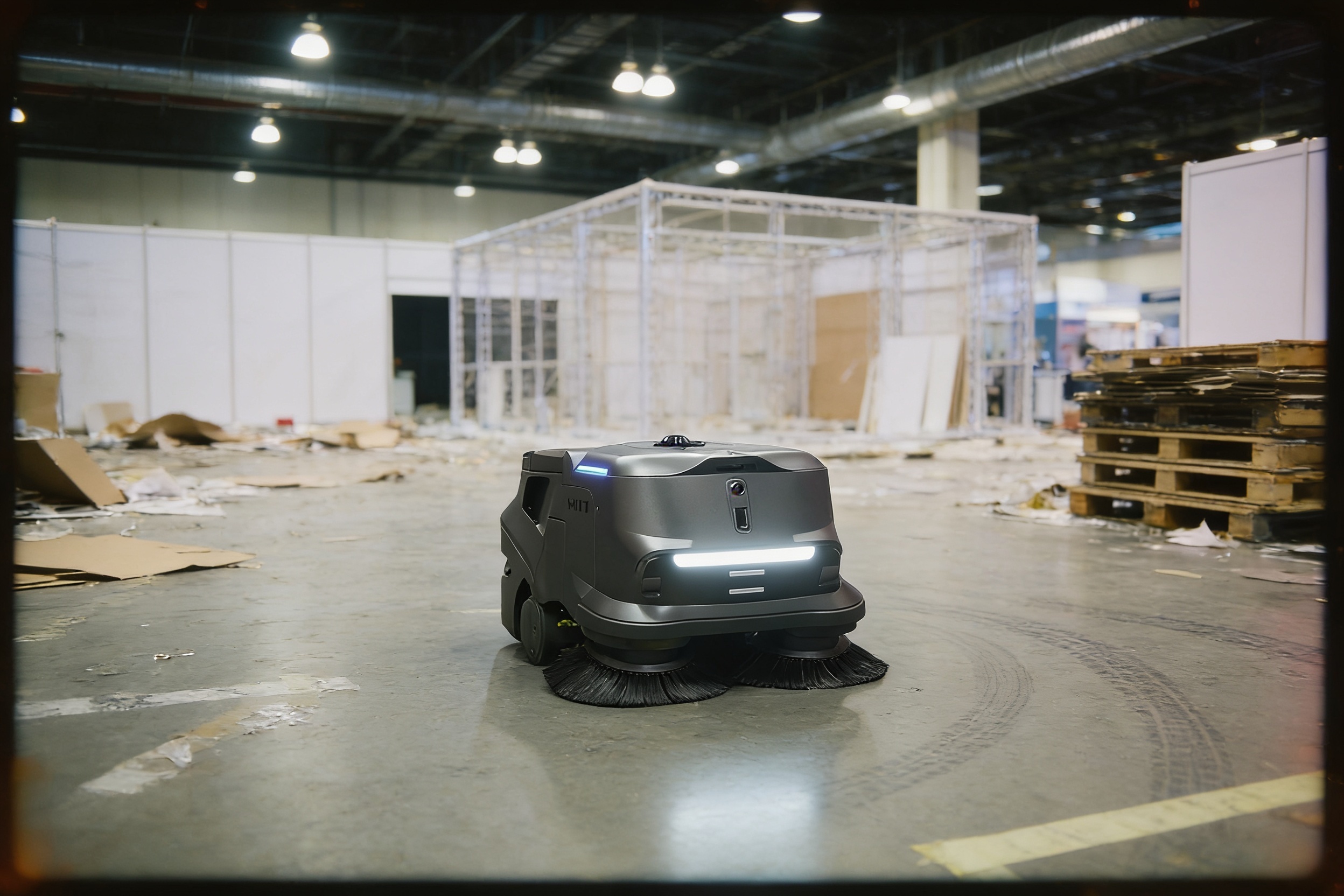
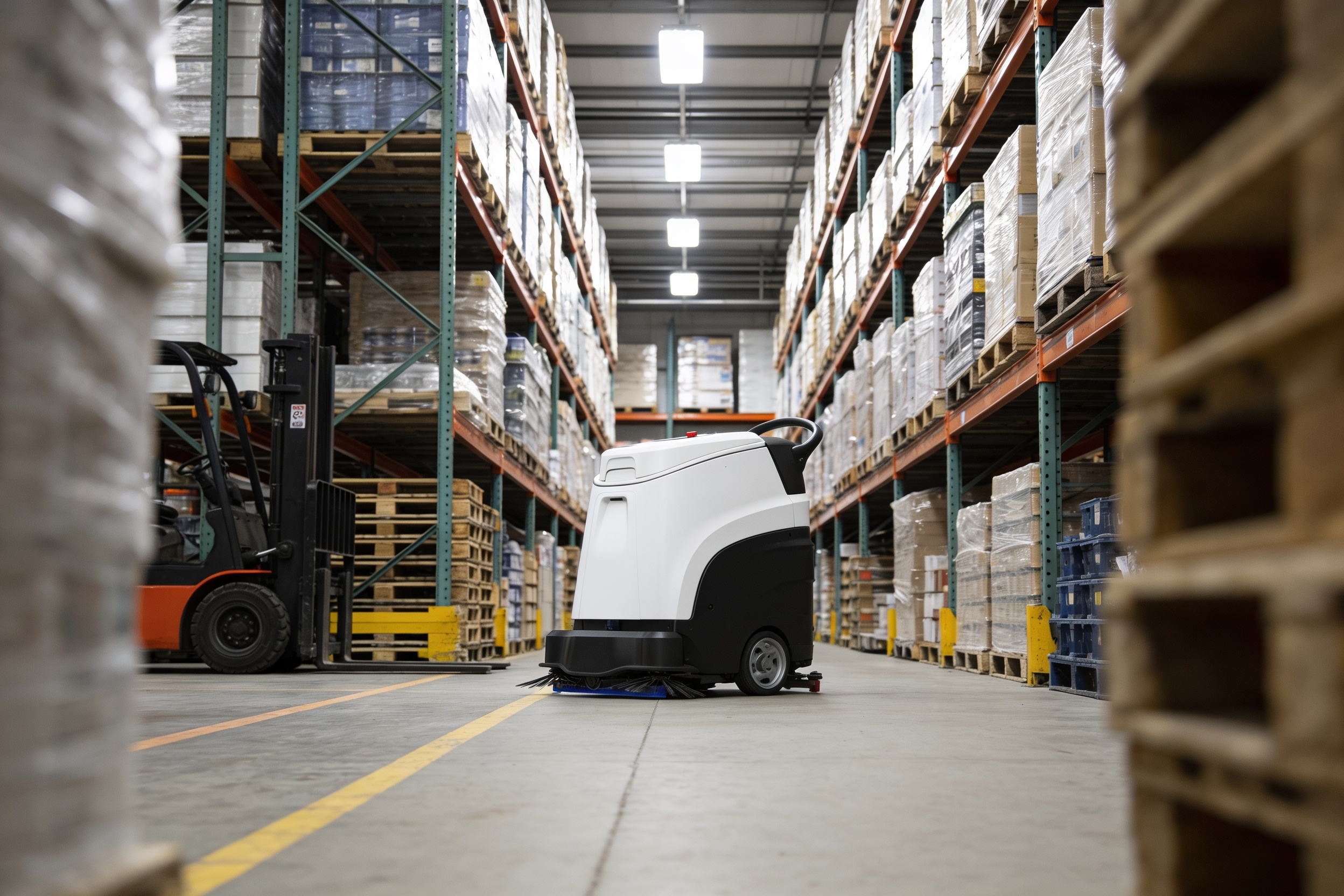
The robot needs a mapped route before it runs. During the site assessment, we map the open bay, the aisles, the doorways and the thresholds, then set the route and its boundaries. The map is made once and updated when the layout changes, such as when a stand, a cart or a parts rack moves to a new spot.
Before each run, the crew clears the route. Loose tools, hoses, cords, pallets and chocks are the main hazards for a floor machine, and they should be picked up at handover. The robot can be set to stop when it meets an obstacle, and a stopped robot waits for a person to clear it.
During the run, the machine follows its route at the set time, scrubbing and drying as it goes. Nobody needs to stand at the machine. When the run ends, the robot returns to its charging spot and reports its status, including any stop it made along the way.
The day is not finished when the robot is. Someone still walks the floor afterward to look for wet spots, missed patches and anything the route did not reach. That check is short, and it catches the cases a machine cannot judge on its own.
Which areas of a hangar does it work in?
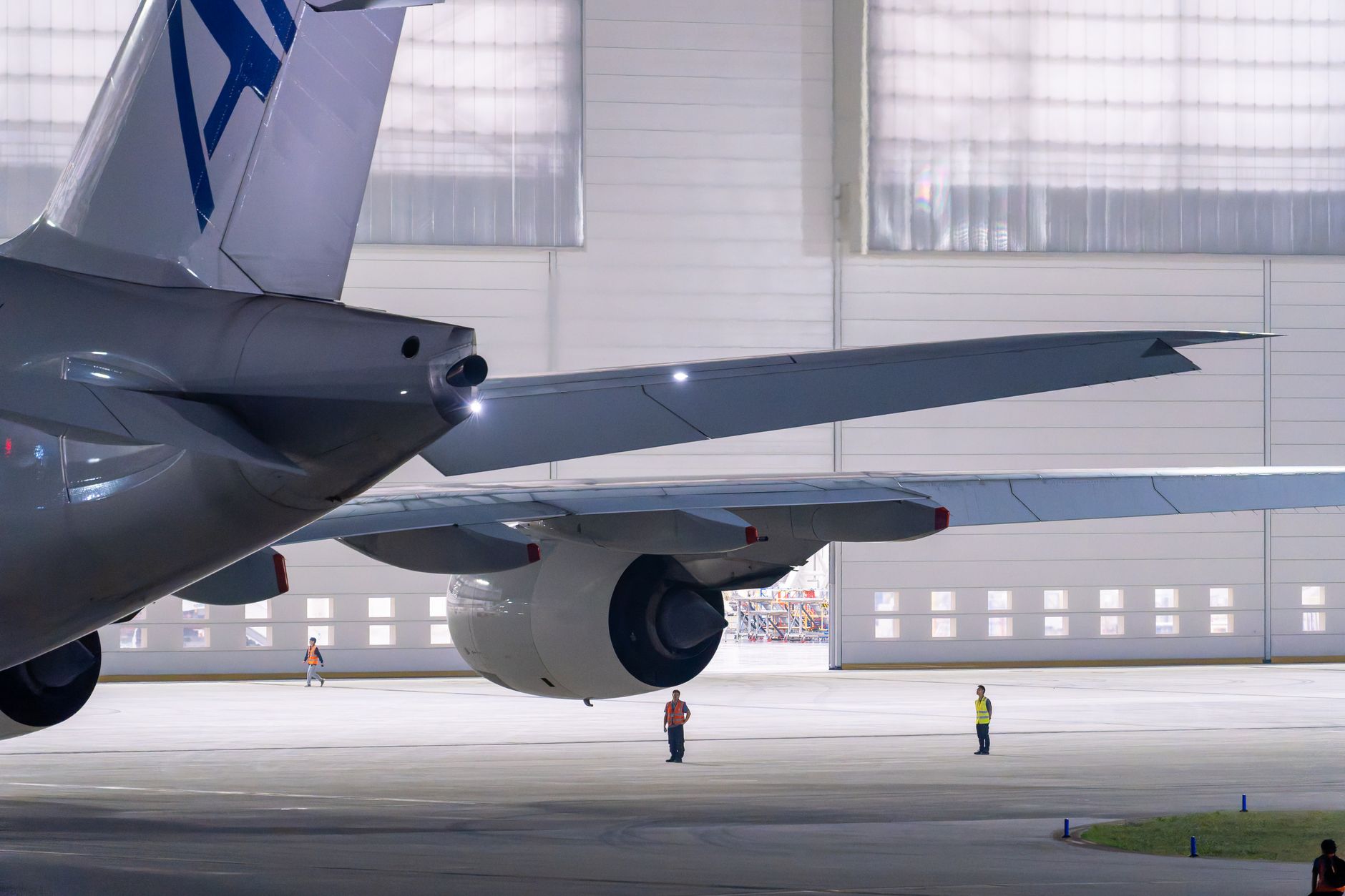
The robot works where the floor is open, reasonably smooth and gets soiled again and again. The main bay floor between aircraft stands is the obvious starting point. Aisles between parts shelving and tool storage come next, and the corridor from the bay door to the crew area is often a strong candidate because grit collects at that entry.
Some areas stay with the crew. Surfaces with heavy debris, deep cracks, open drains or uneven thresholds are poor fits for a floor machine. Areas that need a specialized method, such as spill response or work near fuel handling, also belong to people with the right training and procedures. Our site assessment marks these areas clearly on the map.
The zones below show the kinds of areas we review on a typical site. Each one is a candidate, not a guarantee, and the final route depends on what we see when we walk the building with your team.
How does it work alongside your existing staff?
A floor robot works with a crew, not in place of one. The hangar still needs technicians, inspectors and supervisors, and it still needs people to handle exceptions, spills and the final check. The robot takes the repeat scrub, and the people handle everything it cannot judge.
Roles shift a little. A lead or supervisor owns the route and the handover. One person checks the machine at the start of each shift, clears the route and walks the floor after the run. Technicians return to aircraft work sooner, which is the point of the change.
We train the staff who run the robot, so nobody learns the machine on a live job. Training covers starting a run, clearing a stop, reading the status display and the basic care the crew performs. Deeper service, repairs and dispatch stay with our team, who respond nationwide.
We also plan the go live. The first runs are supervised, the route is adjusted with the crew, and the schedule is set around the real shift pattern. That keeps the crew in control and lets the team see how the floor responds before the robot runs unattended.
What drives the savings, and how do we measure them?
The savings come from three places: hours the crew no longer spends on floor care, floor work moved into quiet hours, and fewer interruptions to aircraft work. The size of each depends on how many hours your bay spends on floor care today, so we measure that during the site assessment rather than estimate it from a general rule.
We do not quote a sourced hours range for hangars on this page. We have not found a published study of floor robots in aircraft hangars with measured hours. We would rather measure your floor care time, bay size, route length and shift pattern, then give you numbers that apply to your facility.
Labor is best framed in hours. The projected job growth noted earlier suggests crew time is a limited resource, so each hour returned to aircraft work has value even before any change to staffing. The quote sets out a fixed robot lease payment, so the comparison is between that payment and the hours you recover on your floor.
What can the robot not do?
A floor robot does not inspect aircraft, clean aircraft surfaces or handle fluid spills. It does not replace a technician, and it does not do the careful work around tooling benches, engines or parts. Anything that needs judgment stays with the crew.
It also needs a route that suits it. Heavy debris, wet spills in the path, deep cracks, open drain covers and steep thresholds can stop a run. Some floors need another method or another machine, and we say so during the assessment rather than placing a unit that will struggle.
Scheduling is a real limit. A robot can run only when its route is clear, so a hangar that is never empty needs a plan for run windows. If a route is blocked for a whole shift, the robot will not cover it, and the crew needs to know that before the day starts.
How do you get started?
Start with a free site assessment. We walk the hangar, measure the floor areas and the route, note the thresholds and obstacles, and talk through your shifts and floor care hours today. That gives us a site plan and the right robot for the floor.
The robot is leased through financing, and we do not sell it. The payment comes in a quote after the assessment, so you see the lease terms for your facility before you commit. The quote also lays out what deployment, integration, staff training and nationwide service include, so the terms are clear before anything is installed.
Many operators start small. A common path is one leased unit on one bay, with the route tuned during the first weeks and the schedule adjusted once the crew sees the results. If the numbers hold, the route can grow to more bays. This phased deployment lets a hangar keep working during the change.
If you run a hangar and want to see whether a floor scrubber lease fits your bay, request the free site assessment. Bring your shift pattern, your floor care routine and any layout drawings you have. That is enough for us to give you a useful first answer.
Frequently asked questions
Want a cleaning robot at your airport hangar?
Tell us about your site. We will recommend the robot, quote the lease, and keep it serviced.