

Key takeaways
- Sales floors and lanes are large, flat and mostly empty between sessions, which is when a floor cleaning robot can make its pass.
- Lanes and reconditioning floors collect debris and spills that staff currently clean by hand between sales.
- Cleaning labor is hard to keep steady, so fewer open shifts matter as much as the hours a robot takes back.
- The robot shares the building with the people who run sales, reconditioning and detailing, and it does not replace them.
- Start with a free site assessment, then a lease quote that includes maintenance and go live support.
How can cleaning robots benefit auto auction houses?
Cleaning robots for auto auction houses take on a job that is large, repetitive and easy to schedule. A sales floor is a wide indoor space with predictable lanes, and between sale sessions it sits empty long enough for a floor cleaning robot to make a full pass. The payoff is clean lanes and reconditioning floors at the start of every session, without pulling staff away from vehicle work.
The robot does not replace the people who run the sale, grade vehicles or prepare them for the block. It handles the floor passes that are slow, repeat every session and tend to get pushed back when the crew is busy. For an operator, the practical test is readiness: the floor should be clean when the next sale opens.
Service Robot Co. is a US commercial robot integrator. We recommend the right robot for your site, lease it through financing, deploy and integrate it, train your staff and service it nationwide. Every project starts with a free site assessment.
What does floor care look like at an auction house today?
Auction houses are big buildings with a lot of floor, and the operators who run them know that scale better than any table can show. According to the National Auto Auction Association, its membership page lists 355+ domestic and international auctions. That count includes international members, so it describes the membership rather than U.S. sites alone, but it shows how many operators face the same floor problem.
Facility sizes vary widely. As reported in trade press, one new Texas auction runs 10 lanes that allow nearly 3,000 units to run per sale. A 2019 trade press report on a Texas reconditioning facility describes 20,000 sq ft of space with 14 mechanical bays, 10 lifts and three detail lanes. Both show how much floor a crew covers between sessions.
Today the work is done by hand or with push equipment. Staff clear lanes of tire debris, dropped parts, fluid drips and paper, then sweep and mop after the final sale, often late in the evening. The same people are needed for reconditioning, detailing and the next day's set-up, so floor care is usually the task that slips first.
What are the main benefits?

The clearest benefit is consistency. A floor cleaning robot runs the same mapped route after every sale, so lanes and reconditioning floors start each session in the same condition. Staff no longer have to decide, at the end of a long day, which floor gets done and which waits until morning.
The second benefit is timing. Because the work runs after the last sale, it stays out of the sale window, when bidders, drivers and inspection crews are moving through the building. This is post event floor recovery, done before the next session rather than squeezed into it.
The third benefit is safety. Lanes with drips, grit or loose debris are a slip and drive-over concern for people walking between vehicles. A fixed schedule means hazards are picked up before the next session starts, not after someone reports them.
The fourth is steadier staffing. A repeatable floor pass depends less on whether a specific person shows up for a late shift, which matters in a field where open shifts are hard to fill.
How does the robot work there day to day?
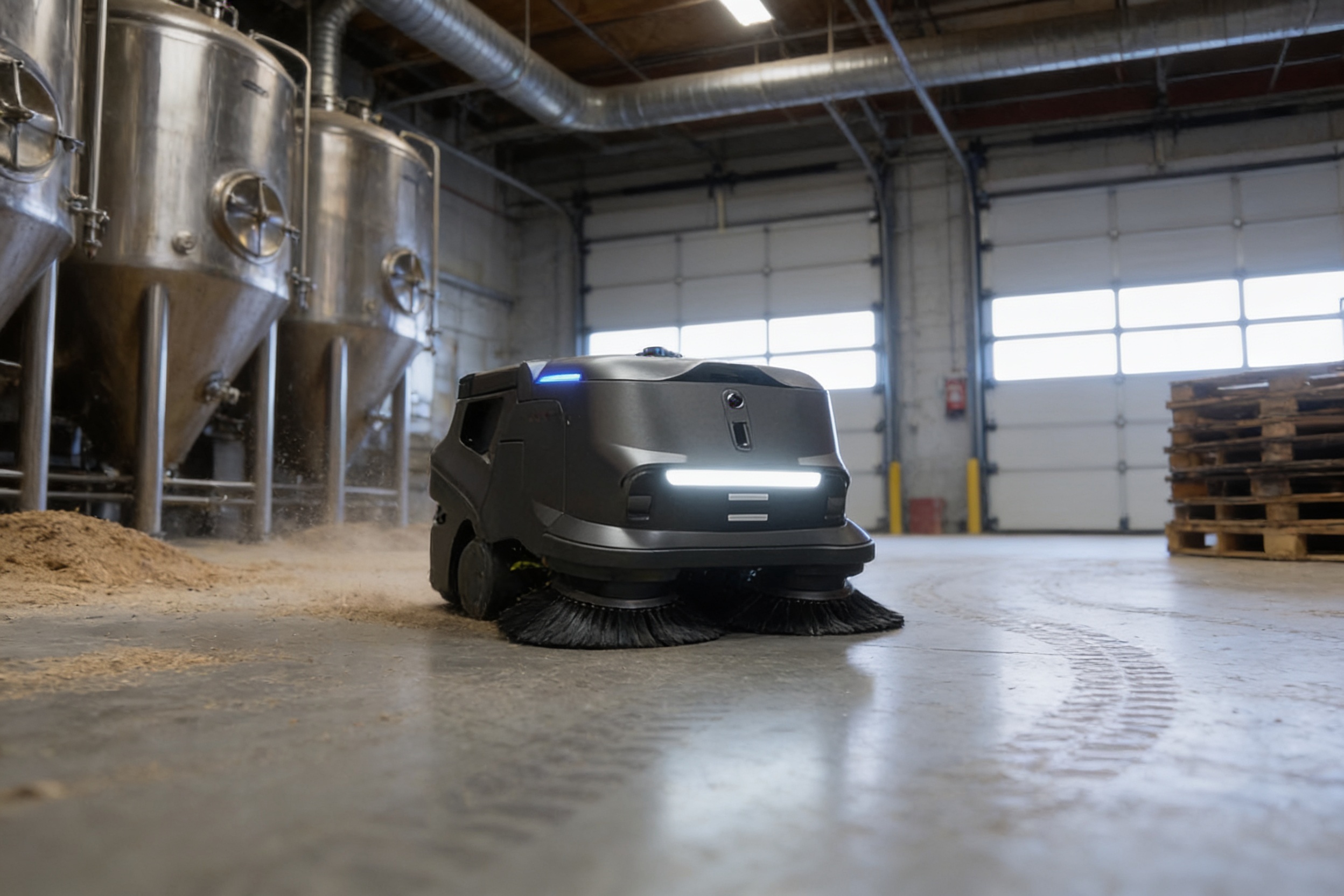
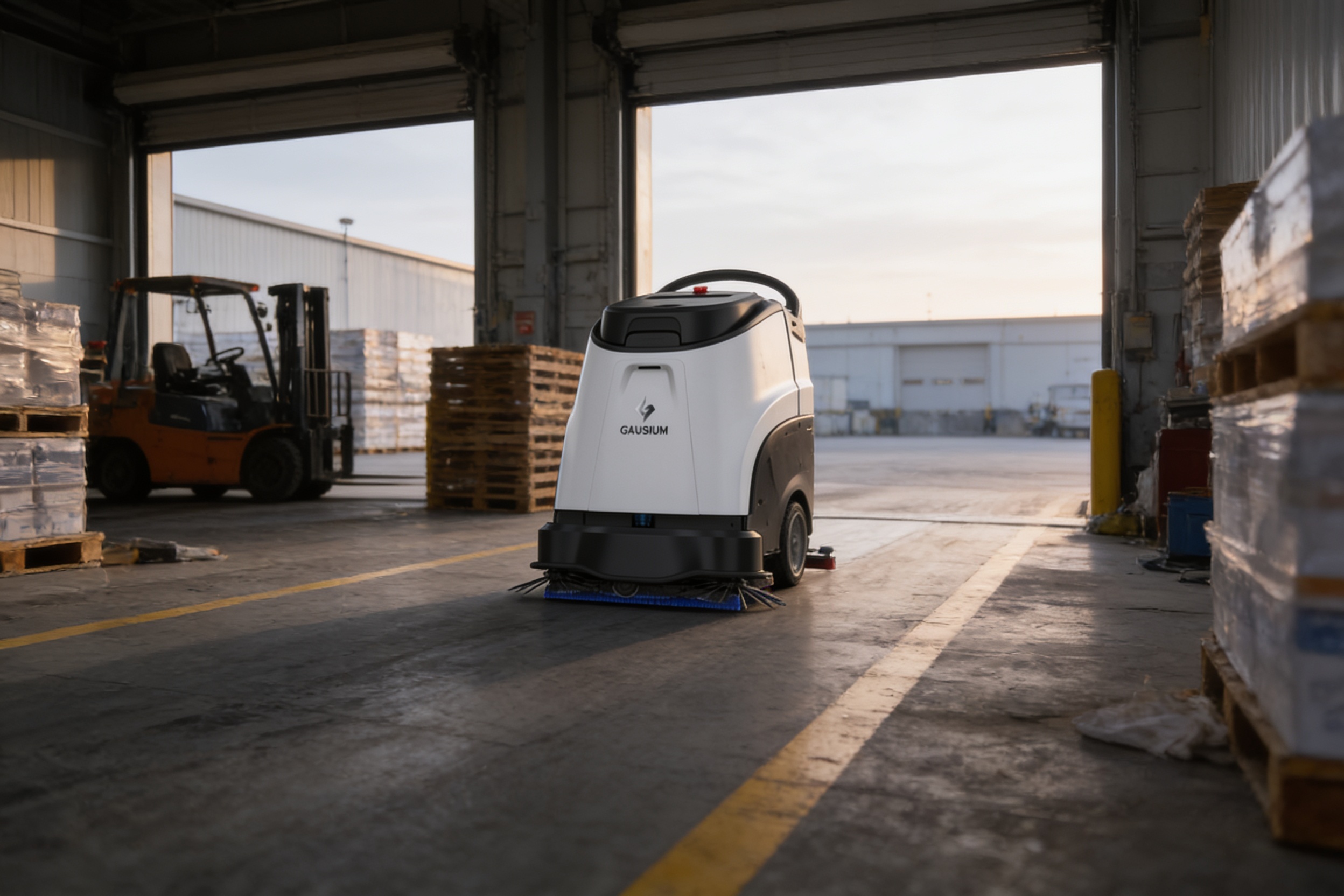
Before the first run, the robot is mapped to your building. Our team walks the floor with you, marks the lanes and the no-go areas, and sets the route. That mapping happens during the site assessment and carries into go live support, when the route is tested under real sale-day conditions.
Each evening, staff clear the route of cones, cords, stray tools and any vehicle still on the floor. The robot then runs its route, stops when it meets an obstacle and logs what it covered. At the start of the next shift, a staff member reviews the log, clears any stops and confirms the route finished.
The work is scheduled, not on call. Because the route repeats, the same lanes get the same pass, and the crew can see at a glance which areas were covered and which need a manual touch-up. Schedules change with the sale calendar, and the route can be adjusted when lanes move.
Which areas does the robot work in?
The robot works on hard, flat, mapped floors. At an auction house those floors fall into several areas, each with its own rhythm, and the list below shows where the robot earns the most time back.
It does not work on vehicle surfaces, outdoor yards or floors covered in loose materials. Those stay with staff, and the site assessment confirms which areas belong on the route before anything is quoted.
How does it work alongside existing staff?
A robot does not run the building alone. The auction still needs sale staff, lane runners, reconditioning technicians, detail crews and an office team. What changes is who handles the repeat floor passes, which frees people for work that needs judgment.
Plan for a robot plus a smaller crew, not a robot alone. Your people keep spill response, trash, restrooms, vehicle handling and sale-day set-up. The robot takes the floor passes that otherwise pull those people away from the rest of the day.
Service Robot Co. trains the staff who will run and check the robot, so the daily routine is clear before go live. We service the robot nationwide, which means your crew handles the daily checks and clears stops while our team handles the machine itself.
What drives the savings?
Savings come from hours and from labor that is hard to fill. We do not promise a number, and we do not quote a time saving from national averages. During the site assessment we measure the hours your crew spends on repeat floor passes, then show the result as a range built from your own schedule.
The labor picture makes the case. According to the U.S. Bureau of Labor Statistics, about 2,447,700 jobs in 2024 were held by janitors and building cleaners. The handbook projects growth of 2% from 2024 to 2034, which it describes as slower than average for all occupations, adding about 47,800 jobs, so the pool of cleaning labor is not expanding quickly.
Turnover makes it harder. A cleaning industry reader survey reported average annual turnover of 73 percent, and research from the Building Service Contractors Association International, presented in 2019, found that employees leave contract cleaning companies at 3.6 times the national average rate. Every open shift is a gap your floor care has to absorb, and a steady route keeps the floor on schedule when the crew changes.
What can the robot not do?
It cannot do work that needs hands, judgment or a vehicle. It does not wipe down cars, detail interiors, clean windows or handle trash and restrooms. It does not cover the outdoor yard, paved lots or spills that need an immediate response.
It needs a clear, mapped route. Parked vehicles, stored parts and loose debris on the path will stop it or leave gaps, and a route that changes often needs a remap. Surfaces such as deep carpet and heavily damaged concrete are reviewed in the site assessment, since they affect how well the floor gets cleaned.
It also needs a person checking it. The robot is one part of the floor program, not the whole program, and it works best when staff review the log every shift. We are candid about these limits during the site assessment, so the plan matches the building you have.
How do you get started?
Start with a free site assessment. We walk the building with you, look at the sales lanes, reconditioning bays, corridors and break areas, and measure the repeat floor work your crew does now. We map the site and recommend the robot that fits the floor.
Robots are leased through financing, and the payment comes in the quote after the site assessment. The quote covers the robot, deployment and integration, staff training, maintenance included and go live support. Many operators start with one leased unit, prove the route on sale days, then decide whether to add more.
Cleaning robots for auto auction houses work best when the route is set before the first sale. After go live, we service the robot nationwide and adjust the route as the sale calendar changes. Your crew keeps the daily checks, and we handle the machine.
Frequently asked questions
Want a cleaning robot at your auto auction house?
Tell us about your site. We will recommend the robot, quote the lease, and keep it serviced.
Sources
- National Auto Auction Association membership page
- U.S. Bureau of Labor Statistics, Occupational Outlook Handbook: Janitors and Building Cleaners
- Trade press report on a new Texas auto auction
- Trade press report on a Texas reconditioning facility, 2019
- Cleaning industry reader survey on turnover
- Building Service Contractors Association International research, as cited in an industry blog