

Key takeaways
- Dining room floors soil in every meal rush, and cleaning shifts are hard to staff.
- A floor cleaning robot can make scheduled passes between service periods, keeping the crew on food tasks.
- The robot takes the floor work, not the food safety work, so your team stays on the line.
- Savings depend on your floor, your hours and your schedule, so measure them at your own site.
- Start with a free site assessment, then receive a lease quote through financing.
How do cleaning robots for cafeterias help?
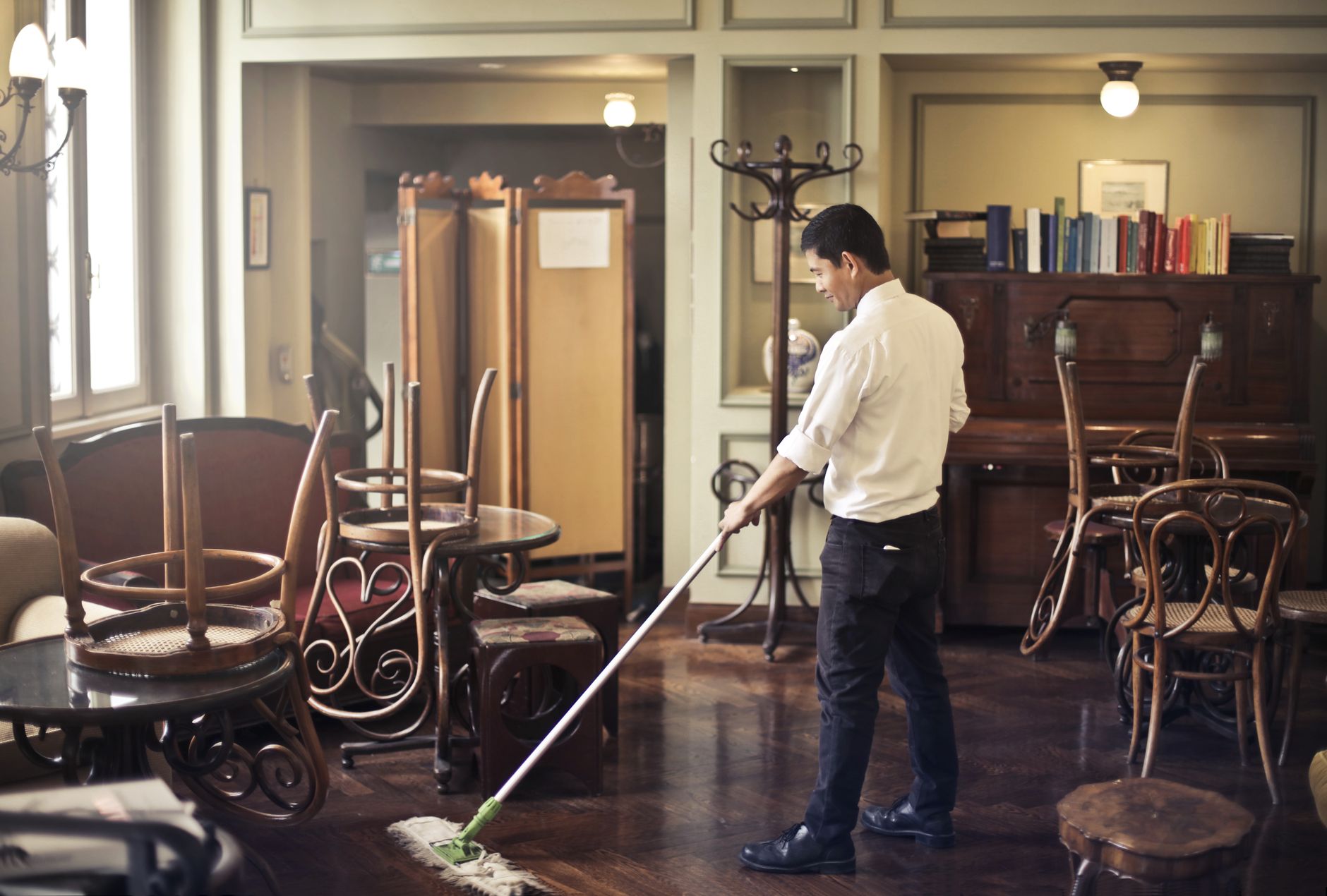
Cleaning robots for cafeterias take on the repeat floor work that builds up after each service period. A dining room floor is walked on by every person in line, and crumbs, spilled drinks and wet footprints show up within minutes of a rush. A floor cleaning robot can make scheduled passes between those rushes so the room is ready for the next group, while the serving and kitchen crew stay on the tasks that need them.
The biggest gain is usually in timing and staffing. Floor cleaning is easy to push to the end of a shift, when staff are tired and the room is full of chairs and carts. The robot handles the repetitive passes, and your people keep the spills that need a hand, the tables, the trays and the food safety checks.
We are a US commercial robot integrator. We pick the unit that fits your floor, lease it through financing, deploy and integrate it, train your staff and service it nationwide. The place to start is a free site assessment, and the payment comes in the quote after that.
What problem do cafeteria floors create today?
A cafeteria runs in short, heavy bursts. Breakfast, lunch and dinner each push a large number of people through a dining room in a window of an hour or two, and the floor takes the most wear in those windows. Cleaning has to fit between the rushes, and it has to happen on time.
Staffing that work is hard. According to the U.S. Bureau of Labor Statistics Occupational Outlook Handbook, janitors and building cleaners held 2,447,700 jobs in 2024, and the occupation is projected to grow 2 percent from 2024 to 2034, which is slower than average and adds about 47,800 jobs. A kitchen that needs a cleaner on the late shift is competing for workers in a slow-growing pool.
The food service side is crowded too. According to a BLS Technology Economics Data release for May 2023, 8.7 percent of jobs were in food preparation and serving related occupations, and restaurant cooks alone numbered 1.4 million. Turnover adds pressure. According to FRED, the seasonally adjusted total separations rate for accommodation and food services was 5.9 percent in December 2025, 6.1 percent in January 2026, 5.4 percent in February 2026 and 4.8 percent in October 2025. According to BLS Economics Daily, the quits rate in that sector was 3.5 percent in August 2026, down from 3.9 percent in August 2025.
What are the main benefits for a cafeteria?
The first benefit is a floor that is clean on schedule. Passes can run at fixed times between service periods, so the dining room does not depend on whoever happens to be free at 2 pm. The floor is ready for the next group rather than waiting on a shift change.
The second is that staff stay on serving and food safety. Servers, cooks and dish crews keep their hands on food, trays and sanitizing tasks. Floor passes that used to pull someone away from the line become a background routine that runs without a person pushing the machine.
The third is consistency. The robot covers the same route in the same way on each run, which is hard to match with a rotating crew working from a long checklist. Pair that with a staff member walking the room for spills, and the floor looks much the same at the end of a long day as it did at the start.
How does the robot work day to day?
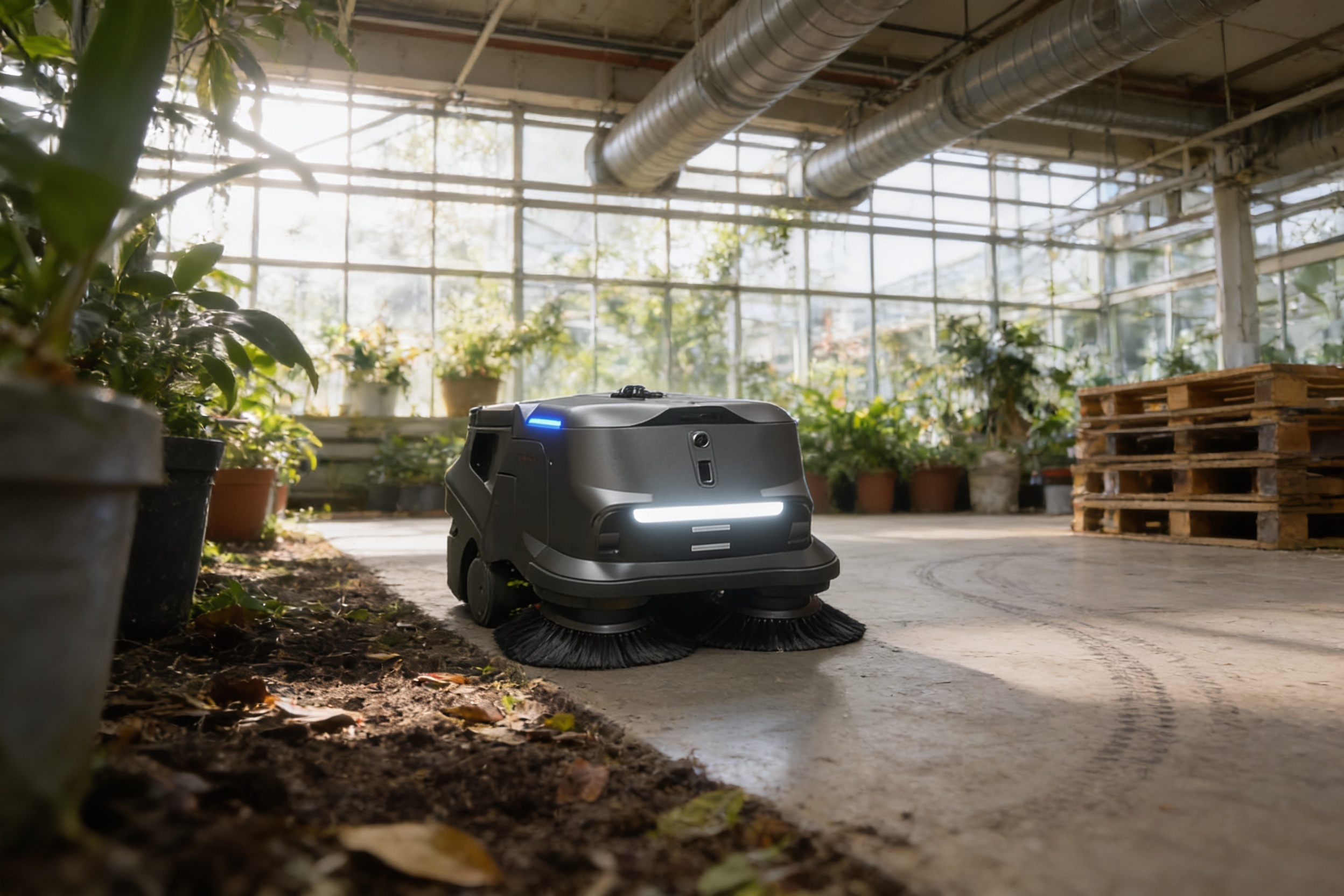
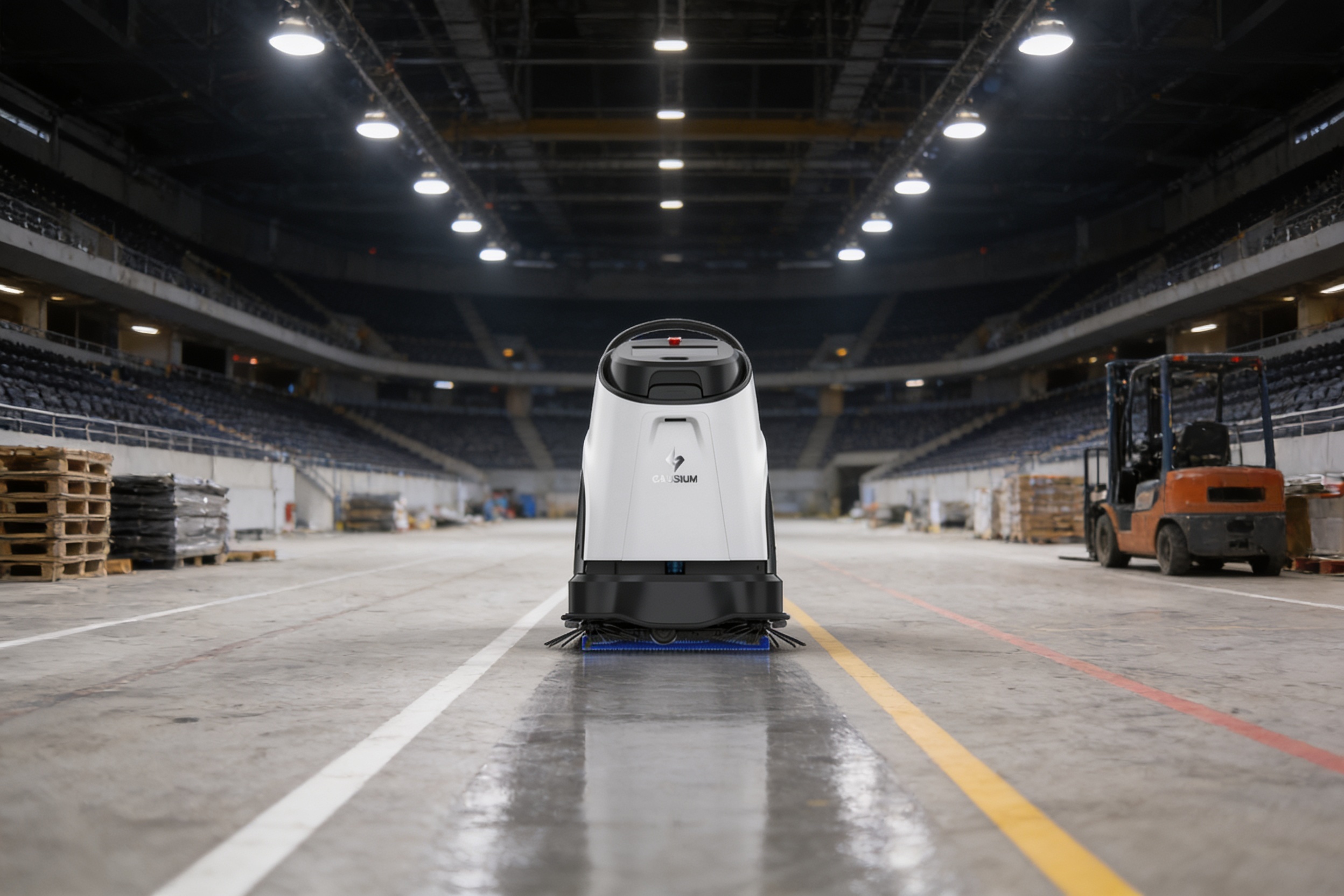
Before the first run, the unit is mapped to your room. The site assessment captures the layout, table and chair positions, walkways and thresholds, and the route is set around them. Your team agrees on what counts as a clear floor before each pass, so the robot is not asked to work in a room that is not ready.
A typical day has the robot running between service periods, plus one run after close. Staff clear loose items such as stray chairs and bags, confirm the path is open and start the run. The unit works its route and returns to its charging spot when it finishes.
Staff check the unit at the start of the day and handle any stop or alert it raises. Our service team handles repairs and maintenance nationwide, so the people on site do not need to diagnose the machine.
Which areas of a cafeteria does it cover?
Not every part of a cafeteria suits a robot, and the layout decides where it runs. The best use is hard, open floor that carries the most foot traffic and the most spills, with clear paths and few obstacles. Carpet, stairs, loose mats and food prep areas call for another plan.
The areas below are the ones that usually suit this kind of place. Each one is floor only. Tables, chairs, counters and food contact surfaces stay with your staff under your own cleaning schedule.
What drives the savings, and what do the numbers show?
Savings come from hours, not from a promise. The biggest lever is how many hours of floor work come off the schedule, and whether those hours are reassigned or cut. The size of the room, the number of service periods and the staffing you already have all change the result.
A floor cleaning robot seller says its units typically run about 3 to 4 hours per night in most commercial venues, according to its published FAQ. That is vendor material, not measured data, so treat it as a starting point for your own schedule rather than a promise. Vendor case studies in this category report large cuts in floor cleaning time, but those are published by vendors and not independently measured.
We did not find an independent study of hours saved per week for cafeteria or restaurant floor robots. The right figure for your site should come from the site assessment and your own schedule, measured over a few weeks of real service.
What can the robot not do?
A floor cleaning robot is a narrow tool. It does a floor job, and the rest of the room still needs people. Plan around these limits before you decide where it goes.
- It does not wipe tables, clean chairs, handle trays or clean food contact surfaces.
- It does not clear loose items from its path, so someone still picks those up before each run.
- It needs a route it can navigate, so carpet, stairs and some thresholds usually need a separate plan.
- It does not replace the food safety cleaning your own plan requires.
- It raises stops and alerts that staff must respond to during a run.
How do you get started?
Start with a free site assessment. We walk the dining room and the adjacent corridors, map the route, note thresholds and stops and talk through your service periods. Then we recommend the unit that fits your floor.
Lease it through financing. The payment comes in the quote after the site assessment, and it reflects the unit and the work on your floor. You can start with one unit on one floor and expand once the routine is running well.
We deploy and integrate the robot, train your staff and service it nationwide. Our team stays involved through go live, so cleaning robots for cafeterias become part of the daily routine rather than a separate project.
Frequently asked questions
Want a cleaning robot at your cafeteria?
Tell us about your site. We will recommend the robot, quote the lease, and keep it serviced.
Sources
- U.S. Bureau of Labor Statistics, Occupational Outlook Handbook: Janitors and Building Cleaners
- U.S. Bureau of Labor Statistics, Technology Economics Data: Food Preparation and Serving Related Occupations, May 2023
- FRED, Total Separations Rate for Accommodation and Food Services (seasonally adjusted)
- U.S. Bureau of Labor Statistics, Economics Daily: Quits Rate in Accommodation and Food Services, August 2026
- Floor cleaning robot seller, published FAQ (vendor material, not measured data)