
Key takeaways
- A floor cleaning robot takes over the repetitive floor pass that falls between booking blocks.
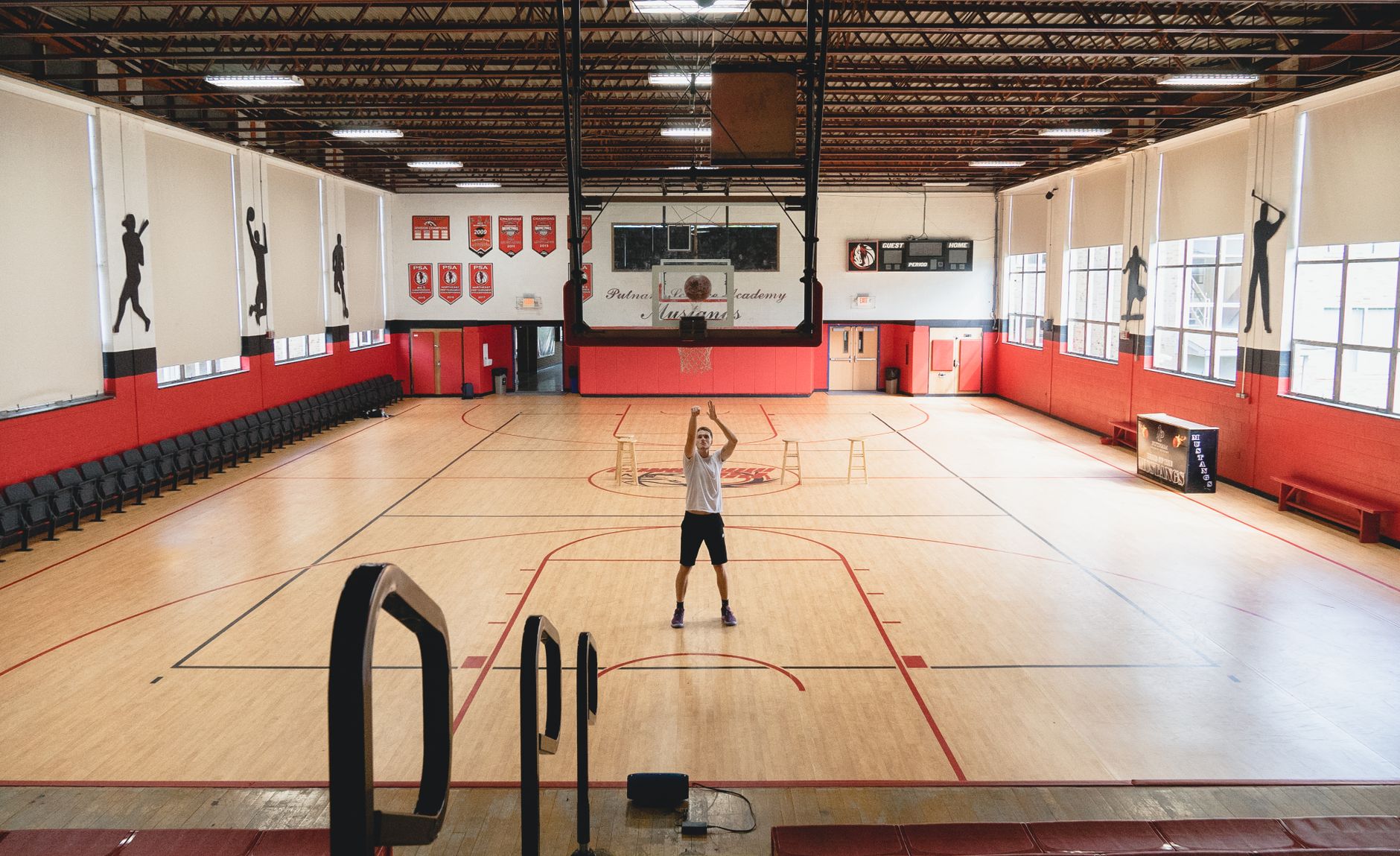
- Venue counts show a large market in which the floor a player walks onto is part of the experience.
- Hours savings reported elsewhere have no independent measurement for indoor pickleball yet.
- The robot works best alongside a team that handles spills, entry dust and check-in.
- A free site assessment comes before any lease quote, so the terms are clear first.
How can cleaning robots help an indoor pickleball center?
A floor cleaning robot can take over the repetitive floor work that happens between booking blocks at an indoor pickleball center. It runs a set route across open court floor, lobby tile and hallways, covering the same ground at the same pace each time, so the floor is ready for the next group without a staff member pushing a scrubber across every court. For the person who runs the building, that means fewer gaps in the schedule and less time spent on work that does not need a person.
Cleaning robots for indoor pickleball centers make the most sense where the floor is large, flat and busy. Courts sit in long rows of identical lanes, traffic is steady through the entry and along the walkways, and a hard surface suits a scrubbing machine. The robot does not replace the person who handles a spill, a torn net or a player who needs help. It handles the routine pass so the people on shift can spend their time on what only they can do.
The rest of this page covers the problem at these centers, how the robot works day to day, where it runs, what it cannot do, and how a site assessment and lease would begin. Where a figure comes from a named source, we say so, and where no independent figure exists, we say that too.
How many indoor pickleball centers are there, and is the market still growing?
The number of places to play is large. According to a 2026 state-of-the-courts report from a court listing platform, which is vendor-reported and drawn from its own database, there are 18,342 venues and 76,589 courts across 6,651 cities, 51 states and DC. That count covers pickleball and padel together, so it describes both sports, not indoor pickleball alone.
Growth has slowed in some large cities. A 2026 news report on the 100 most populous US cities found that pickleball court counts rose 4% from 2025 to 2026, down from 13% growth in 2025. Regional news coverage also reports indoor chains still opening sites in 2025 and 2026. For an operator, a slower build-out means the condition of the floor matters more, because players compare centers on what they see as they walk in.
What does floor care look like at these centers today?
Sport court makers say courts need a quick wash between play periods, and that trash on the court and in nearby bins is a routine task. Indoor courts also collect dust at the entries and grit from shoes, and wet cleaning leaves moisture that has to be removed before play resumes. Each job is small, but they repeat across every block of the day, and they fall on the same staff who are checking players in and running the front desk.
Schedules vary by source. One supplier suggests weekly cleaning for high-traffic courts, another suggests monthly, and an indoor court supplier recommends a deep clean every 3 to 6 months. These are vendor recommendations, not independent studies, so the right rhythm depends on your traffic and floor type. The common sequence is sweeping first, then a court-approved detergent for stains.
We did not find an independent figure for the hours a team spends cleaning an indoor pickleball floor per shift or per week. That gap matters. Any savings estimate has to come from how your own building runs, not from a number borrowed from another kind of site, and the site assessment is where that measurement happens.
How does the robot work day to day?
Before the robot runs a route, its work area is mapped. During a site assessment we walk the floor, note the court lanes, entry mats, furniture and any low obstacles, and set the paths the robot should follow and the zones it should avoid. Route setup has the largest effect on how well a robot fits a building, so it is worth doing with the person who knows the floor best.
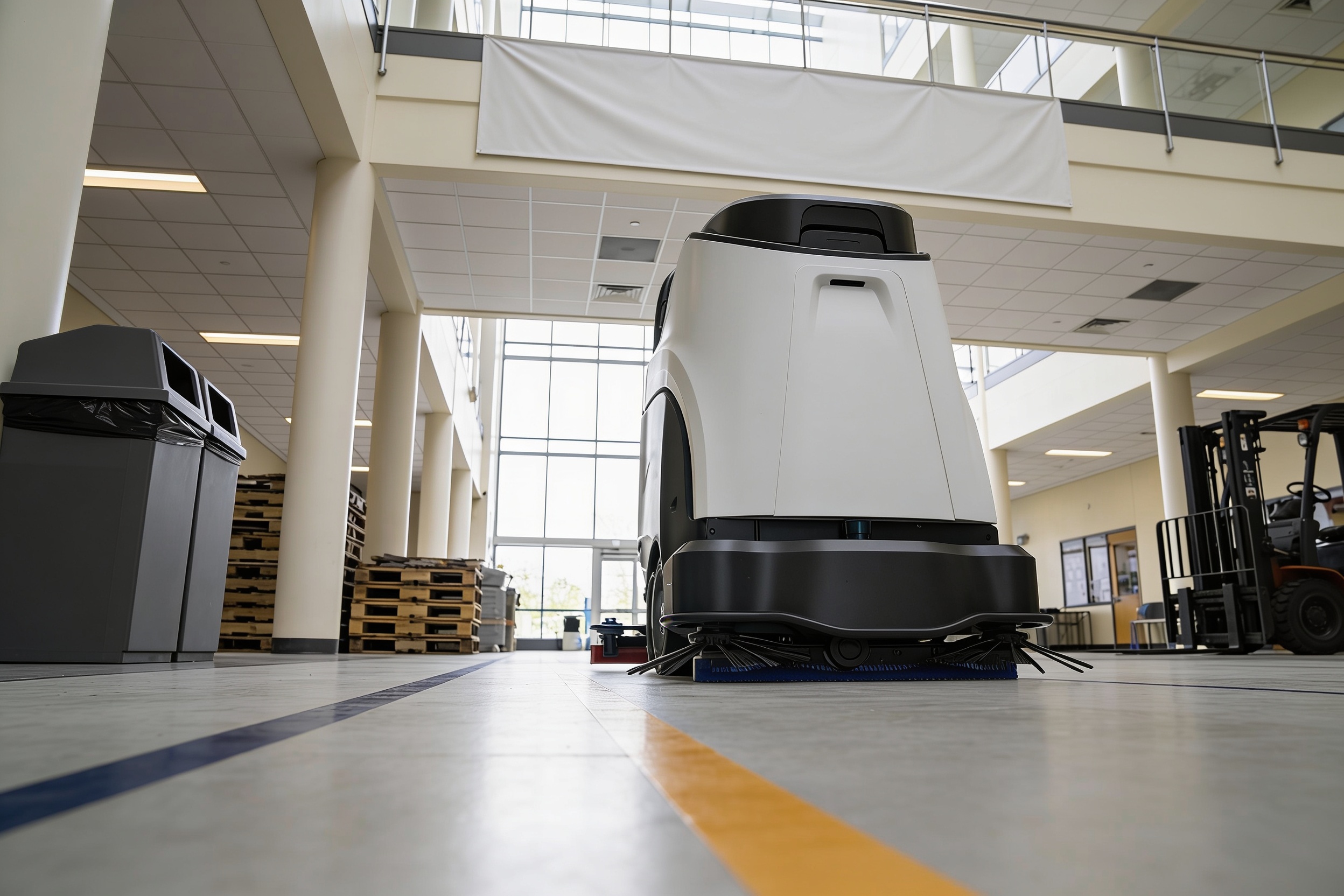
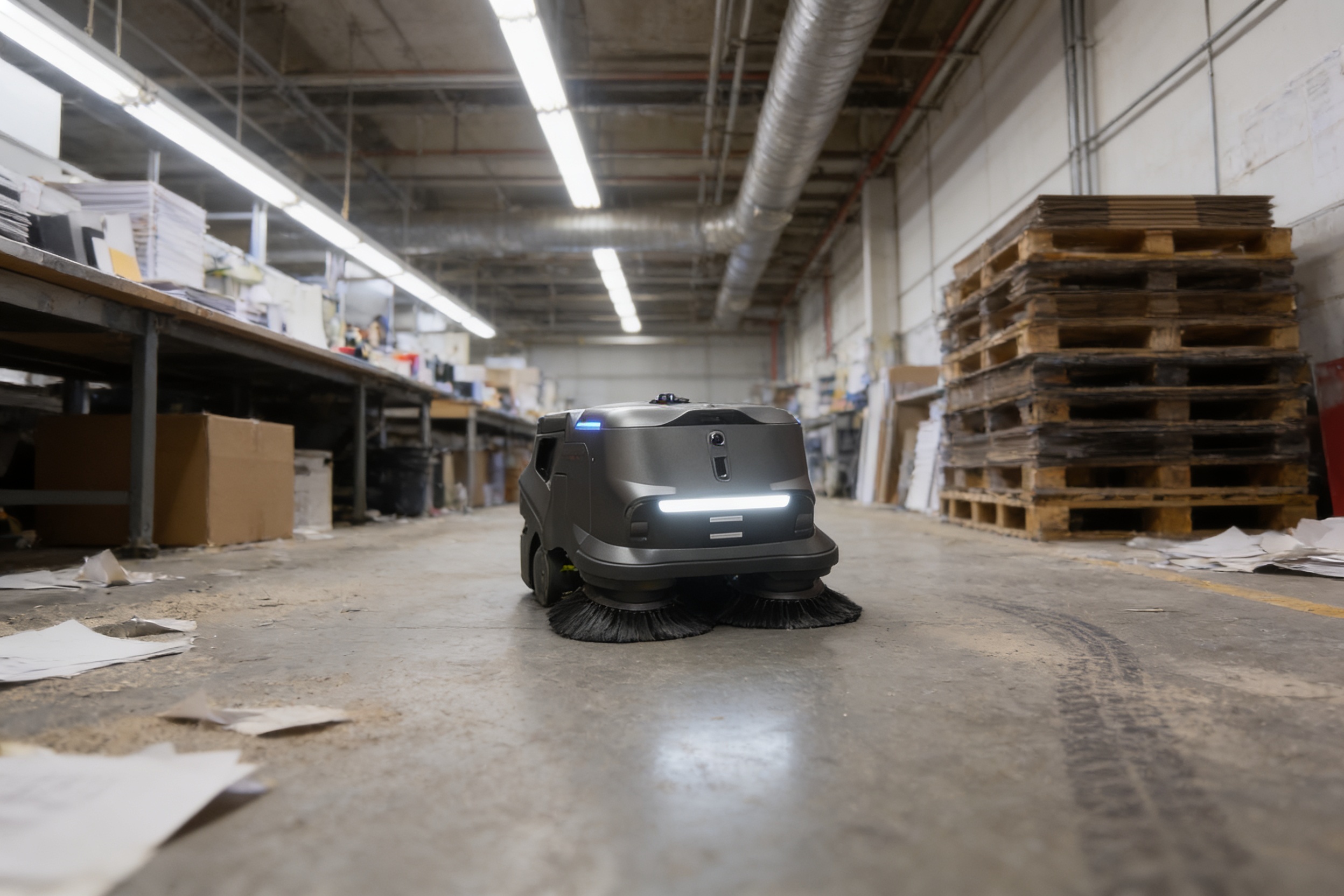
Once the route is set, the robot runs between booking blocks or overnight. It sweeps, scrubs and leaves the floor ready for the next group, then returns to its charging point on its own. A staff member checks each run, clears anything in the path, and deals with spills or wet areas the robot should not cross. The goal is a predictable floor pass, not a machine left to work alone.
Routes change when the schedule does, for example when a league takes over a block of courts or a clinic adds a group in the lobby. We walk those changes through with your team during go-live support, so the first weeks feel routine rather than experimental.
What are the main benefits for the operator?

The clearest benefit is consistency. A floor swept and scrubbed on the same route looks the same at 9 am as it does at 9 pm, and players notice when they step onto a court. Staff also get back the time they spent on the floor pass, which can go to check-in, court resets and the questions players bring to the desk.
A second benefit is coverage. Large, flat floors take a long time by hand, and a robot covers the same area on every pass without the fatigue of a long push. For a center with many courts, that makes it easier to keep every lane ready, not just the courts closest to the desk.
A third is planning. A fixed route makes the schedule easy to set, so the deep clean can sit around league nights instead of waiting for someone to find a free hour.
What drives the savings in hours and labor?
Savings come from hours taken out of the routine floor pass, and figures from other sites show the range. In a 2023 hospital case study published by a vendor, total manhours per night for floor care fell from 16 hours to 5 hours after a floor scrubbing robot was deployed across a 50,000 sq. ft. area. That is a hospital, so it is a reference for what one large, flat floor can look like, not a forecast for yours.
A logistics facility in Canada, reported by a materials handling trade publication, cleaned more than 3.5 million sq. ft. from summer 2020 to April 2021 and saved more than 300 labor hours compared with conventional cleaning. A grocery retailer's vendor-reported case study records 33,649 hours saved cumulatively across its stores in 2024, a multi-store total rather than a weekly figure for one site. A retail cleaning contractor's case study reports typical autonomous cleaning run time of 20 hours per week, with some weeks above 30 hours, and more than 2.5 hours per day on average. Those are robot run-time figures, not staff hours saved, so we keep them separate.
The labor backdrop is national. According to the US Bureau of Labor Statistics Occupational Outlook Handbook, there were about 2,447,700 janitor and building cleaner jobs in 2024, with growth projected at 2% over the decade, which the BLS calls slower than average. The same profile projects about 351,300 openings a year, mostly from replacing workers who leave. A center that struggles to fill cleaning shifts has a reason to take the routine pass off the schedule.
Your own estimate comes from the site assessment. The figures above are ranges other operators have seen, and the assessment measures your floor area, route length and today's hours so any projection rests on your building.
What can the robot not do?
A floor cleaning robot is good at a steady, repeated pass over a clear floor. It is not a substitute for the judgment staff bring. It will not handle a large spill, a broken net, a dropped water bottle on a court in the middle of play, or a stain that needs a person to scrub it by hand. It needs a clear path, so the route has to account for benches, bins, carts and any gear left on the floor.
The floor itself sets limits. Routes and cleaning settings are chosen for the surface, and edges, corners and thresholds may still need a hand pass. Dust at the entry and moisture after a wet clean still need attention from staff, so the route should be built around the times when those areas are quiet.
Being honest about these limits is what makes the arrangement work. A center that plans for them ends up with a floor that is ready on time, not one that depends on the robot doing everything.
How do we get started?
Start with a free site assessment. We walk the building, measure the floor areas, look at the court layout and entries, and map the routes a robot would run. The assessment shows which robot fits the floor, how many routes the center would need, and where staff would still do a hand pass.
Robots are leased only, through financing. The lease comes with a fixed robot lease payment, and that payment comes in the quote after the site assessment, so you see the full terms for your building before you commit. Deployment includes go-live support, and service is handled by our nationwide team.
A common way to begin is a pilot with one leased unit. It lets you check the route and staff workflow over a few weeks before deciding whether to add more. To book a site assessment, bring your court count, booking schedule and entry layout so the first visit is productive.
Frequently asked questions
Want a cleaning robot at your indoor pickleball center?
Tell us about your site. We will recommend the robot, quote the lease, and keep it serviced.
Sources
- 2026 state-of-the-courts report
- 2026 news report on pickleball court counts in major US cities
- US Bureau of Labor Statistics, Occupational Outlook Handbook: Janitors and Building Cleaners
- 2023 hospital floor care case study
- Materials handling trade publication article on a logistics facility floor cleaning
- 2024 grocery retailer floor cleaning case study
- Retail cleaning contractor floor cleaning case study
- Pickleball court maintenance guide (supplier blog)