
Key takeaways
- Wet bays, exit lanes and waiting areas create slip risk on every shift, and the risk builds all day.
- A floor cleaning robot runs fixed scrubbing routes between vehicles, so the floor gets attention before it gets dangerous.
- The robot works beside a team that stays on site. It takes the repeated floor pass, not the vehicles or the customers.
- Savings show up as staff hours returned to the lane and counter, measured on your own schedule.
- We lease the robot through financing, and the payment comes in a quote after a free site assessment.
How can cleaning robots for car washes help with wet floors?
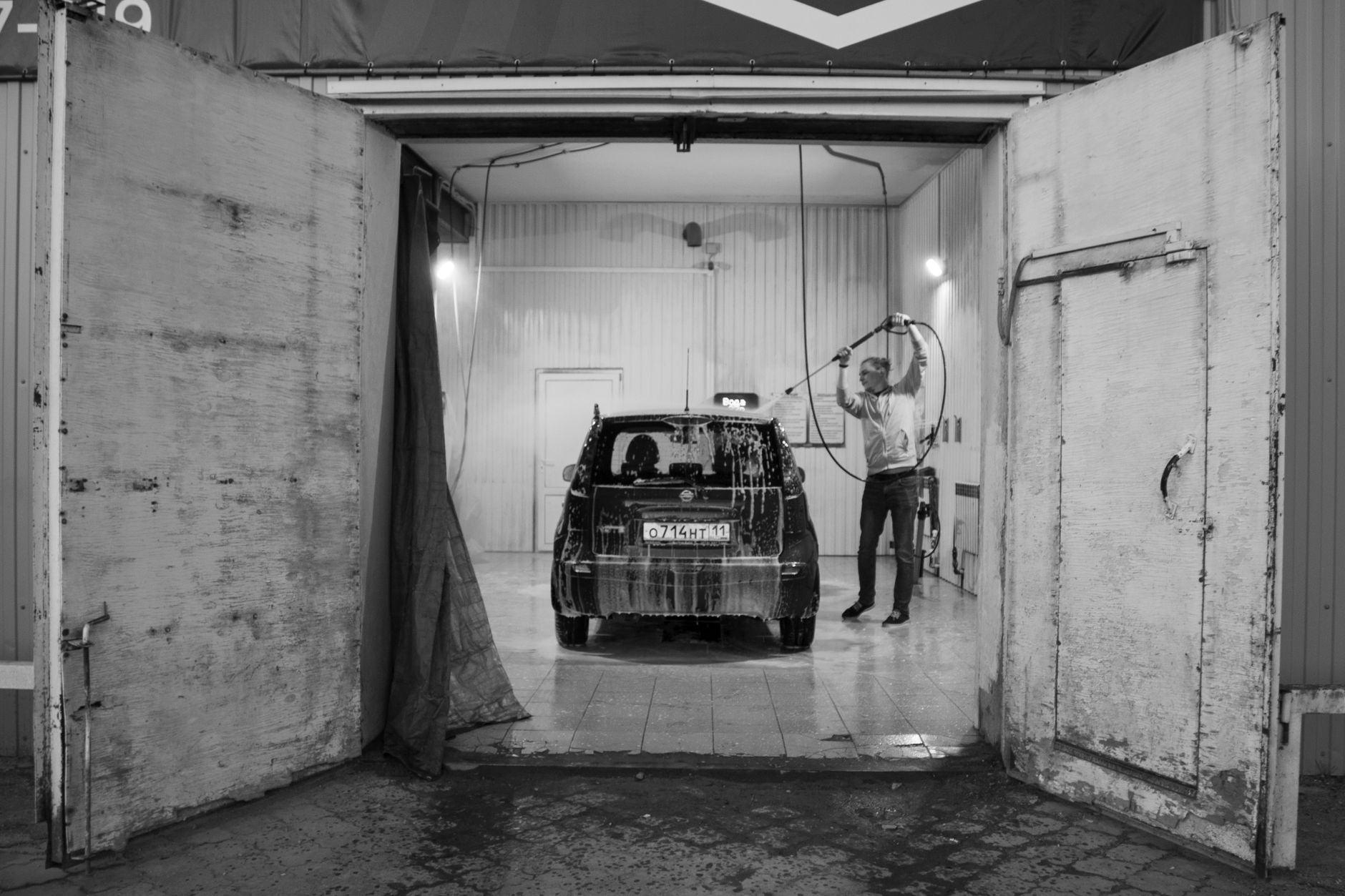
Cleaning robots for car washes keep the wet areas of a site safer across the whole day, not just at close. A floor cleaning robot follows a fixed route through the bays, exit lanes and waiting areas, scrubbing or sweeping on a schedule instead of whenever someone has a free minute.
The problem is simple to describe and hard to solve with people alone. Water from every vehicle runs onto concrete and tile, and it sits where customers and staff walk all day. A robot handles the repetitive pass, so your team can stay on vehicles, payments and customers.
It does not replace a trained team. The robot carries the routine floor work, while your staff keep the wash running, clear spills that need hands, and watch the floor where the robot cannot go.
What does the floor look like at a car wash today?
At a car wash, water is part of the service. Every vehicle leaves wet, and the floors in the bays, exit lanes and waiting areas stay damp for much of the day. According to the International Carwash Association, which cites the U.S. Census Bureau's 2020 count, 17,584 car washes had paid employees. Other industry counts use different definitions, so check any total against its source before you rely on it.
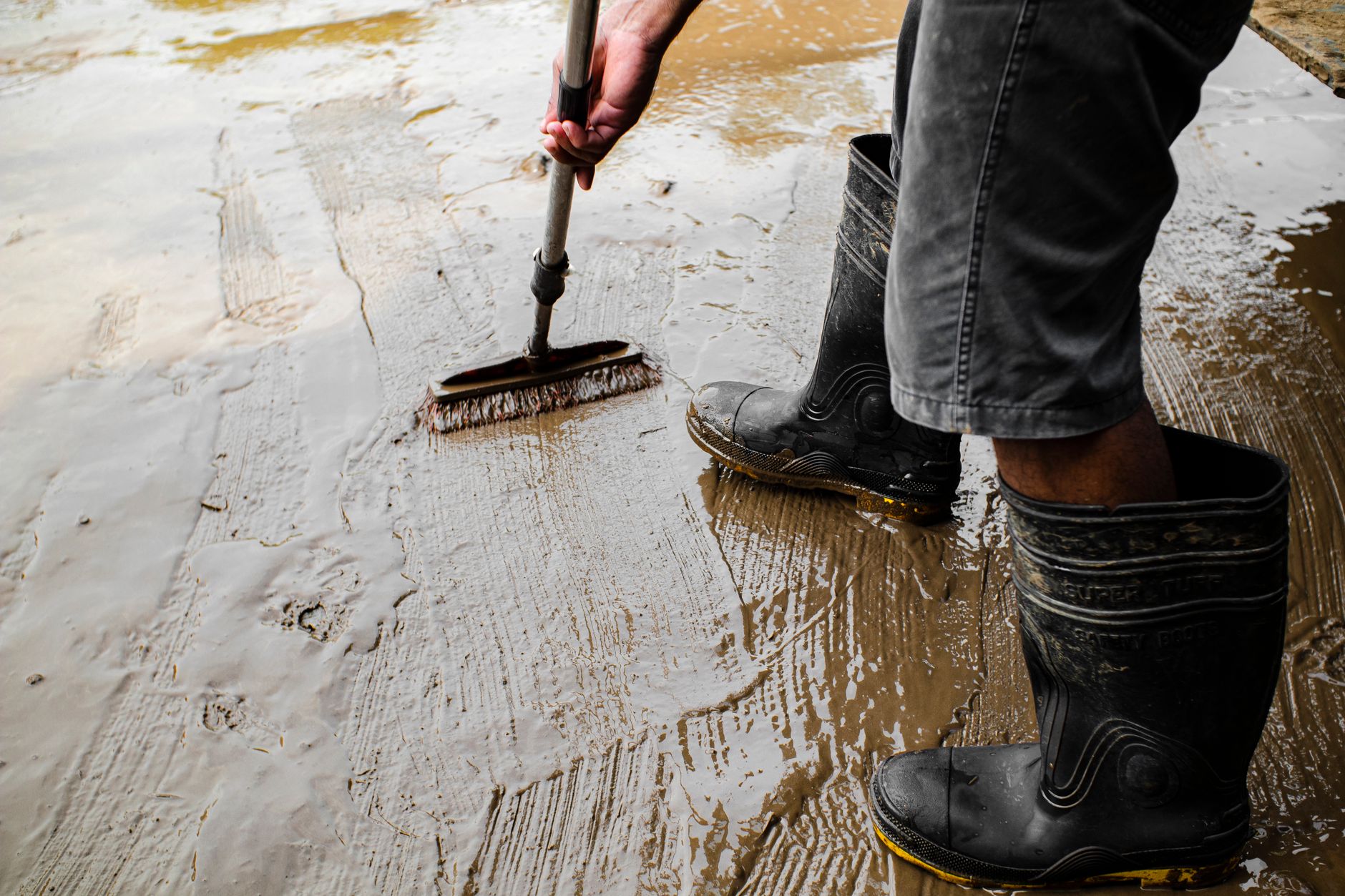
Slip risk is the daily problem. Many operators respond by mopping or squeegeeing when a worker notices a patch, which means the floor is clean in some spots and wet in others. According to the U.S. Bureau of Labor Statistics, there were 844 fatal falls, slips, and trips across all sectors in 2024, and 479,480 nonfatal cases that required days away from work. Those totals cover all industries, but they show how often these incidents happen on floors like yours.
Staffing makes the problem harder. A freshly hired attendant may not yet know where the wettest spots form or which lane drains slowly. A floor that depends on memory and attention tends to drift between shifts.
What are the main benefits of a cleaning robot at a car wash?
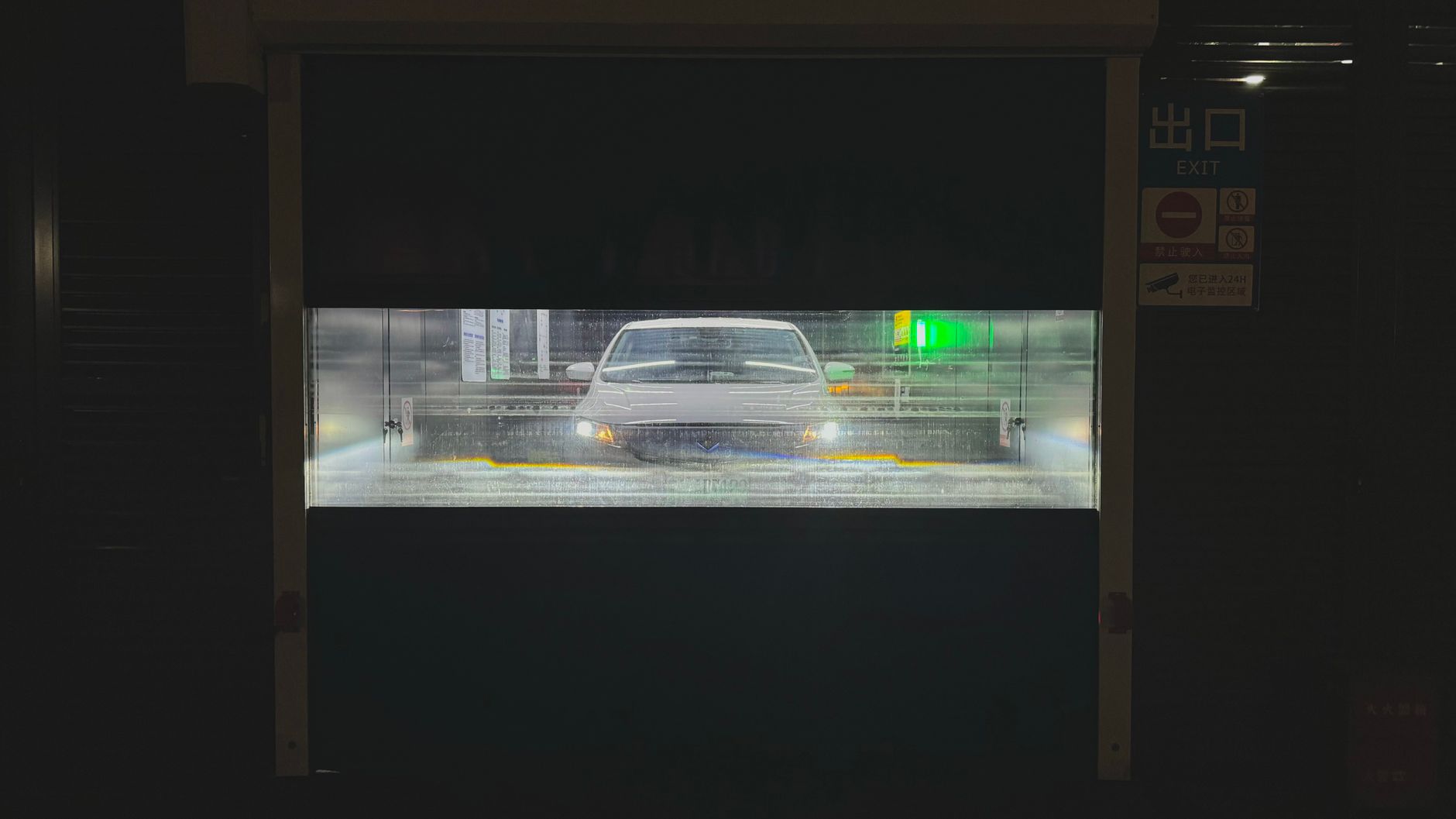
The biggest benefit of cleaning robots for car washes is steady floor condition. A cleaning robot runs the same route at the same frequency, so the wettest spots get attention on a predictable schedule rather than when someone happens to pass. That consistency reduces the chance of a slip, and it is easier to show a safety manager or insurer than a record of occasional mopping.
The second benefit is staff time. Scrubbing a large wet area by hand pulls an attendant out of the lane for a stretch of every shift. Moving that repetitive work to a machine returns those minutes to vehicle prep, payment and the customer waiting area, where people are most likely to notice the difference.
The third benefit is how the place looks and feels. A clean lounge and entry lane matter to customers who wait for their car, and a dry, presentable floor supports the conversations your team has at the counter. These gains are real but harder to measure, so track them with your own customer feedback rather than taking our word for it.
How does the robot work day to day at a car wash?
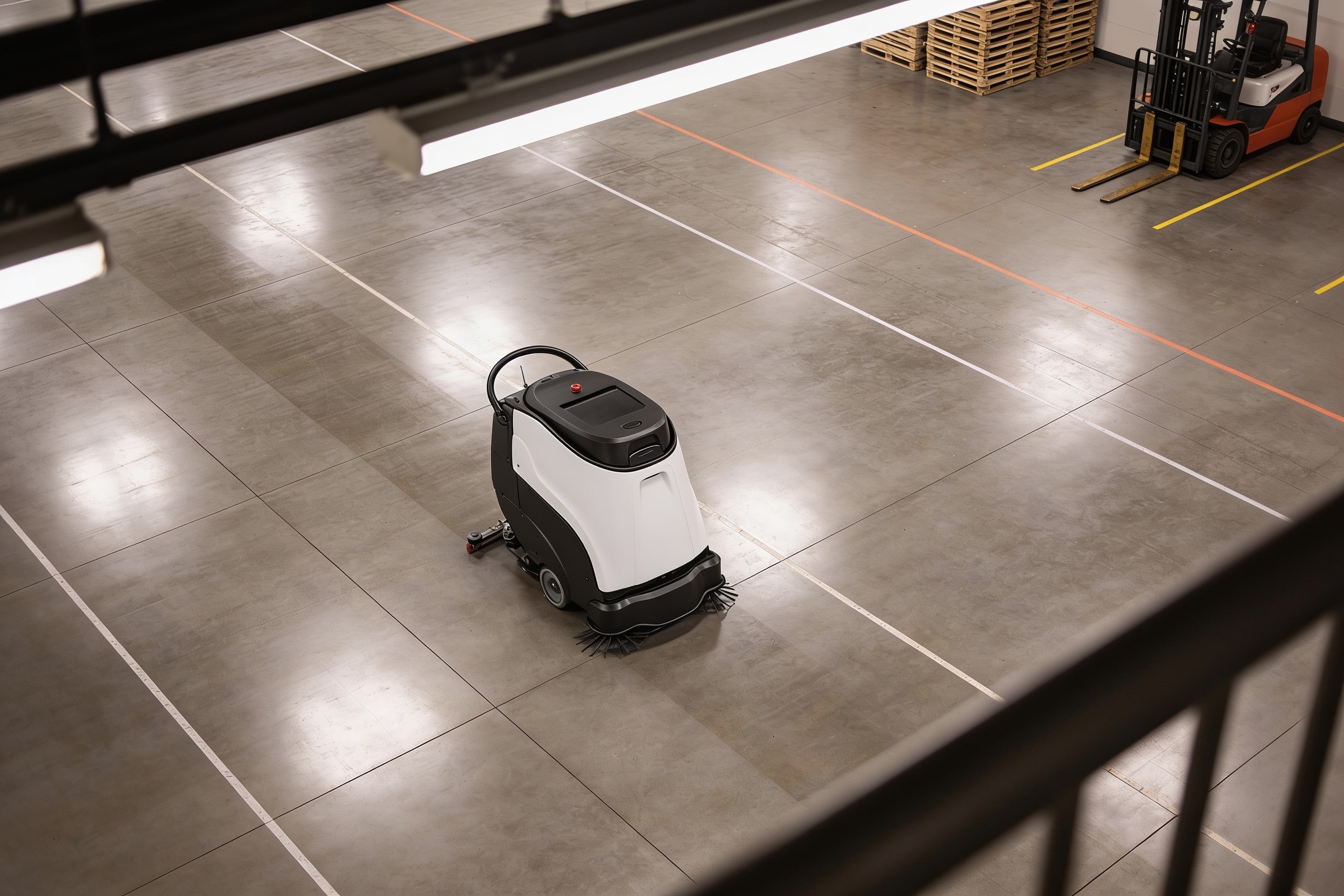
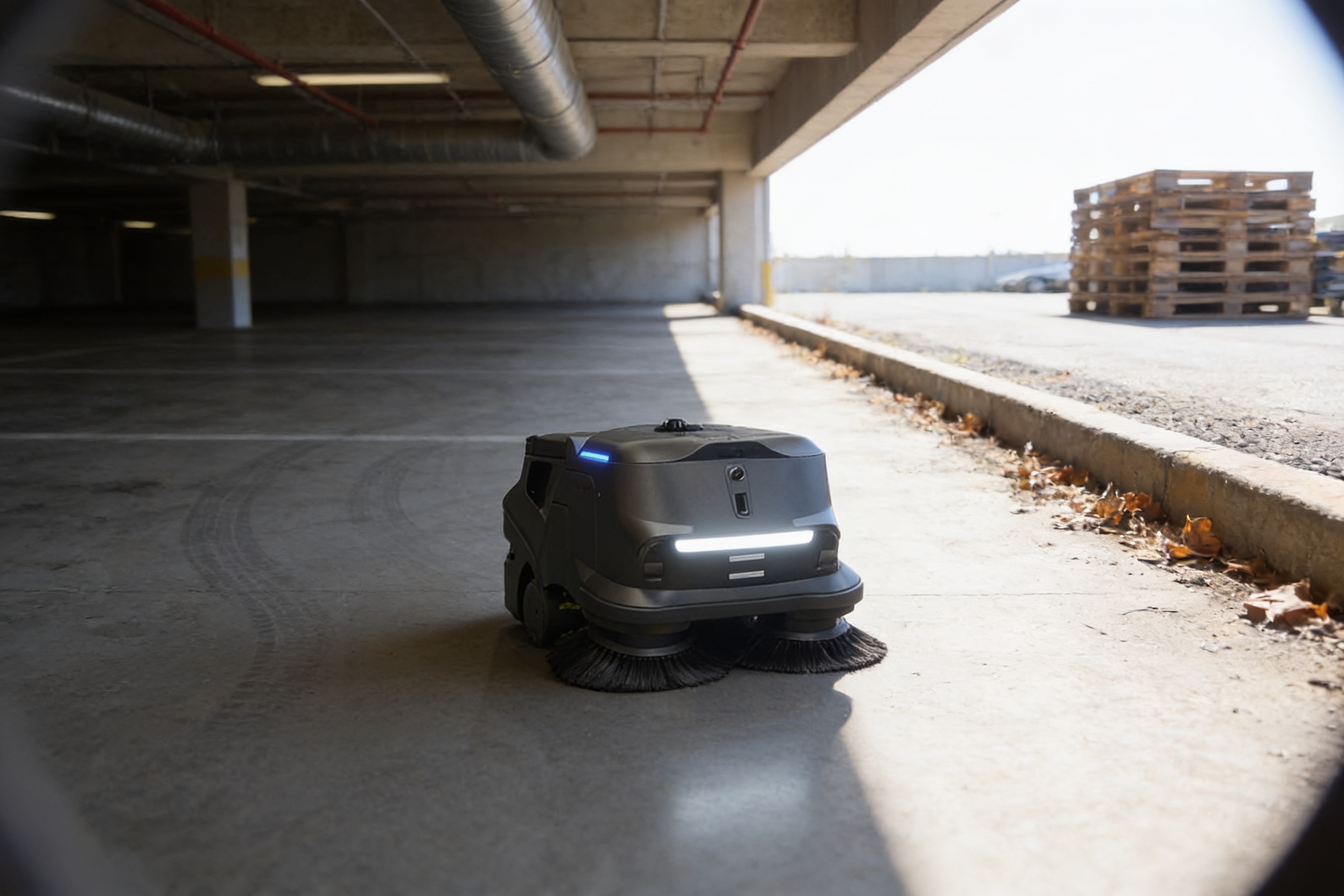
The robot starts each day from a charging dock. It runs a route we map during the site assessment, covering the lanes and lounge floors you choose, and it returns to the dock when the route is complete or the battery runs low. Your team sets the operating windows, usually quieter periods, and can change them as your traffic changes.
On the floor, the robot does not need an operator walking beside it. It slows or stops when people or objects are close, and a staff member can pause it from a handheld control or the dashboard. Its log shows which routes ran and where it stopped, so the shift lead can check the floor without walking every lane.
Before the route is set, we check the surfaces that matter most. Smooth, flat floors suit the robot best, and we look at curbs, drains, thresholds and any area where water pools, since those decide where the route can safely run.
Which areas of a car wash does the robot cover?
The robot works on floors that are dry or lightly wet and that offer a reliable path. Most sites have more than one surface, so we map each zone separately: concrete in the bays and exit lanes, tile or sealed concrete in the lounge, and the mixed surfaces where the vacuum area meets the pavement.
We keep the robot out of the active wash tunnel and any area with standing water, pressure equipment or heavy vehicle traffic. Those zones stay on your staff routine, and the robot takes the floors around them. That split is why the site assessment matters: the map is only as good as the traffic patterns it reflects.
How does it work alongside your existing staff?
A car wash runs on a thin crew. A tunnel wash job listing describes 1 or 2 employees per shift. A single listing is not a survey, but it matches what many operators describe. The robot does not replace that team. It handles one repetitive floor task so the people already on shift can focus on the work that needs a person.
Staffing is also fragile. A workforce article on car wash turnover reports that annual turnover at car wash operations commonly exceeds 100%, a figure it attributes to International Carwash Association data. Treat that number as secondhand, but plan for turnover anyway. When someone leaves, the floor routine suffers first, which is why a robot works as a continuity tool as well as a labor tool.
What drives the savings, and how do you measure them?
Savings come from hours, not from a promise. The clearest sourced figures come from DataUSA's profile built on Census data: full-time car wash employees average 42.9 hours per week, and part-time employees average 22.1 hours, across the whole industry. Those averages are not specific to tunnels, so the range is a benchmark, and your own schedules matter more.
The floor work a robot can take on is the repeated pass. If your team spends a stretch of each shift mopping, squeegeeing and rechecking the same lanes, that time is the pool the robot draws from. Measure it for two weeks before the site assessment so you know the baseline in your own hours.
Expect the gain to appear as hours returned to the lane and counter, not as a cut in the team. The gain grows when the robot covers more of the repeated floor work, and it shrinks when the route is poorly mapped or the schedule ignores your peak times. We model the estimate from your hours and traffic in the quote.
What can a cleaning robot not do at a car wash?
It does not wash, dry or detail vehicles, take payment, or greet customers. It cannot clear a spill it cannot see, a jam of debris, or a puddle it cannot cross safely. It needs a clear route, a charging dock within reach of that route, and someone who checks its log.
It is not a fix for poor drainage, worn surfaces or a leak. Those problems need repair first, because a robot running over standing water only moves it around. Treat it as a routine floor care tool that depends on sound building conditions.
Expect a learning period. The first weeks show where the route needs adjusting, where traffic runs heavier than the map suggests, and which staff habits help or get in the way. Plan for that instead of expecting full coverage on day one.
How do you get started with a leased cleaning robot?
Start with a free site assessment. We walk the wash, map the floors, note the drainage and traffic patterns, and select a floor cleaning robot that fits the surfaces you have. We then set a route and a training plan with your team, so the first shift is not a surprise to anyone.
The robot is leased through financing, and we handle deployment and integration, staff training, and nationwide service. The payment comes in the quote, which we prepare after the site assessment, so you see the terms for your own site before you commit. A common path is to start with one leased unit, track hours and floor condition for a few weeks, and then decide on the next step.
Bring your current schedule, your peak periods and a rough sense of where the floor gets wettest. Those three things let us give you a useful assessment rather than a generic one.
Frequently asked questions
Want a cleaning robot at your car wash?
Tell us about your site. We will recommend the robot, quote the lease, and keep it serviced.